Connect with us

Foreign

“Enlist or die”: How Sudan’s paramilitary withholds food to forcibly enlist men and boys

Published

on

ADVERTISEMENT
Zoom Ad
ADVERTISEMENT
Zoom Ad

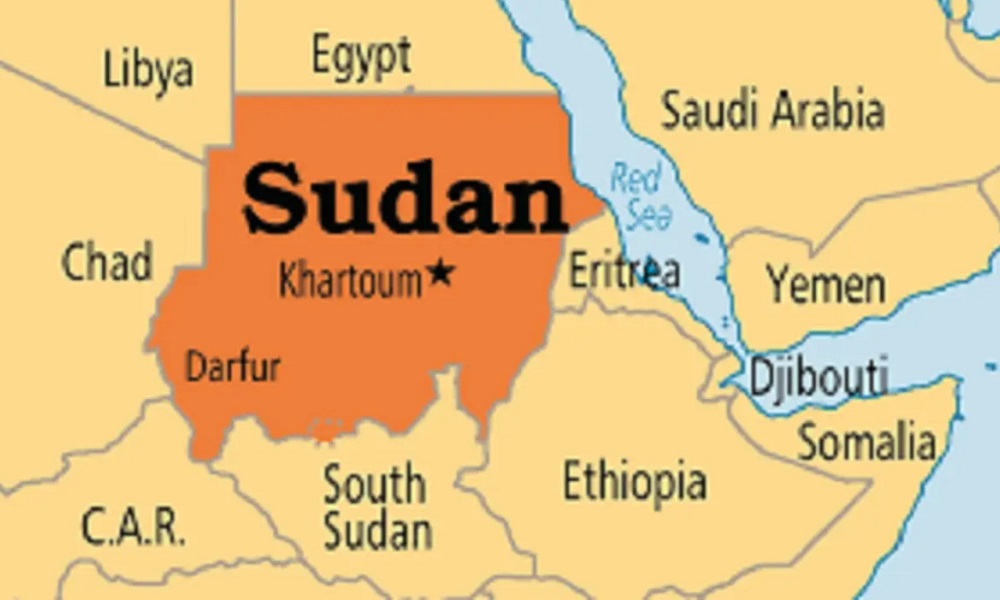
In mid-December, the powerful paramilitary Rapid Support Forces (RSF) swept into Sudan’s central Al Jazira state, known as the country’s breadbasket, with an ultimatum: “Enlist or die.”


Since then, the militia group has sought to use food as a weapon, withholding supplies from the hungry in a bid to coerce men and boys to join its ranks, according to over three dozen witnesses.

The RSF has been battling the Sudanese Armed Forces (SAF) for control of the country since a civil war broke out between the two rival factions in April last year. Both forces have been accused of killing civilians.

Now, a CNN investigation led by CNN Chief International Investigative Correspondent Nima Elbagir has found that almost 700 men and 65 children have been forcibly recruited by the RSF over the past three months in Jazira state alone.

Advertisement

Many of the victims were identified by witnesses, survivors, and family members. CNN cross-checked their names with residents from their communities to get details of what happened in each case.

CNN was independently able to corroborate the identities of all 750 people swept up by the RSF press gangs in Jazira. Of those, at least 600, including 50 boys under 18, joined the RSF in eastern Jazira, in many cases driven by hunger, witness testimonies revealed. Another 150, including 15 boys, were forcibly recruited in western Jazira. Many of the men previously worked as farmers or traders.

The RSF campaign unfolded in Sudan’s agricultural heartland during its peak cultivation and harvest period, exacerbating food insecurity in a country already on the brink of famine.

Eyewitnesses detailed a range of coercive methods employed by the RSF to compel individuals to join their ranks, including intimidation, torture, summary execution and the withholding of food and medical aid.

Advertisement

RSF soldiers looking to swell the militia’s ranks targeted one village on February 27, witnesses said.

The militia tried to recruit 20 young men from the village, eyewitnesses, survivors and families of victims said. When the residents refused, they set up a base in the village, unleashing what the witnesses described as a campaign of terror. Homes were looted, and supermarkets and food warehouses were set on fire before the soldiers took off with over 30 stolen vehicles.

The three dozen eyewitnesses CNN spoke with from across Jazira, including survivors and the families of victims, say refusing the RSF’s ultimatum comes at the cost of food, home and safety. CNN is not naming the villages and most of the people who spoke due to fear of RSF reprisals.

The RSF has yet to respond to CNN’s request for comment on this story.
Advertisement
Continue Reading
Advertisement

Foreign

Iran accuses US of violating ceasefire over past 48 hours

Published

on

By

ADVERTISEMENT
Zoom Ad
ADVERTISEMENT
Zoom Ad

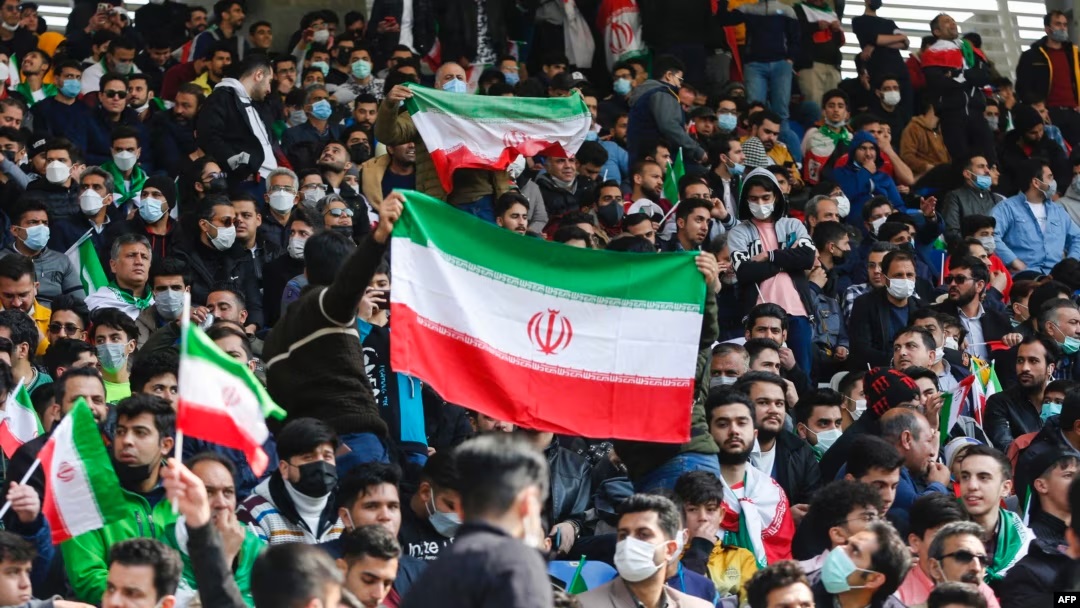
Iran’s foreign ministry on Tuesday accused the United States of violating a fragile ceasefire during the past 48 hours in the southern coastal province of Hormozgan, without specifying the incident.

“The US terrorist army, continuing its illegal and unjustified actions since the ceasefire … has, in the past 48 hours, committed a gross violation of the ceasefire in the Hormozgan region,” the ministry said in a statement.

The US Central Command said forces had on Monday attacked missile sites and boats it said were trying to lay mines in the Gulf, while Iran’s Revolutionary Guards said it had fired at US aircraft attempting to enter the country’s airspace.

AFP

Advertisement
Continue Reading

Foreign

Iran president orders internet restored after war suspension

Published

on

By

ADVERTISEMENT
Zoom Ad
ADVERTISEMENT
Zoom Ad

Iranian President Masoud Pezeshkian has ordered the restoration of international internet access in Iran, which had been suspended since the United States and Israel launched attacks against the country, local media reported Monday.

“The decree aimed at restoring internet access to its pre-January state was communicated to the Ministry of Communications by the president,” Iranian news agencies Tasnim and Fars reported.

Authorities shut down the internet during large-scale anti-government protests that peaked in early January, then suspended it again on February 28 at the start of the Middle East war.

Since then, the population has only had access to domestic platforms and websites.

Advertisement

AFP

Continue Reading

Foreign

Trump says Iran deal ‘largely negotiated’ including reopening Strait of Hormuz

Published

on

By

ADVERTISEMENT
Zoom Ad
ADVERTISEMENT
Zoom Ad

US President Donald Trump says an agreement with Iran has been “largely negotiated” and details will be announced soon.

The deal would include the reopening of the Strait of Hormuz, he said on Saturday, without giving further details.

Iranian foreign ministry spokesman Esmaeil Baqaei earlier told state television that US and Iranian positions had been converging in the last week, but warned that did not mean agreements would be reached on key issues and accused the Americans of “contradictory statements”.

On social media, Trump said he had a “very good call” with the leaders of Saudi Arabia, the United Arab Emirates, Qatar, and others about a “Memorandum of Understanding pertaining to PEACE”.

Advertisement

“An agreement has been largely negotiated, subject to finalization between the United States of America, the Islamic Republic of Iran, and the various other Countries, as listed,” Trump said.

“Final aspects and details of the deal are currently being discussed, and will be announced shortly.”

He also said he had a call on Saturday with Israeli Prime Minister Benjamin Netanyahu, which “went very well”.

The president has not given any further details on the deal, but has insisted any agreement would “absolutely” prevent Iran from obtaining a nuclear weapon.

Advertisement

Later, Pakistan’s Prime Minister Shehbaz Sharif said: “I congratulate President Donald Trump on his extraordinary efforts to pursue peace,” and said the phone call had been “very useful and productive”.

Pakistan has been helping to negotiate a peace deal, serving as an intermediary.

“We hope to host the next round of talks very soon,” he wrote in the statement on X.

The US and Israel launched wide-ranging strikes on Iran on 28 February, sparking conflict across the Middle East. Iran responded by launching attacks on Israel and US-allied states in the Gulf.

Advertisement

A ceasefire in Iran was agreed in early April, and since then Washington and Tehran have engaged in talks over a long-term peace deal.

Speaking to state television on Saturday, Iranian foreign ministry spokesman Esmaeil Baqaei also described a “memorandum of understanding”, saying Iran’s intention was to reach an agreement “in the form of a framework, consisting of 14 points”.

Baqaei said they were in the process of finalising the memorandum, so further talks could be held within 30 to 60 days “and ultimately a final agreement can be reached”.

The new sense of momentum comes after the mood appeared to have soured in Washington, with anonymous officials briefing US media on Friday that the administration was preparing for a fresh round of military strikes, although no final decision had been made.

Advertisement

On Friday, the president posted on Truth Social that he would not attend his son Donald Jr’s wedding this weekend so he could remain in Washington DC “during this important period of time”.

Last week, Trump had said the truce was on “massive life support” after rejecting Tehran’s demands, labelling them “totally unacceptable”.

The US has blockaded Iranian ports since 13 April.

On Saturday, US Central Command (Centcom) said it had redirected 100 vessels, disabled four, and allowed 26 humanitarian aid ships to pass since the blockade began.

Advertisement

Centcom commander Admiral Brad Cooper said its forces had been “highly effective” in “allowing zero trade into and out of Iranian ports which has squeezed Iran economically”.

Meanwhile, Iran has claimed military control of an area around the Strait of Hormuz, and has said all transit through the strait “requires coordination with and authorisation from the Persian Gulf Strait Authority”.

The US and Gulf allies have repeatedly rejected Iranian attempts to assert control over the strait, and the US has told ships not to comply with Iran’s rules.

Advertisement
Continue Reading

Trending

Copyright © 2024 Naija Blitz News