Connect with us

News

How Nasarawa Gov pressurised me to establish militia group — Detained Miyetti Allah Leader, Bodejo

Published

on

ADVERTISEMENT
Zoom Ad
ADVERTISEMENT
Zoom Ad

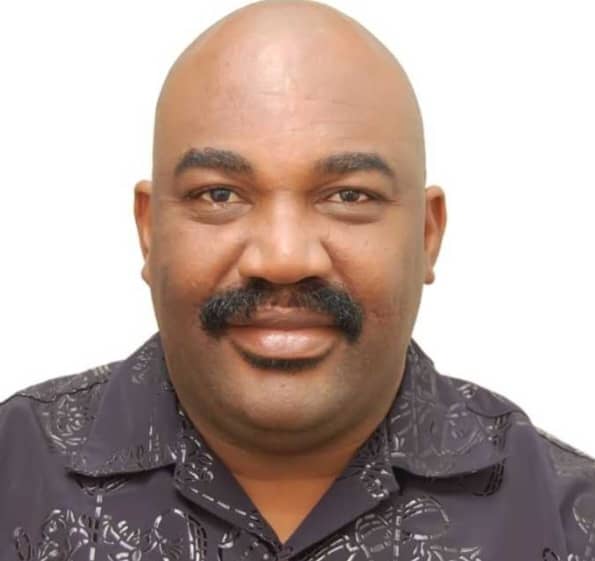
The President of Miyetti Allah Kautal Hore, Bello Bodejo, has alleged that the Governor of Nasarawa State, Abdullahi Sule, was behind the establishment of the ethnic militia group, Kungiya Zaman Lafiya.


Bodejo, who is facing terrorism charges, accused the governor of pressurising him to form the militia group.

The Miyetti Allah leader was arrested by operatives of the Defence Intelligence Agency on January 23, 2024, at the group’s office in the Karu Local Government Area of Nasarawa State for allegedly unveiling a militia group and has been in custody since then.

He was arraigned before Justice Inyang Ekwo of the Federal High Court in Abuja on three counts of terrorism on March 22, 2024.

Advertisement

Bodejo was specifically accused of establishing the Kungiya Zaman Lafiya ethnic militia in Nasarawa State without authorisation.

The offence was said to be punishable under Section 29 of the Terrorism (Prevention and Prohibition) Act, 2022.

However, in his confessional statement exclusively obtained by Sunday PUNCH, Bodejo alleged that the Nasarawa State governor was behind the formation of the militia group.

He stated that he received a call from the governor earlier in the year expressing his desire to establish a vigilante group different from those of his counterparts.

Advertisement

Bodejo said, “I was arrested because of the vigilantes I paraded in Nasarawa State. Sometime in early January 2024, Governor Sule called me and said that he wanted me to see him concerning a Fulani group called Kungiya Zaman Lafiya, which I told him I didn’t know about. The governor said what he called me for was because all the governors had agreed to form vigilante groups in their states like Katsina State had done, but he did not want to organise his like other state governors.

“He said he wanted to use all those who participated in the political rally before the election. And he intended to link them with the Army and they would work for him as vigilantes. The governor asked if I could work with Akajo, the leader of the group and I told him that I couldn’t come down to work with Akajo because I am from the national level. Later, I called Akajo to meet me and we discussed how to operate the Kungiya Zaman Lafiya in the state. I told the Emir of Lafia that people complained about the group and I didn’t like them.

“However, I asked Akajo about the number of his men. He said there were about 700 men. I demanded for their ID cards which he showed me; the ID cards were authorised and signed by the CSO to the Nasarawa State governor. About two weeks later, Governor A. A. Sule called me to come with Akajo.”

Bodejo stated that he met with Akajo and Sule at the Governor’s Lodge in Abuja.

Advertisement

He said despite informing the governor of the negative narratives about Akajo’s group, he insisted that he (Bodejo) worked with him.

Bodejo said, “So, I left Bauchi and sent for Akajo to meet me at the Governor’s Lodge. When I got to the lodge, I met Akajo with the governor. The governor enquired what was happening between me and Akajo. I told him that Akajo and his group were spoiling the good name of the governor by causing crises, stealing cattle, and killing people.

“They went and cleared the Toto LGA problem. When they got there, they gathered Fulani and harassed them. The Fulani ran away, leaving the cattle. Akajo and his group gathered the cattle and sold them. The governor insisted that I should work with him.”

The Miyetti Allah leader claimed that other people from the Nasarawa, Obi, and Kyana local government areas of the state who were meant to join Akajo’s group pulled out because Akajo failed to give them their share of the fund released by the governor.

Advertisement

He said, “I told the governor that I requested for the group’s list from Akajo so that I could join it with my people to make up the 2,000 and that he had not given me. The governor said we should have a meeting in Lafia. During the meeting, I told the Ardos what the governor wanted to do with the Kuniya Zaman Lafiya and they bought the idea. During the meeting, one member of the Kunya Zaman Lafiya complained that they were not benefiting from anything. I immediately called the governor to inform him.

“The governor affirmed that all funds were released to Akajo for the group, so it was Akajo who failed to settle them. On this revelation, the people were angered and the people from Nasarawa, Obi, and Kyana LGAs said they could not join Akajo’s group. The governor instructed that I should make do with the existing 700 members of the Akajo group and if possible I should make it up to 1,000.”

Bodejo added that after the meeting, he met with one of his friends, Captain Ahmed Chiroma (retd.), who advised him to make the establishment of the group legal.

According to him, Chiroma made a write-up, which they both presented to the governor.

Advertisement

Bodejo claimed that when the governor was presented with the write-up, he rejected it.

He said, “After the meeting, I met one of my friends, Captain Ahmed Chiroma (retd.), who is the deputy secretary of the Presidential Think Tank and explained everything to him. Captain advised that I make it legal; he said he would put a write-up for the governor, which he did, and the two of us went to present it to the governor. I don’t know what he wrote but after the governor read the paper, he said no that he wanted to run the state the way he wanted.”

Bodejo said the governor then instructed him to meet with the Secretary to the State Government to discuss the cost of procuring kits for 1,000 members of the group.

The Miyetti Allah leader said Chiroma advised him to be careful as the establishment of the group was illegal.

Advertisement

He added, “The governor said I should meet the SSG and tell him the cost of procuring 1,000 uniforms and kits. Chiroma advised me to be careful with the governor because what he was doing was illegal. That is number one; the governor can’t just carry one tribe of Fulani as vigilantes, and secondly, he can’t carry one as security. He did not build schools for them, just this security vigilante group.”

Bodejo said the governor called him the following day to inquire about the arrangements put in place for the establishment of the group, adding he pleaded with Sule to give him two weeks.

Not knowing what to do, Bodejo said he contacted Chiroma who advised him to establish a nomad vigilante group and register it with the Corporate Affairs Commission.

He stated, “The following day, I was on my way to Bauchi and the governor called me. So I stopped to see him in Lafia and he inquired about the arrangements. I told him to give us two weeks. I informed Akajo and sent a text message to Captain Chiroma, who agreed that we should meet in Bauchi. While in Bauchi, Chiroma advised that I should inform the governor that we would not use the Kungiya Zaman Lafiya, rather we would use Miyetti Allah and register it as a nomadic vigilante group.
Advertisement
Continue Reading
Advertisement
Click to comment

Warning: Undefined variable $user_ID in /home/naijuinz/public_html/wp-content/themes/zox-news/comments.php on line 49

You must be logged in to post a comment Login

Leave a Reply

News

FCTA Threatens Sanctions Against Hotels, Event Centres Hosting Illegal Groups

Published

on

ADVERTISEMENT
Zoom Ad
ADVERTISEMENT
Zoom Ad

By Gloria Ikibah

The Federal Capital Territory Administration (FCTA) has warned owners of hotels, event centres and other public facilities in Abuja against allowing their premises to be used by unlawful organisations, declaring that violators risk losing their land titles.

The warning was contained in a statement issued on Friday by Lere Olayinka, Senior Special Assistant on Public Communications and Social Media to the Minister of the FCT, Nyesom Wike.

According to the administration, land allocations within the FCT are meant strictly for lawful activities, stressing that authorities would no longer tolerate the use of public facilities for gatherings linked to illegal groups.

Advertisement

The statement read: “In view of the need to further ensure the security of lives and properties in the FCT and sustain the efforts of security agencies in this regard, usage of Event Centres, Hotels and other public buildings will now be closely monitored.

“This is aimed at ensuring that they are not used by illegal organizations for gatherings capable of disrupting the peace of the nation’s capital.”

The FCTA also directed owners and operators of such facilities to properly verify the identities and legitimacy of organisations seeking to rent their venues before approving bookings.

“Owners of these facilities are therefore urged to take cognizance of the legality of organizations seeking to use their facilities and the purpose before letting them out,” the statement added.

Advertisement

The administration further warned that political activities in the build-up to elections must only involve recognised party leadership approved by the Independent National Electoral Commission (INEC).

“For instance, in this political season, owners of Event Centres and Hotels in particular must ensure that they only deal with Independent National Electoral Commission (INEC) recognised leadership of political parties in respect of the use of their facilities, and proper records of transactions must be kept.

“Failure to comply with this directive will result to revocation of the title documents such properties,” the statement further read.

The FCTA maintained that failure to comply with the directive will attract severe consequences.

Advertisement
Continue Reading

News

Ebola Alert! FG flags 21 states on lockdown watch, Lagos, FCT, Rivers, Akwa Ibom, Borno, others in high risk zones

Published

on

ADVERTISEMENT
Zoom Ad
ADVERTISEMENT
Zoom Ad

The Nigeria Centre for Disease Control and Prevention (NCDC) has placed several states on high Ebola preparedness alert after a fresh risk assessment classified Nigeria’s chances of importing the deadly disease as high amid regional outbreaks.

Dr Jide Idris, Director-General of the NCDC said this in a Thursday statement, stressing that Nigeria had not yet recorded any confirmed Ebola Virus Disease case linked to the outbreak.

He explained that the World Health Organization’s Public Health Emergency of International Concern declaration and increasing Ebola cases in the Democratic Republic of Congo and Uganda required intensified surveillance and preparedness activities across Nigeria immediately.

Idris stated that the NCDC conducted a dynamic risk assessment to guide anticipatory and response measures, concluding that Nigeria faced a high Ebola importation risk because of international travel and regional population movement.

Advertisement

He added that uncertainty surrounding the outbreak’s magnitude and the possibility of delayed recognition were heightened because Ebola symptoms closely resembled common endemic diseases such as malaria and Lassa fever in Nigeria.

According to him, all states and the Federal Capital Territory must maintain Ebola preparedness, although readiness efforts should reflect varying importation and transmission risks identified through the NCDC’s recently developed preparedness classification system.

The agency categorised Lagos, the FCT, Rivers, Kano, Enugu, Borno, Akwa Ibom, Cross River, Taraba, and Adamawa as high-risk states because of international airports, porous borders, and active trade or travel routes.

Idris also identified Ogun, Nasarawa, Kaduna, Plateau, Kogi, Niger, Jigawa, Katsina, Bauchi, Ebonyi, Abia, and Bayelsa as moderate-risk states requiring sustained preparedness efforts against possible Ebola importation and transmission threats.

Advertisement

He said that the WHO declaration underscored the seriousness of the regional threat and highlighted the urgent need for Nigeria to strengthen preparedness measures before detecting any suspected Ebola case domestically.

The NCDC boss explained that national preparedness efforts aimed to ensure every state and the FCT could quickly detect, contain, and respond to suspected Ebola cases while protecting health workers and sustaining healthcare services.

Idris reiterated that Nigeria currently had no confirmed Ebola case linked to the outbreak but warned that increasing regional transmission significantly elevated the country’s importation risk because of population movement and extensive travel networks.

He explained that airports, seaports, porous land borders, informal crossings, trade routes, and overlapping Ebola symptoms with malaria and Lassa fever increased the likelihood of delayed recognition and possible disease spread nationally.

Advertisement

According to him, health authorities in the Democratic Republic of Congo and Uganda had reported 1,077 suspected Ebola cases and 247 deaths, while people aged between 14 and 45 years remained most affected.

He said the outbreak’s case fatality rate stood at 24.6 percent, while both regional and national Ebola risks remained high because of continuing transmission and the absence of approved vaccines for the outbreak sstrain.l

Idris stressed that no approved vaccines or specific treatments currently existed for Bundibugyo Ebola virus disease, making rapid public health interventions critical for containing infections and preventing widespread transmission across vulnerable communities.

He explained that outbreak control depended largely on early detection, prompt isolation of suspected and confirmed cases, strict infection prevention measures, effective contact tracing, safe burials, community engagement, and strong surveillance systems nationwide.

Advertisement

The NCDC Director-General disclosed that suspected Ebola cases had also been reported in India, while Canada suspended travel applications from residents of the DRC, Uganda, and South Sudan because of the outbreak situation.

He added that Uganda recently announced border closure measures, while Nigeria faced significant implications because the current Bundibugyo Ebola virus outbreak lacked licensed vaccines or approved targeted therapeutics for treatment and prevention.

According to him, existing Ebola vaccines and monoclonal antibody treatments primarily targeted the Zaire ebolavirus strain and should not be relied upon as effective countermeasures against the current Bundibugyo outbreak affecting neighbouring ccountries.l

Idris clarified that Ebola Virus Disease was not airborne, explaining that transmission occurred through direct contact with blood, body fluids, contaminated materials, or infected animals associated with symptomatic or deceased infected persons.

Advertisement

He said the Ebola incubation period ranged from two to 21 days, making recent travel and exposure history within the preceding three weeks essential when assessing any suspected infection or potential outbreak case.

According to him, early Ebola symptoms often appeared non-specific and included fever, fatigue, muscle pain, headache, sore throat, vomiting, diarrhoea, abdominal pain, rash, hiccups, unexplained bleeding, bruising, and signs of shock.

Idris warned health workers against waiting for bleeding before suspecting Ebola in patients presenting compatible symptoms alongside relevant travel or exposure histories connected to affected countries experiencing active transmission of the vvirus.l

He added that the absence of strain-specific vaccines and approved therapeutics for Bundibugyo Ebola virus disease made early, aggressive, and optimised supportive care especially important in improving patient survival and treatment outcomes significantly.

Advertisement

The NCDC boss explained that clinical management should include rapid assessment, fluid and electrolyte management, glucose monitoring, treatment of malaria or bacterial co-infections, symptom control, shock management, and humane care in isolation facilities.

He disclosed that the NCDC had activated its national Emergency Operations Centre, currently operating in alert mode while coordinating preparedness activities with relevant federal and state institutions across the country to strengthen response capacity.

According to him, state governments and Commissioners for Health must ensure immediate operational readiness across public and private health systems to effectively manage any suspected Ebola case and prevent possible widespread community transmission.

Idris emphasised that preparedness measures should prioritise early detection, immediate isolation, supportive care, infection prevention and control, safe sample handling, contact tracing readiness, referral systems, workforce protection, and adequate medical countermeasures nationwide.

Advertisement

He urged commissioners to provide leadership for coordinated Ebola readiness efforts across their respective states and the Federal Capital Territory, assuring them of continued technical guidance and national coordination support from the NCDC.

The Director-General also requested commissioners to activate state public health coordination structures for Ebola preparedness and conduct rapid risk assessments focusing on population movement, high-density settings, and facilities receiving suspected cases.

He further advised states to engage public and private healthcare providers to ensure early suspicion, safe separation of suspected cases, immediate reporting through approved channels, and identification of functional isolation or holding facilities.

Idris stressed the importance of strengthening facility readiness for screening, infection prevention, ambulance transfers, safe sample movement, decontamination, and waste management while ensuring frontline workers received adequate protection and psychosocial support during operations.

Advertisement

He also urged intensified traveller monitoring and surveillance in states with airports, seaports, transport hubs, land borders, and migrant corridors while encouraging calm public communication to discourage stigma and promote verified information sharing.

The NCDC boss directed states to maintain essential health services without disruption and submit readiness updates within seventy-two hours while immediately reporting suspected cases, high-risk exposures, unusual febrile clusters, or major preparedness gaps.

(Credit: NAN)

Advertisement
Continue Reading

News

JUST IN: Trouble looming as North Central APC Group Wants Nat’l Chairman,Yilwada to Resign 

Published

on

ADVERTISEMENT
Zoom Ad
ADVERTISEMENT
Zoom Ad

Trouble seems to be looming as the North-Central Forum of the All Progressives Congress (APC) has called on the party’s National Chairman, Prof. Nentawe Yilwatda, to resign within two weeks over allegations of irregularities and monetization of the party’s recently concluded primary elections.

The group accused the Yilwatda-led National Working Committee (NWC) of mishandling the State Assembly, National Assembly, governorship and presidential primaries, claiming that the process was manipulated in favour of preferred aspirants.

In a statement issued on Friday by the Forum’s National Chairman, Alhaji Saleh Zazzaga, the group alleged that results were altered to favour candidates loyal to party officials, while some aspirants who appeared likely to win were screened out of the contests.

According to the Forum, concerns had earlier been raised during the primaries over what it described as the “commercialization” of the exercise. It added that more than half of APC members were dissatisfied with the conduct of the elections.

Advertisement

The group insisted that members of the NWC should be held accountable for allegedly violating the party’s constitution and guidelines.

“We are issuing a two-week ultimatum to the national chairman to resign because of incompetence, violation of the party’s constitution, monetization of the just concluded party primaries and changing the results when it favoured those perceived as not in his camp,” the statement said.

The Forum further alleged that party officials manipulated outcomes of the primaries across the country using their positions within the party structure.

As part of its claims, the group pointed to controversies surrounding the APC presidential primary election results announced by the Chairman of the Presidential Primary Election Committee, former Senate President Pius Anyim.

Advertisement

Anyim had declared President Bola Tinubu winner of the presidential primary with 10,999,162 votes, while his challenger, Stanley Osifo, secured 16,503 votes.

However, the figures have since generated public debate following allegations that the numbers were inflated.

The North-Central APC Forum argued that the results did not correspond with the party’s official membership data.

“The party has eight million registered voters but when they released the result of Mr President in the presidential primary they wrote more than 10 million votes,” the statement said.

Advertisement

“The guidelines stated that only those that are registered are going to vote. So this means that, all over the country, what they did was selection of candidates, not election.”

The Forum also lamented that the controversies surrounding the primaries had weakened the ruling party, leading to defections by aggrieved members.

It cited the resignation of former Deputy Senate President Ovie Omo-Agege from the APC after losing the Delta Central senatorial primary. Omo-Agege has since joined the Nigeria Democratic Congress (NDC), where he was reportedly granted a waiver to contest the election.

The group also referenced the defection of Mustapha Bala Dawaki, a former Chief of Staff to the APC national chairman, who left the party after losing the Dawakin Kudu/Warawa Constituency return ticket in Kano State.

Advertisement

According to the Forum, Dawaki’s resignation further highlighted growing dissatisfaction within the party ranks.

The Forum warned that it would institute legal action against Yilwatda if he failed to resign before June 12, Nigeria’s Democracy Day.

“It is because of these infractions that we are asking the national chairman to resign before two weeks, or we will sue him to court,” the statement added.

The group also faulted the party leadership for allegedly deploying inexperienced officials to supervise the primaries in several states, which it said contributed to the crisis currently rocking the APC.

Advertisement
Continue Reading

Trending

Copyright © 2024 Naija Blitz News