News
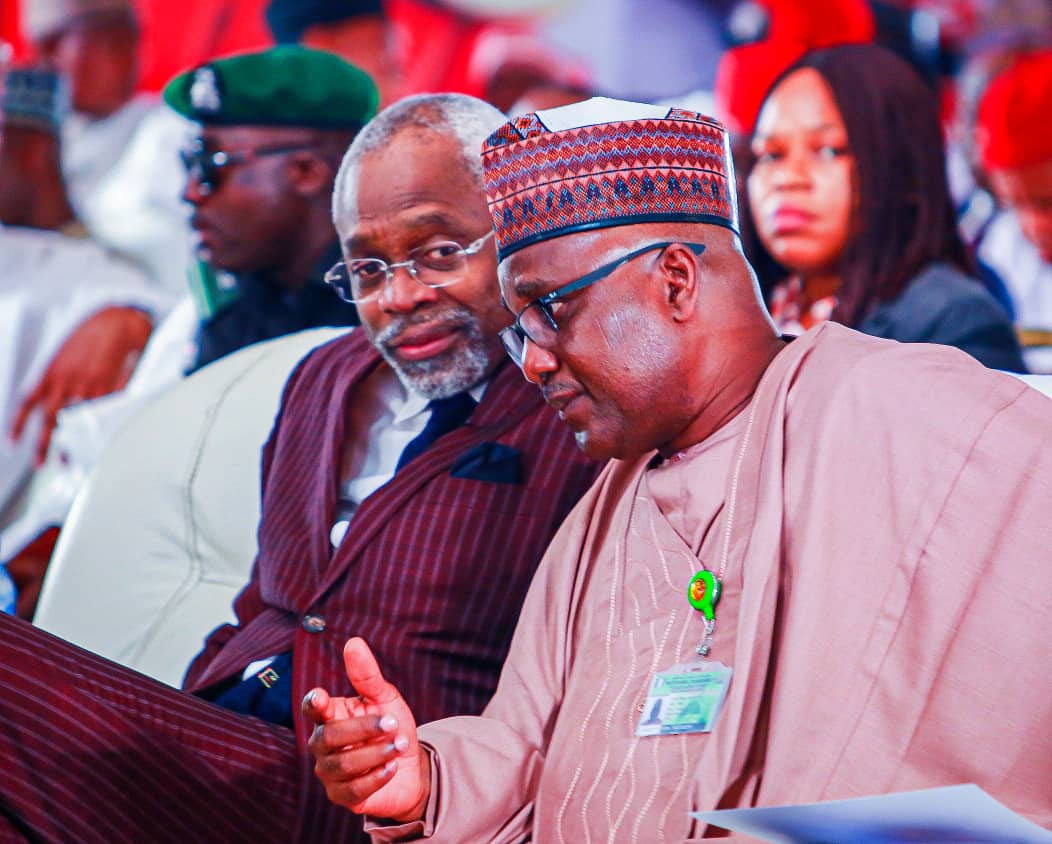
Speaker Abbas Reiterates Commitment Of 10th House To Support Tinubu’s Economic Reforms
- /home/naijuinz/public_html/wp-content/plugins/mvp-social-buttons/mvp-social-buttons.php on line 27
https://naijablitznews.com/wp-content/uploads/2024/04/IMG-20240430-WA0001-1000x600.jpg&description=Speaker Abbas Reiterates Commitment Of 10th House To Support Tinubu’s Economic Reforms', 'pinterestShare', 'width=750,height=350'); return false;" title="Pin This Post">
- Share
- Tweet /home/naijuinz/public_html/wp-content/plugins/mvp-social-buttons/mvp-social-buttons.php on line 72
https://naijablitznews.com/wp-content/uploads/2024/04/IMG-20240430-WA0001-1000x600.jpg&description=Speaker Abbas Reiterates Commitment Of 10th House To Support Tinubu’s Economic Reforms', 'pinterestShare', 'width=750,height=350'); return false;" title="Pin This Post">
…says Nigeria’s VAT collection, lowest in Africa

By Gloria Ikibah
The Speaker of the House of Representatives Rep. Abbas Tajudeen, has said that Nigeria’s efficiency in the collection of Value Added Tax (VAT) is the lowest among its African peers, indicating significant inefficiencies in its tax system.

He expressed the preparedness of the 10th House to support the economic policies and programmes of President Bola Tinubu led-administration.
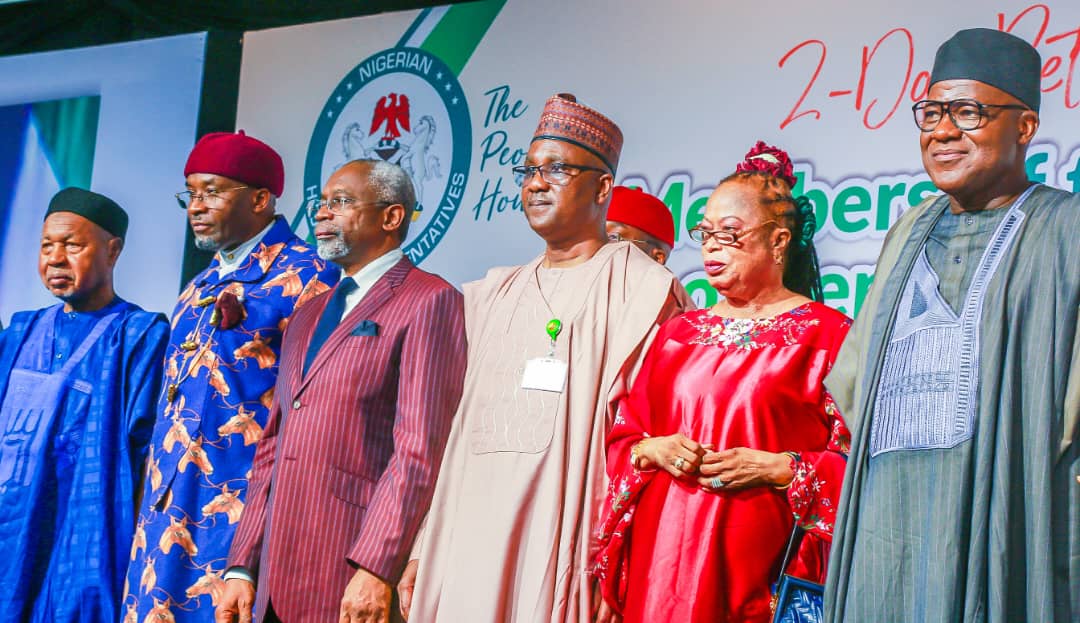
This, Speaker Abbas who stated this on Tuesday in Abuja while delivering his keynote address at the opening of a two-day retreat for members of the House, also noted that the support includes engagement with stakeholders on laws governing finance, tax, and oil sub-sectors of the economy, with the aim of causing positive reforms.
The legislative retreat on Economic Transformation and Development was organised by the House in collaboration with the Federal Inland Revenue Service (FIRS) and the Konrad Adenauer-Stiftung Foundation (KAS), with the theme: ‘Navigating Change: Legislative Strategies for Economic Transformation.’
Speaker Abbas noted that the House made a deliberate decision to focus on tax reforms and modernisation as well as a review of the implementation of the Petroleum Industry Reform Act (2021). “The overarching objective is to discuss and identify concrete legislative strategies for economic transformation,” he said.
He expressed his pleasure that the legislative retreat was taking place “at a point in our nation’s economic landscape when the current administration is diligently implementing policies and initiatives to steer our economy towards recovery, growth, and sustainable development.”
He stated that the commitment and foresight shown by the government in addressing economic challenges “deserve commendation, and it is imperative that we, as legislators, align our efforts to support and enhance these endeavours.”
He said: “As a critical arm of government, the legislature has a crucial role in shaping our nation’s economic transformation and development. Part of our law-making powers is the authority to enact tax reforms and strengthen resource governance mechanisms. By designing and implementing progressive tax policies, we strive to ensure a fair and efficient tax system that boosts revenue while fostering economic growth and equity. This involves not only broadening the tax base and simplifying tax codes but also enhancing compliance and minimising loopholes that benefit only the wealthy.
“Furthermore, the legislature’s oversight function is central in the governance of natural and financial resources. It ensures transparency and accountability in the exploitation and management of resources, which is essential for sustainable development. By holding government and private sectors accountable, the legislature helps prevent the mismanagement and corruption that can often undermine economic progress.”
He added that the retreat aimed to foster stakeholders’ engagement, ensure constructive dialogue, exchange ideas and offer insights on legislative strategies that will contribute to the economic transformation of our country.
“Accordingly, this forum allows us to take a deep dive into the tax reforms instituted by President Tinubu and undertake a review of the implementation of the Petroleum Industry Act (2021). We consider these two initiatives vital in our nation’s quest for economic recovery, transformation and growth. The two areas speak to both the oil and non-oil sectors of the Nigerian economy,” he said.
While stating that Nigeria’s tax revenue struggles are primarily due to narrow bases for indirect taxes, low compliance rates among taxpayers, substantial tax exemptions, and generally low tax rates, the Speaker added that the situation was compounded by “a lack of enthusiasm and morale for tax compliance, contributing to the nation’s underwhelming fiscal performance.”
He stressed: “Comparatively, Nigeria’s efficiency in collecting Value Added Tax (VAT) is the lowest among its African peers, indicating significant inefficiencies in its tax system.
“This trend of low tax revenue, coupled with a continued dependency on the increasingly unstable oil revenue, presents a major risk to Nigeria’s fiscal sustainability. It also highlights an important area for potential reform to boost revenue and stabilise the country’s economic framework.
“The lack of growth in non-oil revenue sources and the volatile nature of oil income underscore the urgent need for Nigeria to diversify its revenue base and enhance its fiscal management to ensure economic stability and growth.”
Speaker Abbas noted that several empirical studies had shown that Nigeria has the potential to further increase revenue if priority tax reforms are implemented. He stated that “the House stands ready to support the Executive to achieve its overall goal of reversing the negative trend.”
He also noted that this is in keeping with the Legislative Agenda of the House, which prioritises economic growth and development, focusing on economic restructuring, diversification and agricultural development and enacting tax reforms that will simplify our tax codes, expand the tax base and strengthen mechanisms for compliance.
The Speaker stressed: “Of particular interest to the House is increasing government revenues without unduly burdening the citizens, especially the vulnerable.”
Another important thematic area at the retreat, Speaker Abbas noted, was the potential of digitalisation and technology to transform tax administrations by enhancing the efficiency, transparency, and fairness of tax systems. He said these advancements enable tax authorities to collect, process, and utilise information more effectively, leading to improved operational capacities.
For taxpayers, he said integrating digital tools could simplify compliance, making it a more seamless part of everyday personal and business activities, thereby reducing friction and increasing ease of engagement with tax systems.
The Speaker noted that the second leg of the retreat centred on the Petroleum Industry Act (PIA), which represents a legislative milestone passed by the 9th Assembly. “This Act is not just a piece of legislation but a transformative blueprint designed to overhaul the petroleum industry, which is the backbone of our economy,” he said, adding that, “It’s an opportunity to align our actions with our aspirations, ensuring that this vital sector operates efficiently, transparently, and, most importantly, beneficially for every Nigerian.”
Speaker Abbas stated that the National Assembly is vital in ensuring continuous review of the PIA to ensure its effectiveness in a rapidly evolving industry landscape. This, he said, involves meticulously monitoring the implementation of the Act, analysing its impacts, and identifying areas where modifications may be necessary.
“For this reason, we are actively engaging various stakeholders at this retreat, including government bodies, industry experts, and community representatives.
“Today’s sessions are designed to gather diverse perspectives and insights, which will be essential for making informed amendments that address emerging challenges and ensure that the Act meets its intended objectives.
“This iterative process will not only help in fine-tuning the Act but also ensure that it remains aligned with the broader economic and environmental goals of Nigeria,” he said.

News
Why FCT can’t have state police — Senate
The Senate has explained why the Federal Capital Territory will not be included in the proposed state police structure, saying Abuja lacks the constitutional institutions required to operate one.
Chairman of the Senate Committee on Media and Publicity, Yemi Adaramodu, said the FCT has no governor or State House of Assembly and remains directly under the control of the Federal Government.
Adaramodu said the territory is administered by a minister who takes directives from the Federal Executive Council, while the National Assembly performs legislative functions for the FCT.
“I have heard many people raise a lot of questions on why the Federal Capital Territory is not among the plan for state police. The FCT issue is different. It is under the Federal Government,” he said.
He added that because Abuja does not have a governor or state legislature, it cannot operate under the same policing arrangement being proposed for the 36 states.
“The federal capital does not have an assembly. It is the National Assembly that legislates for the FCT. This is why it can’t be different from what the Federal Government does. Therefore, the federal police are in charge,” Adaramodu said.
The clarification comes as the Federal Government pushes ahead with plans for a new policing structure amid mounting calls for decentralised security across the country.
President Bola Tinubu is expected to receive the draft Executive National Policing Bill on September 3 as part of efforts to provide an operational framework for the proposed system.
Chief of Staff to the President and Chairman of the Presidential Working Group on the National Policing Bill, Femi Gbajabiamila, had also unveiled a public information portal through which Nigerians can submit memoranda and position papers on the proposal.
Under the constitutional amendments being considered, state Houses of Assembly would have powers to legislate on the establishment, administration, funding and oversight of state police.
States would bear the primary responsibility for funding their police formations, although the Federal Government could provide grants or assistance on the recommendation of the National Police Council and subject to approval by the National Assembly.
The FCT, however, would remain under the federal policing structure because of its unique constitutional status and direct administration by the Federal Government.
News
Gov Abiodun Commends Army, Police, DSS, Others for Intelligence-led Rescue of 5 Kidnapped Poly Students, 2 Others
Governor Dapo Abiodun of Ogun State has lauded the Department of State Services (DSS), the Nigerian Army, the Nigerian Police, as well as Civil Defence Corps (NSCDC), for rescuing five kidnapped students of Gateway ICT Polytechnic, Saapade, in Remo North Local Government Area of the state.
The students, who were abducted by suspected kidnappers earlier this week, were rescued in the early hours of Friday, in an intelligence-led operation around Alamala community, off Ayetoro Road Roundabout, of the state capital. Also rescued were two non-students.
The governor described the rescue as a major breakthrough in its fight against kidnapping, even as he reaffirmed his administration’s unwavering commitment to ensuring that kidnappers and other criminal elements have no hiding place in the state.
He described the operation, which included members of the State Security Network Agency (Amotekun Corps), local vigilantes and hunters, as a demonstration of the success that can be achieved when security agencies work together.
“One of the victims sustained a gunshot injury during the incident and was immediately evacuated for medical attention. The student has since been stabilised.
“This operation is still ongoing, and I wish to assure the good people of Ogun State that our security agencies remain on the trail of every individual connected with this criminal enterprise,” said the governor.
“Our resolve is very clear. Ogun State will remain hostile to criminality and safe for every law-abiding citizen, resident and investor,” the Governor declared, stressing that
According to him, recent joint security initiatives, particularly Operation Kò S’Áyé, have demonstrated the effectiveness of intelligence sharing, inter-agency collaboration and sustained operational pressure against criminal elements.
The governor also commended President Bola Ahmed Tinubu for his administration’s commitment to combating banditry, terrorism and kidnapping across the country, noting that the recent rescue of 308 abducted victims by Nigerian security forces underscores the growing effectiveness of coordinated security operations nationwide. (Reuters)
“At this juncture, I must acknowledge the purposeful leadership of President Bola Ahmed Tinubu, whose administration has placed the restoration of peace and security at the centre of Nigeria’s development agenda through sustained investment in the operational capacity of the Armed Forces and other security agencies.
“The strengthening of intelligence coordination, the acquisition of modern security assets and his deliberate reforms have continued to deepen inter-agency collaboration,” he said.
The governor further noted that the Federal Government has continued to strengthen the nation’s security architecture, adding that the recent approval of a substantial salary increase for officers and men of the Armed Forces would further boost personnel welfare and morale.
“One of the kidnapped victims sustained a gunshot injuries during the operation and was immediately evacuated for medical attention and has since been stabilised.” disclosed a security source.
News
Fresh Court Document Reveals EFCC Secured Order Freezing Three Osun Govt Accounts, Not One
A fresh court document obtained has revealed that the Economic and Financial Crimes Commission (EFCC) secured a Federal High Court order freezing not one but three bank accounts belonging to the Osun State Government over allegations of diversion of public funds and money laundering.
The newly obtained document shows that the anti-graft agency sought and obtained an ex parte order authorising the freezing of three allocation-related accounts pending the conclusion of its investigation and any subsequent prosecution.
The revelation comes amid mounting controversy over the commission’s action and a day after President Bola Tinubu directed the EFCC to immediately return to court to vacate the freezing order, describing its timing, coming days before the Osun governorship election, as “embarrassing” and capable of creating the impression of federal interference in the electoral process.
The order was granted on Tuesday, August 5, 2026, by Justice M. G. Umar of the Federal High Court, Abuja, in Suit No. FHC/ABJ/CS/1750/2026, titled In the Matter of an Application by the Executive Chairman of the Economic and Financial Crimes Commission.
According to the court document obtained, the EFCC asked the court to empower its Chairman, “or any officer authorised by him,” to direct the managing directors of the affected banks to freeze accounts listed in the schedule to the application.
The commission told the court the accounts were “currently being investigated in a case of Diversion of public funds and Money Laundering pending conclusion of investigation and prosecution.”
Justice Umar granted the application after counsel to the EFCC, M. A. Babatunde, moved the motion ex parte.
The court order covers the following accounts: Osun State Government Federal Allocation Account, domiciled with First Bank Plc, Account No. 2017170947; Osun State Joint Allocation Account, domiciled with Zenith Bank Plc, Account No. 1013374191; and Osun State Joint Allocation Account, domiciled with Zenith Bank Plc, Account No. 1014374909.
The application was supported by an affidavit sworn to by EFCC investigator Ikenna Chukwueze and an exhibit marked “EFCC 1.”
Justice Umar ordered that the freezing of the accounts should remain in force pending the conclusion of investigation and prosecution.
The court record was issued under the hand of the presiding judge, with Muazu Kasimu signing as Registrar.
The newly obtained document indicates that the scope of the court order is broader than previously known.
On Thursday, it was reported that President Tinubu directed the EFCC to immediately approach the court to vacate the freezing order and discontinue all related actions after expressing concern over the timing of the move ahead of the Osun governorship election.
The President said he was “deeply embarrassed” by the timing of the action, stressing that although the commission acted pursuant to a court order and within its statutory powers, the public would inevitably attribute the development to his administration.
Before Tinubu’s intervention, the EFCC had defended its action, saying it had been investigating the Osun State Government since March 2026 over the alleged fraudulent handling of Ecology Funds, Intervention Funds and Federation Account Allocation Committee (FAAC) allocations amounting to about ₦11 billion.
The commission said it sought the freezing order only after allegedly discovering what it described as “precipitate and unwarranted” movement of public funds into several corporate entities beginning on August 2, insisting the action was intended to prevent the alleged looting of public funds and was not politically motivated.
SaharaReporters also reported that the Osun State Government subsequently sued the EFCC, its Executive Chairman and First Bank of Nigeria, accusing the anti-graft agency of unlawfully freezing the state’s accounts for political reasons just days before the governorship election.
Court filings seen show the state argued that the Federal Statutory Allocation Account is used to pay salaries, pensions, contractors, healthcare, education, security and other essential government obligations.
The government contended that the EFCC’s action was designed to cripple its finances at a politically sensitive period and sought, among other reliefs, an order unfreezing the accounts and ₦2 billion in damages.
-
News23 hours agoIgbale community petitions police over alleged harassment, land dispute involving Lere Oni
-
Politics18 hours agoAccord party demands removal of EFCC chairman immediately
-
News24 hours agoYemi Amodu Accepts Role as TAMPAN National Secretary, Reaffirms Commitment to Industry Reform*
-
News18 hours agoReps Minority Caucus Fault Tinubu Over Osun Accounts, Allege Plot to Intimidate Opposition
-
Crime18 hours agoSAD: Teenager kills grandparents, six others in Thailand
-
News18 hours agoEx-VP Atiku raises alarm over strange payment into his account
-
News4 hours agoI Will Involve Trump Over Osun Election If… – Davido Warns
-
Metro4 hours ago28-Year-Old Nigerian Man Deported From Ireland After Conviction for Terror Offences and Mass Murder Threats in UK

Warning: Undefined variable $user_ID in /home/naijuinz/public_html/wp-content/themes/zox-news/comments.php on line 49
You must be logged in to post a comment Login