Connect with us

News

Uganda President, Museveni Blasts Western Countries, Says ‘You Fund Seminars But Won’t Aid Manufacturing In Africa

Published

on

ADVERTISEMENT
Zoom Ad
ADVERTISEMENT
Zoom Ad

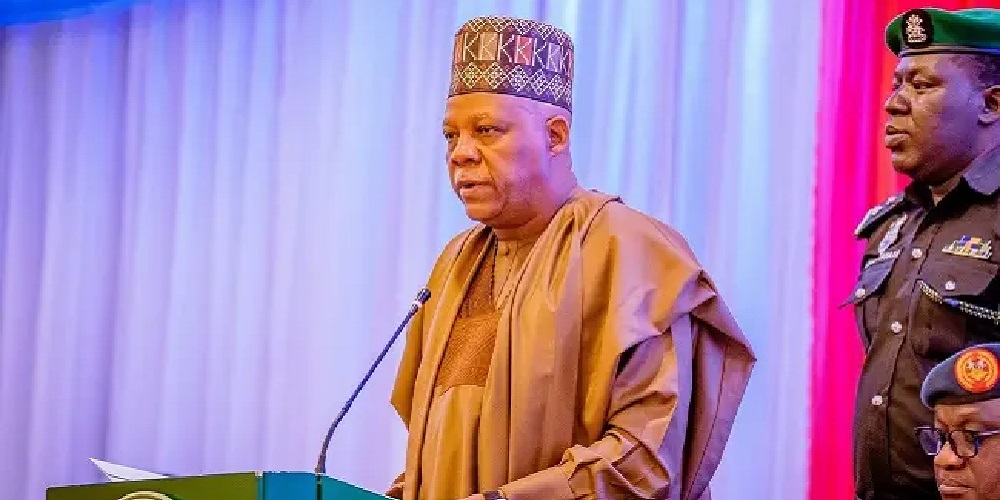
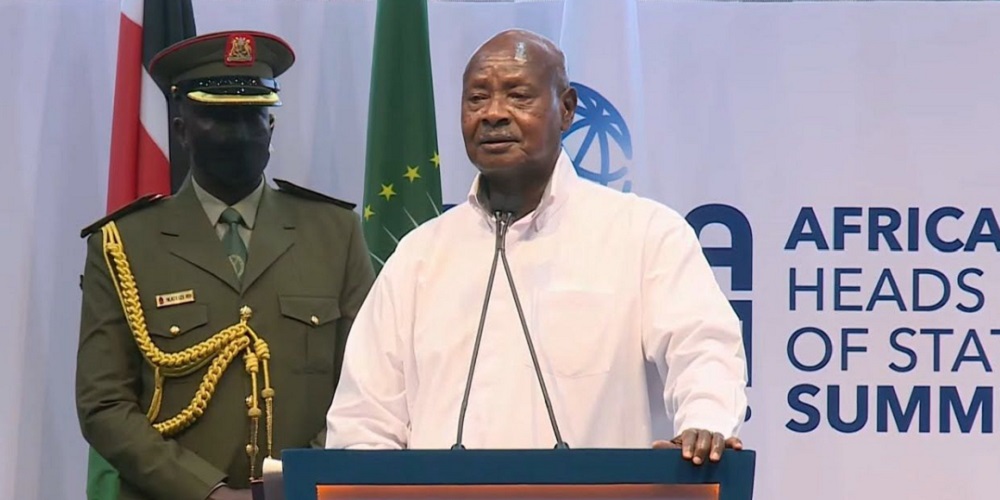
President Yoweri Museveni of Uganda took a bold swipe at world leaders during his speech at the World Bank’s International Development Association summit for African Heads of state, held in Nairobi, Kenya, on Tuesday.


In his remarks, Museveni opined that most of Africa’s problems predicted over 60 years ago were a result of philosophical, ideological, and strategic economic mistakes.

He alleged that a fundamental African problem is that aid from the World Bank and other Western bodies was majorly for profiteering.

“The crisis which is in Africa today is because of philosophical, ideological, and strategic economic mistakes which we have been talking about since the 1960s. It is not an accident when you see the crisis in many African countries, the collapse of States. We predicted this in the 1960s – philosophical, ideological, and strategic mistakes. I don’t have time to amplify each one but I was very happy to hear the president of the World Bank talking about prosperity instead of profiteering.

Advertisement

“Aid has been for profiteering, this has been the problem. Now, the World Bank people and other groups have been talking about sustainable development. Even in your documents, I have seen those words there, sustainable development”, Museveni stated.

He argued that what Africa needed to thrive as a continent was not sustainable development as always suggested by the World Bank, and other key players in economic development, but social and economic transformation.

He urged the World Bank and world leaders to quit pushing sustainable development as a key factor in achieving a more developed African continent.

“I would ask you to change those words in your documents. Africa does not need what you could call sustainable development. Africa needs social and economic transformation. The main reason why there’s no growth is because the growth factors are not funded, they are not even understood. What are the growth factors, we now talk of private sector growth. Yes, but for the private sector to grow what does it need? It needs a low cost of production”, he said.

Advertisement

In his opinion, the main reason Africa remains underdeveloped is because the growth factors are not funded and they are not understood by the Western world.

He added that for Africa to be more developed and independent, the private sector needs funding. According to him, adequate funding for the transportation, power and agricultural sectors will boost low production costs.

“Ministers of finance, what are the low costs of production? Number one is transport. You must have low transport costs. Where do low transport costs come from? The railway? If you don’t fund the railway how will you get low transport costs?

“Wonderful people, IMF, where will low-cost operations come from if you don’t have a railway? If you don’t fund the railway, how would you get low transport costs? I have been here for the last 64 years, I have been watching as a student leader, as a freedom fighter and now as the leader of a country.

Advertisement

How many railways have been constructed or funded in Africa? The few that have been was by China, the Tanzanian railway to Zambia, and recently, another one here in Kenya. Tanzania on their own is building a railway line.

So if you’re talking of developing Africa, fund the railway. If you fund the railway, you will have a low cost of transport and you can produce cheap products which can be bought all over the world.

“The second cost pusher is electricity. If you don’t fund electricity and you talk about sustainable development, what are you then talking about? We must have low-cost electricity not exceeding 5 cents per kilowatts, per hour.

That is what I insist on in Uganda. I am tired of all these stories, I have put my foot down saying I don’t want to hear those stories. Uganda is a developing country and it will continue to develop because I don’t entertain nonsense anymore.”

Advertisement

Speaking further, Museveni who has ruled Uganda for over 40 years accused the World Bank and Western leaders of refusing to lend him money for capital projects such as the establishment of the Uganda Development Bank.

He lamented the rate at which loans are promptly approved and grated for frivolities but not for serious projects that would yield economic gains.

He said, “Borrowing, for what? Capacity building! Imagine! They call you to a hotel where you eat Chapati and mandazi, and they say that is capacity building. Capacity building should be on the ground and not just in seminars. So, the second point your Excellencies is electricity. The third one; is for those people who talk about private sector growth, I have been trying to borrow money for our Uganda Development Bank, a bank which funds manufacturers, but no, I don’t get support for that.

“They say they want my people to go to commercial banks. Those commercial banks are to encourage import because the only person who can borrow money from a commercial bank and pay it back is a trader who goes to China, Dubai buys goods, sells them quickly and pays the loan back. So, if you are serious, I need it here, about the low-cost funding for manufacturing, not stories.”

Advertisement

“How about funding for irrigation? Because if you want to stabilise agriculture, a country like Uganda is very rich, we have got everything. But sometimes, we have some erraticness because of the rains. So, to stabilise irrigation I’ve been trying to look for a loan for irrigation but I can’t easily get it, it is very difficult to get. But a loan for seminars is very quick.”

PUNCH
Continue Reading
Advertisement
Click to comment

Warning: Undefined variable $user_ID in /home/naijuinz/public_html/wp-content/themes/zox-news/comments.php on line 49

You must be logged in to post a comment Login

Leave a Reply

News

Why FCT can’t have state police — Senate

Published

on

By

ADVERTISEMENT
Zoom Ad
ADVERTISEMENT
Zoom Ad

The Senate has explained why the Federal Capital Territory will not be included in the proposed state police structure, saying Abuja lacks the constitutional institutions required to operate one.

Chairman of the Senate Committee on Media and Publicity, Yemi Adaramodu, said the FCT has no governor or State House of Assembly and remains directly under the control of the Federal Government.

Adaramodu said the territory is administered by a minister who takes directives from the Federal Executive Council, while the National Assembly performs legislative functions for the FCT.

“I have heard many people raise a lot of questions on why the Federal Capital Territory is not among the plan for state police. The FCT issue is different. It is under the Federal Government,” he said.

Advertisement

He added that because Abuja does not have a governor or state legislature, it cannot operate under the same policing arrangement being proposed for the 36 states.

“The federal capital does not have an assembly. It is the National Assembly that legislates for the FCT. This is why it can’t be different from what the Federal Government does. Therefore, the federal police are in charge,” Adaramodu said.

The clarification comes as the Federal Government pushes ahead with plans for a new policing structure amid mounting calls for decentralised security across the country.

President Bola Tinubu is expected to receive the draft Executive National Policing Bill on September 3 as part of efforts to provide an operational framework for the proposed system.

Advertisement

Chief of Staff to the President and Chairman of the Presidential Working Group on the National Policing Bill, Femi Gbajabiamila, had also unveiled a public information portal through which Nigerians can submit memoranda and position papers on the proposal.

Under the constitutional amendments being considered, state Houses of Assembly would have powers to legislate on the establishment, administration, funding and oversight of state police.

States would bear the primary responsibility for funding their police formations, although the Federal Government could provide grants or assistance on the recommendation of the National Police Council and subject to approval by the National Assembly.

The FCT, however, would remain under the federal policing structure because of its unique constitutional status and direct administration by the Federal Government.

Advertisement
Continue Reading

News

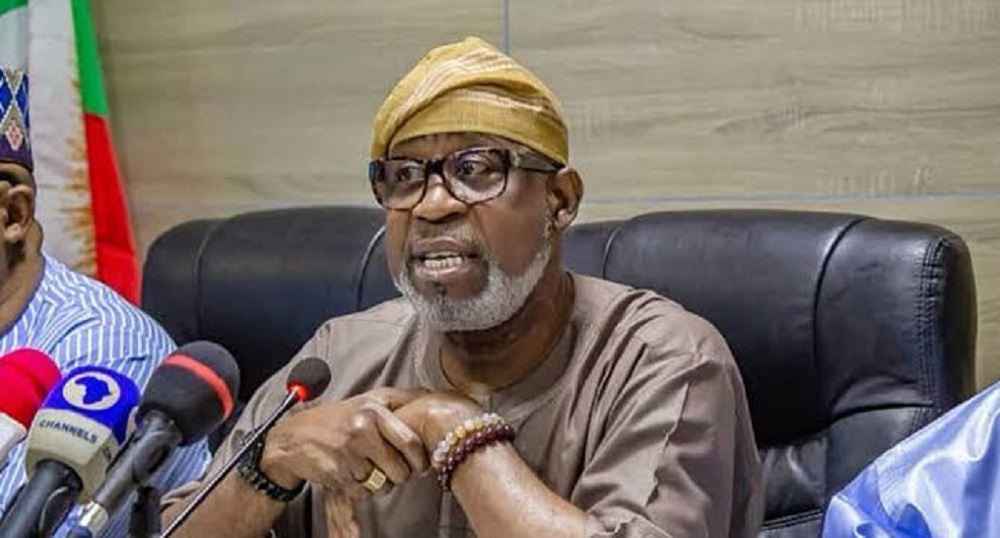
Gov Abiodun Commends Army, Police, DSS, Others for Intelligence-led Rescue of 5 Kidnapped Poly Students, 2 Others

Published

on

By

ADVERTISEMENT
Zoom Ad
ADVERTISEMENT
Zoom Ad

Governor Dapo Abiodun of Ogun State has lauded the Department of State Services (DSS), the Nigerian Army, the Nigerian Police, as well as Civil Defence Corps (NSCDC), for rescuing five kidnapped students of Gateway ICT Polytechnic, Saapade, in Remo North Local Government Area of the state.

The students, who were abducted by suspected kidnappers earlier this week, were rescued in the early hours of Friday, in an intelligence-led operation around Alamala community, off Ayetoro Road Roundabout, of the state capital. Also rescued were two non-students.

The governor described the rescue as a major breakthrough in its fight against kidnapping, even as he reaffirmed his administration’s unwavering commitment to ensuring that kidnappers and other criminal elements have no hiding place in the state.

He described the operation, which included members of the State Security Network Agency (Amotekun Corps), local vigilantes and hunters, as a demonstration of the success that can be achieved when security agencies work together.

Advertisement

“One of the victims sustained a gunshot injury during the incident and was immediately evacuated for medical attention. The student has since been stabilised.
“This operation is still ongoing, and I wish to assure the good people of Ogun State that our security agencies remain on the trail of every individual connected with this criminal enterprise,” said the governor.

“Our resolve is very clear. Ogun State will remain hostile to criminality and safe for every law-abiding citizen, resident and investor,” the Governor declared, stressing that

According to him, recent joint security initiatives, particularly Operation Kò S’Áyé, have demonstrated the effectiveness of intelligence sharing, inter-agency collaboration and sustained operational pressure against criminal elements.

The governor also commended President Bola Ahmed Tinubu for his administration’s commitment to combating banditry, terrorism and kidnapping across the country, noting that the recent rescue of 308 abducted victims by Nigerian security forces underscores the growing effectiveness of coordinated security operations nationwide. (Reuters)

Advertisement

“At this juncture, I must acknowledge the purposeful leadership of President Bola Ahmed Tinubu, whose administration has placed the restoration of peace and security at the centre of Nigeria’s development agenda through sustained investment in the operational capacity of the Armed Forces and other security agencies.
“The strengthening of intelligence coordination, the acquisition of modern security assets and his deliberate reforms have continued to deepen inter-agency collaboration,” he said.

The governor further noted that the Federal Government has continued to strengthen the nation’s security architecture, adding that the recent approval of a substantial salary increase for officers and men of the Armed Forces would further boost personnel welfare and morale.

“One of the kidnapped victims sustained a gunshot injuries during the operation and was immediately evacuated for medical attention and has since been stabilised.” disclosed a security source.

Advertisement
Continue Reading

News

Fresh Court Document Reveals EFCC Secured Order Freezing Three Osun Govt Accounts, Not One

Published

on

By

ADVERTISEMENT
Zoom Ad
ADVERTISEMENT
Zoom Ad

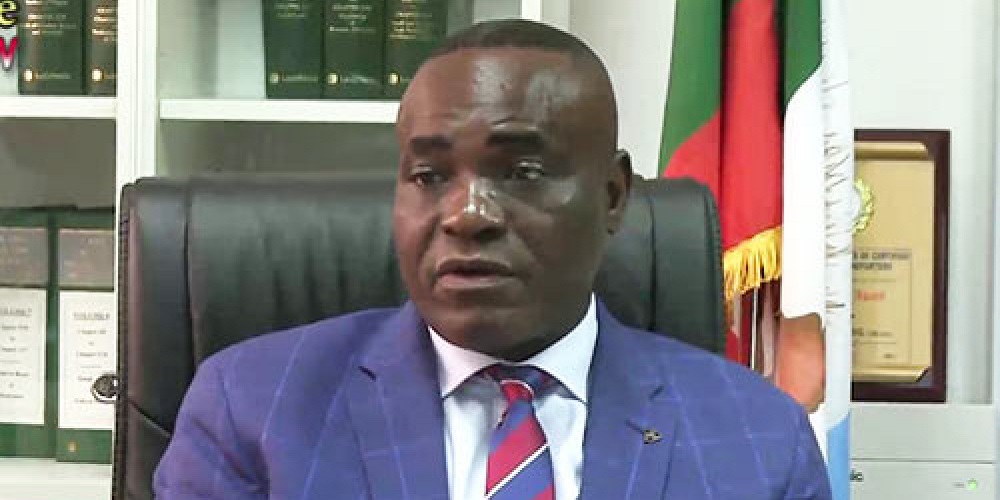
A fresh court document obtained has revealed that the Economic and Financial Crimes Commission (EFCC) secured a Federal High Court order freezing not one but three bank accounts belonging to the Osun State Government over allegations of diversion of public funds and money laundering.

The newly obtained document shows that the anti-graft agency sought and obtained an ex parte order authorising the freezing of three allocation-related accounts pending the conclusion of its investigation and any subsequent prosecution.

The revelation comes amid mounting controversy over the commission’s action and a day after President Bola Tinubu directed the EFCC to immediately return to court to vacate the freezing order, describing its timing, coming days before the Osun governorship election, as “embarrassing” and capable of creating the impression of federal interference in the electoral process.

The order was granted on Tuesday, August 5, 2026, by Justice M. G. Umar of the Federal High Court, Abuja, in Suit No. FHC/ABJ/CS/1750/2026, titled In the Matter of an Application by the Executive Chairman of the Economic and Financial Crimes Commission.

Advertisement

According to the court document obtained, the EFCC asked the court to empower its Chairman, “or any officer authorised by him,” to direct the managing directors of the affected banks to freeze accounts listed in the schedule to the application.

The commission told the court the accounts were “currently being investigated in a case of Diversion of public funds and Money Laundering pending conclusion of investigation and prosecution.”

Justice Umar granted the application after counsel to the EFCC, M. A. Babatunde, moved the motion ex parte.

The court order covers the following accounts: Osun State Government Federal Allocation Account, domiciled with First Bank Plc, Account No. 2017170947; Osun State Joint Allocation Account, domiciled with Zenith Bank Plc, Account No. 1013374191; and Osun State Joint Allocation Account, domiciled with Zenith Bank Plc, Account No. 1014374909.

Advertisement

The application was supported by an affidavit sworn to by EFCC investigator Ikenna Chukwueze and an exhibit marked “EFCC 1.”

Justice Umar ordered that the freezing of the accounts should remain in force pending the conclusion of investigation and prosecution.

The court record was issued under the hand of the presiding judge, with Muazu Kasimu signing as Registrar.

The newly obtained document indicates that the scope of the court order is broader than previously known.

Advertisement

On Thursday, it was reported that President Tinubu directed the EFCC to immediately approach the court to vacate the freezing order and discontinue all related actions after expressing concern over the timing of the move ahead of the Osun governorship election.

The President said he was “deeply embarrassed” by the timing of the action, stressing that although the commission acted pursuant to a court order and within its statutory powers, the public would inevitably attribute the development to his administration.

Before Tinubu’s intervention, the EFCC had defended its action, saying it had been investigating the Osun State Government since March 2026 over the alleged fraudulent handling of Ecology Funds, Intervention Funds and Federation Account Allocation Committee (FAAC) allocations amounting to about ₦11 billion.

The commission said it sought the freezing order only after allegedly discovering what it described as “precipitate and unwarranted” movement of public funds into several corporate entities beginning on August 2, insisting the action was intended to prevent the alleged looting of public funds and was not politically motivated.

Advertisement

SaharaReporters also reported that the Osun State Government subsequently sued the EFCC, its Executive Chairman and First Bank of Nigeria, accusing the anti-graft agency of unlawfully freezing the state’s accounts for political reasons just days before the governorship election.

Court filings seen show the state argued that the Federal Statutory Allocation Account is used to pay salaries, pensions, contractors, healthcare, education, security and other essential government obligations.

The government contended that the EFCC’s action was designed to cripple its finances at a politically sensitive period and sought, among other reliefs, an order unfreezing the accounts and ₦2 billion in damages.

Advertisement
Continue Reading

Trending

Copyright © 2024 Naija Blitz News