

News
OGUN GO KILL UNA!
- Share
- Tweet /home/naijuinz/public_html/wp-content/plugins/mvp-social-buttons/mvp-social-buttons.php on line 72
https://naijablitznews.com/wp-content/uploads/2024/06/IMG-20240607-WA0046-1000x600.jpg&description=OGUN GO KILL UNA!', 'pinterestShare', 'width=750,height=350'); return false;" title="Pin This Post">
*By Tunde Olusunle
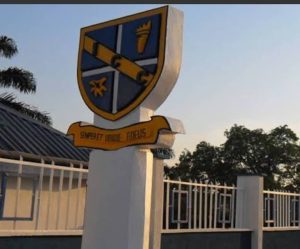
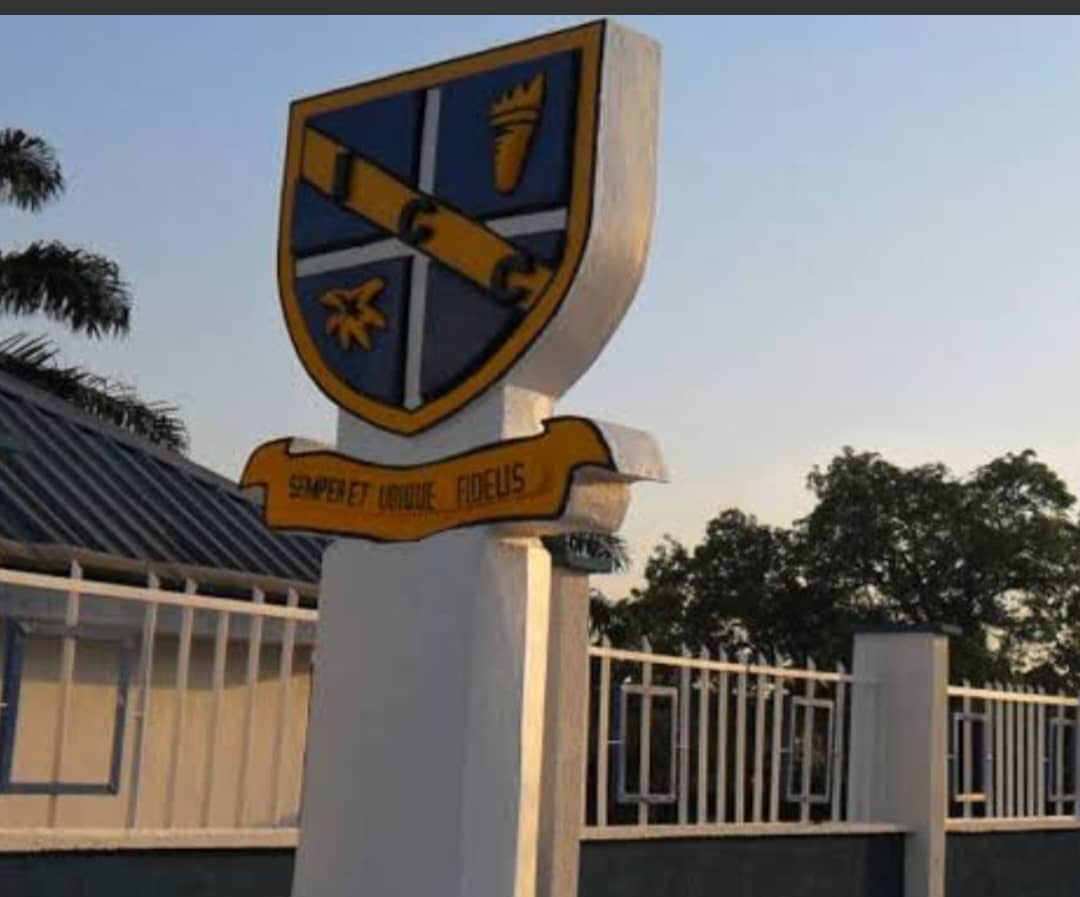
Joseph Odidi Itotoh, the legendary educationist who raised my generation at the famous Immaculate Conception College, (ICC) in Benin City, was notable as a thoroughbred teacher, an uncompromising disciplinarian and a school administrator *par excellence.* He received us, enthusiastic little boys, into the luminous premises of the institution in September 1975. He would subsequently guide us with paternal commitment through five most impactful years of our lives as teenagers, which largely shaped our personalities and perspectives. As against the extant practice where school principals were reposted every two or three years, Itotoh was retained in ICC for 10 full years by the Midwestern, and later Bendel State governments. This underscored official acknowledgement and appreciation of his revolutionary exploits in the institution.
Itotoh led a multiracial team of dedicated teachers and instructors to provide world class education and instruction to us. Irish, Indian, Pakistani, Beninoise and Togolese teachers collaborated with their dutiful and committed Nigerian colleagues to set us up on solid foundations in life. The academic session just before Itotoh’s advent, the institution posted an uninspiring below 50 percent pass in the West African School Certificate, (WASC) O’Level examination. The sleepless Itotoh pursued an uncommon reformatory project to radically reposition ICC. By his third year in office, the school was brandishing a 100 percent pass performance sheet. This implied that the least performing students earned a minimum *Division Three* pass. This could get them into some polytechnics or colleges of education, while taking remedial courses to make up for foundational deficits.

We could almost swear that Itotoh deployed supernatural enablements in the discharge of his assignment. He lived in the principal’s house within the school premises. The cute bungalow sat on a small elevation at the back of the school acreage, abutting a section of the famous *Benin moat.* There were localised myths and fables around and about the moat which kept us in awe and trepidation. A certain midget-spirit, *useku* it was alleged, appeared from the moat from time to time from the direction of the moat. It reportedly scared and terrorised those it found at wrong places late at night! Itotoh had the entire topographical and geophysical map of the school on the lines of his palms. He toured the entire expanse of the school virtually everyday, holding his famous whip to keep errant students in check. On his night patrols, Itotoh would beam his torchlight straight in your face if he found you loafing around, simultaneously calling out your name. He knew the names of each and every student in ICC. Students of *Bini* origins among us usually whispered in hushed tones describing him as *ovbi azen,* son of a witch!
Itotoh studied English at the University of Ibadan, (UI) and obtained his masters and doctorate from the same institution. Such was the depth of his immersion into self-development as far back as those years. He would serve as education commissioner in the 1990s and as Minister of State for Internal Affairs during the second term of the President Olusegun Obasanjo milieu. Such was the quality of Itotoh. With deep roots in the English language, it was understandable, he had total resentment for the deployment of pidgin English and indigenous languages under his watch. This was as he strove to mitigate the pollution of standard English by other forms of the language in our young and impressionistic consciousness. There was substantial compliance with this *fatwa* especially with the reinforcement of Itotoh’s “commandment” by prefects on various briefs, who themselves were students. I was the prefect in-charge of *Bishop Kelly House,* for instance and we prided ourselves as the largest and neatest house, ever dominant in academics and sports. At our level as teenagers therefore, we had begun to take preliminary lessons and tutelage in leadership and responsibility. We all are the better for it today.
Most of us students in our time resided in Benin City with our parents or benefactors. During midterm breaks and holidays, we stayed in that historic city which is swaddled in so much mythology. It was a very robust melting pot and we experienced the pulse and dynamics of the sociocultural space. Pidgin English was an inevitable median between the various tongues, and the conventional English language. Our pidgin English lexicon was regularly enriched courtesy of borrowings by “broken” English, as some prefer to christen it, from the dominant indigenous tongue. I recall the admission of the *Bini* expression *you go see Oba* into modern pidgin English during my sojourn in Benin City. That phrase is an original *Bini* contribution to the lexicon of contemporary pidgin English. Royalty and *Oba-ship* are ensconced in mystique, in *Bini* cosmology. The *numero uno* royalty in Benin kingdom is the *Oba.* He is addressed and serenaded with jaw-breaking prefixes before the announcement of his name.
He is therefore the: *Omo N’Oba N’Edo Uku Akpolokpolo,* before the preferred appellation of the incumbent monarch is mentioned. *Oba Akenzua II* was in office in my years in Benin City but was succeeded by *Oba Erediuwa II* just before I left. The *Oba of Benin* sparingly makes public appearances. Except of course during specific traditional events in the *Bini* traditional calendar. He is equally seen in public when he receives high ranking dignitaries who seek to pay homage to him when in his domain. The *Oba of Benin* will not be found in places or events capable of denigrating his office as prime monarch-spiritual leader of his people. Seeing the *Oba,* therefore is a tortuous, tedious labyrinthine excursion. Rabble-rousers are therefore admonished not to court the kind of entanglements which will precipitate a figurative quest for the pardon of the *Oba* who will be hard to access.
Swear words and expressions were also common on the streets during our growing up years. Such invectives range from the peripheral, maybe pedestrian, to the presumably more potent, vile and vicious. Some verbal missiles indeed deliberately and intentionally appropriate deep traditional motifs for desired potency and rapid action. *Ogun,* the dreaded Yoruba god of iron and metallurgy occupies the same podium and reverence in *Bini* epistemology. Because of its potential for instantaneous and efficacious destruct, *ogun* is dreaded and venerated in *Bini* cosmology. The invocation of *ogun* in adjudication in a contestation, is taken very seriously by sections of the *Bini* nationality. Most will prefer any other form of verbal deployment in the course of an altercation, to the invitation of *ogun* in *Bini* culture.
This video of metal joints and other components on the *Second Niger Bridge* has been trending in the last few days. A concerned Nigerian recorded the site of the excavation of heavy metallic components of the face of the bridge from a point which in engineering is referred to as the “expansion joint.” Much as the narrator spoke in *Igbo,* we can piece together the fact that the crime is associated with sellers of scrap metals in Anambra State. They are those he described in the narrative as dealers in “iron condemned,” headquartered in Onitsha and its environs. You couldn’t but be thoroughly exasperated watching that clip. Just days before, I had gotten into a robust but civil engagement with a gentleman on some platform on a related issue.
There was a news item to the effect that police outriders will henceforth patrol the *Third mainland bridge* in Lagos which has been serially vandalised by thoughtless vagrants. It was recently rehabilitated at great cost by the federal government and will henceforth be on regular police surveillance. My point in the banter with the person in question was that monitoring the bridge will be better and more sustainably done by deploying technology. This is what is needed in the protection of our prized national assets including our oil pipelines which are eternally at the mercy of a hydra of rogues. My sparring partner reminded me that regular, physical security presence on the bridge will also discourage many people with suicide propensities, who seem to prefer the *Third mainland bridge* as guillotine.
Tears cascade down one’s cheeks when you imagine the depth of the destructive propensity, the anti-development disposition of some Nigerians. They are those we least believe harbour criminal intentions in any form. Have we forgotten how a syndicate in Abuja engaged freelance garbage workers to steal virtually all the metal coverings of manholes on the streets of Abuja? The CCTV cameras on a particular Abuja avenue showed the driver of a *Toyota Sienna* van, hauling his loot into his open space van in one such operation. Just weeks ago, military personnel on guard duties at the *$19 Billion,* ultra-modern *Dangote Refinery* in Lagos were arrested stealing cables from the newly minted pride of Africa. They aimed to render prostrate the behemoth of an industrial complex even before it commenced operations. These are the kinds of Nigerians our system has bred, the vampire *Babylon system,* to quote the great reggae idol Bob Marley.
Nigeria’s President, Bola Tinubu has a lot on his chest. He asked for the job, anyway. While poring through the files and folios of the variegated problems on his desk, the preservation of multibillion dollar national investments requires speedy attention. Tinubu has shown himself a taskmaster on certain issues like the lightning speed with which he requested a new minimum wage template from his finance minister, Wale Edun and the jet turnaround time with which the document was reverted. Tinubu urgently needs a road map for the preservation of those possessions which guarantee our national lifeblood. As we urgently anticipate that compass from the desk of the President, let me invoke the famous curse: As many as remain in the business of undermining this nation country, *ogun go kill all of una!*
*Tunde Olusunle, PhD, is a Fellow of the Association of Nigerian Authors, (FANA).*
News
Osun decides: Ahead today’s poll, police dogs deployed to combat thugs
Ahead of today’s guber poll, the Police has deployed some of its security dogs to Osun state to ensure seurity is not breeched during and after the election.
The police dogs have been prepared to assist security personnel in detecting and confronting potential threats from violent criminals.
News
Just in: Security operatives take over Osun Assembly Speaker residence
The Speaker of the Osun State House of Assembly, Hon. Adewale Egbedun, has reportedly been placed under house arrest, with unidentified security operatives in police uniforms surrounding his residence in Osun State.
According to reports, the security personnel arrived at the Speaker’s residence in more than 10 black Hilux vehicles and allegedly cordoned off the premises.
The Imole Campaign Council said it attempted to contact senior police officers and the Police Situation Room to obtain clarification on the development but was unable to reach them.
It also urged security agencies and political actors to ensure that the electoral process remains peaceful and free from intimidation, fear or interference.
The council called on residents and all stakeholders to remain calm, obey the law and await an official explanation from the relevant authorities.
As of the time of filing this report, there had been no official explanation from the police or other security agencies regarding the reported operation at the Speaker’s residence.
News
FG reserves 33000 hectares for FCT livestock settlements
The Federal Government has earmarked about 33,000 hectares of land in the Federal Capital Territory (FCT) for livestock settlements as part of efforts to curb cattle movement within Abuja and shift livestock production to a more settled, commercially viable system.
Minister of Livestock Development, Idi Mukhtar Maiha, disclosed this on Friday in Abuja during a ministerial press briefing, fielding questions from journalists.
Maiha said the land, captured in the Abuja Master Plan and located outside the city centre, would provide designated areas where livestock could be raised under improved conditions without competing for space with residents in densely populated parts of the capital.
He said the initiative is part of the Federal Government’s broader livestock transformation programme, focusing on settled production, improved animal genetics, better husbandry practices, and the establishment of Livestock Development Centres across the country.
“The city is not designed to co-mingle livestock with people,” Maiha said.
He explained that livestock owners would still be free to conduct their businesses within the city, while their animals would be kept in designated production areas where adequate feed, water, veterinary services, and other facilities would be provided.
The minister said the Federal Government was already engaging the FCT Administration to rehabilitate existing livestock facilities, including the Cow Grazing Reserve, Karshi, Piko, and Kore.
He said improvements had commenced at the Cow Grazing Reserve, where three boreholes and a digital weather station had been provided to enhance livestock production and management.
Maiha added that discussions were ongoing with the FCT authorities to rehabilitate other facilities and integrate them into the government’s proposed settled livestock production system.
The minister said the government was determined to address the practice of moving livestock over long distances in search of pasture and water, describing the system as economically inefficient and detrimental to animal productivity.
According to him, animals that continuously trek long distances expend energy that should ordinarily contribute to weight gain, milk production and other productive purposes.
He described cattle subjected to such movements as “athletes”, stressing that the extensive production system was partly responsible for Nigeria’s low livestock productivity.
Maiha said animals were not roaming for the sake of movement but because the existing production system compelled livestock owners to search continuously for feed and water.
He said the government’s preferred model would keep animals within designated production areas where they could access feed, water, veterinary care, breeding services and other essential inputs.
The minister noted that the approach would not only increase meat and milk production but also reduce waste and some of the social and economic challenges associated with uncontrolled livestock movement.
Maiha also identified low genetic potential and poor animal husbandry practices as major constraints on Nigeria’s ability to meet growing demand for meat, milk and eggs.
He said indigenous livestock breeds were not necessarily inferior but had not undergone the systematic genetic improvement required to substantially increase their productivity.
According to him, some indigenous cattle require several years to reach marketable weight, whereas genetically improved breeds can achieve considerably higher weights in a shorter period.
He also highlighted the disparity in milk production, noting that many indigenous cows produce between 1.2 and two litres of milk daily, compared with significantly higher yields obtainable from improved dairy breeds.
“The rate of growth matters a lot. Serviceability matters a lot,” Maiha said.
He said genetic improvement, better feeding and modern animal husbandry would therefore be critical components of the Federal Government’s livestock development programme.
Maiha said the creation of the Federal Ministry of Livestock Development in July 2024 had begun to trigger institutional reforms at the state level.
Only three states, he said, had dedicated ministries or agencies responsible for livestock when the ministry was established, but the number has since increased to 20 states.
He said this development would strengthen collaboration between federal and state governments in implementing livestock policies and attracting investment into the sector.
The minister, however, cautioned that transforming a sector that had operated largely through traditional systems for decades would take time.
“It’s a gradual process,” he said, adding that the impact of the reforms should not be assessed solely on immediate outcomes.
Under the emerging framework, the Federal Government would provide policy direction, technical and animal health standards, traceability systems, data infrastructure, investor facilitation and regulatory coordination.
State governments would be expected to provide suitable land and local infrastructure, undertake community engagement and security coordination, and mobilise livestock producers.
Private investors and producer organisations would, in turn, finance and operate commercial activities across livestock value chains.
Maiha said the proposed Livestock Development Centres would serve as commercially oriented production clusters rather than government-owned farms.
The centres are expected to accommodate investments in breeding, feed and fodder production, cattle finishing, dairy production and chilling, sheep and goat fattening, poultry production, pig breeding, feedlots, modern abattoirs and meat processing.
Other opportunities include cold-chain facilities, logistics, biogas and organic fertiliser production, and hides, skins and leather processing.
He said states would be encouraged to develop livestock industries based on their comparative advantages, available feed and water resources, agro-ecological conditions, producer populations, and market demand, rather than adopting a uniform model.
For cattle and dairy production, investment opportunities would include irrigated fodder, hay and silage production, feedlots, breeding and artificial insemination, milk collection and chilling, abattoirs and meat packaging.
The poultry value chain would encompass hatcheries, breeder farms, feed mills, broiler and layer clusters, vaccination and laboratory services, egg grading and packaging, processing and cold-chain facilities.
Similar investment opportunities would be developed for sheep and goats, pigs and micro-livestock, including rabbits, grass cutters, snails and bees.
Maiha said the reforms were aligned with the National Livestock Growth Acceleration Strategy (NL-GAS), which seeks to raise the livestock sector’s contribution to the Nigerian economy from about $32 billion to at least $74 billion by 2035.
The minister said the reforms would also reduce the economic and security risks associated with transporting live animals over long distances from major livestock-producing areas to consumer markets.
He noted that although a significant proportion of the country’s livestock population is concentrated in the North, major markets are located elsewhere, resulting in animals travelling more than 1,000 kilometres.
Maiha said developing livestock production, processing and marketing infrastructure across states would reduce dependence on long-distance movement of live animals.
He said the combination of settled livestock production, improved genetics, adequate feed and water, animal health services, processing infrastructure and private-sector investment would enable Nigeria to produce more meat, milk and eggs while creating jobs and strengthening rural economies.
Meanwhile, the National Veterinary Research Institute (NVRI), Vom, presented awards to Maiha and the Permanent Secretary of the Ministry, Dr Chinyere Ijomah Akujobi, in recognition of their contributions to developing the livestock sector.
The Executive Director and Chief Executive Officer of NVRI, Dr Yakubu Gunya Dashe, presented the awards alongside institute officials.
The institute recognised Maiha for service delivery, while Akujobi was honoured for her leadership and supportive role in advancing the ministry’s mandate.
The recognition highlighted the importance of collaboration among government institutions, veterinary research organisations, livestock producers and private investors in building a modern and productive livestock industry.
-
News7 hours agoUS missionary kidnapped in Niger released after nine months in captivity
-
News7 hours agoAdeleke camp condemns release of APC Assembly candidate allegedly found with gun
-
News7 hours agoASUU decries unpaid 2022 salaries, demands education review
-
News7 hours ago2027: Atiku asks court to disqualify Tinubu over names, certificate controversy
-
News7 hours agoCourt remands ex-NBA chairman in DSS custody
-
News7 hours agoOsun 2026: Davido fires back at critics, says ‘I’ll be on ground before 7am’
-
News17 hours agoOsun 2026: Davido Raises Alarm Over Ebonyi REC’s Presence, Alleges Plot to Rig Election
-
Sports7 hours agoFormer Popular Boxer Dies After Suffering Brain Injury

Warning: Undefined variable $user_ID in /home/naijuinz/public_html/wp-content/themes/zox-news/comments.php on line 49
You must be logged in to post a comment Login