Connect with us

Foreign

Ruling on presidential immunity a “dangerous precedent” – Biden blasts Supreme Court

Published

on

ADVERTISEMENT
Zoom Ad
ADVERTISEMENT
Zoom Ad

By Francesca Hangeior.

 

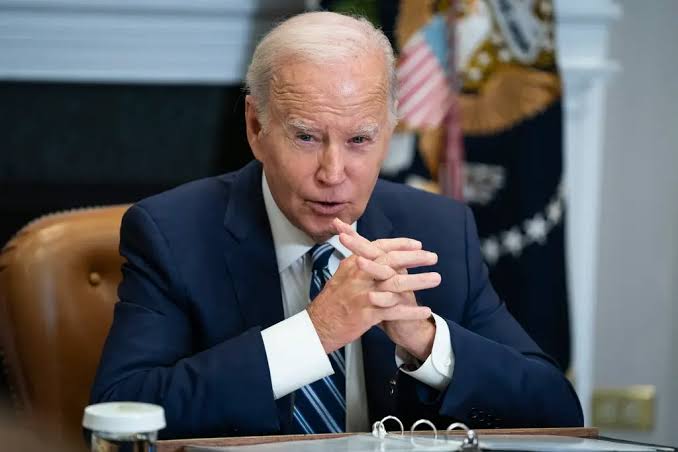
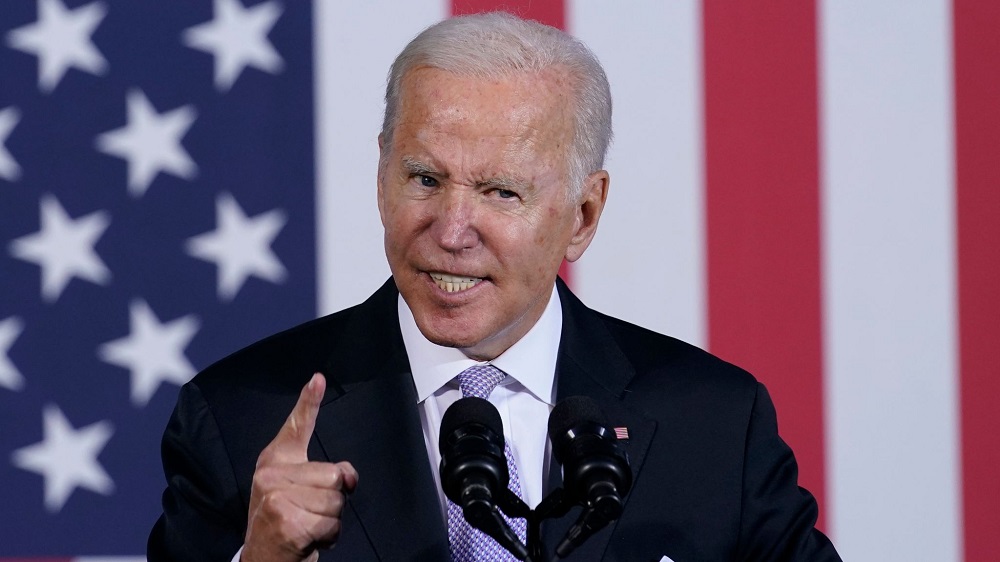
President Joe Biden warned that the US Supreme Court’s landmark ruling on presidential immunity sets a “dangerous precedent” that Donald Trump would exploit if elected in November.

The conservative-dominated high court ruled that Trump — and all presidents — enjoy “absolute immunity” from criminal prosecution for “official acts” taken while in office, but can still face criminal penalties for “unofficial acts.”

Advertisement

“For all practical purposes today’s decision almost certainly means there are no limits to what a president can do. This is a fundamentally new principle, and it’s a dangerous precedent,” Biden said in a speech at the White House.

I want people to remember the Emirate as a symbol of dignity and peace —Film maker, Zainab Bayero0:00 / 1:00

Trump is facing criminal charges over his attempts to overturn his 2020 election loss to Biden, but that trial had been put on hold while the Supreme Court considered his immunity claims.

The 6-3 ruling on Monday, split along ideological lines, is set to further delay proceedings in that case, almost certainly to sometime after voters head to the polls in November.

Advertisement

“The American people must decide if they want to entrust… once again, the presidency to Donald Trump, now knowing he’ll be more emboldened to do whatever he pleases, whenever he wants to do it,” Biden said.

Conservative Chief Justice John Roberts, in his majority opinion, said a president is “not above the law” but does have “absolute immunity” from criminal prosecution for official acts taken while in office.

“The president therefore may not be prosecuted for exercising his core constitutional powers,” Roberts said.

“As for a President’s unofficial acts, there is no immunity,” the chief justice added, sending the case back to a lower court to determine which of the charges facing Trump involve official or unofficial conduct.

Advertisement

Trump is charged with conspiracy to defraud the United States as well as obstruction of an official proceeding — when a violent mob of his supporters tried to prevent the January 6, 2021, joint session of Congress held to certify Biden’s victory.

The 78-year-old former president is also charged with conspiracy to deny Americans the right to vote and to have their votes counted.

“The public has a right to know the answer about what happened on January 6, before they’re asked to vote again this year,” Biden said.

“Now because of today’s decision, that is highly, highly unlikely. It’s a terrible disservice to the people of this nation.”

Advertisement

The three liberal justices dissented from Monday’s ruling with Justice Sonia Sotomayor saying she was doing so “with fear for our democracy.”

“Never in the history of our Republic has a President had reason to believe that he would be immune from criminal prosecution if he used the trappings of his office to violate the criminal law,” Sotomayor said. “In every use of official power, the President is now a king above the law.”

“Orders the Navy’s Seal Team 6 to assassinate a political rival? Immune. Organizes a military coup to hold onto power? Immune. Takes a bribe in exchange for a pardon? Immune. Immune, immune, immune.”

Trump, in posts on Truth Social, welcomed the decision calling it a “big win for our Constitution and democracy.”

Advertisement

“Today’s Historic Decision by the Supreme Court should end all of Crooked Joe Biden’s Witch Hunts against me,” he said.

Steven Schwinn, a law professor at the University of Illinois Chicago, said the ruling means the case “is going to drag on more and more, and longer and longer, and well beyond the election.”

“To the extent that Trump was trying to drag his feet and extend this beyond the election, he has succeeded wildly,” Schwinn said.

Advertisement
Continue Reading
Advertisement
Click to comment

Warning: Undefined variable $user_ID in /home/naijuinz/public_html/wp-content/themes/zox-news/comments.php on line 49

You must be logged in to post a comment Login

Leave a Reply

Foreign

Strikes on Iran to continue until ‘I say it’s enough’ – President Trump declares

Published

on

By

ADVERTISEMENT
Zoom Ad
ADVERTISEMENT
Zoom Ad

US President Donald Trump has vowed that American military strikes on Iran will continue until he personally decides they have achieved their objectives, declaring that the campaign will not stop “until I say it’s enough.”

Speaking with Fox  News on Tuesday, July 24, Trump said the US forces would ‘hit them very hard tonight, very hard tomorrow night’ in a brutal campaign that won’t stop until he says ‘enough.’

‘I’ll save the energy targets for last, but ultimately we’ll hit energy targets,’ Trump warned.

‘We’re going to hit them very hard the night after, and then next week it gets really bad for them because next week comes the power plants.’

Advertisement

Trump also said the US would target bridges next week unless Iran was willing to negotiate a peace deal that included giving up their nuclear ambitions.

He vowed the attacks will continue ‘until I say it’s enough.’

In an update late on Tuesday night, CENTCOM advised another round of strikes had been completed, hitting dozens of military targets near the Strait of Hormuz and Iranian coastal areas.

‘US fighter aircraft, drones, and naval vessels launched precision munitions against Iranian missile and drone sites, naval capabilities, and coastal defense systems during the seven-hour wave to further degrade Iran’s ability to threaten commercial shipping and civilian crews,’ the update said.

Advertisement

US forces resumed the naval blockade against vessels transiting to or from Iranian ports and coastal areas.

The latest US bombing comes after Trump notified Congress that the war would resume after Iran breached the memorandum of understanding by targeting commercial ships in the Strait of Hormuz.

Trump did not rule out using US ground forces to ensure that his key objectives are met, especially when it comes to removing Iran’s enriched uranium.

US forces had been careful not to harm Iran’s civilian population with strikes, but Trump warned Iran that everything was on the table.

Advertisement

‘You better make a deal, or you’re not going to have anything left,’ he said.

The President also likened Iran to ‘a great boxer’ that needed to be put to the mat.

‘You think you have them beat, then they’ll come back and give you a shot,’ Trump said.

Trump suggested later in the interview with Fox News that he wasn’t interested in continuing negotiations  with Iran because ‘they lie.’

Advertisement

He also said the last contact he had with negotiators was an hour ago.

The President praised his Cabinet for its work on the Iran issue, including Pete Hegseth, as he said ‘oil is flowing like never before.’

He also announced he was replacing the 20 percent fee the US was charging on the Strait of Hormuz to various Gulf States.

Advertisement
Continue Reading

Foreign

UK announces social media curfew for 16, 17-year-olds

Published

on

By

ADVERTISEMENT
Zoom Ad
ADVERTISEMENT
Zoom Ad

Children aged 16 and 17-year-olds in the UK will face a voluntary overnight social media curfew, alongside a shutdown of infinite scrolling and mandatory breaks in AI chatbot use, under new plans announced by Technology Secretary Liz Kendall.

According to a report by The Independent UK on Tuesday, the measures form part of the government’s wider restrictions on children’s social media use, and will see default settings block access for older teenagers between midnight and 6 am.

Kendall, in a statement, said, “These measures will be crucial in helping young people get the sleep they need, focus on school and college, and spend more quality time with family and friends, all of which are fundamental to building a happy, healthy and fulfilling adult life.

“We want young people to enjoy the benefits of technology while having the tools to make the online world a place where they can thrive.”

Advertisement

The Independent said features designed to keep users engaged, such as never-ending video reels and algorithmic feeds, will also be automatically switched off under the new defaults.

However, the report noted that critics have questioned how effective the measures will be, given that 16 and 17-year-olds will be able to turn off these default settings themselves.

The curfew plan follows last month’s announcement of a broader social media ban for under-16s by Prime Minister Sir Keir Starmer’s government, expected to cover platforms including Snapchat, TikTok, YouTube, Instagram, Facebook and X, but not messaging services such as WhatsApp and Signal, from next spring, according to the newspaper.

The report added that responsibility for working out key details of the policy will fall to Andy Burnham, who is set to become prime minister after winning the Makerfield by-election.

Advertisement

Kendall is also reportedly pushing new safeguards for children using artificial intelligence, including requiring under-18s to take regular breaks while using chatbots, and a crackdown on AI services that give dangerous, misleading or unverified mental health advice.

Ministers are said to be considering banning chatbots deemed a serious threat to children.

Conservative shadow education secretary Laura Trott reportedly criticised the plan, describing it as “another dog’s dinner from Labour” and arguing that curfews teenagers can simply switch off “won’t achieve anything.”

Advertisement
Continue Reading

Foreign

South Africa Confirms Visa-Free Entry for 22 African Countries, Excludes Nigeria

Published

on

By

ADVERTISEMENT
Zoom Ad
ADVERTISEMENT
Zoom Ad

The South African government has reaffirmed its visa exemption policy, allowing citizens of 22 African countries to enter the country without obtaining a visa in advance, subject to the permitted duration of stay and applicable entry conditions.

According to the country’s official visa exemption policy, eligible travellers may enter South Africa for periods ranging from 30 to 90 days, depending on their nationality.

The African countries currently eligible for visa-free entry include:

Algeria – up to 30 days
Benin – 30 days or less
Botswana – up to 90 days
Cabo Verde (Cape Verde) – 30 days or less
Comoros – up to 90 days
Côte d’Ivoire (Ivory Coast) – up to 30 days
Gabon – 30 days or less
Guinea – up to 90 days
Kenya – up to 30 days
Lesotho – 30 days or less
Madagascar – up to 30 days
Malawi – 30 days or less
Mauritius – 30 days or less
Mozambique – up to 90 days
Namibia – 30 days or less
Rwanda – up to 30 days
Seychelles – 30 days or less
Eswatini – 30 days or less
Tanzania – up to 90 days for ordinary passport holders
Tunisia – up to 90 days
Zambia – 30 days or less
Zimbabwe – up to 90 days

Advertisement

South Africa also grants visa-free entry to holders of the African Union Laissez-Passer and the Southern African Development Community (SADC) Laissez-Passer under its exemption policy.

Authorities, however, noted that visa-free access for some countries, including Kenya, Benin and Gabon, is subject to specific conditions. Travellers are therefore advised to confirm the latest entry requirements with South African authorities before making travel arrangements.

Notably, Nigeria is not among the countries currently eligible for visa-free entry into South Africa, meaning Nigerian passport holders are still required to obtain a visa before travelling.

Advertisement
Continue Reading

Trending

Copyright © 2024 Naija Blitz News