Connect with us

Foreign

Replacing Biden with anyone but Harris would be a real headache for Democrats

Published

on

ADVERTISEMENT
Zoom Ad
ADVERTISEMENT
Zoom Ad

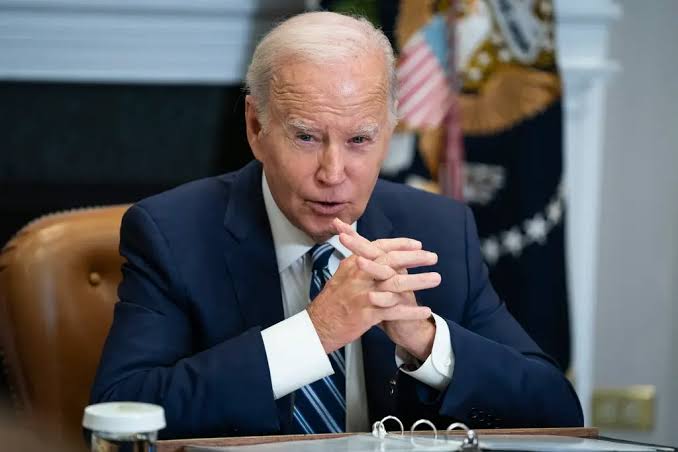
Democrats would have a practical and political nightmare on their hands if President Joe Biden drops out and they decide to push Vice President Kamala Harris to the sidelines instead of the top of the ticket.


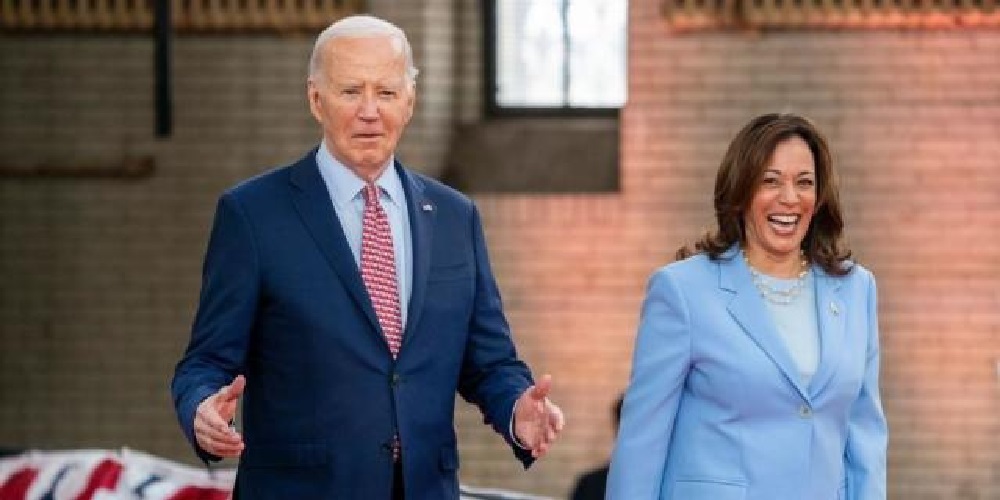
On Wednesday, Biden and Harris jointly proclaimed to campaign aides that they would press on in the face of growing criticism following Biden’s disastrous debate, according to the Associated Press.

“I am running. I am the leader of the Democratic Party. No one is pushing me out,” he said, according to the AP.

No one, least of all Biden’s running mate, can be seen publicly pressuring Biden to give up now.

Advertisement

Harris gets the money — probably.
In the event that Biden does call it quits, the focus will quickly turn to Harris. She is by far the best-positioned of Biden’s potential successors to take over. Most importantly, according to campaign finance experts, she would have the easiest path to accessing the Biden campaign’s $240 million war chest.

While nobody is quite sure what would happen to the millions should Biden step aside, Harris would probably control the cash — but only if she became the nominee.

“If Harris succeeded Biden as the presidential nominee, she would maintain access to all the funds in the campaign committee and could use them to advance her presidential candidacy,” Saurav Ghosh, the director for federal campaign finance reform at the Campaign Legal Center, told Business Insider in an email.

That’s because she shares a campaign committee with Biden, Ghosh said. Given her initial involvement with the Biden money — and the presence of her name on FEC filings related to his candidacy — she is likely the only one who could use the money without much issue.

Advertisement

Yet the same rules wouldn’t apply if Harris remained the vice presidential candidate or dropped off the ticket altogether.

According to Ghosh, federal contribution limits stipulate that candidate-to-candidate transfers don’t exceed $2,000 per election. While the Biden camp could convert the money into a political action committee if someone else was the nominee, there’s a catch — PACs can only donate a maximum of $3,300 per election to a different candidate.

“So in either case, there’s no legal way for Biden to transfer to a new candidate the $90 million dollars that his campaign currently has on hand,” Ghosh told Business Insider.

In a massive return-to-sender effort, the Biden campaign could also refund donations and donors could redirect their money toward the new candidate, campaign finance experts told NBC. Or, in yet another version of the future, the Biden campaign could transfer the funds to the national party.

Advertisement

All things considered, Harris soaring to the top of the ticket if Biden steps aside seems like the simplest solution with regards to the cold hard cash.

But money, of course, is not the only question — though many heads are turning in Harris’ direction, longstanding questions about her viability as a candidate remain.

Harris has major support among the Democratic Party’s core.
Pushing Harris aside could risk a firestorm. The vice president has repeatedly declared that she’s standing behind Biden, but already, influential voices in the party are lining up behind her. Rep. James Clyburn of South Carolina, whose backing helped Biden win the state’s 2020 primary, has said he would want Harris if Biden drops out.

“We should do everything we can to bolster her, whether it’s in second place or the top of the ticket,” Clyburn said on MSNBC on Tuesday.

Advertisement

In Washington, where the optics are never far out of sight, it would be impossible to ignore passing over the first female vice president for a man, or the first Black vice president for a white candidate.

Black voters remain the core of the modern Democratic Party. No single group is a monolith, but none of the major Biden challengers come close to Harris’ support in the Black community. According to a recent Economist-YouGov poll, 66% of Black voters view Harris favorably. In comparison, only 47% of Black voters view California Gov. Gavin Newsom favorably; slightly fewer view Michigan Gov. Gretchen Whitmer in the same light.

The same survey found that voters still don’t know enough about Whitmer to have an opinion about her, underlining another potential headache. Harris is one of the most-known politicians in the country. Any potential replacement will likely need to introduce themselves to the American people and on the national stage.

This doesn’t mean Harris has every advantage. Her notoriety comes with the White House’s baggage. Republicans would likely tag her with the same attacks on the economy and immigration that they’ve used against Biden. Unlike a potential replacement outside the beltway, Harris would struggle to show any major daylight with the president.

Advertisement

Already, Republicans are preparing for a potential Harris bid should she get the nomination and, with it, the campaign money. On Wednesday, the Republican National Committee released a digital ad calling her the “enabler in chief” and blaming her for chaos at the border.

Against ominous music, the ad asks, “Is this who we want to be president?” It seems the Democratic Party, and its donors, have to answer that question, too.
Continue Reading
Advertisement
Click to comment

Warning: Undefined variable $user_ID in /home/naijuinz/public_html/wp-content/themes/zox-news/comments.php on line 49

You must be logged in to post a comment Login

Leave a Reply

Foreign

Strikes on Iran to continue until ‘I say it’s enough’ – President Trump declares

Published

on

By

ADVERTISEMENT
Zoom Ad
ADVERTISEMENT
Zoom Ad

US President Donald Trump has vowed that American military strikes on Iran will continue until he personally decides they have achieved their objectives, declaring that the campaign will not stop “until I say it’s enough.”

Speaking with Fox  News on Tuesday, July 24, Trump said the US forces would ‘hit them very hard tonight, very hard tomorrow night’ in a brutal campaign that won’t stop until he says ‘enough.’

‘I’ll save the energy targets for last, but ultimately we’ll hit energy targets,’ Trump warned.

‘We’re going to hit them very hard the night after, and then next week it gets really bad for them because next week comes the power plants.’

Advertisement

Trump also said the US would target bridges next week unless Iran was willing to negotiate a peace deal that included giving up their nuclear ambitions.

He vowed the attacks will continue ‘until I say it’s enough.’

In an update late on Tuesday night, CENTCOM advised another round of strikes had been completed, hitting dozens of military targets near the Strait of Hormuz and Iranian coastal areas.

‘US fighter aircraft, drones, and naval vessels launched precision munitions against Iranian missile and drone sites, naval capabilities, and coastal defense systems during the seven-hour wave to further degrade Iran’s ability to threaten commercial shipping and civilian crews,’ the update said.

Advertisement

US forces resumed the naval blockade against vessels transiting to or from Iranian ports and coastal areas.

The latest US bombing comes after Trump notified Congress that the war would resume after Iran breached the memorandum of understanding by targeting commercial ships in the Strait of Hormuz.

Trump did not rule out using US ground forces to ensure that his key objectives are met, especially when it comes to removing Iran’s enriched uranium.

US forces had been careful not to harm Iran’s civilian population with strikes, but Trump warned Iran that everything was on the table.

Advertisement

‘You better make a deal, or you’re not going to have anything left,’ he said.

The President also likened Iran to ‘a great boxer’ that needed to be put to the mat.

‘You think you have them beat, then they’ll come back and give you a shot,’ Trump said.

Trump suggested later in the interview with Fox News that he wasn’t interested in continuing negotiations  with Iran because ‘they lie.’

Advertisement

He also said the last contact he had with negotiators was an hour ago.

The President praised his Cabinet for its work on the Iran issue, including Pete Hegseth, as he said ‘oil is flowing like never before.’

He also announced he was replacing the 20 percent fee the US was charging on the Strait of Hormuz to various Gulf States.

Advertisement
Continue Reading

Foreign

UK announces social media curfew for 16, 17-year-olds

Published

on

By

ADVERTISEMENT
Zoom Ad
ADVERTISEMENT
Zoom Ad

Children aged 16 and 17-year-olds in the UK will face a voluntary overnight social media curfew, alongside a shutdown of infinite scrolling and mandatory breaks in AI chatbot use, under new plans announced by Technology Secretary Liz Kendall.

According to a report by The Independent UK on Tuesday, the measures form part of the government’s wider restrictions on children’s social media use, and will see default settings block access for older teenagers between midnight and 6 am.

Kendall, in a statement, said, “These measures will be crucial in helping young people get the sleep they need, focus on school and college, and spend more quality time with family and friends, all of which are fundamental to building a happy, healthy and fulfilling adult life.

“We want young people to enjoy the benefits of technology while having the tools to make the online world a place where they can thrive.”

Advertisement

The Independent said features designed to keep users engaged, such as never-ending video reels and algorithmic feeds, will also be automatically switched off under the new defaults.

However, the report noted that critics have questioned how effective the measures will be, given that 16 and 17-year-olds will be able to turn off these default settings themselves.

The curfew plan follows last month’s announcement of a broader social media ban for under-16s by Prime Minister Sir Keir Starmer’s government, expected to cover platforms including Snapchat, TikTok, YouTube, Instagram, Facebook and X, but not messaging services such as WhatsApp and Signal, from next spring, according to the newspaper.

The report added that responsibility for working out key details of the policy will fall to Andy Burnham, who is set to become prime minister after winning the Makerfield by-election.

Advertisement

Kendall is also reportedly pushing new safeguards for children using artificial intelligence, including requiring under-18s to take regular breaks while using chatbots, and a crackdown on AI services that give dangerous, misleading or unverified mental health advice.

Ministers are said to be considering banning chatbots deemed a serious threat to children.

Conservative shadow education secretary Laura Trott reportedly criticised the plan, describing it as “another dog’s dinner from Labour” and arguing that curfews teenagers can simply switch off “won’t achieve anything.”

Advertisement
Continue Reading

Foreign

South Africa Confirms Visa-Free Entry for 22 African Countries, Excludes Nigeria

Published

on

By

ADVERTISEMENT
Zoom Ad
ADVERTISEMENT
Zoom Ad

The South African government has reaffirmed its visa exemption policy, allowing citizens of 22 African countries to enter the country without obtaining a visa in advance, subject to the permitted duration of stay and applicable entry conditions.

According to the country’s official visa exemption policy, eligible travellers may enter South Africa for periods ranging from 30 to 90 days, depending on their nationality.

The African countries currently eligible for visa-free entry include:

Algeria – up to 30 days
Benin – 30 days or less
Botswana – up to 90 days
Cabo Verde (Cape Verde) – 30 days or less
Comoros – up to 90 days
Côte d’Ivoire (Ivory Coast) – up to 30 days
Gabon – 30 days or less
Guinea – up to 90 days
Kenya – up to 30 days
Lesotho – 30 days or less
Madagascar – up to 30 days
Malawi – 30 days or less
Mauritius – 30 days or less
Mozambique – up to 90 days
Namibia – 30 days or less
Rwanda – up to 30 days
Seychelles – 30 days or less
Eswatini – 30 days or less
Tanzania – up to 90 days for ordinary passport holders
Tunisia – up to 90 days
Zambia – 30 days or less
Zimbabwe – up to 90 days

Advertisement

South Africa also grants visa-free entry to holders of the African Union Laissez-Passer and the Southern African Development Community (SADC) Laissez-Passer under its exemption policy.

Authorities, however, noted that visa-free access for some countries, including Kenya, Benin and Gabon, is subject to specific conditions. Travellers are therefore advised to confirm the latest entry requirements with South African authorities before making travel arrangements.

Notably, Nigeria is not among the countries currently eligible for visa-free entry into South Africa, meaning Nigerian passport holders are still required to obtain a visa before travelling.

Advertisement
Continue Reading

Trending

Copyright © 2024 Naija Blitz News