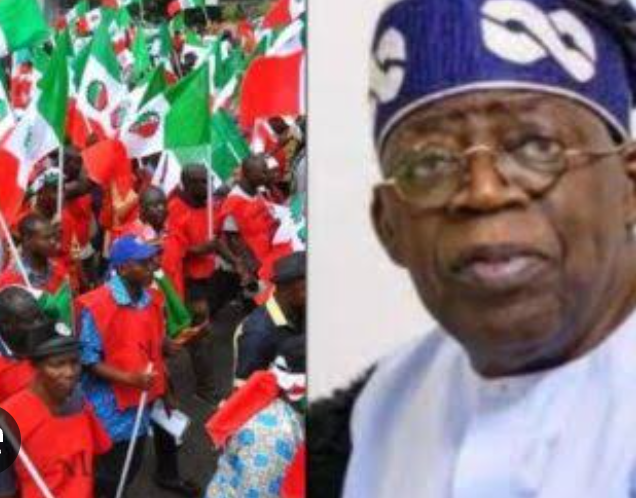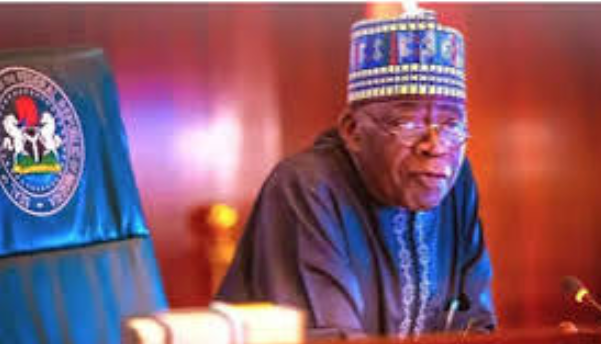
The 2027 general election, though still three years away, is already shaping up to be a nail biting showdown for the soul of Africa’s most populous country, as the north, shaken by the unrelenting usurpation of its hitherto dominant position in the country’s polity by the President Bola Tinubu led South West, has begun to restrategize for battle. But the region presents its weakest front since Nigeria’s independence in 1960, against Tinubu, who has thus far, proved his mettle in exploiting weaknesses to his ultimate advantage, Thecitypulsenews learnt.


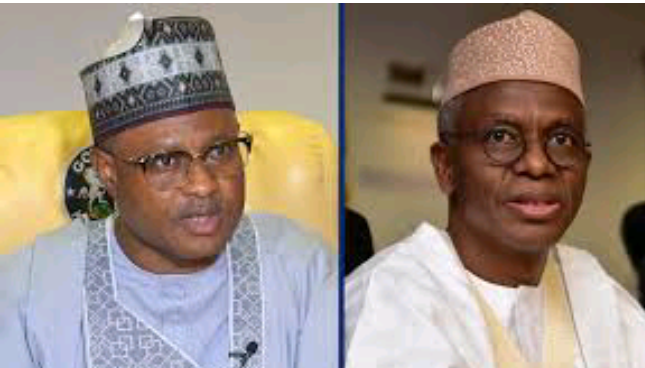
Over the course of the past few weeks, leading northern political figures, such as Tinubu’s predecessor, Muhammadu Buhari; former vice president, Atiku Abubakar; former Kaduna State governor, Nasir El-Rufai, former Kano governor, Rabiu Musa Kwankwaso, among others, who were hitherto in different political platforms, have held strategic meetings in, what Business Hallmark gathered, are part of an ongoing political realignment in the region ahead of 2027.
On June 22, Atiku, accompanied by some Peoples Democratic Party (PDP) stakeholders, visited Buhari at his home in Daura, Katsina State, to, as he put it, “pay a courtesy call and offer Sallah homage.” 
The former vice president had noted in a post on X after the visit that, “My trip to Katsina today also afforded me the opportunity to pay my condolences to the family of my late friend and associate, Alhaji Lawal Kaita, over the loss of the matriarch of the family, Hajiya Yalwa Kaita, where I was received by the Governor of Katsina, Dikko Umar Radda. I also paid courtesy visits to the Emir of Katsina, HRH Abdulmumini Kabir Usman, and the Emir of Daura, HRH Alhaji Farouk Umar Farouk.”
Earlier on June 19, Atiku also visited former Heads of State, Gen. Ibrahim Babangida (rtd) and Gen. Abdusalami at their residences in Minna, Niger State.
Atiku was beaten to second place by Tinubu in the contentious 2023 presidential election. Buhari, then outgoing president, had backed Tinubu, his party’s candidate, despite initially favouring a northern successor, but was literally bullied by northern governors, who insisted on power shift to the south, fearing possible collapse of the ruling APC. But with Tinubu apparently determined to consolidate power at the centre to the detriment of the north, the former president appears willing to close ranks with other stakeholders in the region.
El-Rufai, another prominent APC figure, who had been a staunch supporter of Tinubu in the lead up to the election last year, but evidently feel betrayed after being left in the cold by the president, has been making moves of his own preparatory to 2027. On June 27, he received Kwankwaso, leader of the Kwankwasiyya Movement, who relying on massive Kano support, came fourth in the 2023 presidential election, at his home in Abuja, all of which builds up to a definite political realignment to challenge Tinubu in 2027.
“There is evidence of rallying of forces, regrouping of political forces from the North trying to use former President Buhari as a rally point in order to evict the government of Asiwaju Ahmed Bola Tinubu,” noted Shehu Sani, former Kaduna Central Senator in an interview on Arise TV last week.
Sani, who cautioned against the move in the interest of national cohesion, noted that the politicians, “hope to resurrect the political charms in the hearts of the masses and portray the government as the one that has been undermining the North and the one that has not been living up to his campaign promises.”
The harsh economic realities the country has faced since Tinubu assumed office last year after he haphazardly removed fuel subsidy and floated the naira, has created mass discontent among the populace, as hunger takes its toll, more prevalently in the north, a region also gripped by insecurity manifested by terrorism, banditry and kidnapping right across the region.
Across social media, a number of northern influencers have begun to describe the former Lagos State governor as an OTP, an acronym for One Term President, an affirmation of their believe that Tinubu will be voted out in 2027. In the wake of the controversies over the Samoa agreement which has been alleged – but denied by the government – to have provisions for allowing same sex unions has also worsened Tinubu’s reputation in the north, with some clerics vowing to ensure the president does not return for second term. But it’s easier said than done.
Tinubu, who lost his home state of Lagos to Peter Obi, the presidential candidate of the Labour Party in 2023, had relied on the north – and some would insist, the manipulation of the electoral process by the Independent National Electoral Commission (INEC) – to win overall majority and become president. He will still need northern votes in 2027, and some analysts have wondered how he hopes go about it given that the north now appears unwilling to support him.
Indeed, given the mass discontent among Nigerians towards the Tinubu presidency, a carry-over from the anger of the younger generation, who felt let down by the conduct of the last election, but now compounded by rising inflation, job losses, poor economic outcomes and the general hunger and insecurity in the land, many observers have tended to support the idea that Tinubu will likely be a one term president.
But Tinubu started making his moves from his first day in office. And despite the widespread misgivings against his government, it may still be a tall order to unseat him, even with the north’s best efforts. Tinubu has within the first year of his administration, managed to consolidate hold on the South West, the zone, which for the first time, now feels the aura of being in power.
Although, Olusegun Obasanjo, who took office as president in 1999, came from the South West, he ascended power on a pan Nigerian mandate, and thus never saw a need to run a ‘Yoruba government.’ The coming of Tinubu and his political structure, therefore, is the first time the South West will be taking power at the centre on its own strength. And from all indications, Tinubu intends to enthrone the zone as a dominant political player in the country for good, at the expense of the northern political establishment, which had held the centre stage for long.
Presently, all the core security and economic structures of the country, ranging from headship of Customs, Immigration, Army, EFCC, FCT lamong others, which used to be the exclusive preserve of the north, have been taken over by the the South West.
This contest for control of the country, keen observers have noted, is what will form the undercurrent of the 2027 political battle. President Tinubu, apparently with this in mind, has continued to deepen and consolidate South West’s roots in the mainstream of Nigerian politics.
It is, therefore, not entirely strange that some of the political voices in the region like PDP’s Chief Olabode George, Doyin Okupe, among others, who had hitherto worked against his presidential ambition, have all made u-turns. Indeed, even Obasanjo, a who openly endorsed Peter Obi in the last election, appears to have suddenly developed soft spot for the president. He was recently seen wearing Tinubu’s signature cap at an event in Lagos, and he subsequently paid courtesy visit to Oluremi, the president’s wife, a move some insiders informed our correspondent, is part of political realignment happening in the South West.
North Losing Grips
For a region that had over the years, maintained a grip on Nigeria’s polity, the 2023 election exposed what many had suspected was the weakening of the north as a political entity. The attempt by Buhari to chose his own successor was thwarted by ambitious governors from the north, who apart from nursing individual ambitions of becoming vice president, genuinely feared that the future of the APC, if not the country itself, would be in jeopardy should the region attempt to retain power. Tinubu’s deep pocket, it must also be said, was a huge factor.
Abdullahi Adamu, then APC chairman, had apparently with Buhari’s blessings, attempted to foist then Senate President, Ahmad Lawan as APC presidential candidate, but the move not only collapsed, but also cost the former Nasarawa State governor his seat as APC chairman.
Tinubu went on to emerge candidate, and ultimately president, after winning the majority of northern votes ahead of Atiku.
Going into 2027, the reasoning within the emergent northern opposition, it seems, is that the region having been instrumental to Tinubu’s emergence as president, would still be able to vote him out. But if anything, the 2023 election showed that the north has become vulnerable and can hardly now act as one entity.
There is little doubt that anger is growing in the north, as much as the rest of the country, as economic and security challenges mount. And the inherent strengths of the region, such is its voting population and huge landmass cannot be wished away. But with huge financial war chest and power of incumbency, Tinubu is likely to still buy support in the region.
More importantly, with the overt promotion of religious politics in the region, coupled by mounting banditry and attacks by herders, which has also in some ways, assumed ethnic and religious colouration, there is now a situation, where a large chunk of what is originally known as the north no longer want to be identified as such. The much of the Christian north, cutting across much of the North Central, and fringes of the North East and North West, has opted for a new identity, the Middle Belt.
The decision of Tinubu to run a Muslim-Muslim ticket in 2023 was politically expedient. It helped to rally the core Muslim North behind him. But the down side of the ticket is that it was a direct message to the Christians in the region that they are not North enough, when it comes to politics.
“The north is no longer the cohesive political factor it used to be. In addition to banditry, kidnapping and poverty, the north has over the years been the scene of great, big bleeding batches of inter and intra-communal, sectarian crises rupturing the tensile political fabric of the region. There are sections of the north that do not want to belong to the same political party as other northerners and less even with any overarching northern political project,” wrote Iliyasu Gadu, a veteran columnist and media expert in a recent piece.
“There are sections and groups in the north, who have come to detach themselves from any political or social project in the north for the justifiable reason that the north no longer functions as an inclusive political entity for all northerners. Such people believe the north is now captive to exclusive interests and are using it in an opportunistic way for their advancement.”
Gadu asserted that in the present realities, “no candidate of commensurate status and strength can match President Tinubu in the 2027 game. The Atikus, Kwankwasos, El-Rufais, Bala Kauras and Zulums are formidable in their rights, but Tinubu, for many reasons, is miles ahead of them politically.”
He further asserted that, “As for platforms, whatever the north can bring up will have to contend with the octopoid political tentacles of the Asiwaju Political Holdings (APH) in the Nigerian political space. The ruling All Progressive Congress (APC) is a no-go area for the probable northern political counterattack. And in the opposition Peoples’ Democratic Party (PDP), the APH will have by arrangement agents to block any northerner from emerging as a presidential candidate. In the run-up to 2027, the Asiwaju Political Holding will work overtime to ensure that other political parties are not in a position to offer any northerner their presidential ticket.”
Indeed, part of Atiku’s major undoing in 2023 was the split within the PDP, which saw the Nyesom Wike led faction, comprising of five sitting governors, break ranks to back Tinubu in the election. The main opposition party is yet to recover from the split, and with Wike now serving as FCT Minister under the Tinubu government, while maintaining a grip on the party, the PDP is now effectively another wing of the APC.
This will be a huge challenge for Atiku and whatever structure he hopes to build to challenge Tinubu in 2027.
“It should be clear that the PDP is already out of the equation as a political party that can effectively contest and win power,” said Chidi Anthony, an Abuja based lawyer and political analyst. “Atiku’s refusal to stand down in 2023, when it was clearly the turn of the South destroyed the PDP fundamentally. The party had to go against its own constitution to enable Atiku to run. So, what Wike and his likes are doing is just symptoms of the rot in the party.”
Peter Obi, the former Anambra State governor, who broke away from the PDP to run on the platform of Labour Party, came third with over 6m votes, according to the results announced by INEC. His supporters insist he won the election. But going into 2027, Labour is now locked seemingly intractable leadership crisis.
The Atiku camp are muting the idea of a joint ticket with Obi in 2027, but neither group is likely to accept the vice presidential slot.
“I do not see an Atiku/Obi ticket happening in 2027. And mind you, Obi running under Labour Party was able to achieve that 2023 feat because INEC convinced everybody that the election would be free and fair. That will not the case. In 2027, whatever shortcomings witnessed in 2023 will be child’s play, considering that Tinubu is now president and he has foot soldiers across the regions,” concluded Anthony.