Economy
CAC issues guidelines for banks recapitalisation, merger
- /home/naijuinz/public_html/wp-content/plugins/mvp-social-buttons/mvp-social-buttons.php on line 27
https://naijablitznews.com/wp-content/uploads/2024/07/Corporate-Affairs-Commission-CAC.jpg&description=CAC issues guidelines for banks recapitalisation, merger', 'pinterestShare', 'width=750,height=350'); return false;" title="Pin This Post">
- Share
- Tweet /home/naijuinz/public_html/wp-content/plugins/mvp-social-buttons/mvp-social-buttons.php on line 72
https://naijablitznews.com/wp-content/uploads/2024/07/Corporate-Affairs-Commission-CAC.jpg&description=CAC issues guidelines for banks recapitalisation, merger', 'pinterestShare', 'width=750,height=350'); return false;" title="Pin This Post">
The Corporate Affairs Commission has issued fresh guidelines to assist Deposit Money Banks in the ongoing recapitalisation.
The commission, in a statement signed by its management and posted on its Facebook account on Friday, said the new directive is pursuant to its powers under Section 8 (1) (e) of the Companies and Allied Matters Act No. 3 of 2020, stressing immediate adherence to the policy.
It said the new guidelines were issued to guide proper filing for new incorporations, increase in share capitals, mergers and upgrade or downgrade of licence authorisation.

For new incorporations, the CAC stated that intending applicants must submit necessary requirements including, “An approved name reservation or availability, approval-in-principle from sector regulator, duly completed on-line incorporation form and payment of stamp duty and filing fees for the category of license authorisation.”
It added that a certificate of incorporation shall be issued within 24 hours for applications that satisfy all requirements for incorporation of companies prescribed in the, “Commission’s operations checklists available at www.cac.gov.ng/resources.”
Also, banking institutions seeking to increase their share capital through private placements, rights issues and/or offers for subscription must submit a duly signed company resolution, return of allotment and other statutory declaration by directors verifying that the issued share capital is fully paid- up
Other requirements include, “Notice of the fact that regulatory approval is required, an affidavit deposed to by a director of the company to the effect that regulatory approval is required for the increase, an amended memorandum of association reflecting the new share capital.
“Payment of stamp duties and filing fees, Issuance of a letter acknowledging notice of increase and requirement of regulatory approval, filing of regulatory approval and the issuance of a certificate of increase.”
Under this category, the commission warned that the notice of the fact that regulatory approval is required must be filed in accordance with the provisions of Section 127 (3), (4) & (5) of CAMA.
“Annual returns and information on persons with significant control must be filed up-to-date and certificate of increase shall be issued within 24 hours of filing of regulatory approval,” it said.
Similarly, small and medium banking institutions seeking to merge must submit duly signed special resolution for merger by each of the merging companies.
Other requirements are “the scheme of merger duly approved by the Securities and Exchange Commission.
“A certified true copy of court order authorising Extraordinary General Meeting of each of the merging companies. Evidence of publication of court ordered meeting in two newspapers and the Federal Gazette and a CTC of Court order sanctioning the Scheme of Merger.
“All enquiries and complaints on these guidelines and applications submitted in pursuance of the recapitalisation exercise should call +234 816 920 9551,” the statement added.
Recall that the Central Bank of Nigeria in March 2024 directed all banks to increase their capital base for improved productivity.
The apex bank had directed commercial banks with international authorisation to increase their capital base to N500bn and national banks to N200bn.
It also said commercial banks with national licences must meet a N200bn threshold, while those with regional authorisation are expected to achieve a N50bn capital floor.
This process has commenced fully with banks issuing public offers and rights issues to meet the two year target.
Economy
Telcos to spend $76 billion CapEx in five years
Telecommunication operators in Nigeria and other parts of Africa are expected to inject over $76 billion as capital expenditure (CapEx) into their various networks in five years.
GSMA said this projection is for between 2025 and 2030. It, however, said that for the investment to translate into improved coverage, quality and capacity, there is a need for an improved regulatory and cost environment.
According to the telecom body, markets that have reduced rights-of-way costs, enabled infrastructure sharing and provided regulatory predictability are seeing faster and broader capital deployment.
Infrastructure-sharing models in particular are emerging as a structural solution for extending coverage into areas where individual operator economics alone cannot justify the investment, it said.
MTN Nigeria’s quarterly CapEx this year has been extremely aggressive, starting with N390.3 billion in Q1 and reaching N620.5 billion by H1, while Airtel Africa invested $389 million in Q1 2026 alone, its highest first quarter rollout.
Both operators are front loading investments to expand 4G/5G coverage and fibre infrastructure.
For FY 2025, MTN Nigeria’s CapEx surged to N1 trillion, more than doubling from N443.5 billion in FY 2024. This was driven by aggressive investment in broadband coverage and spectrum leasing.
CapEx intensity stood at 19.3 per cent of revenue, reflecting heavy reinvestment into infrastructure.
Airtel Africa CapEx rose to $884 million in FY 2026, a 31.9 per cent increase year-on-year. The company rolled out over 3,250 new sites and expanded fibre by 3,200 km, with plans to accelerate spending to $1.1 billion in FY 2027.
Both operators are scaling aggressively to meet surging data demand and smartphone penetration.
MTN’s investment intensity is higher relative to revenue, while Airtel is focusing on pan-African expansion with Nigeria as a key growth driver.
For FY 2026, Airtel reported 47.5 per cent constant currency revenue growth in Nigeria, showing strong returns on its infrastructure push.
Airtel Africa is balancing pan African expansion with Nigeria as a key growth driver. Its CapEx is more diversified across regions but still heavily weighted toward network densification.
Economy
NAICOM revokes Nigeria Reinsurance’s licence, appoints Muiz Banire as receiver/liquidator
The National Insurance Commission, NAICOM, has revoked the operating licence of Nigeria Reinsurance Corporation over its failure to meet the statutory Minimum Capital Requirement, MCR, and appointed Dr. Muiz Banire, SAN, as Receiver/Provisional Liquidator to wind up the company’s affairs.
The appointment took effect on August 3, 2026, following the cancellation of the corporation’s certificate of registration by the insurance regulator.
In a public notice dated August 4, 2026, Banire said he was appointed by NAICOM, in exercise of its statutory powers, to take charge of the receivership and liquidation of Nigeria Reinsurance Corporation (RR-002).
According to the notice, the company’s licence was revoked after it failed to comply with the prescribed Minimum Capital Requirement applicable to its category of licence within the stipulated compliance period, in accordance with the Nigerian Insurance Industry Reform Act (NIIRA) 2025 and other extant laws, regulations and guidelines.
Banire said his appointment empowers him to immediately trace, recover, secure and take possession of all assets belonging to the company, collate and settle its liabilities in accordance with the NIIRA 2025, liaise with NAICOM on matters relating to the liquidation, and submit periodic reports to the Commission.
He also directed banks, financial institutions, insurance policyholders and members of the public not to honour any instruction relating to the company except those issued by him or persons expressly authorised by him.
As part of the liquidation process, Banire announced that all bank accounts belonging to Nigeria Reinsurance Corporation had been frozen with immediate effect pending further directives from his office.
He warned that any transaction carried out without his authorisation would be at the risk of the parties involved.
“Members of the general public, banks and financial institutions in Nigeria are hereby informed that no financial transactions should be conducted pursuant to any instruction from anyone except those that I issue as the Receiver/Provisional Liquidator,” the notice stated.
According to him, only instructions bearing his official seal and stamp as a legal practitioner, or those issued by persons duly authorised by him, will be recognised throughout the liquidation process.
The regulatory action marks a significant enforcement measure by NAICOM and underscores the Commission’s resolve to ensure that insurance and reinsurance companies operating in Nigeria comply with statutory capital requirements designed to safeguard policyholders and strengthen the financial stability of the industry.
The liquidation process is expected to involve the recovery and realisation of the company’s assets, verification and settlement of valid claims and liabilities, and the orderly winding up of its affairs in accordance with the provisions of the law.
The public notice serves as formal notification to policyholders, creditors, banks and other stakeholders that all dealings concerning Nigeria Reinsurance Corporation must henceforth, be channelled through the Receiver/Provisional Liquidator until the liquidation process is concluded.
Economy
See Black Market Dollar To Naira Exchange Rate Today 5th August 2026
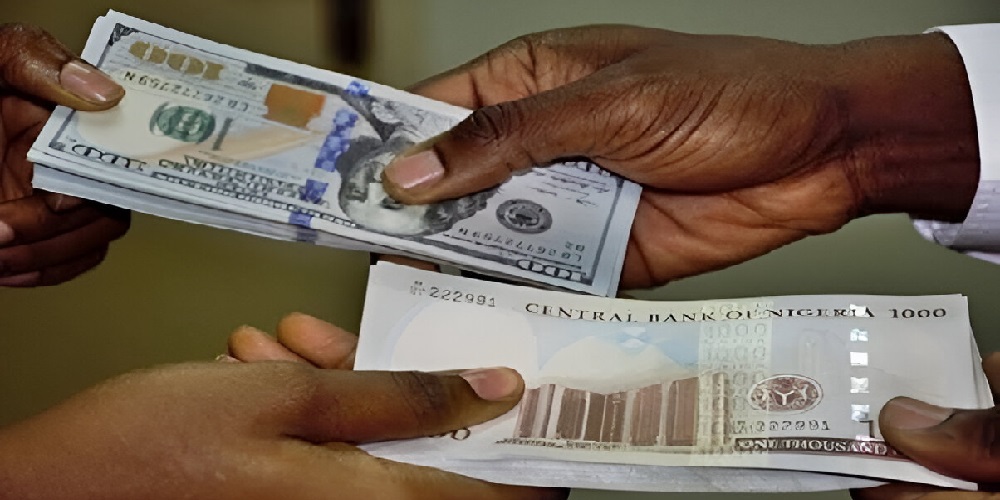
The Black Market Dollar-to-Naira Exchange Rate for 5th August 2026 Can Be Accessed Below.
NOTE: The exchange rate changes hourly. It depends on the volume of dollars available and the Demand. This means…you can buy or sell 1 dollar at a certain rate, and the price can change (high or low) within hours.
The official naira black market exchange rate in Nigeria today, including the Black Market rates, Bureau De Change (BDC), and CBN rates.
The exchange rate fluctuates hourly based on the supply and demand of dollars in the market.
What’s the dollar to naira black market today, 5th August 2026?
The exchange rate for a dollar to naira at Lagos Parallel Market (Black Market) players sell a dollar for ₦1425 and buy at ₦1410 on Wednesday, 5th August, 2026, according to sources at Bureau De Change (BDC).
Please note that the Central Bank of Nigeria (CBN) does not recognize the parallel market (black market), as it has directed individuals who want to engage in Forex to approach their respective banks.
Dollar to Naira Black Market Rate Today
Dollar to Naira (USD to NGN) Black Market Exchange Rate Today
Selling Rate ₦1425
Buying Rate ₦1410
Dollar to Naira CBN Rate Today
Dollar to Naira (USD to NGN) CBN Rate Today
Highest Rate ₦1364
Lowest Rate ₦1361
-
News23 hours agoIgbo Muslim top army officer slain in Nasarawa as Sultan demands immediate probe
-
News23 hours agoBREAKING: “Your timing is wrong”, Tinubu orders EFCC to halt Osun account freeze
-
News23 hours agoJust in: Court sacks top APC candidate from contesting 2027 election
-
News21 hours agoWAFCON 2026: Super Falcons to battle Cameroon in quarter-finals
-
News20 hours agoFayose To Be Inugurared REA Chairman Tomorrow (Photos)
-
News20 hours agoAAU Celebrates Excellence: Olotu Akpodiete,VC Omonzejie Among Distinguished Awardees
-
News22 hours agoMove to bus terminals or be shut down – FCTA tells transport operators
-
News12 hours ago‘Anyone supporting Tinubu’s administration has been bribed’ — Odumeje

Warning: Undefined variable $user_ID in /home/naijuinz/public_html/wp-content/themes/zox-news/comments.php on line 49
You must be logged in to post a comment Login