Connect with us

News

New Zealand Hikes Student Visa Fees By 90% For Nigerians, Others

Published

on

ADVERTISEMENT
Zoom Ad
ADVERTISEMENT
Zoom Ad

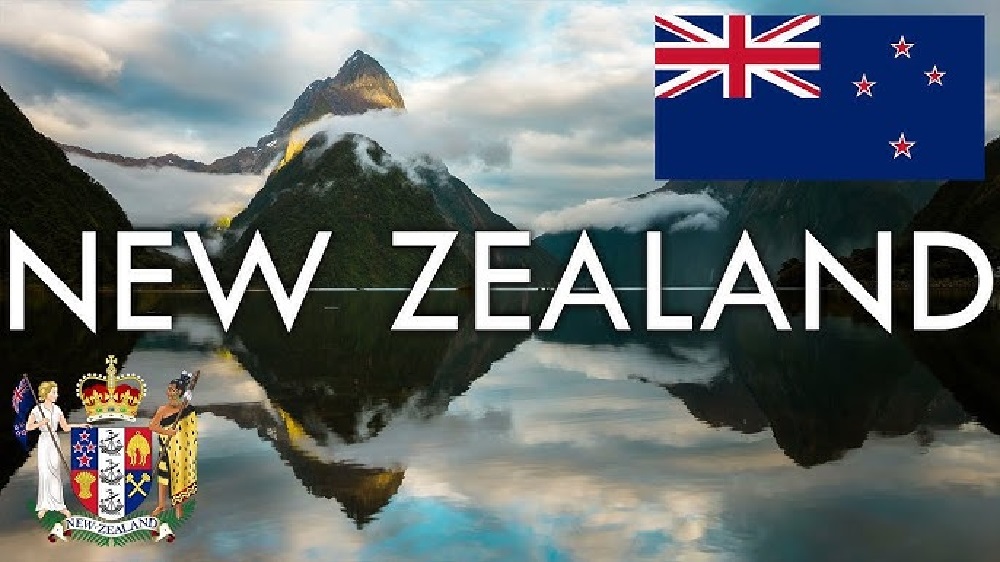
The New Zealand Government has announced a 90 percent increase in student visa fees for Nigerians and citizens from other non-Pacific nations.


The new visa fee will take effect from October 1, 2024, as detailed on the New Zealand immigration website.

Currently, the student visa fee stands at NZD395 (approximately $238).

However, from October, this will rise to NZD750 (about $452) for applicants from countries like Nigeria.

Advertisement

The fee revision is part of a broader adjustment across various visa categories, aligning charges more closely with the actual costs of processing applications.

New Zealand’s visa application process is categorised into three distinct bands. Band A is for New Zealand residents reapplying for visas, Band B covers citizens from Pacific nations, and Band C applies to citizens from other parts of the world, including Nigeria.

For student visas, the fees were previously structured as follows: NZD375 for Band A, NZD315 for Band B, and NZD395 for Band C. With the new adjustments, the fees have been revised across the board, significantly impacting Band C applicants.

The fee hikes extend beyond student visas. Post-study work visas, which previously cost NZD700 ($422) for Band C applicants, will now surge by 139% to NZD1,670 (around $1,006).

Advertisement

Work visas have also seen a notable increase. For instance, the fee for a skilled residence visa under Band C has risen from NZD2,480 ($1,494) to NZD2,880 ($1,735), marking a 16% increase.

Similar adjustments have been made for other visa categories, with the Entrepreneur Work Visa fee seeing a significant rise, although specific figures for the new fee were not detailed.

The New Zealand Government justifies these fee increases as necessary to align visa charges with the actual costs of processing applications.
However, in a bid to support regional neighbours, the government has opted to maintain subsidised visa fees for applicants from Pacific countries.

According to a report by Indian Travel Times, the Immigration Minister, Erica Stanford, emphasised that even with these increases, New Zealand’s visa fees will remain competitive compared to those of Australia and the United Kingdom.

Advertisement

In addition to the fee adjustments, the government has introduced updates to the Accredited Employer Work Visa (AEWV) scheme.

The AEWV fee, while reduced from NZD540 to NZD480, will see its immigration levy increase substantially from NZD210 to NZD1,060.

This visa is central to New Zealand’s efforts to prioritise local workers while allowing employers to hire skilled migrants during genuine labour shortages.

Moreover, new requirements have been introduced for migrant workers under the AEWV scheme.

Advertisement

These include an English language requirement for migrants applying for low-skilled roles under the Australian and New Zealand Standard Classification of Occupations (ANZSCO) levels 4 and 5.

Employers will also now need to engage with Work and Income, New Zealand’s welfare agency, before receiving approval to hire migrants for these roles.

Additionally, the maximum continuous stay for most positions at these levels will be reduced from five years to three years.

Advertisement
Continue Reading
Advertisement
Click to comment

Warning: Undefined variable $user_ID in /home/naijuinz/public_html/wp-content/themes/zox-news/comments.php on line 49

You must be logged in to post a comment Login

Leave a Reply

News

EU Raises Alarm Over Fake Compensation Scheme, Warns Public Against Scam

Published

on

ADVERTISEMENT
Zoom Ad
ADVERTISEMENT
Zoom Ad

By Gloria Ikibah

The European Union (EU) Delegation to Nigeria and ECOWAS has dismissed as fraudulent a document circulating online which claims that the EU and the World Bank are offering compensation to victims of alleged funds trapped in banks across West Africa.

In a statement issued on Tuesday in Abuja, the delegation described the document as a scam and urged members of the public to ignore it.

According to the EU, the fake document falsely claimed to have originated from the Secretary General of the Council of the European Union, Ms Thérèse Blanchet, and announced a non-existent EU-World Bank assisted recovery programme for people allegedly affected by fraudulent fund transfers in Africa.

Advertisement

The document also claimed that citizens from Europe and other countries whose legally transferred funds were trapped in banks and financial institutions across West Africa were eligible for compensation. It further alleged that the EU Ambassador to Nigeria and ECOWAS had been mandated to oversee the compensation process and encouraged potential beneficiaries to contact him.

Rejecting the claims, the delegation stated:
“This document in its entirety is a scam. The information and claims contained therein are false. The European Union is neither aware of any such bogus programme nor part of it.”
The delegation further disclosed that the contact details contained in the fraudulent document were fabricated by the perpetrators.

“The email addresses and phone number provided in the document as those of Ms Blanchet and Ambassador Mignot are fake, and obviously belong to the scammers.”

The EU urged members of the public to remain vigilant and avoid engaging with individuals behind the scheme.

Advertisement

“The Delegation of the European Union to Nigeria and ECOWAS urges members of the public to disregard the fake information. The Delegation’s website and social media platforms remain the Delegation’s official channels of communication to the public”, the statement read.

The delegation advised anyone seeking information on EU programmes or activities to rely only on its verified communication channels, warning that fraudsters increasingly exploit the names of international organisations to deceive unsuspecting members of the public.

Continue Reading

News

Just in: NNPC increases fuel price within 48hours

Published

on

ADVERTISEMENT
Zoom Ad
ADVERTISEMENT
Zoom Ad


The Nigerian National Petroleum Company Limited, NNPCL, has increased the pump price of Premium Motor Spirit, PMS at its retail outlets for the second time in less than 48hours.

According to a market survey by DAILY POST showed that NNPCL raised its petrol price to N1,335 per litre on Wednesday from N1,270 per litre on Tuesday.

This means that the state-owned filling station increased its fuel price by N65 per litre.

Advertisement

The new price has been implemented at NNPCL filling stations in Wuse Zone 6 (Berger), Zone 4, and other outlets in Abuja and its environs.

Recall that on Tuesday, NNPCL increased its petrol pump price by N115 per litre to N1,270 per litre.

The latest increase comes amid continued petrol price volatility in the country’s downstream oil sector following Dangote Refinery’s resumption of the sale of refined petroleum products in U.S. dollars.

Daily Post

Advertisement
Continue Reading

News

Reps Push National Drone Policy to Strengthen Defence Industry, Combat Insecurity

Published

on

ADVERTISEMENT
Zoom Ad
ADVERTISEMENT
Zoom Ad

By Gloria Ikibah

The House of Representatives has called for the development of a National Drone Industrialisation Policy aimed at strengthening Nigeria’s indigenous defence manufacturing capacity and improving the country’s ability to respond to rising security threats.

The lawmakers also urged the Federal Government to provide targeted financial support to local drone manufacturers, including Beirech UAS, Terra Industries, Elites Group, Pro-force and the Air Force Institute of Technology (AFIT), through the Bank of Industry, the Defence Industries Corporation of Nigeria (DICON) and other financing platforms to help them expand production and meet military procurement standards.

The resolution was sequel to the adoption of a motion sponsored by Rep. Ademorin Kuye on Wednesday during plenary.

Advertisement

Nigeria has continued to battle terrorism, banditry, kidnapping, oil theft and other forms of violent crime, prompting increasing calls for the deployment of advanced technology to support military and security operations. Globally, unmanned aerial vehicles (UAVs), commonly known as drones, have become indispensable tools for intelligence gathering, surveillance, reconnaissance and precision operations. In recent years, security experts have also warned that non-state actors, including terrorist organisations, are increasingly deploying commercial drones during attacks, underscoring the need for Nigeria to strengthen its domestic production capacity.

Debating the motion, Rep. Kuye said the country’s worsening security situation had placed enormous pressure on the Armed Forces and other security agencies.

He noted that drones have become vital assets in modern military operations, adding that terrorist groups such as Boko Haram and the Islamic State West Africa Province (ISWAP) have already incorporated commercial drones into their operations against Nigerian troops.

The lawmaker, however, said Nigeria has made notable progress in indigenous drone development, pointing to the successful production of the Tsaigumi Unmanned Aerial Vehicle by the Air Force Institute of Technology in 2018 as evidence of the country’s growing technological capability.

Advertisement

He argued that Nigeria possesses the resources needed to become Africa’s leading drone technology hub if supported by deliberate government policies.

He said: “The House is concerned that Nigeria, with a pool of engineering talent, a growing technology entrepreneurship ecosystem, existing military-industrial partnerships and the largest economy in Africa, possesses the foundational conditions to become the hub for drone technology, provided there is structured government policy, capital and legislative support.”

Kuye expressed concern that despite the country’s potential, local drone manufacturing remains largely driven by private investors who face limited access to financing, inadequate government support and weak technology transfer arrangements.

Following the adoption of the motion, the House mandated its Committees on Defence; National Security and Intelligence; Science and Technology; and Industry and Commerce to develop a comprehensive National Drone Industrialisation Policy that would serve as a roadmap for transforming Nigeria’s drone manufacturing sector into a strategic, government-backed industry.

Advertisement

Lawmakers also directed the Committees on Defence and National Security and Intelligence to work with the military and relevant government agencies to negotiate technology transfer agreements with reputable international drone manufacturers. The proposed agreements are expected to facilitate the training of Nigerian engineers, encourage local production and gradually reduce the country’s dependence on imported drone components.

The House further tasked its Committees on Defence; Industry and Commerce to collaborate with relevant agencies in establishing specialised Defence Industrial Zones dedicated to drone manufacturing, research and maintenance. The zones are expected to benefit from fiscal incentives, improved infrastructure and supportive regulatory frameworks capable of attracting both local and foreign investors.

The house unanimously adopted the motion and mandated its Committees on Defence; National Security and Intelligence; Industry and Commerce; Air Force; and Science and Technology to review existing laws governing defence procurement, local content, aviation and investment incentives with a view to introducing amendments that would promote drone industrialisation, including tax incentives and stronger protection for intellectual property developed by Nigerian innovators.

The committees were given four weeks to submit their report for further legislative consideration.

Advertisement
Continue Reading

Trending

Copyright © 2024 Naija Blitz News