By Kayode Sanni-Arewa


Telecom operators have warned that the excruciating financial obligations they are burdened with at the moment may push them to adopt load-shedding formula of the power sector in providing telecom services in the country.
But the regulator, the Nigerian Communications Commission, NCC, in a swift reaction, said it would not be arm-twisted by the operators’ threat. 
Load-shedding is a formula that the electric power provider uses to relieve stress on a primary energy source when demand for electricity is greater than the primary power source.
It is a service formula which denies power supply to an area at a time just to relieve stress on the power source.
Chairman of the umbrella body of the telcos, Engr Gbenga Adebayo, disclosed this at an event put together by the Financial Derivatives Company, FDC, titled ‘’Telecom Industry 2.0: The Next Investment Frontier in Nigeria.’’
Addressing concerns of debilitating telecom services in the country, Adebayo said the country’s economic woes have impacted the telcos so badly, to the extent that they might not be able to service all their facilities at the same time.
Adebayo said the point at which telcos have found themselves at the moment is where they could only service a part of their facilities at a time, meaning that the area they are able to service will enjoy better services, while other areas not so lucky at the time may just have to bear epileptic services.
Telecoms sector, victim of its own success ’
Adebayo said: “The question to ask is why has government found it difficult to take advantage of different advocacies to sustain a healthy telecom sector despite these advocaies coming from verified data and indicies?
‘’I will say it is because the telecom sector has become a victim of its own successes. The behaviour of the public sector towards using the sector to better the economy is at variance with what is obtainable in other climes.
‘’The behavior of those that superintend over government agencies is poor and anthitetical to progress. Remember that when the operator signed agreement to provide telecom services in the country in 2001, the part Nigerian government signed was to provide 18 hours of power supply to the operators.
‘’That part of the bargain has not been fulfilled since then. Yet, the greater part of our operating expenditure, OPEX is on power.
“Multiple taxation from different government and non-government agencies is another hydra-headed problem, just as the banking sector debt to the telcos have also culminated to the poor state of infrastructure maintenance in the telecom sector.
“As we speak, there is an Association of Telecom Landlords whose primary aim is to fix rental charges for telecom facility deployments. This will be in addition to over 40 different taxes and levies the telcos face in the course of their operations.
“With all these, services will continue to be impaired. Today, we are heading to a situation where telecom services will be provided in parts because telcos may not be able to service all their sites at the same time.”
Price increase has become imperative —MTN CEO
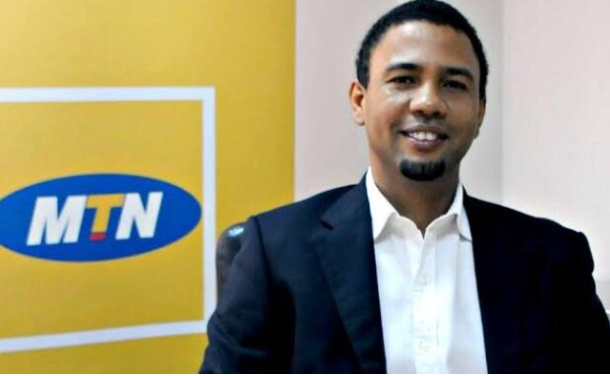
Corroborating Adebayo was the CEO of MTN Mr Carl Toriola who joined the meeting on Zoom.
Toriola said that the severe sustainability challenges the telcos currently face need urgent attention to salvage the entore ICT sector.
He said despite the growth over the past two decades of liberalisation, the sector is now threatened by rising costs and unsustainable pricing.
He said: “Price increase has become imperative, it is now an absolute necessity because the sector is in an intensive care unit and needs urgent rescue to avoid total collapse”.
Expressing concerns that the sector will lose more investments as the rot digs in, Toriola said: our fundamental challenge is that the financial returns expected from the industry are now so low that they threaten its very survival.
“Nobody is going to put in $1 with the expected return of 60 cents on the dollar,” he said.
“There’s no way under the surface of the earth, in the kind of inflationary environment and forex devaluation that we’ve seen, that an industry can maintain prices the same for 11 years.
“The telecoms sector has faced escalating costs across the board — from the cost of capital to the soaring expenses of maintaining infrastructure like base stations and diesel generators.
“Without adjustments to pricing, the industry’s ability to function and attract investment is in jeopardy.”
However, the telcos’ position has drawn reactions from critical stakeholders, including the regulator, the Nigerian Communications Commission, NCC, National Association of telecom subscribers of Nigeria, NATCOMS, among others.
NCC reacts
A reliable source at the NCC said the regulator would not be arm-twisted by the telcos’ threat because they are known to be deploying several tactics to get the regulator to approve tariff hike for them.
He said: “We agree that the operating environment is difficult but it is not only for the telcos, every other sector is going through same hard times. If the operators say they cannot provide quality services because of economic conditions, it is not strange. It is their strategy.
‘’The reason they have not gone to where you have access gaps is because of low revenue they could attract in those places. This latest load-shedding formula is a subtle threat to get the regulator approve tariff hike, which they know is not possible that way.
‘’We cannot be arm-twisted by subtle threats “ the source who didn’t want his name mentioned, said.
Subscribers ‘ll hold NCC responsible—NATCOM
But in a sharp reaction, the President of NATCOMs, Chief Deolu Ogubanjo, said the subscribers will hold the NCC responsible if the industry collapses because, according to him, load-shedding will collapse not only the telecom sector but banking, education, health and other sectors which are now dependent on telecom services.
He said: “Telecom has become a legacy with the Nigerian society now, because telephone is life. In several stakeholder meetings, we have advocated that the telcos should be allowed a decent level of tariff pricing to tally with the high operating cost and the regulator is not doing anything about it when it has seen that these telcos are crashing under the weight of operating costs. It is not fair.
‘’It is possible that their OPEX may not be able to carry routine maintenances and what that may lead to is service downtime as we are witnessing now. If anything happens to the telecom sector today, the banking, education, health and entertainment sectors among others will go with it.
‘’This is why the regulator should act fast, else subscribers will hold it responsible if the industry collapses,” he threatened.
huge foreign direct investment into the country.
On infrastructure deficits, the telcos complained they still lacked access to essential telecommunication services due to a myriad of challenges, including multiple taxation and regulations and prohibitive Right of Way (RoW) charges, inadequate electric power supply and vandalism of telecommunications infrastructure.
They also advocated legislation that designates telecommunications infrastructure as critical national infrastructure as a way of protecting assets and network infrastructure in the country, considering the escalating security threats facing telecommunications infrastructure in Nigeria.
The telcos also claimed that telecommunications infrastructure development required substantial investments in network expansion, maintenance, and technology upgrades.
They added that despite the adverse economic headwinds, the industry remained the only one yet to review its general service pricing framework upward in the last eleven years, primarily due to regulatory constraints.
They also argued that for a fully liberalized and deregulated sector, the current price control mechanism, which is not aligned with economic realities, threatened the industry’s sustainability and could erode investors’ confidence.
The joint statement also asked government to sustain the culture of independence in the regulatory landscape as safeguard against undue influence and unwholesome incursion into the Nigerian Communications Commission, NCC’s domain.
They believe regulatory independence would inspire trust in the telecommunications sector and encourage investment.
Stakeholders, analysts side with telcos
Meanwhile, stakeholders and telecom industry analysts have supported the telcos’ call for a flexible pricing model, saying it would open doors of more opportunities for the sector.
A senior lecturer and former HOD, Computer and Information Sciences Department, Trinity University, Dr. Falade Muritala Adesola, said: “Pricing autonomy is a linchpin for industry sustainability. The ability to set cost-reflective tariffs is indispensable for ensuring adequate returns on investment and fostering long-term viability.
‘’Telecom operators require a more transparent and collaborative approach to tariff adjustments, emphasizing the importance of a pricing framework aligned with operational realities.
‘’The current pricing window, sanctioned by regulators, is a foundation, but the industry needs greater flexibility to navigate cost fluctuations while ensuring service quality and accessibility remain uncompromised.
“The clamour for cost-reflective tariffs is not merely about short-term gains but a strategic imperative to sustain the sector’s growth trajectory. The transition from 2G to 5G and with 6G on the way symbolizes the industry’s evolution, made possible by substantial investments that fuel innovation and expand service capabilities. However, without conducive regulatory frameworks that incentivize investment, the industry risks stagnation, jeopardizing future advancements and undermining service availability.
“The telecommunications industry in Nigeria is currently at a crossroads where infrastructural challenges, pricing dynamics, and regulatory frameworks intersect, offering a unique opportunity for swift and collective action.
‘’A thriving and resilient telecommunications ecosystem has the potential to empower individuals, drive economic growth and enrich lives across the nation of Nigeria. Whilst the industry regulator has delivered commendably, prevailing realities demand a new approach to ensure continued viability of the sector.”