Connect with us

News

Tinubu’s petrol subsidy gulps N15trn as scarcity worsens

Published

on

ADVERTISEMENT
Zoom Ad
ADVERTISEMENT
Zoom Ad
 
President Bola Tinubu’s administration has spent N15.096 trillion on petrol subsidy in the last 14 months, according to BusinessDay’s calculations.
 
The value of the subsidy expenditure under Tinubu was obtained from the National Bureau of Statistics (NBS) data and information from petroleum marketers.
 
According to the NBS, Nigeria imports between 1.4 billion litres and 2.5 billion litres per month, indicating an average of 1.95 billion litres per month. In 14 months (June 2023-July 2024), the country has consumed 27.3 billion litres.
 
On the other hand, independent marketers say the landing cost of petrol and other logistics costs stand at N1,203 per litre. The NNPC Retail sells petrol at N650 per litre at its stations, leading to a differential of N553 for each litre of petrol.
 
With the N553 differential and 27.3 billion litres consumed in 14 months, the amount likely to have been spent over the period by the Tinubu administration is N15.097 trillion.
 
Kelvin Ayebaefie Emmanuel, CEO of Dairy Hills, said Nigeria must first of all be honest with the number of litres of petrol consumed in the country.
 
“The first step to address the cost of under-recovery on the premium motor spirit (PMS) subsidy is finding the actual daily consumption.
 
“The other two major factors that have gone into the re-introduction of under-recovery is the price of crude oil and the exchange rate. The only way to achieve non-payment is to have the Naira to USD pair at 750 and Brent prices at $75 per barrel,” he said.
 
“This is the reason why the government needs to adjust the domestic crude oil supply obligations and guarantee domestic refineries the feedstock they require to backwardly integrate production.”
 
President Bola Tinubu in his inauguration speech on May 29, 2023, said petrol subsidy was gone. However, it has grown bigger than the amount being paid before he came to power.
 
Nigeria’s former President Muhammadu Buhari spent N10.7 trillion on petrol subsidies between 2016 and the first six months of 2023.
 
In one year, however, Tinubu’s petrol subsidy expenditure has eclipsed that. Analysts attribute this to the naira slump after the foreign exchange liberalisation in 2023.
 
Naira has lost more than 60 percent value since it was liberalised by the current administration, analysts say. A dollar exchanges for N1,592.06 on Tuesday as against N740 on June1, 2023.
 
A week before the 2023 presidential election, which led to the new administration, Mele Kyari, group CEO of Nigerian National Petroleum Company (NNPC) Limited, revealed that the country was spending more than N400 billion monthly on fuel subsidies.
 
But on Monday, in a viral video, Kyari told the press that the state-owned company was not paying fuel subsidies.
 
“I told you there is no subsidy whatsoever. We are recovering our full costs from the products that we import.
 
“We understand why the marketers are unable to import. We hope that they do this very quickly and these are some of the interventions the government is doing. There is no subsidy,” he said.
 
BusinessDay’s analysis, however, has revealed that while the retail price of petrol stands between N650 and N750 across the country, the landing cost of petrol per litre is over N1,200 as of Monday, August 19, 2024.
 
“The government has seen the analysis and has now recognised the subsidy is back and bigger,” said Jide Pratt, chief operating officer of AIONA and Country Manager of TradeGrid.
 
Pratt said that the subsidy levels before Tinubu’s government were circa N50/N60 naira per litre using the gasoline index and the exchange rate.
 
He said: “A few months ago it was in the N200 per litre range. The exchange rate has been all over the place and this affects the landing cost of the sole importer of PMS, which is the NNPC.
 
“It was hard to justify how NNPC Retail had an N42 price advantage over other marketers who buy from her. It was very odd to justify in a petroleum market with slim margins.
 
“But I guess the chicken has come home to roost. The queues we keep witnessing albeit now longer and more frequent are a testament to maybe struggles with payment as and when due.”
 
According to a recent report by The Cable, President Bola Tinubu has approved a request by the NNPC Ltd to utilise the 2023 final dividends due the federation to pay for petrol subsidy.
 
The report showed that the president also approved the suspension of the payment of 2024 interim dividends to the federation in order to augment NNPC’s cash flow, according to presidency sources.
 
In addition, the national oil company told the president it will be unable to remit taxes and royalties to the federation account for now because of the subsidy payments, which it termed ‘subsidy shortfall/FX differential’.
 
Despite the Petroleum Industry Act of 2021 and the deregulation of the downstream sector, which permits licensed private oil marketers to import petrol, the state-owned oil company remains the only importer in Nigeria.
 
However, private marketers have struggled to access the foreign currency needed for petrol imports, forcing them to rely on the state-owned oil company for supply.
 
Over 90 licensed petroleum marketers in Nigeria have been unable to import products due to unresolved price differences, leaving them inactive nearly nine months after President Bola Tinubu announced the deregulation of the downstream petroleum sector.
 
“If you look at the price of international crude, and you compare the refined products across Africa, how much is the landing price? Right now, every refined product you have is imported,” said Pedro Omontuemhen, partner & Africa oil and gas leader, PwC Nigeria.
 
“When you compare the international price, landing price, and the state of price (in the country), that means the difference is being borne by the government, either directly or through some of the government agents.”
 
According to Omontuemhen, it doesn’t matter what the government is saying as the reality of things in the country continues to show that someone is paying for the subsidy.
 
“One thing we should be aware of is that there are subsidies everywhere in the world. Another name for subsidy is a grant. They are all over the world.”
 
 
Negative impact on government revenue
 
Petrol scarcity has worsened across the country, with a litre selling at N900 and N1,000 at some filling stations in Lagos, Abuja, Port Harcourt, Kano and other parts of Nigeria. Petrol stations selling at N650-N750 often have long queues.
 
Muda Yusuf, chief executive officer of Centre for Promotion of Private Enterprise, said the current economic situation has necessitated the open acceptance of the subsidy payment, noting that the petrol product is already being subsidised.
 
“Obviously, this affects government revenues because remittances from NNPC is one of the major sources of revenue for the government. If that is removed, we will be left with just revenues from taxes and forex gains. And when you talk about the tax revenues, a lot of it has been taken off by tax credits being offered to some companies.”
 
Yusuf said that the current price of fuel, which ranges from N617 to N1,000 across the country, is already being subsidised by the government.
 
He explained that the prices of fuel may remain high until Nigeria stops the importation of petroleum products.
 
“It is a dilemma for the government also as they are in a tight corner. Look at the recent nationwide protest, which was because of the sufferings occasioned by fuel subsidy removal.
 
“With the exchange rate, the amount we currently pay for fuel has a huge subsidy component – just that the government is not open to us. Until we stop fuel importation, we may not get any relief from the high price of petrol,” he further said.
 
Ken Ife, lead consultant on private sector development to the ECOWAS Commission, said that the government has always subsidised the price of petrol, which is why it could be sold for less than N1,200 per litre.
 
“The price of petrol should be at about N1,200, but we still get to buy at N600 plus, which means somebody is paying for subsidy somehow and I do not see the price of per litre dropping anytime soon.
 
“And if the price must drop, then some things must be done and they include ensuring that Dangote receives sufficient crude and it is allowed to pay in Naira. Also, the NNPC must also buy refined crude from Dangote.
 
“Another issue of concern is that the NNPC has almost securitised all of its crude. So, we do not know how much it has left, but it is important we ensure that Dangote Refinery gets sufficient crude in naira. Also, if the NNPC continues to import refined petrol with all the cost payable in dollars, this may cause the price of PMS to remain high,” he added.
Continue Reading
Advertisement
Click to comment

You must be logged in to post a comment Login

Leave a Reply

News

Ex-VP, Atiku, Amaechi, other stakeholders land Ibadan as opposition leaders hold summit

Published

on

ADVERTISEMENT
Zoom Ad
ADVERTISEMENT
Zoom Ad

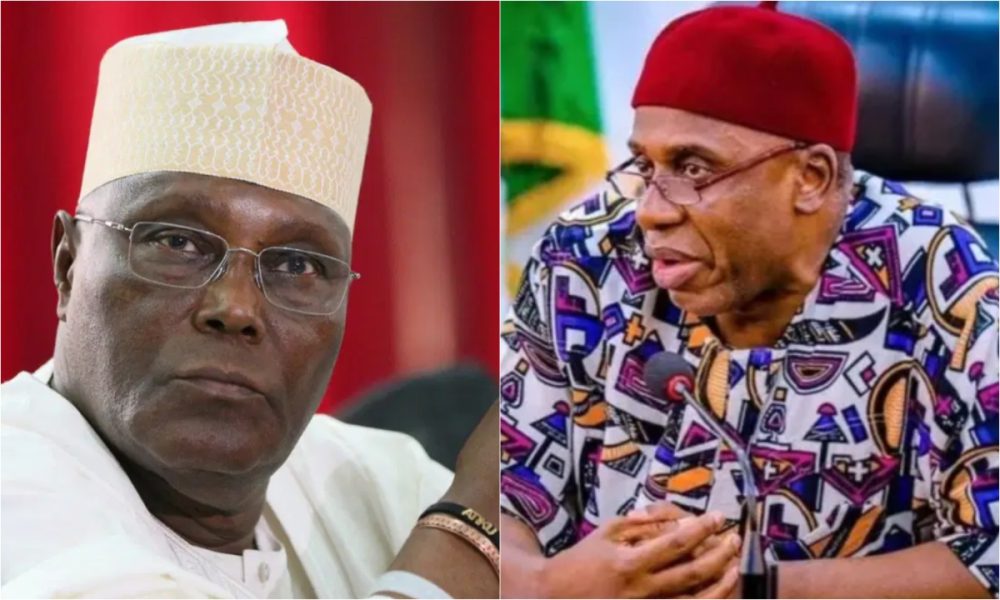
Ex-Vice President Atiku Abubakar and former governor of Rivers State, Rotimi Amaechi, have arrived Ibadan, Oyo State capital, ahead of the National Summit of all opposition parties.

Ex- governor of Anambra State, Peter Obi, and his Kano State counterpart, Rabiu Kwankwaso, alongside other opposition heavy weights, are expected in the summit.

They are being hosted by the Oyo State Governor, Seyi Makinde, a member of the Peoples Democratic Party, PDP.

Atiku, one of the opposition leaders jostling for the presidential ticket of the African Democratic Congress, ADC, for the 2027 election, posted the video of his arrival on his Facebook page.

Advertisement

In the video, a large crowd of supporters were seen welcoming the former vice president to Oyo State.
They are being hosted by the Oyo State Governor, Seyi Makinde, a member of the Peoples Democratic Party, PDP.

Atiku, one of the opposition leaders jostling for the presidential ticket of the African Democratic Congress, ADC, for the 2027 election, posted the video of his arrival on his Facebook page.

In the video, a large crowd of supporters were seen welcoming the former vice president to Oyo State.

Advertisement
Continue Reading

News

Delta PDP threatens Court action against APC defectors over alleged forgery

Published

on

ADVERTISEMENT
Zoom Ad
ADVERTISEMENT
Zoom Ad

The Peoples Democratic Party, PDP, Delta State chapter, has threatened legal action over alleged attempts to forge and backdate resignation letters of party members who defected to the All Progressives Congress, APC.

The PDP Chairman in the state, Mr. Peter Mrakpor, while revealing the move, described the allegation as fraudulent and a clear breach of due process, warning that those behind it would be held accountable.

He confirmed that none of the defectors followed proper procedure by submitting resignation letters to their respective wards before leaving the party.

The PDP chairman further disclosed that the party is prepared to pursue legal action against any individual found culpable in the alleged scheme.

Advertisement

Despite the wave of defections, the Senior Advocate of Nigeria (SAN) maintained that the PDP in Delta State remains united and structurally strong, expressing confidence in the party’s continued stability across the state.

The attempt to forge and backdate resignation letters is not only illegal but a desperate move that will fail. None of those who defected submitted resignation letters to their wards before the mass defection,” he said.

Just weeks ago, the PDP demanded that the APC state chairman, Chief Solomon Areyinka, vacate the PDP secretariat he occupies immediately.

The PDP further warned that the Delta State Government, which it accused of aiding the occupation, should note that the property’s Certificate of Occupancy remains in the PDP’s name and has not been revoked.

Advertisement

It accused the state government of complicity in what it described as the “illegal and unconstitutional” occupation of its state secretariat by the APC.

The party vowed to explore “every legal avenue” to reclaim the property, especially as some defectors who left for the APC as far back as April 2025 were still allegedly using the party’s bank accounts.

The PDP stated that the secretariat, located on WAEC Road, off Mariam Babangida Way, Asaba, was acquired in its name, with all documents bearing the party’s insignia.

The PDP’s Publicity Secretary, Chief Kingsley Akpos Oturubo, said the secretariat was built long before the APC came into existence as a political entity. He described the situation as unprecedented, noting that the APC already maintains a separate state office on Anwai Road.

Advertisement

“Where in this country does a political party have two secretariats in a state?” the statement read. “Chief Solomon Areyinka should know that he is now a member of the APC. The PDP secretariat and all the assets of the party did not defect with him to the APC.”

The statement linked the government’s actions to the PDP’s National Leader, Nyesom Wike, and his pledge to reclaim the party’s mandate in the 2027 elections.

“The state government is doing everything possible to dismantle the structures connected to the PDP National Leader,” the party alleged.

Describing the situation as “an invitation to anarchy,” the PDP called on security agencies to take note. It warned that Chief Areyinka and the state government would be held responsible for any breakdown of law and order.

Advertisement

We have already alerted the relevant anti-graft agencies to apprehend these fraudsters,” the statement added.

The party appealed to its faithful to remain calm, while insisting that the ruling APC must accept constructive criticism and abandon any dream of a one-party state in Delta.
Continue Reading

News

MTN finally begins airtime compensation over poor service rendered in January

Published

on

ADVERTISEMENT
Zoom Ad
ADVERTISEMENT
Zoom Ad

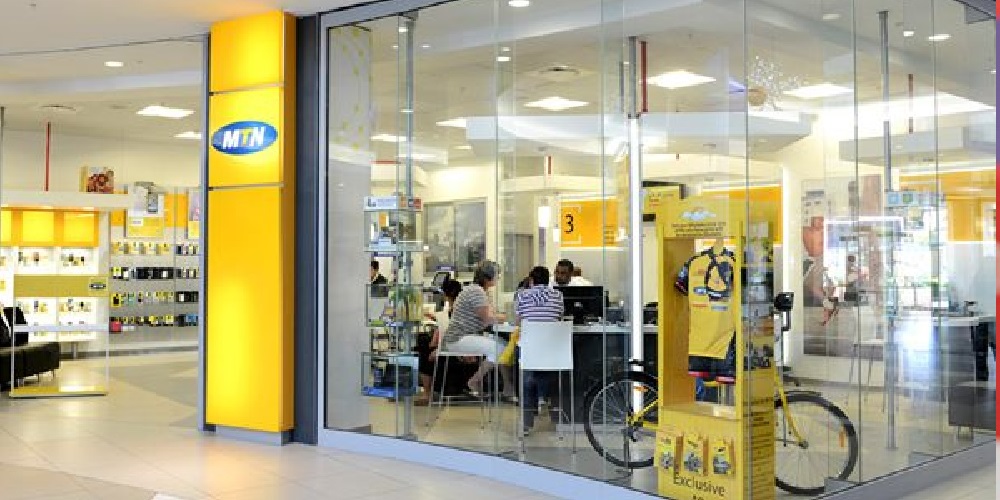
Subscribers of MTN Nigeria have started receiving airtime credits from the telecom operator as compensation for poor quality of service experienced in January 2026.

The development became public after several users shared notifications on the social media platform X, showing that their lines had been credited with different amounts.

One of the messages sent to subscribers read: “Dear Customer, your account has been credited with N341 airtime for quality of service issues in January 2026. Thank you for your understanding.”

Findings indicate that the compensation varies across users. While some reported receiving over N300, others claimed they got smaller amounts such as N20 and N91, though these could not be independently verified.

Advertisement

As of the time of filing this report, it remains unclear whether all affected subscribers have received the airtime credit or if the process is still ongoing in phases.

The move follows increased regulatory pressure on telecom operators to improve service delivery and address persistent complaints from subscribers across the country.

Industry observers believe the action is linked to directives from the Nigerian Communications Commission, which requires operators to meet minimum quality-of-service standards and, where necessary, compensate customers for service lapses.

MTN had earlier signalled its readiness to comply with such directives, while also committing to further investment in network infrastructure to improve service quality nationwide.

Advertisement

However, the company has yet to provide details on the total number of subscribers affected or the criteria used in determining the compensation amounts.

Telecom service delivery has remained a major concern in Nigeria, with many users frequently complaining about dropped calls, slow internet speeds and network outages.

Regulators have in recent years intensified oversight of telecom operators to ensure compliance with service benchmarks and consumer protection guidelines.

Compensation measures such as airtime credits are part of broader efforts to rebuild trust among subscribers and enforce accountability within the sector.

Advertisement

Analysts say while the current compensation may offer temporary relief to affected users, long-term improvement in service quality will depend largely on sustained investment in infrastructure and efficient network management.

Continue Reading

Trending

Copyright © 2024 Naija Blitz News