Connect with us

News

How Nationwide Protests Forced Us To Listen To Nigerians – Says Tinubu

Published

on

ADVERTISEMENT
Zoom Ad
ADVERTISEMENT
Zoom Ad

By Kayode Sanni-Arewa

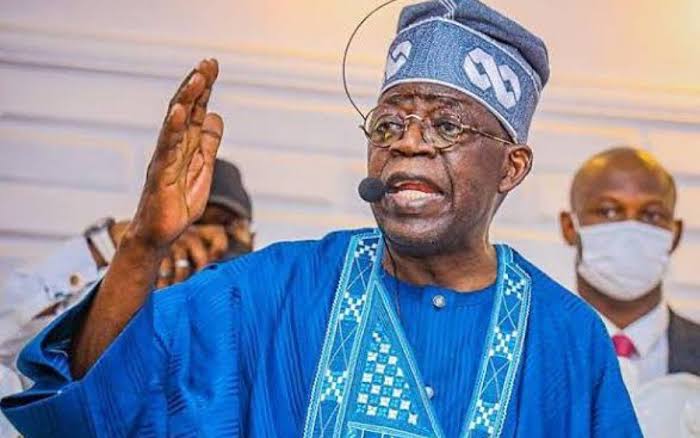
Senator Abubakar Bagudu, the Minister of Budget and Economic Planning, has stated that the recent nationwide #EndBadGovernance protests compelled the federal government to heed Nigerians’ demands.

Speaking at the ‘’Nigerian Economic Summit Group National Economic Dialogue on Nigeria’s Economic Future: 25 Years of Democracy and Beyond,” Bagudu attributed the country’s current issues to previous administrations but noted President Bola Tinubu’s refusal to assign blame.

While noting that efforts were in progress to improve the country’s fortunes, Bagudu said: “We have learnt that even the current protests have made us listen more. Whatever we are doing, we have taken the message that we need to do more, we need to do better, and we need to do it in a hurry.”

Advertisement

Speaking further, the minister said: “President Bola Tinubu has been very reluctant to reflect on the past and blame anybody, but the net effect is that despite efforts by previous administrations, especially in the last 25 years, we are not where we want to be.

“So, what do we do? It’s not because of anyone’s failing, but that is our reality. We have yet to achieve the income per capita that we require, and it’s not for lack of trying; it’s not for lack of successes. With the transformation in the telecommunication sector, at some point, we even reversed our gross domestic product, GDP.

‘’Our population has grown from 119 million in 1999 to about 230 million, almost double. Still, our oil production, for example, 2.2 million barrels in 1999, is now rather than 4 million, according to the doubling of our population, which is still under 1.5 million, reflecting cumulative years of under-investment in the sector.

“So, our reality is that we are not where we want to be, and our constitution needs to be more transparent about what we should do. Chapter 2 of our Constitution, the Fundamental Objectives and Directive Principles of State Policy, clearly discusses the country’s political objectives. It is also very clear about the economic objectives—what kind of economy we want to run.

Advertisement

“Chapter two of the Constitution spells out citizens’ duties. The chapter opens by saying that all persons in authority, legislative, executive, and judicial, at all levels of government, have the primary mandate to ensure the achievement of those fundamental objectives in Chapter 2.

“So, the constitution—maybe we can interrogate it and make it better—provides a starting point. Agenda 2050 reflects those objectives. We want a nation that includes all. We want a higher per capita by the year 2050. We want to ensure that we invest not less than $100 billion annually.

‘’But if our experience in the last 25 years should serve us as a guide, we sometimes know how difficult it is because you have to make choices that are both pleasant and unpleasant to be able to mobilise capital, private and borrowed, to support our aspiration.”


Advertisement
Continue Reading
Advertisement
Click to comment

Warning: Undefined variable $user_ID in /home/naijuinz/public_html/wp-content/themes/zox-news/comments.php on line 49

You must be logged in to post a comment Login

Leave a Reply

News

NLC To Push For New Minimum Wage, National Minimum Pension

Published

on

By

ADVERTISEMENT
Zoom Ad
ADVERTISEMENT
Zoom Ad

The Nigeria Labor Congress (NLC) has announced plans to launch a major national campaign to review the national minimum wage and to demand the introduction of a national minimum pension for retirees.

NLC president, Comrade Joe Ajaero, disclosed this during the commissioning of the Comrade Godwin Abumisi Pensioners Legacy House and Multipurpose Hall in Abuja.

Ajaero said the welfare of pensioners must be given the same level of attention as that of serving workers, stressing that organized labor would no longer advocate for improved wages without also seeking better living conditions for retirees.

“The Nigeria Labour Congress is currently in the preparatory stages for a major national struggle for a comprehensive review of the national minimum wage,” he said.

Advertisement

“However, it is no longer acceptable to discuss the welfare of workers without also discussing the welfare of those who have completed their active years of service.”

According to him, the NLC will not only campaign for a new national minimum wage but will also push for the establishment of a national minimum pension to guarantee retirees a decent standard of living.

“It is a historical injustice that men and women who devoted their youth, strength and productive years to the service of this nation should be condemned to live below the poverty line after retirement,” Ajaero stated.

The labour leader said the rising cost of living, coupled with increasing prices of food, healthcare and transportation, has made it difficult for many pensioners to survive.

Advertisement

“We cannot continue to allow our senior citizens to survive on pensions that have become poverty wages. Every retiree deserves to live with dignity after decades of faithful service to the nation,” he said.

Ajaero urged pensioners across the country to remain united and prepare for the struggles ahead, describing the newly commissioned Legacy House as a center for mobilization, strategic engagement and solidarity.

He also called on workers to remain united in defending their collective interests, noting that the labour movement would continue to demand the payment of outstanding pension arrears and the implementation of a pension system that guarantees retirees dignity and financial security.

“We will continue to demand the immediate payment of all outstanding pension arrears and the implementation of a pension regime that guarantees every retiree a life of dignity and security,” he added.

Advertisement
Continue Reading

News

Digital identity will track illegal miners– Alake

Published

on

By

ADVERTISEMENT
Zoom Ad
ADVERTISEMENT
Zoom Ad

The Federal Government is seeking to deploy digital identity technology to track mining operators, strengthen regulation and curb insecurity in the solid minerals sector.

The Minister of Solid Minerals Development, Dele Alake, stated this when he received the Director-General and Chief Executive Officer of the National Identity Management Commission, Abisoye Coker-Odusote, and her management team on a courtesy visit to his office in Abuja.

According to a statement issued on Sunday by the minister’s Special Assistant on Media, Lara Owoeye-Wise, the ministry and NIMC are exploring deeper collaboration to promote digital identity, strengthen governance and accelerate reforms in the mining sector.

Alake described NIMC as a critical institution in Nigeria’s development architecture, stressing that effective governance, regulation and national planning could not be achieved without credible identity management and reliable data.

Advertisement

“NIMC occupies a critical position in translating policy into reality. It is pivotal to the development of any nation because governance today is driven by data, technology and credible identity systems,” the minister said.

He said the ongoing reforms in the solid minerals sector required stronger collaboration with agencies responsible for identity management, particularly in efforts to improve transparency, accountability and security across the mining value chain.

Alake said a credible identity system would make it easier for the government to identify and track operators, monitor mining activities and distinguish legitimate operators from those engaged in illegal activities.

“Without identification, we cannot trace; we cannot track, and insecurity will flourish. In the solid minerals sector, we need effective tracking of both legal and illegal operations.

Advertisement

“A credible identity ecosystem will strengthen regulation, improve enforcement and support our efforts to sanitise the sector,” he said.

The minister identified technology, statistics, data gathering and digital identity as key tools for evidence-based policymaking, improved regulatory oversight, efficient licensing and investment promotion.

He said the availability of accurate and verifiable data would also help the government to better understand the activities of operators in the sector and design policies capable of supporting sustainable development.

The push for stronger digital identity integration comes amid the Federal Government’s efforts to reform Nigeria’s solid minerals sector, which has continued to face challenges including illegal mining, weak monitoring of operators, insecurity and inadequate data on activities across the value chain.

Advertisement

The government has repeatedly said that better regulation, improved data and stronger enforcement are critical to unlocking the sector’s contribution to the economy and reducing the activities of illegal miners.

Earlier, Coker-Odusote highlighted several areas of possible collaboration between NIMC and the Ministry of Solid Minerals Development.

She said the recently enacted NIMC Act 2026 had strengthened the legal framework for Nigeria’s digital identity ecosystem and created opportunities for deeper integration of identity management into government operations.

According to her, the integration of NIMC’s digital identity infrastructure into the solid minerals sector would support database integration across government agencies, improve regulatory compliance and strengthen security and law enforcement.

Advertisement

She also said it would enhance the monitoring of mining operators and provide stronger support for the implementation of Community Development Agreements in mining host communities.

Coker-Odusote said reliable digital identity would enable government institutions to build more accurate databases and improve service delivery and transparency in public administration.

She added that the new legal framework would accelerate secure identity verification, improve inter-agency data sharing and strengthen the ability of government agencies to deliver services to Nigerians and legal residents.

The NIMC boss said the commission’s infrastructure could support the creation of a more reliable identity ecosystem for the mining sector, helping regulators to verify operators and improve monitoring across the country.

Advertisement

Both institutions expressed their commitment to strengthening collaboration through technology-driven initiatives aimed at supporting the Ministry’s reforms and improving governance in the mining sector.

The partnership is also expected to contribute to improved security, greater transparency and stronger accountability in the management of Nigeria’s mineral resources.

Continue Reading

News

Falana urges Nigeria, Ghana to sue South Africa over xenophobic attacks

Published

on

By

ADVERTISEMENT
Zoom Ad
ADVERTISEMENT
Zoom Ad

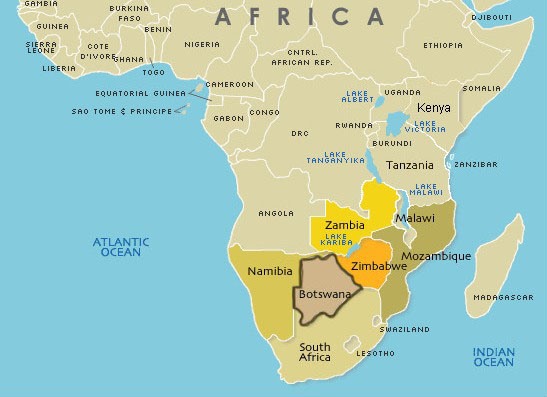
Human rights lawyer and Senior Advocate of Nigeria (SAN), Femi Falana, has called on the governments of Nigeria and Ghana to institute legal proceedings against South Africa at the African Court on Human and Peoples’ Rights over recurring xenophobic attacks and the alleged forced displacement of African migrants.

Falana made the call in a statement on Sunday, arguing that the decision by both countries to report South Africa to the African Union (AU) would not deliver justice or compensation for victims. He described the move as “diversionary and time wasting,” insisting that the AU lacks the legal authority to compel South Africa to compensate those affected.

His remarks follow renewed xenophobic attacks in South Africa that forced thousands of Nigerian migrants to flee the country after groups of youths allegedly targeted African nationals. The Nigerian government had earlier announced plans to seek compensation for citizens who lost businesses, homes, properties and investments during the attacks.

South Africa had initially indicated that discussions on compensation would be handled through diplomatic engagements. The country’s Foreign Ministry spokesperson, Kimiebi Imomotimi Ebienfa, said the matter would be addressed at the highest level between both governments. Nigeria’s Acting High Commissioner to South Africa, Alexander Ajayi, also disclosed that officials had begun documenting businesses and properties abandoned by affected Nigerians.

Advertisement

However, Falana noted that South Africa later rejected Nigeria’s compensation demand, maintaining that many of those evacuated were residing in the country illegally. He said that position had been challenged by some of the affected migrants.

The senior lawyer argued that Nigeria, Ghana and other African countries whose citizens had suffered similar attacks should instead seek redress before the African Court on Human and Peoples’ Rights in Arusha, Tanzania, where they could pursue compensation and other legal remedies for victims.

According to him, the alleged mass expulsion of African migrants violates Article 12 of the African Charter on Human and Peoples’ Rights, which prohibits the mass expulsion of non-nationals except in accordance with the law.

“Some of the victims of the xenophobic attacks were killed in the process,” Falana said, adding that inflammatory statements allegedly made by some South African public officials had fuelled hostility towards African migrants living in the country.

Advertisement

He also drew a comparison with South Africa’s decision to institute proceedings against Israel at the International Court of Justice over alleged violations of the Genocide Convention in Gaza, arguing that Pretoria should equally be prepared to submit itself to international legal accountability over alleged human rights violations against African migrants.

Falana urged Nigeria and Ghana to invoke Article 5 of the Protocol establishing the African Court on Human and Peoples’ Rights by seeking provisional measures to prevent further attacks and demanding aggravated damages against the South African government.

The SAN further criticised Nigeria for failing to recognise the jurisdiction of the African Court to entertain cases filed by individuals and non-governmental organisations, noting that Ghana has already accepted the court’s competence.

“Had Nigeria recognised the competence of the court, victims of xenophobic attacks and other gross abuses of human rights would have been able to seek legal redress, including compensation,” he said.

Advertisement

Falana therefore called on President Bola Tinubu’s administration to activate Article 34(6) of the court’s protocol by recognising the jurisdiction of the African Court, a move he said would allow Nigerian citizens direct access to the continental judicial body to pursue justice for human rights violations.

Continue Reading

Trending

Copyright © 2024 Naija Blitz News