News
JUST IN: Onyeka Onwenu to be buried today in Lagos
- /home/naijuinz/public_html/wp-content/plugins/mvp-social-buttons/mvp-social-buttons.php on line 27
https://naijablitznews.com/wp-content/uploads/2024/08/1725008331.jpg&description=JUST IN: Onyeka Onwenu to be buried today in Lagos', 'pinterestShare', 'width=750,height=350'); return false;" title="Pin This Post">
- Share
- Tweet /home/naijuinz/public_html/wp-content/plugins/mvp-social-buttons/mvp-social-buttons.php on line 72
https://naijablitznews.com/wp-content/uploads/2024/08/1725008331.jpg&description=JUST IN: Onyeka Onwenu to be buried today in Lagos', 'pinterestShare', 'width=750,height=350'); return false;" title="Pin This Post">
By Mario Deepromoter

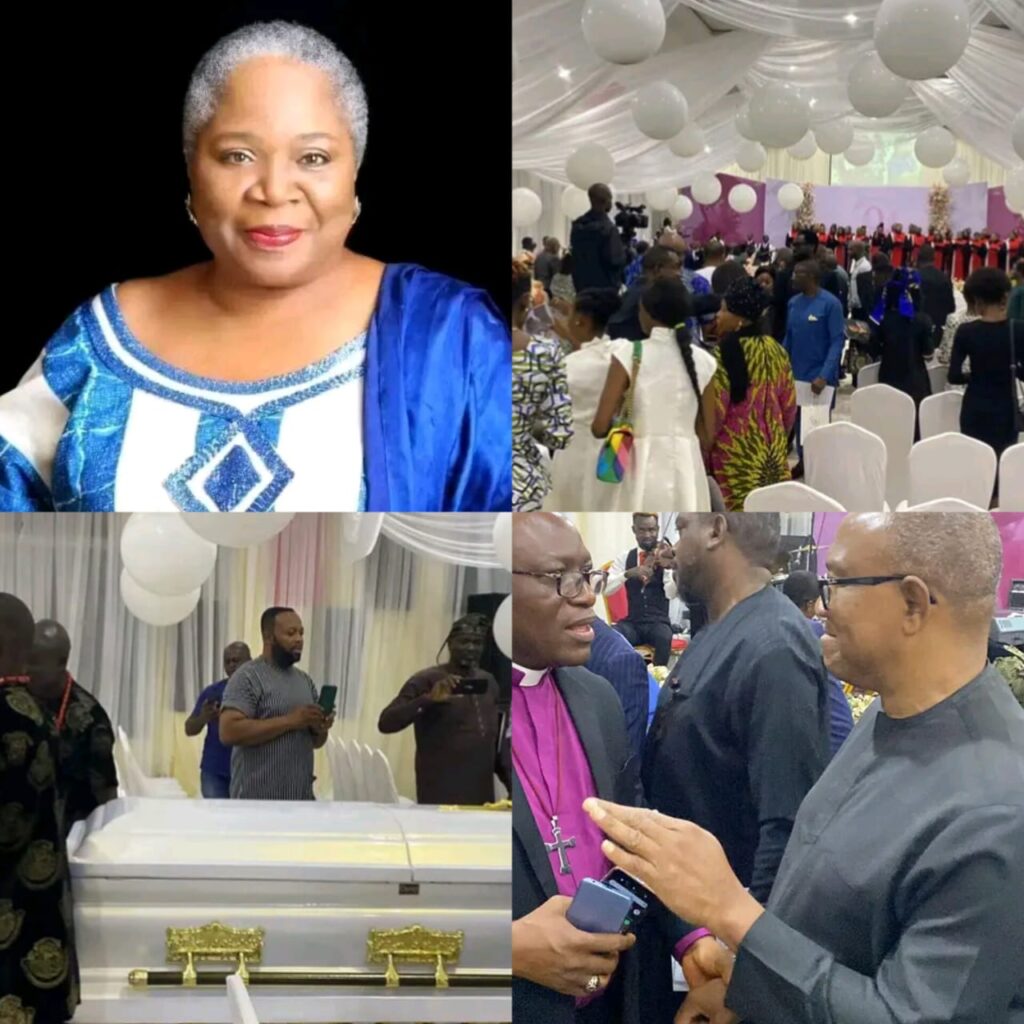
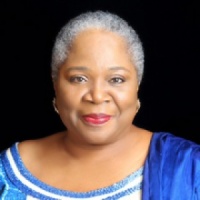
Nigeria’s foremost artiste Onyeka Onwenu will be buried in Lagos today, Friday, August 30, 2024.
The elegant stallion as she is known died on 30th July 2024 at Reddington Hospital, Ikeja Lagos after collapsing at function held in honour of Mrs Okoli the Managing Director of Emzor Pharmaceuticals.

She was 72 years old.
According to a burial arrangement issued by the family, her funeral service will be held at the Fountain of Life Church Ilupeju and burial held at a private vault in Ikoyi.
In her lifetime Onyeka Onwenu was a broadcaster, actress, politician and activist.
She had several successful songs to her credit.
She hailed from Imo State and blessed with two sons. (CKNNews)
News
Dogara Urges National Assembly to Harness Civil Society in Fight for Accountability
By Gloria Ikibah
Former Speaker of the House of Representatives, Rt. Hon. Yakubu Dogara, has urged the National Assembly to forge stronger partnerships with civil society organisations (CSOs), saying effective legislative oversight is essential if government spending and public policies are to deliver real benefits to Nigerians.
Dogara made the appeal on Tuesday during the National Assembly Open Week in Abuja, where lawmakers, development partners, civil society groups and the media gathered to examine ways of strengthening transparency, accountability and public participation in governance.
Reflecting on Nigeria’s 25 years of uninterrupted democracy, the former Speaker said many citizens were still waiting to enjoy the full dividends of democratic governance despite the huge sums approved by parliament over the years.
He questioned why there remained a wide gap between what the National Assembly appropriates and what ultimately reaches ordinary Nigerians, describing the disconnect as one of the country’s biggest governance failures.
“The essence of oversight is to ensure that every kobo appropriated by the National Assembly is spent for the purpose for which it was approved and that Nigerians receive value for public funds,” he said.
Dogara stressed that legislative oversight should not be reduced to routine committee visits or the production of official reports, arguing that its real purpose is to expose corruption, inefficiency, waste and poor governance.
He commended the leadership of the House of Representatives under Speaker Tajudeen Abbas and Deputy Speaker Benjamin Kalu for introducing the National Assembly Open Week, describing it as an important step towards making parliament more accessible and accountable.
According to him, the initiative provides citizens, civil society organisations and the media with an opportunity to engage lawmakers directly, ask difficult questions and make meaningful contributions to the legislative process.
Dogara maintained that democratic institutions become stronger when they willingly open themselves to public scrutiny instead of operating behind closed doors.
He warned that legislative oversight loses its value when it becomes a ceremonial exercise rather than a genuine mechanism for ensuring government programmes are implemented as approved and in the public interest.
The former Speaker argued that civil society organisations should be regarded as partners in governance rather than critics standing on the sidelines.
He said many CSOs possess technical expertise, grassroots knowledge and field-based evidence that can strengthen the oversight work of parliament.
Describing civil society groups as the “eyes and ears” of the legislature, Dogara said they play an indispensable role in tracking constituency projects, monitoring public spending and identifying failures in service delivery.
Recalling his time as Speaker, he said he deliberately encouraged civil society participation during budget defence sessions despite resistance from some lawmakers who were uncomfortable with increased public scrutiny.
According to him, institutions that resist openness ultimately undermine public confidence in democratic governance.
Dogara identified the persistent gap between budget approvals and project execution as one of Nigeria’s greatest accountability challenges, arguing that the problem lies less with the availability of funds than with weak monitoring and enforcement.
He therefore urged lawmakers to devote as much attention to monitoring budget implementation as they do to passing appropriation bills, insisting that the work of parliament should not end once a budget is approved.
The former Speaker also called on the Executive to cooperate fully with legislative oversight by embracing transparency and providing timely access to information required for effective scrutiny.
He encouraged civil society organisations to support the National Assembly with credible data, verified evidence and properly documented findings capable of influencing policy and prompting corrective action where necessary.
Dogara further advocated institutionalising collaboration between parliament and civil society beyond annual events such as the Open Week, saying sustained engagement would strengthen oversight, improve accountability and deepen public trust in democratic institutions.
He concluded that democracy can only thrive where transparency, accountability and constructive criticism are embraced, urging lawmakers, parliamentary staff, civil society organisations and citizens to work together to ensure government policies, budgets and development projects translate into meaningful improvements in the lives of Nigerians.
News
Presidency, National Assembly Renew Alliance on Reforms as Abbas Defends 10th NASS Record
By Gloria Ikibah
The Presidency has reaffirmed its commitment to working closely with the National Assembly to advance security, economic recovery and good governance, insisting that cooperation between both arms of government is essential to delivering the Renewed Hope Agenda.
The assurance came on Tuesday as the House of Representatives opened its National Assembly Open Week in Abuja, an initiative aimed at showcasing the work of parliament and strengthening public engagement under the theme, “Three Years of the 10th National Assembly: Advancing Transparency, Inclusion and Reform.”
Representing President Bola Tinubu, the Chief of Staff, Rt. Hon. Femi Gbajabiamila, said Nigerians expect government institutions to work together in the national interest, while stressing that the Open Week should serve as more than a ceremonial event.
He said: “An Open Week must be more than the ceremonial opening of the gates of Parliament. It should be an invitation to scrutiny, dialogue and partnership.
“Citizens should be able to follow how laws are made, understand how public resources are appropriated and see how legislative oversight protects the national interest.
“Equally, the legislature must continue to hear from young Nigerians, women, persons with disabilities, civil society, the private sector, professional bodies and communities across the federation.”
Gbajabiamila praised the leadership of the National Assembly, led by Senate President Godswill Akpabio and Speaker of the House, Tajudeen Abbas, for reforms undertaken since the inauguration of the 10th Assembly.
He emphasised that collaboration between the Executive and Legislature strengthens, rather than weakens, democracy.
“While the Executive and the Legislature are separate arms of government, they share one ultimate mandate which is to improve the lives of the Nigerian people. Constructive cooperation does not diminish legislative independence, nor does robust debate amount to institutional conflict. Our democracy is strengthened when both arms engage with mutual respect, constitutional fidelity and a clear focus on results.
“As we reflect on the first three years of the 10th Assembly, I encourage us to look beyond the record of activities to the measure of impact: laws that solve real problems; budgets that translate into visible development; oversight that improves performance; and representation that renews citizens’ confidence in government.
“The Presidency remains committed to a productive relationship with the National Assembly in pursuit of security, economic renewal, social justice and shared prosperity under the Renewed Hope Agenda. Nigerians expect their institutions to work together.
“I congratulate the 10th National Assembly and all partners who have made this Open Week possible. May this gathering deepen public trust, strengthen democratic accountability and remind us all that public office is, above all, a public trust”, he added.
In his keynote address, Speaker Abbas Tajudeen defended the performance of the House over the past three years, revealing that lawmakers had processed 2,747 bills, with 363 passed by the National Assembly and 72 already signed into law by President Tinubu.
He said the figures represented the most productive legislative record since the return to democratic rule in 1999.
He said: “These were not lines upon a page but measurable and lasting change. Those figures represent the highest for any Assembly since 1999.”
According to the Speaker, one of the landmark laws guarantees interest-free student loans, while others have overhauled revenue administration and created regional development commissions.
“One of those laws now offers young people interest-free student loans, so that no Nigerian student is turned away from a lecture hall for want of means.
“Another has reformed how the nation raises and shares its revenue. Others have created commissions to carry development into every region of the Federation.
“The landmark statutes are only part of our work: more than 800 citizens have petitioned this House, and we have already brought hundreds of those matters to resolution. That, in my estimation, is this House at its most faithful.
“Where we have served the nation well, the Scorecard records it. Where we have fallen short, it records that also. At our inauguration in 2023, we asked to be measured against our own promises, and we meant it”, Abbas added,
The Speaker described the Open Week as an opportunity for direct engagement between parliament and the public.
“This week was designed not as a lecture but as a national conversation, and at every table, a place has been reserved for the citizen.”
The Speaker also defended the Assembly’s support for the Tinubu administration’s economic reforms, saying parliament had provided the legal framework required to implement key policies.
“President Bola Tinubu asked us to accept a difficult but necessary course of reforms. They reached into the very foundations of our economy, into how it is financed, how our currency is valued, and how our common revenue is shared and invested in our people.
“Every policy of the Executive still had to become law, to pass through appropriation, and to withstand legislative scrutiny. That is the indispensable work this House has performed.
“We laid the legal foundation for the tax reforms that will render our revenue fairer for generations to come.
“We enacted budgets directing resources toward infrastructure, toward power, and toward the human capital upon which all else depends.
“We gave statutory force to the reform of student financing. The President furnished the vision; the National Assembly furnished the laws that render the vision enforceable. That is the true measure of legislative support, and it is worth far more than applause”, he stated.
On security, Abbas maintained that progress was being made despite continuing challenges.
“Nothing tests a government, or a parliament, so severely as the safety of the citizen.
“Let me speak plainly: our security forces are gaining ground, and we will not rest until every Nigerian is safe.”
The Speaker also dismissed claims that the National Assembly merely rubber-stamps Executive proposals.
“Some assume, in good faith, that when a President signs a Bill quickly, then the legislature is a rubber-stamp. That is not how the work is done.
“Swift assent is usually the reward of months of committee work, completed long before the cameras arrive.
“Even the Congress of the United States has, in urgent moments, passed sweeping legislation in a single day, and no serious observer called it surrender.
“Speed built on hard preparation is the mark of a Parliament that is working, not one that has stopped thinking.”
He urged Nigerians to become more involved in the legislative process.
“My appeal to the citizen who observes us today is therefore a simple one: draw closer. Acquaint yourself with the true workings of your Parliament.
“Read a Bill before you pass judgement upon it. Submit your memoranda when we call for them. We take your submissions seriously and consider your input in amending laws”, he added.
Senate President Godswill Akpabio said the National Assembly remained focused on supporting government through legislation and budget approvals that improve the economy.
“I also insist that any sort of finance or those running our economy also take care of our contractors across the board so that money will be released to the society for things to function”, he said.
He also praised President Tinubu’s relationship with the legislature.
“He has visited us more times than any president. Whether it is June 12th or whether it is time of budget, he comes here in person and always very excited.
Executive Director of the Policy and Legal Advocacy Centre (PLAC), Clement Nwankwo, acknowledged the Assembly’s progress in areas including constitutional amendment, electoral reform and citizen engagement, but challenged lawmakers to strengthen oversight of the Executive.
“The Legislature is at its strongest not when it agrees with the Executive, but when it faithfully discharges its constitutional duty to scrutinise executive action, protect public resources and ensure that government remains accountable to the people”, he said.
Nwankwo urged lawmakers to conclude the constitutional review process, strengthen Nigeria’s electoral laws, pass the Special Seats Bill for Women, deepen transparency and ensure oversight delivers measurable benefits for citizens.
Former Speaker Aminu Masari commended the Open Week initiative, describing it as evidence that the House was living up to its reputation as the “People’s House.”
Emeritus Archbishop of the Catholic Archdiocese of Abuja, John Cardinal Onaiyekan, reminded lawmakers that their legitimacy comes from the electorate and urged them to place the interests of Nigerians above every other consideration.
Executive Secretary of the National Assembly Library, Hon. Henry Nwawuba, said the Open Week reflects parliament’s commitment to openness and accountability, while noting that it coincides with the second anniversary of the National Assembly Library, established by President Tinubu to preserve Nigeria’s legislative history and improve public access to parliamentary information.
News
Reps Reopen State Police Debate, Drop Earlier Bill for Tinubu’s Executive Proposal
By Gloria Ikibah
The House of Representatives on Tuesday rescinded its earlier resolution on the proposed constitutional amendment to establish state police, paving the way for fresh consideration of an Executive Bill transmitted by President Bola Tinubu.
Lawmakers unanimously voted to withdraw the earlier version of the legislation before immediately giving the President’s proposal a second reading, signalling a fresh phase in the long-running effort to create a constitutional framework for state policing.
The decision followed the adoption of a motion moved by the Chairman of the House Committee on Rules and Business, Rep. Francis Waive (APC, Delta), during plenary.
Waive said the motion was brought pursuant to Order Nine, Rule 6 of the Standing Orders of the House of Representatives.
He reminded members that the House had, on Thursday, 11 June 2026, approved amendments to several sections of the Constitution relating to the establishment of State Police Services.
According to him, the affected provisions include Sections 34, 35, 39, 42, 84, 89, 129, 153, 197, Chapter VI Part III, Sections 214, 215 and 216, as well as the Second and Third Schedules to the Constitution.
Waive also recalled that on 9 July, the House constituted a 12-member Conference Committee to harmonise its position with that of the Senate on the proposed legislation.
He, however, said fresh developments had made it necessary for lawmakers to revisit the bill.
He said: “New facts have emerged regarding the provisions of the Bill, which necessitate a critical review and reconsideration of its clauses to align with national security structure.
“Cognizant of the need to rescind the decision of the House on the passage of the bill and the constitution of the Conference Committee on the Establishment of State Police Services.”
When Speaker Abbas Tajudeen put the motion to a voice vote, members unanimously supported the proposal, effectively withdrawing the House’s earlier decision on the bill.
Shortly afterwards, the House considered an Executive Bill transmitted by President Bola Tinubu seeking to amend the Constitution to establish a constitutional framework for State Police Services.
The proposed legislation passed second reading after a letter from the President was read on the floor by the Speaker.
In the letter, Tinubu said the Executive Bill builds on the extensive legislative work already carried out by the House while introducing additional safeguards to strengthen the proposed policing framework.
According to the President, the amendments are designed to ensure that the creation of a dual policing system can respond more effectively to Nigeria’s changing security landscape.
“The proposed legislation is a critical component of our administration’s strategy to reorganise Nigeria’s security architecture to better protect our citizens, and I am confident that the House of Representatives will act quickly to consider and pass this bill.
“While I look forward to expeditious consideration of this submission by the House of Representatives, please accept, Rt. Honourable Speaker, the assurances of my consideration and best regards”, Tinubu stated.
-
News18 hours agoUnited States Lobbying Firm Offers Asylum Support To Adeniyi Adeyemi Amid PFIPC Scandal
-
News13 hours agoSAD: UK based young Nigerian mum takes own life over mental challenges
-
News8 hours agoVIDEO: DAY 25 of Projects Commissioning in FCT: Watch Wike’s brief dancing steps
-
News18 hours agoArmy Hands Over Rescued Oyo Teachers, Pupils To Governor Makinde
-
News13 hours agoOrire: Nigerian Army gives reasons why drones could not locate kidnappers
-
Sports18 hours agoDutch Referee Rob Dieperink Dies Weeks After World Cup Removal
-
News17 hours agoTinubu Made Buhari President — And Buhari Returned the Favor, Gowon Reveals
-
News18 hours agoMakinde Urges UN To Probe Circumstances Surrounding Oyo Schoolchildren’s Abduction

Warning: Undefined variable $user_ID in /home/naijuinz/public_html/wp-content/themes/zox-news/comments.php on line 49
You must be logged in to post a comment Login