Connect with us

News

How We Spent 36 Years In Nigeria With 10-Day Visas — American Tourist Narrates

Published

on

ADVERTISEMENT
Zoom Ad
ADVERTISEMENT
Zoom Ad

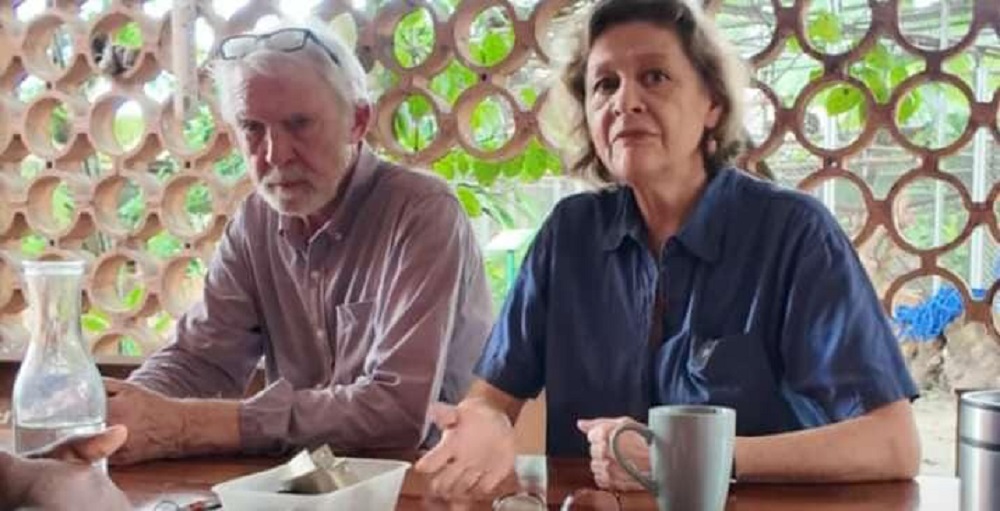
Two American tourists, Liza Gatsby, and Peter Jenkins, have recounted what led them to spend over 36 years in Nigeria instead of the 10-day transit visas that were approved for them in 1988.


The two tourists made the revelation in an interview with a content creator, David Nkwa, monitored by Punch on Wednesday.

According to them, they never planned to stay in Nigeria beyond their approved days of visitation until they saw the need to save drill monkeys in the country because they were impressed by the dominance of interesting opportunities in areas of Science and Wildlife Conservation, the roads, the hospitality of Nigerians and the living condition that appeared better compared to America in those days.

“I’ll tell you what I like about Nigerians. Okay, that’s what makes Nigeria different from every other country in Africa. They would say ‘hey! Oyinbo, come in na, sit down, make we talk. Make I go buy you drink.’ That is the difference between Nigeria and the rest of Africa.

Advertisement

“There were a lot of interesting opportunities in areas of Science and Wildlife Conservation that we became involved in, and we’re still here 36 years later. We arrived with a 10-day transit visa, and we have been here for 36 years.

“We founded a nonprofit organisation called Pandas that ranches monkey drills in Bano and Calabar in Cross River State. I don’t think that one species is more important than another, just like I don’t think that human beings are more important than drills or elephants are more important than whales; I think we are all of equal value, and the drill is a scarce species, it’s one of the rarest animals in Africa and it’s one of those animals you never thought you would even see when we were traveling across Africa, you know I had my Wildlife Field Guide and you look at the pictures,” Gatsby, one of the tourists said.

Speaking on why Calabar was their place of choice, Jenkins said they had done their research and that aside from Cameroon, Calabar was another place for monkey drills, stressing that no scientist or tourist had discovered that those animals were living there until 1987 when they consulted the local people in the community and got funding to make it habitable while conserving the rare species of Monkeys and other animals including girafees.

Jenkins added, “I love Nigeria, this is a great place. Come and live in Calabar and be at rest.When we got here, the population of Nigeria in the early ’90s and the late ’80s was around 65 million.

Advertisement

“The amount of natural resources that were still intact was extraordinary, and the density of wildlife generally in the forest was better compared to today. In fact, it’s appallingly low now, but in those days, this was a wonderful place to do research. Communities were very welcoming in those days; life was cheap; here, diesel, which is what our Land Rover ran on, was 35 Kobo, and with 29 kobo to the market, you would come back with two heavy bags with change in the pocket.

“We were comfortable and found Nigeria habitable. It was the best value country on this continent by far. The food was cheap, the road was perfect. There was no gallop deeper than a bottle cap.”

Meanwhile, Gabsty identified the lack of patriotism as the challenge facing many Nigerians while berating the growing negligence of the country’s culture, heritage, identity, music, traditional herbs, and healing.

“Nigerians don’t have pride in Nigeria’s natural heritage. I think that’s a big issue because that’s what it takes to try to make a difference. People don’t take pride in their cultural identity, language, traditional herbs, and healing.

Advertisement

“There was this huge wealth of knowledge when we came here on traditional healing and herbs from the forest, and that was another thing that put value on the natural resources here, but which of these old herbalists have an apprentice who is learning from them and when these old guys are gone, all that knowledge is going to be lost?

“You go to the market now; we see herbal teas and herbal cures imported from China. How do we know that those things work? What’s wrong with our traditional ones here?” She queried.

Continue Reading
Advertisement
Click to comment

Warning: Undefined variable $user_ID in /home/naijuinz/public_html/wp-content/themes/zox-news/comments.php on line 49

You must be logged in to post a comment Login

Leave a Reply

News

Nigeria-UN Renew Push For  Africa’s Growth

Published

on

ADVERTISEMENT
Zoom Ad
ADVERTISEMENT
Zoom Ad

By Gloria Ikibah

Nigeria and the United Nations have reaffirmed their commitment to deepening cooperation on Africa’s development, democratic governance, women’s leadership and regional economic integration following high-level talks in Abuja.

The Minister of Foreign Affairs, Ambassador Bianca Odumegwu-Ojukwu, received the Regional Director for Africa at the United Nations Development Programme (UNDP), Ahunna Eziakonwa, on Monday, where both sides reviewed the long-standing partnership between Nigeria and the United Nations and explored fresh areas of collaboration.

During the meeting, Odumegwu-Ojukwu congratulated Eziakonwa on her appointment as a United Nations Assistant Secretary-General, describing the elevation as a milestone for both Nigeria and Africa.

Advertisement

“Your appointment is a source of pride for Nigeria and the African continent. It reflects your distinguished contributions to international development, and Nigeria remains committed to strengthening its longstanding partnership with the United Nations in advancing sustainable development, democratic governance and regional prosperity,” the minister said.

The discussions focused on democratic governance, sustainable development, regional integration and peacebuilding, while also reviewing Nigeria’s foreign policy priorities under the government’s 4-Ds framework of Development, Democracy, Demography and Diaspora.

Briefing the minister, Eziakonwa highlighted the outcome of the recently concluded regional dialogue on the implementation of the African Continental Free Trade Area, which Nigeria hosted in partnership with the UNDP.

She lauded Nigeria’s leadership in advancing regional economic integration and stressed that the country’s role remains central to the success of the continental trade agreement.

Advertisement

“Nigeria’s leadership in promoting regional economic integration is commendable. The country’s active participation is indispensable to the success of the AfCFTA.

“Nigeria continues to play a growing role in shaping Africa’s development agenda, and UNDP stands ready to support the Federal Government in advancing inclusive economic growth, entrepreneurship, innovation, and policies that strengthen regional value chains and intra-African trade,” Eziakonwa said.

The meeting also spotlighted efforts to expand opportunities for women and young people across the continent.

Eziakonwa outlined the achievements of the UNDP Regional Leadership Programme, which mentors promising young African women through leadership development, networking and engagement with accomplished leaders. She invited the foreign minister to serve as a mentor and speaker for future cohorts, saying her experience in public service would inspire the next generation of female leaders.

Advertisement

She also invited Odumegwu-Ojukwu to participate in a high-level gathering of African women leaders scheduled for August.

Responding, the minister welcomed the initiative and reaffirmed Nigeria’s support for programmes that expand women’s participation in politics and leadership while creating opportunities for young people.

“Nigeria firmly supports programmes that promote women’s political participation, leadership development and youth empowerment. Investing in the next generation of African leaders remains essential to achieving sustainable peace, democratic governance and inclusive development across the continent,” Odumegwu-Ojukwu said.

She further reaffirmed Nigeria’s commitment to working closely with the United Nations and the UNDP to accelerate the implementation of the United Nations Sustainable Development Goals and the African Union’s Agenda 2063.

Advertisement

Both parties also exchanged views on regional and global developments, emphasising that stronger multilateral cooperation, resilient institutions, inclusive governance and innovative partnerships remain critical to addressing Africa’s evolving development challenges.

Continue Reading

News

Photos: Delivery of road infrastructure fortifying Kwali as FCT’s agric. hub – Tinubu

Published

on

ADVERTISEMENT
Zoom Ad
ADVERTISEMENT
Zoom Ad

President Bola Tinubu has said that the delivery of road infrastructure across Kwali Area Council of the Federal Capital Territory (FCT) was fortifying the area as a food-producing hub for the territory.

Tinubu, represented by Senate President Godswill Akpabio, stated this in Dafa on Tuesday, while inaugurating the newly constructed Gomani-Dafa-Yangoji Road by the FCT Administration.

The president said that with the opening of the road corridor, farmers could move produce faster, buyers could reach the farms without delay and post-harvest losses would drop significantly.

He added that more importantly, Kwali could now stand on its own as a food-producing hub for the FCT and beyond.

According to Tinubu, roads like this keep families together by giving them reasons to stay at home and to build their lives at home.

“When we set out under the Renewed Hope Agenda, we agreed on one thing: development must reach every Nigerian; not just those at the city centre.

“Abuja cannot be a city of two worlds, with gleaming district lights but forgotten satellite towns. This road connects Gomani, Dafa and Yangoji to markets, to schools, to hospitals, and also to opportunities.

“It says clearly that the wealth of this nation belongs to all of us. Whether you live on a boulevard or you live on a farm track, you must take part in the wealth of this nation.”

Advertisement

He noted that for too long, the strength of rural communities was held back by poor access roads, with crops rotting away before reaching the market.

He added that young people left rural communities because the roads to their areas were impossible, stressing that instead of taking them up, the roads were bringing them down.

“Those things have changed today,” he said.

He commended the FCT Minister, Mr Nyesom Wike, for the purposeful leadership in delivering life-impacting projects across the city.

“Wike, you took my advice seriously, open up the area councils and match city development with rural development. You have earned us that trust here in this community and in this local government area,” Tinubu said.

In his remarks, Wike explained that the road projects were initiated following a request by Etsu Kwali, Luka Nizassan III, during a community engagement with stakeholders in the area to identify areas of need.

Advertisement

The minister explained that the community engagement was in adherence to Tinubu’s directive, to meet with community members, discuss and agree on areas that need government intervention.

According to him, the meeting was the first community engagement to entrench community participation in projects nomination for implementation in the area council.

“I remembered during the meeting, the traditional ruler of Kwali mentioned these three roads: A2 to Pai, Pai to Gomani, Gomani to Dafa and Dafa to Yagboji, which is about 43 kilometers.

“Today, to the glory of God, all our promises to them have been fulfilled.”

Wike also recalled that Tinubu had directed that development should not be concentrated in the city centre but should be extended to satellite towns.

“Since we commenced the inauguration of projects on June 9, this is the fourth project being inaugurated in satellite towns and rural communities,” he said.

Advertisement

Earlier, Mr Abdulkadir Zulkiflu, Coordinator, Satellite Towns Development Department, said that the project was awarded in November 2025, adding that the Gomani-Dafa-Yangoji Road is a part of the 43.4-kilometre FCT secondary regional road.

Zulkiflu said that the road commenced from the Abuja-Lokoja Expressway (A2) and traverses through Pai to Gomani and terminates at Yangoji town, making a crescent of road with entry and exit at two different points of the expressway.

“The first segment of this road is A2 to Pai, which is about 15-kilometre and was completed and inaugurated in June, 2025 to celebrate Tinubu’s second year in office.

“The second segment of the road, which is from Pai to Gomani with 15.4-kilometer of length, is still ongoing.

Advertisement

“Here we are today, inaugurating the third and the last segment of the road, Gomani to Dafa to Yangoji, which is about 13-kilometre long and connects Abuja-Lokoja Expressway at the second point,” he said.

Continue Reading

News

FG inaugurates National Laureate Committee, unveils ₦365m Annual Research Prize for Nigerian Students

Published

on

ADVERTISEMENT
Zoom Ad
ADVERTISEMENT
Zoom Ad

In what education stakeholders are describing as one of Nigeria’s most ambitious attempts to reposition scholarship, innovation and research as national priorities, the Federal Government on Monday inaugurated the Tertiary Institutions National Laureate Committee.

The Committee will set in motion a new annual award programme that will reward outstanding undergraduate, master’s and doctoral research with prizes valued at approximately ₦365 million.

The Committee was inaugurated by the Honourable Minister of Education, Dr Tunji Alausa, CON, at the Digital Resource Centre of the Universal Basic Education Commission (UBEC). It will oversee the implementation of the National Laureate Programme, a flagship initiative designed to elevate academic excellence to the highest level of national recognition while promoting research commercialisation and innovation across Nigeria’s accredited post-secondary and tertiary institutions.

Speaking at the inauguration, Dr Alausa said the programme represented a deliberate effort by the Federal Government to reshape the country’s reward system. According to him, it will place scholarly achievement, scientific discovery and innovation alongside other nationally celebrated accomplishments.

Advertisement

The Minister said the initiative seeks to inspire a new generation of young Nigerians to pursue research capable of solving real-world problems, creating new industries and strengthening the nation’s global competitiveness.

“The future prosperity of nations will increasingly depend on their ability to convert knowledge into economic value,” the Minister said. He noted that Nigeria must deliberately celebrate intellectual achievement if it hopes to build a globally competitive knowledge economy.

Alausa observed that in an era increasingly dominated by the social media-driven “attention economy”, the Federal Government considered it necessary to establish a national platform. The platform will reward creativity, scholarship, invention and commercially valuable research, particularly among young people.

The newly inaugurated Committee comprises the following members:

Advertisement

Professor Abubakar Sambo, OON, President of the Nigerian Academy of Science, as Chairman; Professor Solomon Nwhator of Obafemi Awolowo University, Ile-Ife; Professor (Mrs.) Tolulope Ariyomo of the Federal University Oye-Ekiti; Professor Francis F. Uba of the Federal University of Health Sciences, Otukpo; Dr Babangida Abubakar Albaba, representing the National Board for Technical Education (NBTE); Dr Salihu Bakari Girei, representing TETFund; Professor (Mrs.) Carol Arinze-Umobi of Nnamdi Azikiwe University; Dr (Mrs.) Obianuju Anigbogu, representing the Federal Ministry of Education; Mr. Francis Egbokare, representing the Nigerian Academy of Letters; Dr Ezinne Orisakwe, representing the National Universities Commission (NUC); and Dr Pius O. Ekireghwo, representing the National Commission for Colleges of Education (NCCE).

Mr Richard Falaye, Secretary of the Nigeria Education Repository and Databank (NERD), will serve as Secretary to the Committee.

The inaugural National Laureate Awards are scheduled for November 2026. The awards will recognise the country’s finest Undergraduate Dissertations, Master’s Theses and Doctoral (PhD) Theses, alongside six thematic Excellence Awards. The thematic categories cover Medicine and Health Sciences, Engineering and Technology, Agriculture, Law, Arts and Social Sciences, and Teaching Innovation.

Under the approved prize structure, the winner of the Undergraduate Dissertation category will receive ₦35 million, while the best Master’s Thesis will attract ₦50 million. The overall winner in the Doctoral (PhD) category will receive ₦100 million.

Advertisement

In addition, six National Laureate Excellence Awards, each valued at ₦30 million, will be presented annually. This brings the programme’s total prize pool to approximately ₦365 million.

The Minister also announced the establishment of the Dr Stella Adadevoh Excellence Award in Medicine and Medical Innovation. The award, one of the programme’s special awards, honours the late physician whose leadership during the 2014 Ebola outbreak helped prevent a national public health catastrophe.

He further directed the Committee to conclude its work on eligibility requirements, evaluation procedures and institutional engagement in good time. This is to ensure the successful hosting of the inaugural National Laureate Awards in November.

Dr Alausa also used the occasion to commend Engr Olatunji Ariyomo, Chairman of NERD, for his innovative contributions towards transformative interventions within Nigeria’s education sector.

Advertisement

Responding on behalf of the Committee, its Chairman, Emeritus Professor Abubakar Sambo,, described the initiative as a historic turning point in the nation’s education policy. He praised President Bola Ahmed Tinubu’s administration for placing academic excellence and research at the centre of national development.

Professor Sambo pledged that the Committee would uphold the highest standards of transparency, fairness and merit throughout the selection process. He commended Dr Alausa for leading a national revolution to reward and promote innovation and its commercialisation.

He assured the Minister that every eligible student, irrespective of institution or geographical location, would have an equal opportunity to attain National Laureate status. The process, he said, would be insulated from institutional favouritism and other extraneous considerations.

Education analysts say the National Laureate Programme could become one of the most consequential reforms in Nigeria’s tertiary education landscape if successfully implemented. Beyond its substantial prize fund, they argue that the initiative signals a shift in national priorities — from prioritizing social media celebrity culture to deliberately recognising ideas, discoveries and innovations capable of driving economic transformation.

Advertisement

The programme is expected to deepen collaboration between universities, polytechnics, colleges of education, industry and government. It will also create stronger incentives for commercially viable research and position Nigeria to compete more effectively within the global knowledge economy.

Continue Reading

Trending

Copyright © 2024 Naija Blitz News