Connect with us

News

Nothing like tenure elongation for IGP Egbetokun-Police insists, say law allows it

Published

on

ADVERTISEMENT
Zoom Ad
ADVERTISEMENT
Zoom Ad

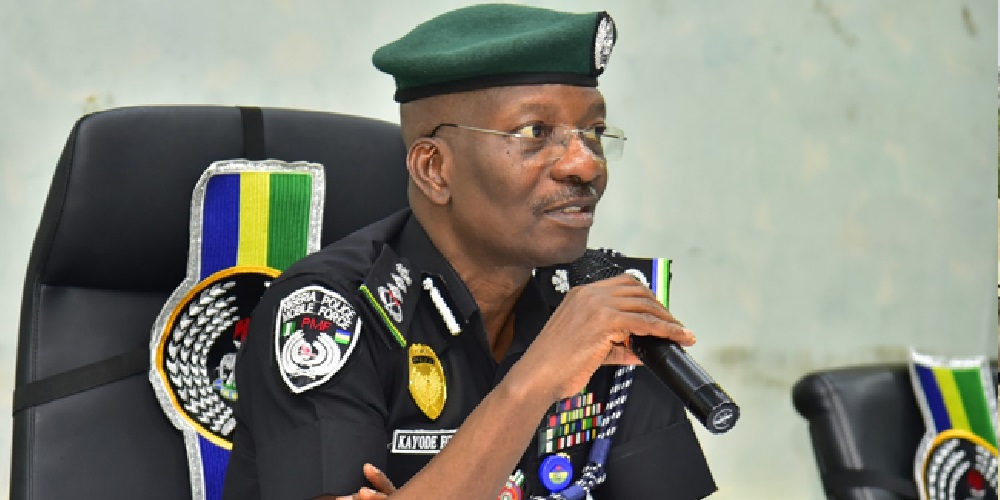
Nigeria Police Force High Command has reacted to the rumoured tenure elingation for Inspector General of Police, Dr. Kayode Adeolu Egbetokun, stating that there was no extension granted by President Bola Ahmed Tinubu.


Instead, the law governing the tenure of the IGP’s office was properly applied.

This clarification was made in a statement released on Friday in Abuja by the Force Public Relations Officer (FPRO), Assistant Commissioner of Police, Olumuyiwa Adejobi.

The statement reads, “the attention of the Nigeria Police Force has been drawn to various misleading reports and misinterpretations concerning the tenure of the Inspector General of Police, IGP Kayode Adeolu Egbetokun, Ph.D., NPM, and wishes to categorically state that what His Excellency, President Bola Ahmed Tinubu, GCFR, approved for the IGP is not an extension of tenure, but rather the proper application of the law governing the tenure of the office of the IGP.

Advertisement

Contrary to the misinformation being circulated on social media and in the news, an appointment letter in circulation was issued to the IGP shortly after his appointment was confirmed by the Police Council.

This letter, dated 3rd November 2023, clearly stated that the President had approved a four-year tenure for the IGP in accordance with the provisions of Section 215(a) and Section 28(c) of the Third Schedule of the Constitution of the Federal Republic of Nigeria, 1999 (as amended).

It is important to emphasize that the IGP does not need to lobby for any tenure extension as his appointment letter explicitly grants him a four-year tenure from the date of his appointment.

The ongoing circulation of false information is clearly the handiwork of pessimists and mischief makers who are determined to spread baseless narratives against the office and the personality of the IGP for obvious reasons and pecuniary gains.

Advertisement

” Furthermore, the IGP has since been issued with another letter in accordance with the provisions of the Police Act, 2020 (as amended), which supersedes the earlier correspondence.

This clarification is necessary to put an end to the speculations and falsehoods being spread.

” We urge the public to disregard the unfounded reports and to trust that the tenure of the IGP is in full compliance with the laws governing the Nigeria Police Force.

In clear terms, IGP’s tenure of office is not subject to unnecessary debate and should not be a source of perennial distraction to policing system in Nigeria. The law is sacrosanct.”

Advertisement
Continue Reading
Advertisement
Click to comment

Warning: Undefined variable $user_ID in /home/naijuinz/public_html/wp-content/themes/zox-news/comments.php on line 49

You must be logged in to post a comment Login

Leave a Reply

News

Tinubu’s Remarks On Flyovers Not Directed At Oborevwori – Waive

Published

on

By

ADVERTISEMENT
Zoom Ad
ADVERTISEMENT
Zoom Ad

Member representing Ughelli North, Ughelli South and Udu Federal Constituency in the House of Representatives, Rt. Hon. (Revd.) Francis Ejiroghene Waive, has said President Bola Tinubu’s recent remarks cautioning state governments against constructing unnecessary flyovers were not directed at Delta State Governor, Rt. Hon. Sheriff Oborevwori.

Waive, in a statement, argued that the flyovers completed and those under construction in Delta State were necessitated by persistent traffic congestion in their respective locations, adding that the projects were undertaken after due consideration of the state’s infrastructure needs.

According to him, the Federal Government had, on several occasions, acknowledged Delta State’s strides in road infrastructure and flyover construction, alongside other developmental achievements, before similar projects gained momentum in other states.

He maintained that Governor Oborevwori had pursued infrastructure development without neglecting key sectors of the state’s economy, insisting that the administration had continued to invest in roads, bridges, healthcare, education and social welfare programmes.

Advertisement

“The flyovers constructed and those currently under construction by Governor Sheriff Oborevwori are absolutely necessary. Deltans can testify that they are all located in areas where severe traffic gridlock is a regular occurrence,” Waive said.

The lawmaker dismissed criticisms of the projects by opposition figures, describing them as politically motivated and disconnected from the realities on the ground.

He expressed confidence that the governor’s performance would earn him another term in office, saying residents of the state remained committed to the continuation of the administration’s M.O.R.E. Agenda in synergy with President Tinubu’s Renewed Hope Agenda.

Waive urged Governor Oborevwori to sustain the pace of infrastructure development through the construction of more roads, bridges and flyovers, while expanding social investment programmes aimed at improving the welfare of the people.

Advertisement

He also congratulated the governor in advance on what he described as his expected victory in the 2027 governorship election, expressing optimism that the administration would continue to deliver democratic dividends across the state.

Continue Reading

News

State Police: Sharia council warns FG against rushed constitutional amendment

Published

on

By

ADVERTISEMENT
Zoom Ad
ADVERTISEMENT
Zoom Ad

The officials of the Supreme Council for Shariah in Nigeria (SCSN) have warned against a rushed constitutional amendment to create state police, urging the Federal Government and the National Assembly to ensure wider consultations before taking a final decision on the proposed reform.

The Council, in a statement issued on Sunday and signed by its Secretary General, Nafiu Baba Ahmad, said it had been closely monitoring the ongoing national debate and legislative process on state police, describing the issue as one with far-reaching implications for justice, national unity and the country’s future.

It also stated that Nigeria was facing one of the gravest security crises in its history, with thousands of innocent lives lost, millions displaced and widespread destruction of agriculture, businesses and livelihoods, leaving many communities living in fear.

According to the Council, while every sincere effort aimed at improving national security should be welcomed, state police should not be presented as a quick or magical solution to the country’s security challenges.

Advertisement

The SCSN argued that the failures of the existing security architecture were rooted largely in inadequate funding, corruption, insufficient personnel, poor welfare, weak intelligence gathering, obsolete equipment and ineffective coordination among security agencies.

It further maintained that these structural deficiencies would not disappear simply by transferring policing powers to state governments, insisting that the country’s immediate priority should be the comprehensive reform and strengthening of existing security institutions through better funding, recruitment, modern technology, intelligence gathering, border security, accountability and professionalism.

Besides, Baba-Ahmed also expressed concern over what he called the apparent haste with which constitutional amendments on the issue were being pursued, stressing that changes affecting Nigeria’s security architecture should never be rushed but should instead be subjected to broad national consultations, transparent public hearings and genuine consensus among stakeholders.

He said the Council was disappointed with the proceedings of the National Assembly, noting that many Nigerians believed the process had fallen short of the openness, inclusiveness and thorough consultations expected of such a critical constitutional matter.

Advertisement

The Council, however, commended lawmakers who insisted on due process, wider consultations and the national interest, saying their principled stand reflected the essence of democratic representation and deserved the appreciation of Nigerians.

It further cautioned against any arrangement that could allow state police to become instruments of political intimidation or discrimination, warning that Nigeria’s complex religious, ethnic and political diversity required a policing system that guarantees equal protection for every citizen under the Constitution.

The SCSN therefore called for strong constitutional safeguards, independent oversight institutions, transparent and merit-based recruitment, professional training standards, effective complaints mechanisms, judicial and legislative oversight, sustainable funding and firm guarantees against abuse of power before any state police structure is established.

It urged President Bola Tinubu, the leadership of the National Assembly, state governments and other relevant stakeholders to conclude comprehensive nationwide consultations and adequately address the concerns of Nigerians before proceeding with any constitutional amendment on state police, while praying that Almighty Allah grants the nation’s leaders the wisdom and sincerity to make decisions that will strengthen justice, preserve national unity and restore lasting peace and security.

Advertisement
Continue Reading

News

Tinubu government begins 2026 Tertiary Institutions National Laureate Programme

Published

on

ADVERTISEMENT
Zoom Ad
ADVERTISEMENT
Zoom Ad

● Institutions directed to Constitute Laureate Committees as Nigeria Begins Search for its Finest Academic Research

The Tertiary Institutions National Laureate Committee has formally announced the commencement of the 2026 National Laureate Programme, marking the inaugural edition of what is expected to become Nigeria’s foremost national platform for recognising outstanding student academic research, innovation and scholarly excellence across tertiary institutions.

The launch of the Programme signals a major milestone in the Federal Government’s commitment to promoting research excellence, strengthening the nation’s knowledge economy and placing scholarship at the centre of Nigeria’s development agenda.

The National Laureate Programme, inaugurated by the Federal Government under the leadership of the Honourable Minister of Education, Dr Tunji Alausa, CON, is designed to identify, evaluate, celebrate and reward exceptional undergraduate dissertations, master’s theses and doctoral research produced in accredited Nigerian tertiary institutions.

Advertisement

Supported by an annual research prize fund of ₦365 million, the Programme ranks among Nigeria’s most prestigious academic recognition initiatives and reflects the Federal Government’s determination to encourage original research, innovation and solutions capable of addressing national and global challenges.

Beyond recognising academic excellence, the Prize is intended to strengthen Nigeria’s research ecosystem by promoting innovation, encouraging the commercialisation of research outputs, supporting industrial development, inspiring future researchers and establishing scholarship as a strategic national asset.

As part of the commencement of the 2026 edition, all accredited universities, polytechnics, colleges of education, monotechnics, military institutions and other eligible tertiary institutions are requested to immediately commence internal preparations for participation.

Every eligible institution is expected to constitute an Institutional Laureate Selection Committee made up of experienced academics with proven research records, unquestionable integrity and the capacity to conduct objective evaluations in accordance with the approved National Laureate Programme framework.

Advertisement

Institutions are also required to formally submit the names and designations of the Chairman, Secretary and members of the Committee, after which the Committee will coordinate the institution’s participation in the Programme.

Following the institutional evaluation process, each participating institution is expected to nominate up to eighteen outstanding research works, comprising six undergraduate dissertations, six master’s theses, and six doctoral theses in the case of universities, or their equivalents for polytechnics, monotechnics, colleges of education, and other tertiary institutions, drawn from the six approved thematic areas, such as Agriculture, Teaching Innovation, Medicine and Health Sciences, Engineering, Science, and Technology, Law, Arts and Social Sciences.

The Programme offers Star Prizes of ₦35 million for the undergraduate category, ₦50 million for the master’s category, and ₦100 million for the doctoral category.

In addition, 15 Thematic Laureate Awards, valued at ₦12 million each, will be presented to other outstanding winners.

Advertisement

Institutions are reminded that every nominated research work must first be formally submitted as required under the National Policy for the Nigeria Education Repository and Databank (NERD) and assigned a valid National Document Number (NDN) before it can be considered for the National Laureate Programme.

This requirement reinforces the Federal Government’s commitment to research integrity, proper documentation and the preservation of Nigeria’s academic output within the national knowledge infrastructure.

The Committee further reminds participating institutions that the National Laureate Programme operates a rigorous three-tier evaluation system, comprising Institutional, Regional, also referred to as Zonal, and National assessments.

This multi-layered process has been designed to guarantee transparency, fairness, objectivity and merit in the selection of the country’s finest academic research.

Advertisement

Institutions are therefore encouraged to conduct their internal assessments with the highest standards of professionalism and impartiality, recognising that only the very best research works will progress through the successive stages of evaluation.

The management of every participating institution is responsible for constituting its Institutional Laureate Selection Committee in accordance with the approved guidelines. Once constituted, the institution’s approved NERD Focal Officer (NFO) is required to designate the Committee members through NFO dashboard on NERD.

This formal designation grants authorised members secure access to make entries, evaluate submissions and digitally manage the institution’s participation on the national Laureate Dashboard throughout the Programme.

The National Laureate Committee also calls on Nigerian professional bodies and associations to play an active role in safeguarding the integrity of the Programme by nominating distinguished scholars and subject experts for appointment into the Regional Laureate Selection Committees across the six geopolitical zones of the Federation.

Advertisement

Professional bodies representing agriculture, science, engineering and technology, medicine, law, arts and social sciences, teaching, and related disciplines are encouraged to submit nominations of suitably qualified experts with established records of scholarship, peer review, integrity and professional leadership.

Those appointed will participate in the independent regional evaluation of research submissions before the national assessment. All nominations will undergo rigorous screening based on merit, experience, integrity, diversity and conflict of interest requirements to ensure that the Programme maintains the highest standards of credibility and academic excellence.

Institutions and professional bodies are advised to conclude the selection of committee members and subject matter experts by 15 August 2026 while the submission of institutional entries will continue until the 31st of August 2026.

It noted that submissions would include mandatory digital transmission as provided in the guideline on the National Laureate portal.

Advertisement

Describing the Programme as a landmark national investment in intellectual capital, the Chairman of the National Laureate Committee, Emeritus Professor Abubakar S. Sambo (OON), said the National Laureate Programme was designed to elevate academic excellence to national prominence, encourage world-class research, inspire innovation and recognise scholars whose work has the potential to transform lives, industries and the future of Nigeria.

He encouraged every eligible institution and every relevant professional association to participate actively in ensuring the success of the inaugural edition of the Programme.

Further information, including detailed guidelines, committee manuals and application procedures, is available on the National Laureate Programme website at www.nationalaureate.ng.

Additional guidance may also be obtained through the Committee Guide and the Application Guide available on the website.

Advertisement

Issued by:
Ita Ekpenyong
Spokesperson
National Laureate Committee

Continue Reading

Trending

Copyright © 2024 Naija Blitz News