News
NNPC conditions: Dangote refinery may dump local market, export petrol
- /home/naijuinz/public_html/wp-content/plugins/mvp-social-buttons/mvp-social-buttons.php on line 27
https://naijablitznews.com/wp-content/uploads/2024/08/Dangote-Refinery-1.jpeg&description=NNPC conditions: Dangote refinery may dump local market, export petrol', 'pinterestShare', 'width=750,height=350'); return false;" title="Pin This Post">
- Share
- Tweet /home/naijuinz/public_html/wp-content/plugins/mvp-social-buttons/mvp-social-buttons.php on line 72
https://naijablitznews.com/wp-content/uploads/2024/08/Dangote-Refinery-1.jpeg&description=NNPC conditions: Dangote refinery may dump local market, export petrol', 'pinterestShare', 'width=750,height=350'); return false;" title="Pin This Post">
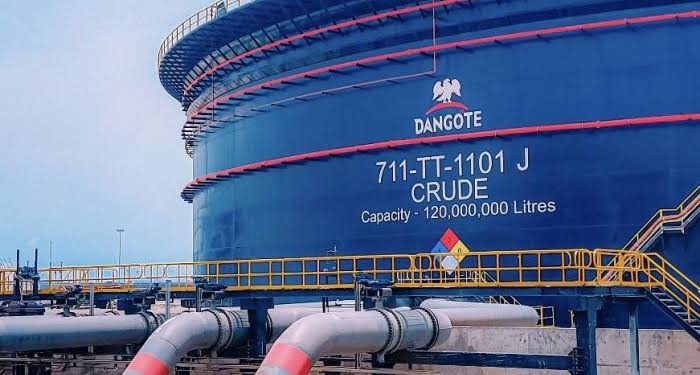
The Dangote refinery may resort to exporting its Premium Motor Spirit (petrol) following the refusal of the Nigerian National Petroleum Company Limited to be the sole buyer of its product.

The NNPC, in a statement by its spokesman, Olufemi Soneye, said on Saturday that it would not buy Dangote fuel unless it was cheaper than that of the international market.
This is contrary to claims by the President of the Dangote Group, Aliko Dangote, that the refinery was waiting for the NNPC to roll out its product.

On Saturday, the NNPC stated that it would only fully offtake petrol from the refinery if the market prices of PMS were higher than the pump prices in Nigeria.
The NNPC also declared that Dangote and other domestic refineries were free to sell directly to any marketer on a willing buyer, willing seller basis, adding that it had no desire or intention to become the distributor for any entity in a free market environment.
The company was reacting to a press release by the Muslim Rights Concern, which claimed that the Dangote refinery was being undermined by the NNPC.
MURIC stated that recent changes to the pump price of petrol by the NNPC would prevent the refinery from offering lower prices, and that the corporation had become the sole offtaker of all products from the refinery.
Responding, the NNPC said, “The pricing of petroleum products from any refinery, including Dangote Refinery Limited, is determined by global market forces.
“The recent changes in PMS prices have no impact on DRL or any other domestic refinery’s access to the Nigerian market. In fact, if current prices are perceived as high, it presents an ideal opportunity for the refinery to sell its products at lower prices in the Nigerian market.
“Furthermore, we emphasise that there is no guarantee of lower prices associated with domestic refining compared to any global parity pricing framework, as confirmed by the DRL. The NNPC Ltd will only fully offtake PMS from the DRL if the market prices of PMS are higher than the pump prices in Nigeria. The DRL and any other domestic refinery are free to sell directly to any marketer on a willing buyer, willing seller basis, which is the current practice for all fully deregulated products. NNPC Ltd has no desire or intention to become the distributor for any entity in a free market environment, and therefore, the notion of becoming a sole off-taker does not arise.”
Soneye added that the NNPC could not undermine a business in which it held a billion-dollar investment.
Dangote’s wait
While unveiling the 650,000-capacity refinery on Tuesday, Dangote had stated that the facility would roll out petrol whenever the NNPC was ready.
Dangote disclosed that petrol would get to the filling stations in the next 48 hours (from Tuesday) after all arrangements with the NNPC were concluded, adding that the queues would soon be over.
“Our PMS can be in filling stations within the next 48 hours, depending on NNPCL,” he said.
He spoke further, “We are ready. I pray that within the next few days, you won’t see any petroleum queues as soon as we finalise with NNPC. We are ready, we are waiting for them (NNPC) and I hope they will be ready like yesterday.”
Dangote told newsmen that he could not disclose the price of the petrol because the NNPC was in a position to control it.
“On the pricing, I can’t say anything because we don’t control the pricing. At the moment, it is controlled by NNPC, not Dangote. We will wait for them. But, our own for now is to make sure that the product is available and round-tripping is stopped,” he noted.
The businessman emphasised that the NNPC was the company that would sell and distribute the product under the current naira crude sale arrangement.
“Once the NNPC is ready, we roll. We are even ready to load a ship this week,” he added.
Product export
But it seems the talk between the two companies have collapsed, which may result in the company selling its petrol abroad.
The NNPC has issued several statements denying that it will fix the price for Dangote or be its sole off-taker, even as the refinery has yet to roll out its product.
Nigerians have wondered why the NNPC decided to hike the pump price of petrol the same day Dangote refinery unveiled its petrol, after several months of implicit subsidy payment.
The masses, who were hopeful that the Dangote fuel would crash the price of petrol, may be losing hope.
Speaking on the Brekete Family live show on Monday, the Vice President of Oil and Gas at Dangote Industries Limited, Devakumar Edwin, said Dangote petrol would be exported if the NNPC and other petroleum dealers in the country refused to patronise it.
Asked if the petrol would be sold locally, Edwin replied, “There has been a kind of a blockade from lifting our products within the country. The traders have been trying to blockade, and so now, we have been exporting our petroleum products. We are ready to pump in PMS as much as possible to the country.
“But if the traders or NNPC are not buying the product, obviously we will end up exporting the PMS as we are doing with the aviation jet and diesel,” he declared.
Edwin expressed surprise that the company started facing challenges it never expected when the refinery was set to commence operations.
He recalled that the philosophy initially was to add value to the raw materials available in the country, regretting that Nigeria was still exporting crude and importing refined petroleum products after over three decades.
Despite having a gantry that can load 2,900 tankers per day, Edwin disclosed that the refinery had not loaded up to five per cent of the gantry’s capacity owing to low local patronage.
In an interview with our correspondent, a professor of Economics at the University of Ibadan and President of the Nigerian Economics Society, Adeola Adenikinju, advised that the government and the NNPC should buy PMS from the Dangote refinery instead of importing from another country.
“Dangote refinery is a private business; he will export to where he can make money. He cannot be subsidising our economy. It is still going to be cheaper for the NNPC to buy from Dangote than to import from Europe. Dangote has to run the business and pay his debts, he can’t subsidise us,” Adenikinju noted.
IPMAN ready to buy fuel
The Independent Petroleum Marketers Association of Nigeria on Saturday said it would buy PMS from Dangote at any price, even if the NNPC refused to buy.
The National President of the association, Abubakar Maigandi, told our correspondent that the independent marketers were ready to patronise Dangote.
“Whatever the case, if Dangote starts selling his product, we are going to patronise him; if at all he wants to do business with us.
“We are ready to buy at any price because the NNPC is saying that they don’t want to involve themselves in fixing prices. So, at any price that he wants to sell, we are ready to buy and discharge and sell at a good price,” Maigandi stated.
Members of IPMAN own about 80 per cent of the filling stations in Nigeria, especially in rural communities.
On Thursday, the NNPC also said it was waiting for a September 15 timeline given to it by the refinery.
However, the latest comments from the NNPC indicate all is not well with the negotiations between the two companies.
The spokesman for the Dangote Group, Anthony Chiejina, did not answer calls or reply messages sent to him by our correspondent on Saturday.
Black marketers sell fuel N1,400 in Benue
Meanwhile, black marketers are making brisk business as most filling stations in Makurdi, the Benue State capital, closed for business.
Since the hike in the price of the petroleum product, many filling stations have been shut down while the black market has resurfaced.
Our correspondent, who monitored the situation in Makurdi on Saturday, observed that several filling stations were not operating while black marketers were using their frontage to sell the product to motorists.
The product was sold between N1,300 and N1,400 per litre.
This development resulted in few vehicles plying the roads, while transport fares skyrocketed and people resorted to trekking.
Motorists crowd NNPC stations for fuel
Despite the promise made by the Minister of State for Petroleum Resources, Heineken Lokpobiri, that fuel would be available in filling stations by the weekend, the situation in Ondo State has not improved.
A visit to some filling stations in Akure, the state capital, showed that many petrol stations were still under lock and key following unavailability of the product, while NNPC stations with the product had long queues.
Also, some stations of the independent marketers were selling for between N950 and N1,100 per litre.
In Ekiti State, many petrol stations dispensed petrol to customers, while a few did not have the product.
But the price was between N950 and N1,200 per litre at the stations dispensing petrol.
Long queues of vehicles were at the few stations selling the product at between N950 and N960 per litre.
A self-employed man, Mr Abel Olode, who said he bought some litres of petrol for N960 per litre on Friday, said, “I parked the car at home and boarded a motorcycle to my place of work today. Using it daily will drain my finances.”
Filling stations belonging to major marketers in Ogun State sold fuel for between N868 and N890 per litre, while independent marketers sold for between N950 and N1,200 per litre.
The NNPC outlets, however, sold at N865 per litre.
A motorist, Adeolu Bashir, said, “Nothing has changed with the fuel situation. The independent marketers are selling the fuel for N1,200; meanwhile, not many of the filling stations are selling the product.”
As of September 7, 2024, independent marketers in Ibadan, the Oyo State capital, were dispensing fuel at N1,100 and N1,200 per litre. There were no long queues in most of the filling stations in the city
Long queues still persisted in most of the filling stations in Zamfara State, despite the hike in fuel price.
Most of the filling stations, controlled by IPMAN in Gusau town and other parts of the state, were selling a litre of fuel between N1,100 and N1,150.
There was no fuel in all the mega stations visited by Sunday PUNCH as of the time of filing this report.
Despite the scarcity of PMS in some states, the product seemed to be available in most filling stations across the 13 LGAs of Nasarawa State.
When our correspondent visited some of the stations in Lafia, the state capital, on Saturday, it was observed that there were no queues.
The prices of PMS in Obi, Awe, Keana, Doma, Toto and Nassarawa Eggon LGAs had skyrocketed to N1,100 per litre.
Filling stations such as Sandaji, Hayattu, Alh Dauda Muhammadu, Nagoda, Rainoil among others, all sold at N990 per litre.
Meanwhile, the product is currently being sold between N1,200 and 1,400 by the black market dealers in several locations across the state.
In an interview with our correspondent, one of the black marketers, Musa Inusa, said getting the product had become “extremely difficult” for him because of the strict restrictions and increase in price.
Credit: PUNCH
News
AWALCO Honours NUJ FCT Chair Grace Ike, Hails Her Transformational Leadership
By Gloria Ikibah
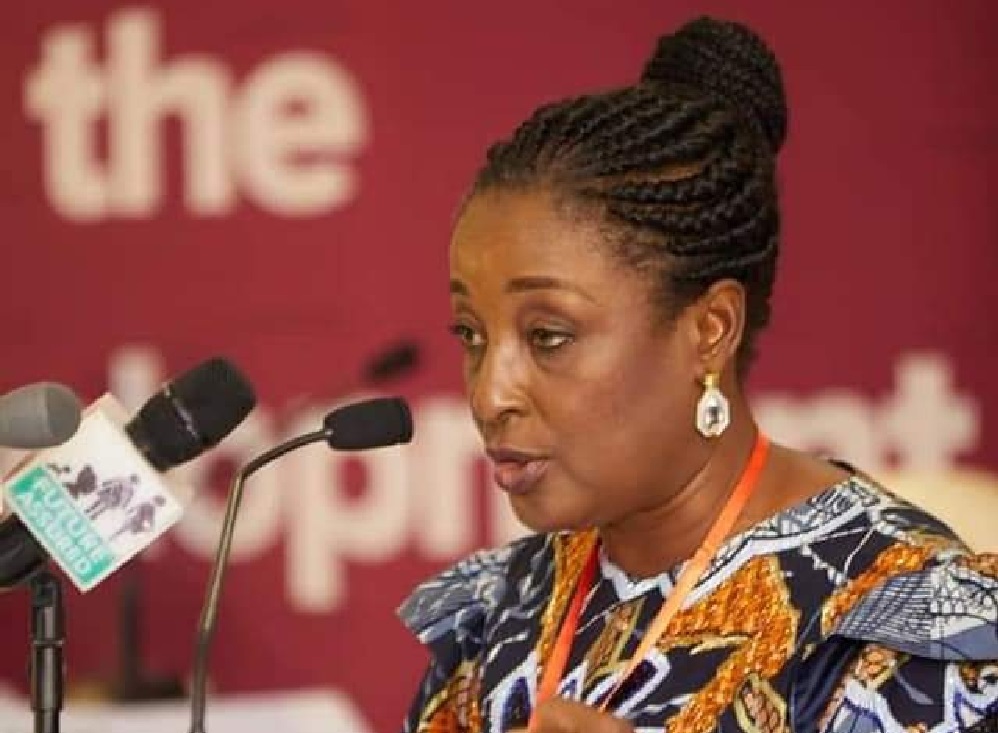
The Association of West African Legislative Correspondents (AWALCO) has nominated the Chairman of the Nigerian Union of Journalists (NUJ), FCT Council, Comrade Grace Ike, for a prestigious award in recognition of what it described as her outstanding leadership and contributions to the journalism profession.
The nomination was announced during a courtesy visit by AWALCO executives, led by the association’s President, Comrade Innocent Odoh, to the NUJ FCT Council Secretariat in Abuja.
Odoh applauded Ike’s performance since assuming office, describing her emergence as the first female Chairman of the NUJ FCT Council as a landmark achievement.
He said her leadership had brought visible changes to the council and demonstrated the qualities required to inspire confidence and drive meaningful reforms.
“We are indeed very impressed and inspired. It takes somebody with this kind of courage and commitment, and someone who will take charge of things, and we are really seeing the change,” Odoh said.
He explained that the nomination followed extensive consultations within the association on journalists and media leaders who had distinguished themselves through exceptional service to the profession.
According to him, Ike’s achievements, including her previous role as Chairperson of the House of Representatives Press Corps, made her a worthy candidate for the award.
Odoh disclosed that AWALCO had initially planned to hold the ceremony last year as part of activities marking the 25th anniversary of the ECOWAS Parliament.
However, he said the event had to be postponed after the regional parliament scheduled a separate award ceremony.
He added that the proposed award was also part of the association’s efforts to deepen collaboration with the NUJ FCT Council.
According to him, AWALCO intends to partner with the council to organise seminars, workshops and conferences focusing on democracy, good governance, development and legislative accountability.
Describing the legislature as the backbone of every democratic system, Odoh stressed that parliamentary correspondents have a critical responsibility to examine policies, interrogate democratic processes and ensure that legislation translates into meaningful development for citizens.
With West Africa’s population exceeding 400 million people, he said stronger cooperation between AWALCO and the NUJ will create an opportunity to promote democratic values and strengthen governance across the ECOWAS sub-region.
Responding, Comrade Ike expressed appreciation for the recognition and assured the association of the NUJ FCT Council’s readiness to work closely with AWALCO.
“I really don’t take this award for granted. I’m honoured,” she said.
She emphasised the need for journalists to remain committed to the core values of the profession, including accuracy, fairness, balance and ethical reporting.
According to her, the media remains one of the most important institutions in any society and must continue to serve as a force for accountability and development.
Ike also challenged journalists to broaden their focus beyond traditional reporting areas and pay greater attention to issues capable of driving positive change across Nigeria and the wider West African region.
She reiterated that the welfare of journalists remains one of the key priorities of her administration.
The NUJ chairman also encouraged AWALCO members to uphold the principles of accountability and transparency in all their activities.
She assured the association that the council will support its initiatives through publicity and strategic collaboration.
Ike further urged journalists to critically examine emerging issues affecting democracy in the region, including electoral reforms and other policy proposals capable of strengthening democratic institutions.
She noted that issues with the potential to improve governance should be properly scrutinised and brought into public discourse.
“Leadership is not easy. If you are a leader, you must do everything possible to leave a legacy behind,” she said.
She also encouraged younger journalists to remain committed to changing public perceptions about leadership and service.
According to her, journalists must strive to tell stories that make a meaningful difference and positively impact society.
Also speaking during the visit, AWALCO’s Financial Secretary, Favour Olise, praised Ike’s leadership and urged her to continue mentoring young professionals in the industry.
“Younger ones not in age, younger ones in the journalism profession, carry them along as you are already doing and keep doing the good works,” Olise said.
She described Ike’s achievements as inspiring, particularly her efforts to attract reputable organisations to collaborate with the NUJ.
Olise added that the NUJ chairman’s leadership was contributing significantly to the growth of the profession and strengthening the image of journalism in the Federal Capital Territory.
AWALCO reaffirmed its commitment to strengthening its partnership with the NUJ FCT Council, especially in advancing legislative journalism, promoting democratic accountability and supporting good governance across Nigeria and the West African sub-region.
News
EU Releases €2.3m Emergency Fund as Cholera Cases Surge Across West/Central Africa
By Gloria Ikibah
The European Union has approved €2.3 million in emergency humanitarian funding to help Nigeria, Cameroon, Chad and the Central African Republic contain the worsening cholera outbreak spreading across West and Central Africa.
The intervention comes as the World Health Organization (WHO) reported more than 61,000 cholera cases across the African region within the first five months of 2026, raising concerns over the growing public health crisis.
Nigeria, which has recorded one of the highest disease burdens, will receive the largest share of the funding, amounting to €1.5 million.
According to the European Commission, the support will be used to expand emergency response teams, provide essential medical supplies, distribute cholera treatment kits and strengthen water, sanitation and hygiene interventions.
The funding will also support the treatment of public water sources and household water, improve epidemiological surveillance in hard-to-reach communities and strengthen case management, risk communication and public awareness campaigns.
Cameroon will receive €100,000 to support outbreak containment efforts through the deployment of additional personnel, provision of essential medicines and establishment of more cholera treatment units and oral rehydration centres in affected communities.
In the Central African Republic, €500,000 has been earmarked to improve case management, expand vaccination campaigns and strengthen water, sanitation and hygiene programmes.
The funding will also support surveillance, case detection, community engagement and provision of safe and dignified burials.
Chad will receive €200,000 to improve access to clean water, strengthen sanitation services and support community-based surveillance and treatment programmes aimed at stopping the spread of the disease.
European Commissioner for Preparedness and Crisis Management, Hadja Lahbib, said the outbreak highlighted the devastating consequences of inadequate access to basic healthcare and clean water.
“Cholera is preventable and treatable. Yet it still threatens lives when people lack something as basic as safe water and healthcare.
“At a time when humanitarian needs are growing and resources are shrinking, Europe is not looking away.
“This emergency funding will help our partners act quickly, contain the outbreaks and protect the communities most at risk,” Lahbib said.
Health experts say cholera is caused by the Vibrio cholerae bacterium and is commonly transmitted through contaminated water or food.
The disease can cause severe diarrhoea, leading to rapid dehydration and shock if left untreated.
Although cholera remains a major public health challenge in many developing countries, the European Commission noted that it is not a common health problem in Europe and that the risk of transmission from imported cases remains low.
The latest intervention underscores growing international concern over the spread of cholera across Africa, where poor sanitation, limited access to clean water and humanitarian crises continue to fuel outbreaks.
Public health experts have repeatedly stressed that improving access to safe drinking water and strengthening healthcare systems remain the most effective long-term solutions to preventing future outbreaks.
News
Abuja Set for Global PR Summit as Nigeria Unveils Jollof Festival, Cultural Showcase
By Gloria Ikibah
Abuja the nation’s capital is set to become the global capital of public relations in November as communication experts, policymakers, diplomats, academics and business leaders from across the world converge on Nigeria for the 2026 World Public Relations Forum (WPRF).
Beyond professional discussions, organisers have unveiled an ambitious cultural programme that includes the maiden edition of the Nigeria Jollof Rice Festival, expected to attract about 10,000 participants, alongside a fashion showcase designed to promote Nigeria’s rich cultural heritage.
The week-long event, themed “Responsible Communication: The Voice of the World,” will examine the evolving role of communication in governance, peacebuilding, technology, conflict resolution, sustainable development and the fight against misinformation.
President and Chairman of the Nigerian Institute of Public Relations (NIPR), Dr Ike Neliaku, disclosed the plans during a briefing with members of the Diplomatic Corps in Abuja on Monday.
According to him, the forum will go beyond the traditional conference format by creating a platform for direct engagement between communication professionals and key stakeholders from different sectors.
He explained that the event would bring together policymakers, business executives, diplomats, security experts, academics and other major users of communication services.
Neliaku said one of the most significant outcomes of the gathering would be the development of the Abuja Declaration on Responsible Communication, a framework expected to shape the future of public relations over the next decade.
He noted that organisers intentionally designed the forum to encourage dialogue among stakeholders from different sectors.
“We deliberately decided to bring stakeholders into the same room to listen to their expectations, challenges and experiences,” he said.
The forum is expected to attract participants from the fields of politics, governance, business, commerce, technology, academia, security, faith-based organisations, traditional institutions, diplomacy, youth development and civil society.
Activities lined up for the event include high-level policy dialogues, workshops, masterclasses, networking sessions and expert-led discussions.
The event will also host the 37th African Public Relations Association (APRA) Conference and an African Ministers of Information Roundtable, which Nigeria’s Minister of Information is expected to lead.
Perhaps one of the biggest attractions of the forum will be the introduction of the Nigeria Jollof Rice Festival, which organisers say will combine culture, cuisine and social responsibility.
The festival is expected to provide meals for about 10,000 people while promoting one of Nigeria’s most celebrated dishes on the global stage.
International visitors will also have the opportunity to experience African fashion through a seven-hour tailoring pavilion, where delegates can have traditional outfits made and take them home as souvenirs.
The programme will further feature exhibitions, entertainment and an interactive experience zone showcasing Nigerian and African art, food, culture and creativity.
Neliaku said the cultural elements were deliberately integrated into the programme to ensure that visitors experience Nigeria beyond the conference environment.
Another major highlight of the forum will be the proposed Abuja Declaration on Responsible Communication.
The declaration is expected to build on the historic 1978 Mexico Statement, which established a widely accepted definition of public relations and outlined the profession’s core responsibilities.
Neliaku explained that the communication landscape has changed significantly over the past five decades, particularly with the emergence of artificial intelligence, social media, digital platforms and the increasing spread of misinformation.
He said the forum would provide an opportunity for global communication experts to review existing principles and develop a framework that reflects today’s realities.
The discussions, he added, will focus on how communication can better support governance, peacebuilding, conflict resolution and the management of emerging global challenges.
Describing the event as a “once-in-a-lifetime engagement,” Neliaku urged stakeholders to actively participate in shaping the future of the profession.
President Bola Ahmed Tinubu is expected to serve as the chief host, while President Hakainde Hichilema of Zambia is expected to deliver the presidential keynote address.
Representatives from several international organisations, including the United Nations, the World Bank, UNESCO, Interpol, the World Press Agency and the World Customs Organisation, are also expected to attend.
The programme will feature the World Public Relations Awards to recognise outstanding individuals and organisations, while a special Global Alliance publication on responsible communication is expected to be unveiled.
Youth engagement will also feature prominently, with the Global Youth Public Relations Summit scheduled for November 20, 2026.
Neliaku said the NIPR, Global Alliance for Public Relations and Communication Management, and APRA are committed to developing the next generation of communication professionals.
He urged diplomatic missions to encourage young people from their respective countries to participate.
According to him, young people must be given opportunities to engage in international conversations and develop the skills required to become responsible leaders.
Speaking on behalf of the Dean of the Diplomatic Corps, the Philippine Ambassador to Nigeria, Ambassador Mersole Mellejor, described the forum’s theme as both timely and relevant.
He noted that the growing spread of misinformation and fake news had made responsible communication more important than ever.
According to him, the forum will provide an opportunity for communication experts, academics and policymakers to examine how communication could promote social cohesion, inclusion, good governance and sustainable development.
Mellejor also described Nigeria as a major economic, cultural and innovation hub, adding that Abuja was an ideal venue for the global gathering.
He assured organisers of the support of the Diplomatic Corps.
With its blend of professional dialogue, cultural diplomacy, food, fashion and entertainment, WPRF 2026 is expected to offer the world a unique opportunity to experience Nigeria while shaping the future of global communication.
-
News10 hours agoSee Dollar to Naira exchange rate today, August 17, 2026
-
News20 hours agoOluwo Hails Adeleke’s Re-election, Urges Closer Ties With Tinubu
-
News19 hours ago2027: Gov dumps deputy, picks ex-commissioner as running mate
-
Metro22 hours ago‘I’ll Rather Eat Grass Under Muslim Leader Than Chicken Under Infidel Leader,’ Islamic Scholar Almaliky Defends Tinubu-Shettima Ticket
-
News19 hours agoel-Rufai files fresh N10b suit against ICPC for allegedly denying family access to him
-
News13 hours agoAbuja Flooding: FCT Minister’s Aide Takes a Swipe at Adeyanju
-
Politics10 hours agoEdo Assembly elects Yekini Idiaye Speaker As Agbebaku Resigns
-
Foreign20 hours agoUS: How 17-year-old Boy Allegedly Killed Mother, Brother After ChatGPT Searches

Warning: Undefined variable $user_ID in /home/naijuinz/public_html/wp-content/themes/zox-news/comments.php on line 49
You must be logged in to post a comment Login