Connect with us

News

China-Nigeria Relations Poised for Growth Amidst Global Reforms

Published

on

ADVERTISEMENT
Zoom Ad
ADVERTISEMENT
Zoom Ad
…as stakeholders say partnership key to economic and cultural growth
By Gloria Ikibah
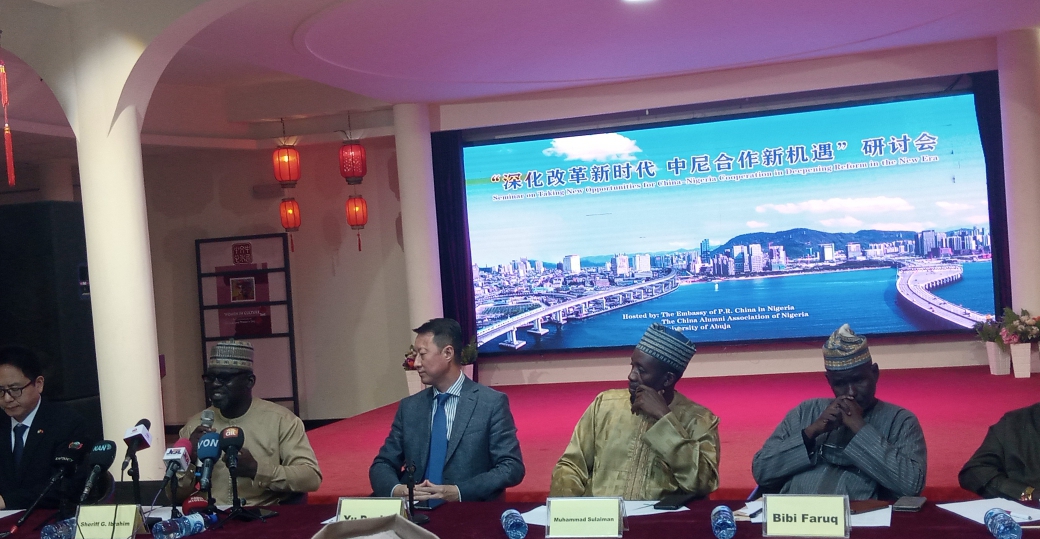
As a fallout of the just concluded Forum on China Africa Cooperation (FOCAC) held in Beijing, China, which had President Bola Tinubu of Nigeria in attendance, the Chinese Embassy in Nigeria has held a seminar focused on “Taking New Opportunities for China-Nigeria Cooperation in Deepening Reform in a New Era”.
During this recent visit, in addition to economic cooperation, President Xi Jinping of China and Nigeria’s President Bola Tinubu, agreed to elevate bilateral relations to a comprehensive strategic partnership and this agreement is expected to deepen political trust and strengthen cooperation in trade, investment, and international diplomacy.
In his welcome address the Chinese Ambassador to Nigeria, Ambassador Yu Dunhai emphasized the strengthening relationship between China and Nigeria.
The event gave insights into China’s ongoing reforms and their relevance to Nigeria, calling attention to the deep potential for collaboration between the two countries.
The Chinese Ambassador referenced the Third Plenary Session of the 20th Central Committee of the Communist Party of China, which concluded in July 2023. This meeting according to him, emphasized comprehensive reforms aimed at advancing Chinese modernization.
Ambassador Yu, also explained that these reforms, which included over 300 key measures, play a crucial role in China’s continued development, even as he drew parallels between China’s past and Nigeria’s current situation, and stressed how similar reforms could benefit Nigeria’s growth.
He highlighted the historic significance of the Third Plenary Sessions in China’s transformation and said the 1978 session, which introduced reforms and opened China’s economy to the world, was pivotal in moving the country toward modernization.
Adding that over the last 45 years, these reforms have driven China’s rapid growth, raising its per capita GDP from $200 in 1978 to $12,000 by 2000.
The ambassador noted that Nigeria, with a current per capita GDP of approximately $17,000, is well-positioned for significant economic advancements, provided it adopts similar reform and development strategies.
Yu underscored the importance of continuous reforms, explaining that outdated policies can become obstacles to progress.
China’s success, according to him, lies in its ability to adapt and reform when necessary.
“This constant evolution has qualified China to become the world’s second-largest economy, surpassing Japan in 2010, and Ambassador Yu believes that Nigeria, with its large youthful population and abundant talent, can achieve similar milestones through dedicated reforms and sustained efforts toward modernization.
Another thing which was part of the conversation of Ambassador Yu, was the importance of opening Nigeria to the world, by drawing from China’s historical lessons, he cautioned against isolation, stressing that countries must learn from others while retaining their unique cultures and identities.
He cited China’s experience with electric vehicles (EVs) as an example of how opening up and fostering competition can drive innovation, especially as of today, China produces over half of the world’s EVs, a remarkable achievement he attributed to the country’s open market and global competition.
The Chinese ambassador therefore expressed optimism about the future of China-Nigeria relations, stating that both countries stand to benefit from deeper collaboration, even as he emphasized that his mission was to promote stronger ties between the two nations, working closely with various stakeholders in Nigeria to achieve mutual growth.
In his remarks, President of the China Alumni Association of Nigeria, Mohammed Sulaiman, emphasized the importance of cultural identity and partnerships in fostering national development.
Mohammed who is also the National President of the Society of Nigerian Artists (SNA), drawing comparisons between Nigeria and China, underscored how China’s economic rise has been driven by a strong adherence to its cultural heritage.
He noted that many African countries, including Nigeria, have struggled with development because they often drift from their cultural roots in an attempt to mimic foreign models.
Suleiman who opined that China’s success in maintaining its cultural traditions while pushing for economic reforms is something Nigeria can and should learn from, and stressed that Nigeria must focus on its own identity to create sustainable development.
According to him, “If China can become a global power by staying true to its culture, why can’t Nigeria do the same in Africa?”
Emphasising on the growing relationship between Nigeria and China, particularly in infrastructure projects, he noted that Nigeria has benefitted from China’s investments, such as the expansion of railways and seaports, which have created jobs and boosted the economy. For example, the construction of rail lines across the country has provided employment opportunities and improved transportation, which in turn supports trade and commerce.

In addition to infrastructure, the Alumni President applauded the trade relationship between the two nations, and stated that Nigeria’s trade with China reached $22.6 billion in 2023.
Sulaiman also discredited the notion that China is merely dumping goods in Nigeria, and emphasised that China is a significant buyer of Nigerian raw materials, and called it a “win-win situation” for both countries.
However, he warned against relying solely on international partnerships and urged Nigeria to develop its own reform strategies, much like China’s periodic review system, to ensure steady progress.
“We cannot just sit and wait for things to happen because we are partnering with China,” he stated.
He also touched on social reforms, recommending for a revival of traditional Nigerian culture, an expansion of education and healthcare, and increased civic engagement, as he believes that these cultural and social changes are essential for Nigeria to achieve true development and strengthen its position on the global stage.
In conclusion, Sulaiman called for enhanced nationalism and a stronger focus on the values that define Nigeria, even as he urged the country to deepen its reforms in line with its cultural identity, following China’s model of balancing tradition with modernity.
“Nigeria must develop its own deepening reforms alongside China’s,” he said.
He added that this approach will help the nation secure its place in the world.
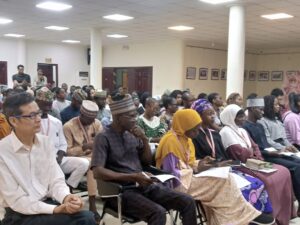
The seminar provided a platform for attendees to understand the significance of China’s reforms and how they might inspire Nigeria to chart a similar path toward modernization.
With China’s support, Nigeria could leverage new opportunities for economic development and global cooperation.

Continue Reading
Advertisement
Click to comment

Warning: Undefined variable $user_ID in /home/naijuinz/public_html/wp-content/themes/zox-news/comments.php on line 49

You must be logged in to post a comment Login

Leave a Reply

News

NIS deports 99 foreigners over irregular migration

Published

on

By

ADVERTISEMENT
Zoom Ad
ADVERTISEMENT
Zoom Ad

The Nigeria Immigration Service repatriated 99 foreigners for irregular migration between July and August 2026, according to its latest operational report.

The report prepared for the Office of the National Security Adviser showed that 90 foreigners were repatriated in July, while nine others were repatriated in August.

The July figure comprised 33 Cameroonians, 38 nationals of Côte d’Ivoire, 15 Pakistanis, four Nigeriens, four Chadians, two Burkinabè, two Central Africans and one national of the Democratic Republic of Congo.

The report identified irregular migration as the primary reason for the repatriations.

Advertisement

It said, “90 foreigners were recorded as repatriated in July, while nine were recorded in August. The cases primarily involved irregular migration, with the July records including nationals of Cameroon (33), Niger (four), Pakistan (15), Côte d’Ivoire (38), Burkina Faso (two), Chad (four), Central African Republic (two) and the Democratic Republic of the Congo (one).”

The NIS also reported rescuing 23 victims of trafficking and other forms of exploitation during the period.

Seven victims were rescued in July, while 16 were rescued in August following interventions at locations including the Murtala Muhammed International Airport, Seme Border, Baji Patrol Post and other locations.

Some of the rescued victims were handed over to the National Agency for the Prohibition of Trafficking in Persons for further care and investigation.

Advertisement

The immigration authorities also apprehended a stowaway at the Murtala Muhammed International Airport in August.

“Seven victims were recorded as rescued in July and 16 in August. The records include interventions at MMIA, Seme Border, Baji Patrol Post, NAIA and other locations, with some victims handed over to the National Agency for the Prohibition of Trafficking in Persons.

“One stowaway was recorded as apprehended at the Murtala Muhammed International Airport in August 2026.

“Twenty-three victims were recorded as rescued across July and August. July interventions accounted for seven victims, including cases involving Thailand, Mali, Egypt and domestic locations. August interventions accounted for 16 victims, including cases intercepted at Seme Border, MMIA, NAIA and Baji Patrol Post,” it said.

Advertisement

In addition, four persons of interest were identified during the period, comprising three in July and one in August.

“The August case involved a potential trafficking victim who was referred to NAPTIP,” it added.

The NIS further disclosed that it had dismantled a fraudulent transnational organised crime syndicate linked to the QNET/Ignite group.

The operation, according to the report, led to the apprehension of the syndicate leaders and 11 facilitators in Lagos and Ogun states.

Advertisement

The service said the interventions formed part of its efforts to strengthen border security, regulate migration and combat transnational organised crime.

The report also highlighted the detection of document fraud, enforcement operations, arrests and prosecutions as part of measures taken by the service to safeguard Nigeria’s borders and prevent the exploitation of migrants.

The NIS said its operations during the period were aimed at ensuring effective migration management while contributing to national security.

Advertisement
Continue Reading

News

NABTEB releases 2026 NBC/NTC results, records 81.24% pass rate

Published

on

By

ADVERTISEMENT
Zoom Ad
ADVERTISEMENT
Zoom Ad

The National Business and Technical Examinations Board (NABTEB) has released results of the 2026 June/July National Business Certificate (NBC) and National Technical Certificate (NTC) examinations.

According to the board, 79,503 candidates, representing 81.24 per cent, obtained five credits and above, including English Language and Mathematics, in the Examinations.

Registrar and Chief Executive Officer of NABTEB, Dr. Aminu Mohammed, announced the results yesterday in Benin at a news conference.

It said the certified craftsmen were among 100,069 candidates that registered for the examinations in 2026, which represented an increase of 7,193 when compared to 92,876 candidates that registered in the 2025 examination cycle.

Advertisement

Mohammed said the increment reflected the growing interest in business and technical education.

He said 97,867 candidates sat for the examinations out of the 100,069 candidates that registered for the examination.

Mohammed said outcome of the examinations was the board’s mandate to promote practical skills. acquisition and occupational competence.

The NABTEB boss said the analysis showed that 79,503 candidates, representing 81.24 per cent, obtained five credits and above, including English Language and Mathematics, in the NBC/NTC Examinations.

Advertisement

He said 89,580 candidates, representing 91.53 per cent, obtained five credits and above, with or without English Language and Mathematics.

According to him, “Comparatively, this performance is significantly higher than that recorded in the May/June 2025 NBC/NTC Examinations, where 61,104 candidates, representing 68.18 per cent, obtained five credits and above including English Language and Mathematics.

“In the same 2025 examination cycle, 74,633 candidates, representing 83.28 per cent, obtained five credits and above, with or without English Language and Mathematics.

“The improvement recorded in the 2026 examination is encouraging and demonstrates the collective effort of candidates, teachers, schools, parents and the wider education system.

Advertisement

“These statistics provide useful indicators of performance; however, beyond the percentages lays the more important question of what these qualifications mean for the future of our young people and for Nigeria’s economic development.”

Dr. Mohammed said the NBC/NTC examinations occupied an important position within Nigeria’s technical and vocational education and training ecosystem.

Continue Reading

News

We’re central to economic activity, workers tell FG

Published

on

By

ADVERTISEMENT
Zoom Ad
ADVERTISEMENT
Zoom Ad

Despite the Federal Government’s latest Gross Domestic Product (GDP) growth figures, the organised labour said that the reported expansion had yet to translate into improved economic wellbeing for civil servants, whose purchasing power continues to weaken amid rising petrol prices and high cost of living.

National President, Association of Senior Civil Servants of Nigeria (ASCSN), Shehu Mohammed, who spoke in Lagos yesterday, on the state of the economy and workers’ welfare, during the South-West zonal workshop of the association, themed “A Shift from Confrontation to Collaboration,” said the contradiction was evident in the fact that civil servants remained central to economic activity while their earnings were being steadily eroded by inflation and rising living costs.

“We are the engine room. We lubricate the economy. Unfortunately, what we are facing today is that as we are lubricating, we are also drying up,” he said.

He said that the quality of economic growth should not be measured solely by increases in GDP, but whether such growth translates into improved disposable income and purchasing power for workers and households.

Advertisement

According to him, the N70,000 national minimum wage has already lost substantial purchasing power to inflation, even before its full implementation across the country.

The labour leader said this had made the next review of the national minimum wage particularly important, stressing that preparations must begin ahead of the 2027 negotiations.

He said that the organised labour would need credible economic data to support its demands at the negotiating table.

Mohammed warned that further increase of fuel price would deepen hardship..

Advertisement

MEANWHILE, the Federal Workers Forum (FWF) has called on the Federal Government to immediately review the salaries of federal workers, demanding a minimum wage of N300,000 and a maximum salary of N1.5 million for officers on Grade Level 17.

The forum also demanded the full implementation of the N70,000 minimum wage, payment of outstanding wage-related arrears and the introduction of additional welfare measures to cushion the impact of the rising cost of living on federal workers.

National Coordinator of the FWF, Andrew Emelieze, and General Secretary, Ogundele Ayodele, made the demands in a statement yesterday and addressed to the Senate President, Speaker of the House of Representatives, President Bola Tinubu, Chief Justice of Nigeria and Head of the Civil Service of the Federation.

Advertisement
Continue Reading

Trending

Copyright © 2024 Naija Blitz News