Connect with us

News

FG Unveils New Fiscal Incentives to Revitalize Nigeria’s Oil and Gas Sector

Published

on

ADVERTISEMENT
Zoom Ad
ADVERTISEMENT
Zoom Ad

In a significant move to rejuvenate Nigeria’s oil and gas industry, the Federal Government has introduced two major fiscal incentives aimed at boosting both the upstream and downstream sectors.


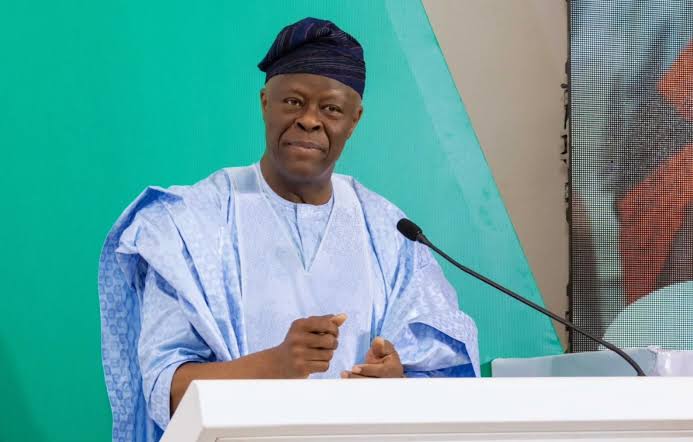
The Minister of Finance and Coordinating Minister of the Economy, Mr. Wale Edun, announced the new measures on Wednesday.

Director of Information and Public Relations, Mohammed Manga in a statement indicated that the initiatives which include the Value Added Tax (VAT) Modification Order 2024 and the Notice of Tax Incentives for Deep Offshore Oil & Gas Production, were designed to attract investment, lower operational costs, and support energy transition efforts.

The statement explained that the VAT Modification Order 2024 exempts several critical energy products and infrastructure from VAT.

Advertisement

“These include Diesel, Liquefied Petroleum Gas (LPG), Compressed Natural Gas (CNG), Electric Vehicles, Liquefied Natural Gas (LNG) infrastructure, and Clean Cooking Equipment.

“The aim is to reduce energy costs, promote energy security, and encourage a shift toward cleaner energy solutions in Nigeria.

The statement indicated that the Notice of Tax Incentives for Deep Offshore Oil & Gas Production introduces new tax reliefs for deep offshore oil and gas projects.

“These incentives are expected to attract significant foreign investment to Nigeria’s deep offshore basin, positioning the country as a premier destination for global oil and gas exploration.

Advertisement

According to the statement the reforms are part of the broader economic agenda driven by President Bola Ahmed Tinubu, under Policy Directives 40-42.

“They signal the administration’s commitment to fostering sustainable growth, improving energy security, and ensuring Nigeria remains competitive on the global oil and gas stage.

“With these bold initiatives, Nigeria is firmly on track to reclaim its position as a leader in the global oil and gas market.

“These fiscal incentives demonstrate the administration’s unwavering commitment to fostering sustainable growth, enhancing energy security, and driving economic prosperity for all Nigerians.”
Advertisement
Continue Reading
Advertisement
Click to comment

Warning: Undefined variable $user_ID in /home/naijuinz/public_html/wp-content/themes/zox-news/comments.php on line 49

You must be logged in to post a comment Login

Leave a Reply

News

Reps Minority Caucus stage Walk Out as House Passes Tinubu’s State Police Bill

Published

on

ADVERTISEMENT
Zoom Ad
ADVERTISEMENT
Zoom Ad

…allege constitutional breaches in voting process as 311 lawmakers back landmark amendment

…reaffirm their support for state policing in principle

By Gloria Ikibah

The Minority Caucus in the House of Representatives on Thursday staged a dramatic walkout during plenary in protest against the passage of President Bola Tinubu’s Executive Bill on the establishment of State Police, accusing the House leadership of violating constitutional provisions and the chamber’s Standing Orders.

Advertisement

Despite the protest, the House approved the Constitution Alteration Bill after 311 lawmakers voted in its favour, marking a major milestone in the ongoing effort to decentralise policing and strengthen Nigeria’s security architecture.

The Executive Bill, transmitted to the National Assembly by President Tinubu last week, seeks to amend the 1999 Constitution to create a constitutional framework for the establishment of State Police Services. The proposal followed months of debate over the need for a multi-layered policing system to tackle rising insecurity across the country. It also replaced an earlier version of the bill previously passed by the House after lawmakers rescinded their earlier resolution to accommodate the President’s proposal.

Speaking to journalists shortly after leading members of the caucus out of the chamber, Minority Leader, Rep. Fredrick Agbedi, said their action was not a rejection of state police but a protest against what they described as the disregard for due legislative process.

He argued that the Speaker, while presiding as Chairman of the Committee of the Whole, ignored the constitutional requirements governing amendments to the Constitution.

Advertisement

He said: “The Constitution is the grand norm. It is the rule book from which even our Standing Orders derive their powers. For the Speaker, acting as Chairman of the Committee of the Whole, to disregard the clear provisions of Section 9(2) of the 1999 Constitution, as amended, is a great affront to the workings of the House of Representatives.”

Agbedi maintained that attendance in the House is determined through members’ registers signed on each legislative day and not by names read during proceedings.

The Minority Caucus also insisted that every clause of a constitutional amendment bill must be considered individually and supported by a two-thirds majority, as required by both the Constitution and the House Standing Orders.

Quoting Order 13 Rule 15(a) of the House Rules, the lawmakers stated:
“In the clause-by-clause consideration in the Committee of the Whole, a clause shall be deemed passed only if supported by a positive vote of two-thirds majority of members of the House.”

Advertisement

The caucus faulted the decision to pass the bill through a voice vote after only the long title was read, without detailed consideration of each clause.

Reaffirming their support for state policing in principle, the lawmakers stressed that procedure should never be sacrificed.

“We are not against the creation of state police. Whatever will help address insecurity in Nigeria, we are prepared to support. But every action taken by Parliament must follow due process”, he added.

According to the minority leader, they had earlier held discussions with Speaker Abbas Tajudeen on aspects of the bill that required amendments, and believed there was an understanding that those concerns would be addressed.

Advertisement

The lawmaker warned that failure to comply with constitutional procedures could undermine the credibility of the National Assembly and Nigeria’s democratic institutions.

“Mr. Speaker even identified areas where we could intervene, but when he sat as Chairman of the Committee of the Whole, he simply read the long title and put the question through a voice vote. That is absurd.

“When the rules and regulations are not complied with, it affects the credibility of the institution as well as the credibility of Nigeria and our democracy”, Agbedi stated.

The caucus further alleged that the Speaker denied them the opportunity to raise constitutional points of order before the vote was taken.

Advertisement

“As Minority Leader, I raised a point of order, but before hearing me, the Chairman ruled me out of order. Which order was he ruling me out of? He ought to have heard my point of order first before deciding whether it complied with our rules or the Constitution”, he said.

The caucus also questioned how the constitutional requirement of a two-thirds majority could have been met after opposition lawmakers had left the chamber.

“If we walked out of the House, where are our votes? Can you count our votes? Can anybody decide a constitutional amendment with a voice vote? It is not possible”, he asked.

Describing the development as a dangerous precedent, the Minority Caucus accused the ruling All Progressives Congress (APC) of weakening democratic institutions.

Advertisement

“We stand on the side of Nigerians. We stand on the side of the rule of law. We stand on the side of what will make Nigeria a great nation and not what will diminish the integrity, progress and development of this country”, the minority leader noted.

The lawmakers urged Nigerians to remain vigilant, insisting that while they support the establishment of state police, any constitutional amendment must strictly comply with the provisions of the Constitution and the House Standing Orders.

Meanwhile, the House proceeded with the consideration and adoption of the report of its Committee on the Review of the 1999 Constitution, chaired by Deputy Speaker Benjamin Kalu.

At the conclusion of the exercise, Speaker Abbas Tajudeen announced that 311 members voted in support of the bill, comprising 276 lawmakers physically present in the chamber and 35 who participated virtually.

Advertisement

The bill, titled “A Bill for an Act to Alter the Constitution of the Federal Republic of Nigeria, 1999 to Provide for the Establishment of State Police Services and for Related Matters (HB. 2797),” now moves to the next stage of the constitutional amendment process.

In forwarding the legislation to the House, President Tinubu said the proposal builds on previous work by lawmakers while introducing additional safeguards to ensure the effective implementation of a dual policing system.

“This bill builds on the significant work already done in this regard by the House of Representatives and incorporates additional safeguards to ensure that the creation of a dual policing structure to address our nation’s evolving national security challenges can be achieved quickly and effectively to the benefit of all Nigerians.

“The proposed legislation is a critical component of our administration’s strategy to reorganize Nigeria’s security architecture to better protect our citizens, and I am confident that the House of Representatives will act quickly to consider and pass this Bill.

Advertisement

“While I look forward to expeditious consideration of this submission by the House of Representatives, please accept, Rt. Honourable Speaker, the assurances of my consideration and best regards”, he said.

Following receipt of the Executive Bill, the House rescinded its earlier resolution of 11 June 2026 on the establishment of State Police Services and dissolved the 12-member Conference Committee constituted on 9 July 2026, paving the way for consideration of the President’s revised proposal.

Continue Reading

News

CBN Assures Senate of Sustained Economic Stability, Projects Single-Digit Inflation

Published

on

ADVERTISEMENT
Zoom Ad
ADVERTISEMENT
Zoom Ad


The Governor of the Central Bank of Nigeria (CBN), Olayemi Cardoso, has assured the Senate that the country’s economy remains resilient despite persistent global uncertainties, expressing confidence that ongoing monetary and financial sector reforms will deliver sustained macroeconomic stability and reduce inflation to single digits over the medium term.

Speaking while presenting the Bank’s Mid-Year 2026 Economic Report before the Senate Committee on Banking, Insurance and Other Financial Institutions, Cardoso said Nigeria’s economy recorded steady growth in the first half of the year, supported by strong performance across key sectors, improved foreign exchange market conditions and a stable banking system.

According to him, although geopolitical tensions, particularly the conflict in the Middle East, generated temporary inflationary pressures through higher energy costs and supply chain disruptions, the underlying disinflationary trend has remained intact due to coordinated fiscal and monetary policies.

Advertisement

He said the Monetary Policy Committee (MPC) adopted a data-driven approach throughout the review period, easing monetary conditions in February to support economic growth before retaining the Monetary Policy Rate (MPR) at 26.5 per cent in May to consolidate gains against inflation.

Cardoso disclosed that headline inflation, which rose from 15.06 per cent in February to 15.93 per cent in May following global energy market disruptions, declined slightly to 15.91 per cent in June, signalling a return to its downward trajectory.

“This outcome demonstrates the effectiveness of our monetary policy stance in containing second-round inflationary pressures and anchoring inflation expectations. We remain fully committed to restoring price stability and achieving single-digit inflation over the medium term,” he said.

The CBN Governor told lawmakers that reforms introduced in the foreign exchange market had significantly improved transparency, liquidity and investor confidence.

Advertisement

He noted that the launch of the fourth edition of the Foreign Exchange Manual, implementation of the Nigeria Foreign Exchange Code and deployment of an electronic foreign exchange matching system had strengthened governance and improved price discovery in the market.

According to him, the naira appreciated by about 7.95 per cent during the first half of 2026, with the average exchange rate improving to about ₦1,370.40 per United States dollar from ₦1,490.21 recorded in the second half of 2025.

Cardoso also reported a significant increase in diaspora remittances through official channels, rising from approximately 200 million dollars to over 600 million dollars monthly following exchange rate reforms and the introduction of the non-resident Bank Verification Number (BVN).

He said the apex bank is targeting diaspora remittance inflows of one billion dollars per month by the end of 2026.

Advertisement

The Governor further disclosed that Nigeria’s external reserves increased to approximately 52.73 billion dollars as of July 9, 2026, reflecting stronger foreign exchange inflows and improved market fundamentals.

On the banking sector, Cardoso described the successful completion of the banking recapitalisation programme in March 2026 as one of the country’s most significant financial sector achievements.

He said the exercise mobilised ₦4.65 trillion in fresh capital, with over 72 per cent coming from domestic investors and about 27 per cent from foreign investors, resulting in 33 banks meeting the new minimum capital requirements.

He added that discussions were ongoing to resolve the status of a few non-compliant institutions in a manner that would safeguard financial stability and protect depositors.

Advertisement

Cardoso also highlighted the launch of the Payments System Vision 2028, describing it as a strategic roadmap aimed at building a secure, inclusive, innovative and globally competitive digital payments ecosystem.

He said Nigeria’s improved sovereign ratings by Fitch, Moody’s and Standard & Poor’s further reflected growing international confidence in the country’s macroeconomic management and reform agenda.

Looking ahead, the CBN Governor said the Bank would focus on strengthening post-recapitalisation supervision, deepening foreign exchange market reforms, advancing its transition to an inflation-targeting framework, implementing the Payments System Vision 2028 and preserving financial system stability.

He reiterated the Central Bank’s commitment to maintaining price stability, safeguarding the financial system, strengthening external sector resilience and supporting sustainable economic growth.

Advertisement

Cardoso expressed optimism that with continued collaboration between the National Assembly, fiscal authorities and other stakeholders, Nigeria would consolidate recent gains and build a stronger, more competitive economy.

Continue Reading

News

Police Nab 22 Suspected Drug Dealers In Delta, Rescue Two Minors

Published

on

ADVERTISEMENT
Zoom Ad
ADVERTISEMENT
Zoom Ad

Operatives of the Delta State Police Command have arrested 22 suspects and rescued two minors during an intelligence-led raid on suspected illicit drug dens and criminal hideouts in Ozoro and Abraka communities.

The operation, carried out on July 21, was part of the command’s ongoing campaign against illicit drug trafficking and related crimes across the state.

The Police Public Relations Officer, SP Bright Edafe, disclosed this in a statement released on Thursday, saying the operation was led by the Deputy Commissioner of Police in charge of the Department of Operations.

Edafe said, “On 21st July 2026, at about 1500 hours, the Deputy Commissioner of Police, Department of Operations, led operatives of the Command on a coordinated raid of identified illicit drug dens and criminal hideouts at Ofagbe Community, Ozoro, Ekrejeta, and the NUT Area, Abraka, following credible intelligence.

Advertisement

“The operation led to the arrest of 22 suspects, comprising 19 males and three females, for offences relating to the sale, possession, and distribution of illicit drugs.

“During the operation, operatives also rescued two minors who were found in a suspected drug den allegedly operated by their father.

“The children have been taken into protective custody. They will be handed over to the Delta State Ministry of Women Affairs for appropriate care and safeguarding, while investigations into the activities of the suspects are ongoing.”

Reacting to the operation, the Commissioner of Police, CP Yemi Oyeniyi, described the discovery of minors in a suspected drug environment as “deeply disturbing.”

Advertisement

He reaffirmed the command’s commitment to dismantling drug trafficking networks and protecting vulnerable persons.

The commissioner also urged parents, guardians and community leaders to continue supporting the police with useful information, assuring residents that “the Command will sustain intelligence-led operations to rid Delta State of illicit drug activities and other forms of criminality.”

On July 10, the Yobe State Police Command arrested 14 suspected drug dealers during a coordinated raid on criminal hideouts and drug joints in Jakusko Local Government Area of the state.

The officers also recovered over 300 sachets and packages of suspected illicit drugs, including Tramadol, Vega tablets, Indian hemp and other prohibited.

Advertisement
Continue Reading

Trending

Copyright © 2024 Naija Blitz News