By Gloria Ikibah
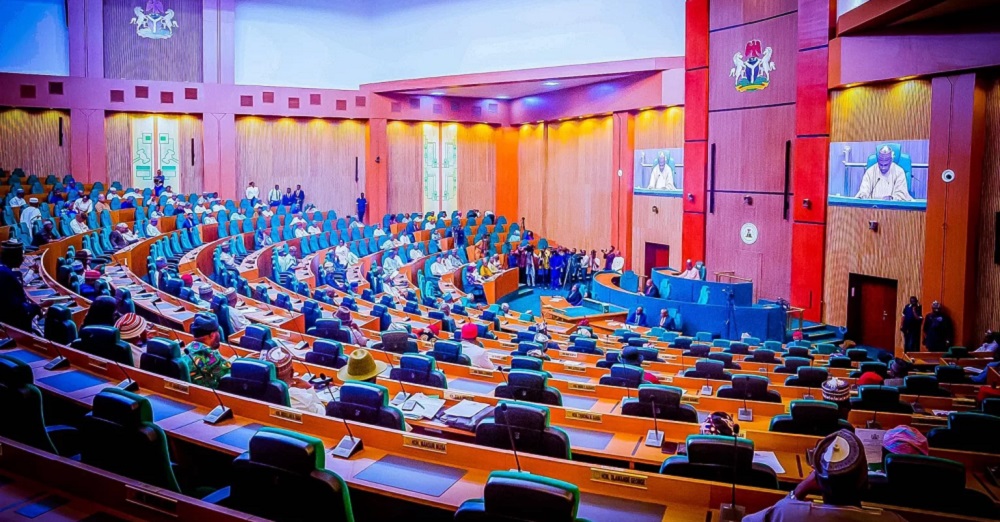
The House of Representatives has directed the Federal Ministry of Agriculture and Food Security to provide more incentives for farmers in order to boost agricultural production and productivity.
The House also called on the Federal Government to, as a matter of urgency, implement the Exports (Prohibition) Act, 2004 to curb food smuggling and food insecurity in Nigeria.
These resolutions was sequel to the adoption of a motion on the “Need to Curb Export Prohibition Act to Curb Insecurity in Nigeria” by Rep. Muktar Shagaya.
In his lead debate, Shagaya noted that Section 14(2) (b) of the Constitution of the Federal Republic of Nigeria, 1999 (as amended) states that the security and welfare of the people shall be the primary purpose of government.
He also highlighted that Nigeria is currently experiencing high levels of food insecurity, food inflation, and food shortages.
This situation accordingtohim, has led to millions of citizens lacking access to sufficient and nutritious food, resulting in untold hardship, hunger, and misery among the population.
Thr lawmaker further expressed concerns about reports from the World Bank and the International Rescue Committee (IRC) indicating that over 31.8 million Nigerians, approximately 16% of the population, are currently facing severe food insecurity and malnutrition among women and children.
Rep. Shagaya expressed worries that food smuggling and exportation is a major driver of the current food insecurity, with large quantities of food products smuggled out of the country, consequently undermining agricultural output and threatening the livelihoods of farmers.
The motion reads in part: “The Export (Prohibition) Act, 2004 was passed at a period when the majority of Nigerians were unable to acquire basic necessities like rice, corn, yam, garri, cassava, and beans due to the fact that these goods were being transported, sometimes covertly, to foreign markets.
“Failure to implement the said legislation overtime has led to severe food shortages, high food prices, increased food insecurity, and the loss of revenue for farmers and the federal government.
“Cognizant of the need to address the current food crisis by enforcing the Export (Prohibition) Act, 2004 to prevent food exportation, ensure food availability, and reduce the cost of living for Nigerians”.
The House adopted the motion and mandated the Committees on Agricultural Production and Services, Legislative Compliance, Customs, Commerce and Industry to ensure compliance and report back within four weeks for further legislative action.