Connect with us

News

Senate Bill seeking establishment of Fed Medical Centre Gembu scales second reading

Published

on

ADVERTISEMENT
Zoom Ad
ADVERTISEMENT
Zoom Ad

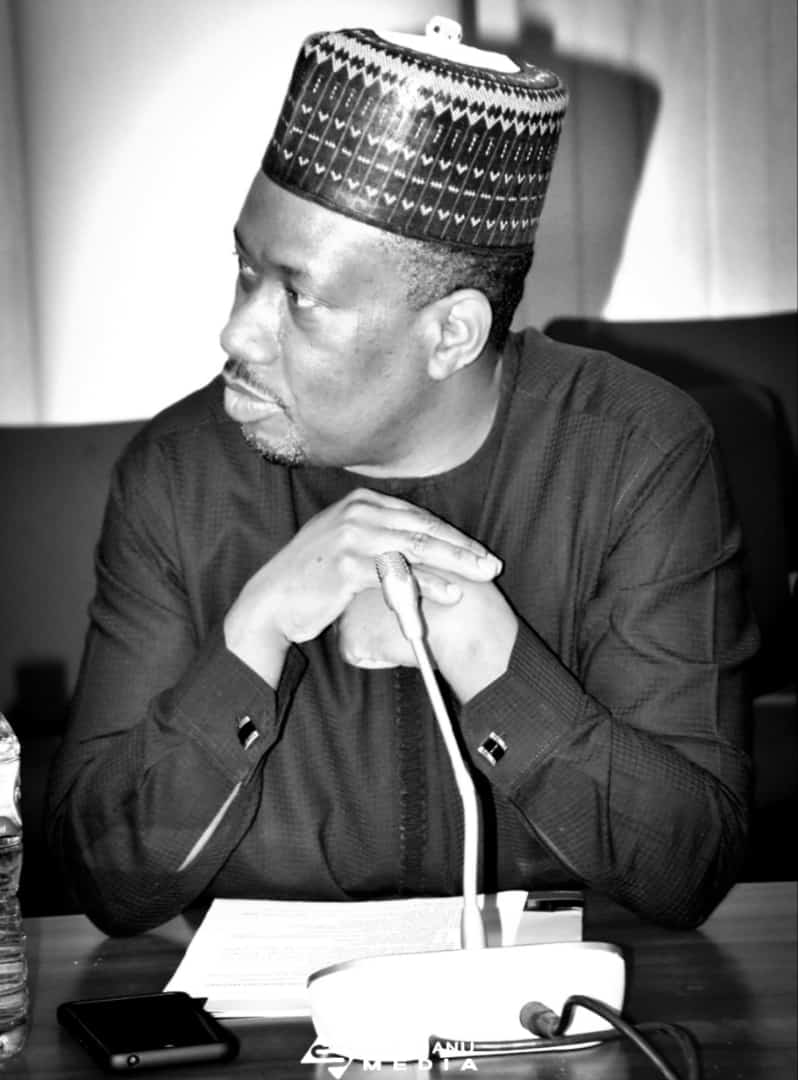
A Bill seeking legal framework for the establishment of Federal Medical Centre Gembu has scaled through second reading in the Senate.

The establishment Bill sponsored by Senator Haruna Manu representing Taraba Central Senatorial District of Taraba passed first reading last July.

If eventually passed into law, the FMC will service Gembu which is 6 to 7 hours drive from Jalingo and other environs such as Gashaka, Karumi and villages, it’s definitely not for people on the Mambila, Sardauna LGA alone as this will bring healthcare closer to so many communities.

The Bill presented on the floor of the Senate by the Majority Leader, Opeyemi Bamidele and passed for second reading.

Advertisement
Continue Reading
Advertisement
Click to comment

Warning: Undefined variable $user_ID in /home/naijuinz/public_html/wp-content/themes/zox-news/comments.php on line 49

You must be logged in to post a comment Login

Leave a Reply

News

FCT police arrest 10 car jackers, 20 one-way offenders

Published

on

ADVERTISEMENT
Zoom Ad
ADVERTISEMENT
Zoom Ad

The Federal Capital Territory (FCT) Police Command has arrested 10 suspected traffic robbers accused of dispossessing motorists and passengers of their belongings on congested roads across Abuja.

The command also arrested 20 motorists for driving against traffic, popularly known as “one-way”, while three kidnapped victims were rescued and two suspected kidnappers arrested in separate operations.

The Commissioner of Police, FCT, Ahmed Mohammed Sanusi, disclosed this on Wednesday while giving an update on the command’s recent anti-crime operations.

Sanusi said the crackdown on traffic robbers followed complaints from members of the public about criminals who disguise themselves as hawkers and exploit traffic congestion to rob motorists and passengers.

Advertisement

He said he directed all Divisional Police Officers, particularly those operating within the city centre, to ensure that such criminal elements were removed from the roads.

“Following complaints from members of the public regarding the criminal activities of traffic robbers who sometimes disguise themselves as hawkers along congested roads and traffic stops, I charged all Divisional Police Officers, particularly within the city centre, to ensure the evacuation of such persons from our roads,” he said.

The suspects arrested were identified as Umar Salihu, Yusuf Isah, Aliyu Hamza, Abubakar Naziru, Muhammed Musa, Yagugu Mohammed, Suwidi Jibril, Kasimu Taraba, Abubakar Sani and Aminu Umar.

Sanusi said the suspects were in police custody and undergoing investigation.

Advertisement

20 arrested for ‘one-way’ driving

The commissioner said he also directed the command’s divisional police officers to intensify enforcement against motorists who violate traffic regulations, particularly those driving against the flow of traffic.

He said 20 motorists had so far been arrested for various traffic offences and charged to court.

“These operations will be sustained across all roads within the FCT until our roads are safe for all road users,” he said.

Advertisement

Police rescue three kidnap victims

Sanusi also disclosed that the command had rescued three victims kidnapped from their residence in Nyanya, Abuja.

He said the incident was reported on August 14, 2026, at about 6pm, following which he deployed operatives of the Command’s Violent Crime Response Unit, Team 1, to commence investigation.

According to him, investigation revealed that the victims had been taken to New Nyanya in Nasarawa State, where they were held by their abductors.

Advertisement

He said intelligence provided by a resident of the FCT enabled the police to track and arrest two suspects, identified as Godwin Afekhide and Aaron Ogbu, who were allegedly linked to the abduction.

“All three victims were rescued unharmed and reunited with their family,” Sanusi said.

Two arrested over robbery, stolen property

The commissioner further disclosed the arrest of two suspects allegedly linked to armed robbery incidents in Nyanya and Kubwa.

Advertisement

He said the investigation followed a robbery reported in Nyanya on July 14, 2026, after which operatives of the Violent Crime Response Unit, Team 2, were deployed to identify and apprehend those responsible.

According to him, investigators later established that a similar robbery had occurred in Kubwa, using a modus operandi similar to the Nyanya incident.

He said intelligence supplied by members of the public, combined with digital investigative techniques, led operatives to a hotel in Jabi, where a 32-year-old suspect, Ismail Tasiu, was arrested.

Tasiu was arrested alongside 35-year-old Adamu Aliyu, whom police identified as an alleged receiver of stolen items.

Advertisement

Sanusi said police recovered five motorcycles, three knives, a vehicle number plate and a face cap bearing the inscription “Kaduna State Vigilante Service” from the suspects.

He said the suspects and exhibits remained in police custody and would be charged to court after the conclusion of investigations.

Six arrested over burglary, armed robbery

The commissioner also disclosed the arrest of six suspects allegedly involved in burglary and armed robbery.

Advertisement

He said operatives of the Violent Crime Response Unit, Team 1, arrested the suspects on July 28, 2026, following intelligence-led operations.

The suspects were identified as Sanusi Yusuf, Zakari Mohammed, Sani Adamu, Abdulwasi Yahuza, Abdullahi Abah and Aliyu Mohammed.

Sanusi said investigation showed that the gang allegedly specialised in breaking into residential buildings at night, stealing valuables and stabbing victims.

He said the suspects remained in custody and would be charged to court after investigations.

Advertisement

The commissioner assured residents that the command would sustain its operations against criminal elements across the FCT.

“We will identify their hideouts, disrupt their networks, recover their instruments of crime, and bring those responsible to justice,” he said.

Sanusi urged residents to continue providing the police with credible information about suspicious persons and activities in their communities.

“With your continued support and cooperation, we will make the Federal Capital Territory safer for all,” he added.

Advertisement
Continue Reading

News

Wike: Tungan Madaki-Zuba Road, 9 Others Ready Before 2027 Polls

Published

on

ADVERTISEMENT
Zoom Ad
ADVERTISEMENT
Zoom Ad

The Minister of the Federal Capital Territory (FCT), Barr Nyesom Wike, has expressed confidence that at least 10 major road and infrastructure projects in Abuja will be completed and ready for commissioning before the 2027 general elections.

Wike gave the assurance on Wednesday during an inspection of the ongoing Tungan Madaki-Zuba Road and Nile University-RR3 Road projects, saying the contractors handling them had demonstrated the capacity, equipment and commitment required to meet their delivery timelines.

The minister said the inspection was part of efforts to assess the progress of projects flagged off during the FCT Administration’s third anniversary and determine whether the contractors would meet their commitments ahead of the planned commissioning.

At the Tungan Madaki-Zuba Road project, Wike disclosed that five of the six box culverts had been completed, describing the pace of work as commendable.

Advertisement

He said the contractor, China Geo-Engineering Corporation (CGC), had assured the administration that the project would be completed and handed over by December.

“They have the capacity. I mean, they are not a new company. They have the capacity, they have the equipment. What’s important is if you have the equipment, and they have the equipment as part of capacity. So, they’ve been tested before now, so I have so much confidence in them,” Wike said.

The minister commended CGC for its commitment, noting that the company had demonstrated willingness to support the development of the FCT.

Wike also disclosed that the projects were capital-intensive and that contractors had yet to receive up to 30 per cent mobilisation, but had continued to execute the projects.

He assured the contractors that the FCT Administration would meet its financial obligations to ensure timely completion.

“On our part, we will not take it for granted that they are committed to the realization of the project. We will do our own part to pay them their money,” he said.

According to Wike, the administration plans to have at least 10 major projects completed and lined up for commissioning before the 2027 elections.

“We are also visiting some other two projects tomorrow, believing that by the end of the year, we would have had up to 10 projects, as promised, lined up for commissioning before the general election,” he said.

Advertisement

Wike also said the FCT Administration had intensified efforts to tackle flooding by removing structures obstructing waterways across Abuja.

He said the ongoing demolition exercise, which commenced in Maitama on Tuesday, would be extended to other areas affected by blocked waterways.

“We’ve just started somewhere. After that, we will move to another area. We are not going to end just with what we started yesterday,” he said.

The minister further disclosed that the Director of Development Control was being queried over approvals allegedly granted to car dealers to operate on designated green areas.

Advertisement

He ordered the immediate removal of car dealerships operating on such spaces, insisting that green areas must be preserved for recreational and environmental purposes.

“This morning, the Director of Development Control is being queried now for giving approval to car dealers to use green areas for the sale of cars,” Wike said.

“I’ve already stopped it, and I’ve set up a task force to make sure that every car dealer is moved out of the green areas. If you want to sell your car, you go and purchase somewhere, or rent somewhere, and then develop it.”

The minister maintained that the decision would not be reversed, regardless of the individuals or businesses affected.

Advertisement

He said the removal of structures erected on waterways would restore the free flow of stormwater and reduce the risk of flooding in affected communities.

Reacting to criticism on social media over the demolition of structures obstructing waterways, Wike challenged critics questioning the exercise to explain whether the construction of buildings on water channels followed due process.

“What is due process? What is due process? You went to block a water channel, is that due process?” he asked.

The minister maintained that the FCT Administration was enforcing planning and environmental regulations in line with its responsibility to protect public infrastructure and communities.

Advertisement

Wike vowed that the enforcement exercise would continue until structures obstructing drainage channels and other public infrastructure were removed.

Continue Reading

News

FG Says ‘No Going Back on Subsidy Removal’, Defends Tinubu’s Economic Reforms

Published

on

ADVERTISEMENT
Zoom Ad
ADVERTISEMENT
Zoom Ad

…Finance Minister insists reforms saved Nigeria from deeper economic crisis despite rising hardship

…Poverty reduction remains “unfinished business” – Oyedele

By Gloria Ikibah

The Federal Government has ruled out any reversal of its economic reforms, particularly the removal of fuel subsidies, insisting that the policy prevented Nigeria from slipping into a more severe fiscal and economic crisis.

Advertisement

The Minister of Finance and Coordinating Minister of the Economy, Mr Taiwo Oyedele, defended the administration’s controversial policies during a media briefing in Abuja on Tuesday, where he presented what he described as “Nigeria’s Reform Scorecard: The Benefits, Costs and Harms Prevented.”

Oyedele said the aim of the briefing was not to celebrate the reforms but to provide Nigerians with a transparent account of their impact.

According to him, the administration of President Bola Ahmed Tinubu embarked on difficult but necessary reforms to tackle longstanding structural problems that had weakened the economy.

“For the past three years, the administration of President Bola Ahmed Tinubu has embarked on major reforms to address age-long economic challenges.

Advertisement

“The removal of a fuel subsidy that was quietly bankrupting the country and the unification of an exchange rate system that had become a source of arbitrage, distortion and corruption rather than stability,” Oyedele said.

He maintained that the reforms were introduced to correct deep-rooted distortions in the economy rather than to generate additional government revenue.

However, the minister acknowledged that the policies came with painful consequences for millions of Nigerians.

“Those decisions came at a real cost, and we’re not here to pretend otherwise. Prices rose.

Advertisement

“Nigerians adjusted sharply. Households and businesses felt it, and many still do.  What we want to do today is put the whole picture in front of you, the Nigerian people.

“What those reforms cost, what they delivered, and just as importantly, what they prevented,” he added.

Oyedele said the government considered it necessary to explain not only the benefits of the reforms but also the consequences the country would have faced had it maintained the old system.

He argued that the removal of fuel subsidies and the unification of the foreign exchange market created the fiscal space needed to stabilise the economy and avert a looming financial crisis.

Advertisement

The minister also stressed that the administration remained committed to staying the course, despite public criticism and concerns over the rising cost of living.

His comments come amid growing debates over the impact of the government’s economic policies, which have triggered increases in fuel prices, transportation costs and the prices of essential goods across the country.

Despite the hardship, the government insists that reversing the reforms is not an option, arguing that doing so will  undermine efforts to restore fiscal stability and put the economy on a sustainable growth path.

According to Oyedele, the newly released scorecard contains four key sections: a breakdown of how resources generated through the reforms were raised and spent; 10 benefits delivered to Nigerians; 10 economic dangers the reforms prevented; and 25 indicators comparing Nigeria’s current position with projections of what could have happened without the reforms.

Advertisement

He urged Nigerians to study the entire report before reaching conclusions.

Subsidy removal generated N15.8 trillion
Providing a breakdown of the figures, Oyedele disclosed that between June 2023 and December 2025, the reforms generated ₦15.8 trillion in additional resources for the federation.

He explained that many Nigerians had questioned where the savings from subsidy removal had gone because there was no specific budget line labelled “subsidy savings”.

“As a matter of fact, there wasn’t any allocation to the federation account with the description ‘subsidy savings.

Advertisement

“The subsidy savings showed up in the form of higher collection by Customs because for every one naira or one dollar of import duty before, at N460, it became one dollar at N1,004, N1,003 or N1,005.

“The savings showed up in the federation accounts by way of higher revenue collections as a result of the reforms’,” he said.

According to him, of the N15.8 trillion generated, the Federal Government received N5.4 trillion, while states and local governments received N10.4 trillion.

He also revealed that the Federal Government generated an additional N3.1 trillion through remittances from government-owned agencies, while incremental borrowing amounted to N11.9 trillion.

Advertisement

“So people will say, ‘You said you have exceeded your revenue. Why are you still borrowing?’ I will come to that.

“The additional borrowing that the Federal Government took for that period, from June 2023 to December 2025, amounted to N11.9 trillion.

“A figure that would have been far higher and economically destabilising without the fiscal space the reforms created”, the minister said.

Wage increases exceeded subsidy savings
Oyedele disclosed that the Federal Government recorded incremental expenditure of N30.64 trillion during the period under review.

Advertisement

He said N9.39 trillion was spent on wage adjustments, including the implementation of the new minimum wage and other salary-related obligations.

“The incremental amount that the Federal Government spent paying higher wages is more than the entire savings that the Federal Government earned from subsidy removal,” he said.

He added that another N9.37 trillion was spent servicing external debt, while N6.5 trillion was invested in strategic infrastructure projects.

“It is instructive that the single largest expenditure line, wage adjustments at N9.39 trillion, outstrips the Federal Government’s entire savings from subsidy removal.

Advertisement

“This is evidence that the reform was never introduced for revenue purposes, but to address entrenched corruption in an artificially managed fuel subsidy and foreign exchange market”, he said.

Twenty-seven states no longer owe salaries
One of the strongest arguments presented by the government was the improvement in salary payments across the states.

According to Oyedele, before the reforms began, 27 states struggled to pay salaries and pensions.
Today, he said, that number has dropped to zero.

“When 27 states that were defaulting in paying salaries and pensions no longer default, today that number is zero.

Advertisement

“We are not paying rich people; we are paying the average Nigerian, who can now put food on the table.”

He also cited the increase in the minimum wage from N30,000 to N70,000, the introduction of student loans through the Nigerian Education Loan Fund, cash transfers to vulnerable households, subsidised mortgages and agricultural interventions as some of the reforms’ direct benefits.

He described the student loan programme as “one of the most affordable student loan schemes globally”, adding that it had already supported more than 1.5 million students.

Defending the removal of fuel subsidies, Oyedele argued that maintaining the old system would have resulted in a more severe crisis.

Advertisement

He said the government was not attempting to conceal the painful consequences of the reforms.

“We’re being honest about the cost. We’re not saying all of it is rosy.

“A scorecard that only lists wins is not a scorecard. It’s a campaign leaflet. And we did not come here to give you one”, he stated.

He acknowledged that the Monetary Policy Rate had increased from 18.5 per cent to 26.5 per cent, while petrol prices had risen from about N185 per litre to between N1,100 and N1,400 per litre.

Advertisement

“That is a major felt cost, and I will not stand here and tell you otherwise”, he said.

However, he argued that under the old subsidy regime, fuel scarcity would have worsened.

“On the pre-reform path, petrol would likely be simultaneously unavailable.

“It would still be N185 per litre, but it would not be available at the official price.

Advertisement

“It’s likely to be trading in the black market for at least N3,000 per litre”, he said.

He further warned that Nigeria’s net external reserves had fallen to less than $3 billion before the reforms.

“We were owing over $7 billion. That’s bankruptcy.

“And you know we can’t print dollars because we’re not the United States of America.”

Advertisement

The government also highlighted what it described as improvements in key economic indicators.

According to the scorecard, headline inflation declined from 22.41 per cent in May 2023 to 15.91 per cent by June 2026.

Food inflation also dropped from 24.82 per cent to 17.52 per cent.

Gross external reserves increased from about $35 billion to $52.5 billion, while net reserves rose from about $3 billion to $34.8 billion.

Advertisement

The stock market’s capitalisation also increased from N31 trillion to about N150 trillion.

“Real GDP growth has strengthened to 3.89 per cent, against a baseline of 2.31 per cent and a no-reform estimate that had us, at best, stagnant and, at worst, in recession by now,” Oyedele said.

He also pointed to Nigeria’s sovereign credit rating upgrade by S&P Global in May and the country’s removal from international financial watchlists.

“S&P Global upgraded our sovereign credit rating to B in May, our first upgrade in 14 years.

Advertisement

“Nigeria exited the FATF grey list in October last year and exited the European Union’s anti-money laundering and combating the financing of terrorism deficiency list in January 2026, restoring our standing in the global financial system”, he noted.

Poverty remains ‘unfinished business’
Despite highlighting the gains, Oyedele admitted that poverty and household welfare remained major concerns.

“Food and household welfare remain a work in progress.

“Poverty and household welfare recovery are still classified in our scorecard as unfinished business.

Advertisement

“Not a victory lap.”

He said the next phase of the reforms will focus on ensuring that ordinary Nigerians experienced the benefits of economic stability through expanded cash transfers, increased agricultural support and deeper collaboration with state and local governments.

“We will stay the course of reform and accelerate how we translate the macro gains into meaningful impacts for every household,” he said.

He added that the government will continue implementing the Nigeria Tax Act while introducing additional fiscal reforms aimed at improving budgeting, accountability and public financial management.

Advertisement

In a direct appeal to Nigerians, Oyedele urged citizens to support beneficial government policies while holding public officials accountable.

“We cannot build our country by opposing every government action. Criticise government constructively.

“Misinformation, like anything else we amplify, shapes the reality we all end up living in.

“We actually pay a price for amplifying negativity about our country.”

Advertisement

He encouraged Nigerians to interrogate the data rather than rely on assumptions.

“We are not here to pretend these reforms were painless.

“We are here to show you honestly and with numbers what they cost, the benefits they delivered and the harm that they prevented.

“We invite you to engage with the scorecard in good faith and with an open mind.  Together, let us build the Nigeria of our dreams”, he appealed. Oyd

Advertisement
Continue Reading

Trending

Copyright © 2024 Naija Blitz News