News
Hardship: Men now collect marriage list from different families to get cheapest – Report
By Kayode Sanni-Arewa

In recent years, the age-old tradition of marriage has undergone a myriad of transformations, reflecting societal changes, economic conditions, and shifting values. One particularly intriguing trend emerging in some communities is the concept of men requesting “marriage lists” from multiple women. This practice, driven by a desire to evaluate potential marriage costs, raises several questions about tradition, love, and the commodification of relationships.
Marriage lists are essentially detailed accounts of the financial demands associated with a prospective marriage. These lists may include dowries, gifts, and other financial obligations that a groom or his family must meet. Traditionally, dowries were a way to secure the financial future of a bride and her family, but in contemporary settings, they can vary significantly based on cultural, regional, and individual factors.

Men requesting these lists from various women aims to assess which marriage would be the most economically feasible. This practice can stem from a combination of personal financial constraints, cultural expectations, and the desire to make informed decisions in an era where economic considerations are increasingly important.
In many cultures, marriage is not just a union of two individuals; it is a significant financial transaction involving families. While in some societies, love and companionship are the primary motivations for marriage, in others, financial considerations play a pivotal role. The practice of comparing marriage lists could be seen as a practical approach to ensuring financial stability, but it also risks reducing the complex institution of marriage to a mere transactional relationship.
The practice raises several ethical questions. First, is it fair to women to be evaluated based solely on financial demands? This approach can reinforce harmful stereotypes and perpetuate a culture where women’s worth is tied to monetary value. Additionally, it may lead to emotional detachment in relationships, prioritizing financial calculations over genuine compatibility and affection.
Moreover, this practice could create an environment of competition among women, fostering insecurities and undermining the foundational values of trust and love that are vital for a successful marriage.
On a practical level, the comparison of marriage costs can be influenced by economic realities. In times of financial uncertainty, individuals may feel compelled to prioritize financial security over emotional connection. This trend can also reflect broader societal changes, where economic factors increasingly dictate personal choices.
However, it’s essential to recognize that while financial considerations are valid, they should not overshadow the fundamental aspects of partnership—mutual respect, love, and shared goals.
While the practice of men requesting marriage lists from various women may appear to be a logical approach to navigating the complexities of modern relationships, it brings to light significant ethical, cultural, and emotional concerns. Marriage, at its core, is a partnership that thrives on connection and commitment, transcending financial considerations.
As society continues to evolve, it’s crucial to strike a balance between practical realities and the deeper values that define successful and fulfilling relationships. Ultimately, a marriage built on love and mutual respect will likely yield a more rewarding and lasting partnership than one anchored solely in economic calculations.
Credit vanguard
News
2027: Rainbow Coalition Signals Fresh Political Realignment in Nigeria — Sokoto PDP Guber Candidate
The Peoples Democratic Party (PDP) governorship candidate in Sokoto State, Abubakar Sokoto, has described the emerging Rainbow Coalition as another chapter in Nigeria’s long history of political alliances and realignments.
Sokoto, in a statement issued in Sokoto on Tuesday, said political coalitions had remained a recurring feature of Nigeria’s electoral history, with parties and political groups often coming together to pursue shared political objectives.
According to him, while the names, personalities, circumstances and goals behind such alliances may change, political realignment remains an established part of the country’s democratic process.
He cited the 1999 AD-APP joint presidential ticket of Olu Falae and Umaru Shinkafi as one of the notable examples of political cooperation in Nigeria.
He also recalled the Coalition of Progressive Political Parties ahead of the 2015 general elections, as well as the merger involving the Action Congress of Nigeria (ACN), Congress for Progressive Change (CPC) and All Nigeria Peoples Party (ANPP), which eventually led to the formation of the All Progressives Congress (APC).
“The greatest lesson from these experiences is that political coalitions are about people as much as they are about parties,” he said.
On the latest political realignment, Sokoto noted that the Minister of the Federal Capital Territory (FCT), Nyesom Wike, had described the Rainbow Coalition as a multi-party platform mobilising support for President Bola Tinubu’s 2027 re-election bid.
He added that Wike had also maintained that the coalition was not an APC structure.
Sokoto said concerns reportedly expressed by some APC governors over the emerging coalition should be viewed within the broader context of Nigeria’s history of political alliances and realignments.
He urged APC governors and other party leaders to adopt what he described as a pragmatic approach to the developing political configuration ahead of the 2027 elections.
The PDP candidate also called on Nigerians to support efforts aimed at ensuring that the 2027 general elections are free, fair and credible.
News
2027: Rainbow Coalition Signals Fresh Political Realignment in Nigeria — Sokoto PDP Guber Candidate
The Peoples Democratic Party (PDP) governorship candidate in Sokoto State, Abubakar Sokoto, has described the emerging Rainbow Coalition as another chapter in Nigeria’s long history of political alliances and realignments.
Sokoto, in a statement issued in Sokoto on Tuesday, said political coalitions had remained a recurring feature of Nigeria’s electoral history, with parties and political groups often coming together to pursue shared political objectives.
According to him, while the names, personalities, circumstances and goals behind such alliances may change, political realignment remains an established part of the country’s democratic process.
He cited the 1999 AD-APP joint presidential ticket of Olu Falae and Umaru Shinkafi as one of the notable examples of political cooperation in Nigeria.
He also recalled the Coalition of Progressive Political Parties ahead of the 2015 general elections, as well as the merger involving the Action Congress of Nigeria (ACN), Congress for Progressive Change (CPC) and All Nigeria Peoples Party (ANPP), which eventually led to the formation of the All Progressives Congress (APC).
“The greatest lesson from these experiences is that political coalitions are about people as much as they are about parties,” he said.
On the latest political realignment, Sokoto noted that the Minister of the Federal Capital Territory (FCT), Nyesom Wike, had described the Rainbow Coalition as a multi-party platform mobilising support for President Bola Tinubu’s 2027 re-election bid.
He added that Wike had also maintained that the coalition was not an APC structure.
Sokoto said concerns reportedly expressed by some APC governors over the emerging coalition should be viewed within the broader context of Nigeria’s history of political alliances and realignments.
He urged APC governors and other party leaders to adopt what he described as a pragmatic approach to the developing political configuration ahead of the 2027 elections.
The PDP candidate also called on Nigerians to support efforts aimed at ensuring that the 2027 general elections are free, fair and credible.
News
Niger Miners’ Deaths: ‘Anyone Who Tampers With Evidence Will Face Full Wrath of Law’ — Tunji-Ojo
The Federal Government has warned that anyone who attempts to destroy or conceal evidence, intimidate witnesses or obstruct investigations into the deaths of 37 suspected illegal miners in Niger State will face prosecution.
Minister of Interior, Olubunmi Tunji-Ojo, issued the warning on Tuesday in Abuja while inaugurating a 10-member independent investigative committee set up to establish the circumstances surrounding the deaths of the detainees in the custody of the Nigeria Security and Civil Defence Corps (NSCDC).
The 37 detainees died on September 17, days after they were arrested during NSCDC operations against suspected illegal mining in the M.I. Wushishi and Lukoto areas of Niger State on September 15 and 16.
The circumstances and actual cause of the deaths remain under investigations.
Speaking at the inauguration of the panel, Tunji-Ojo directed the NSCDC leadership and all officers linked to the incident to cooperate fully with investigators and ensure that all relevant records and material evidence are preserved.
“All records and material evidence connected to this incident, I have directed that they must be preserved and made available,” the minister said.
He added: “Any attempt by anybody to destroy or conceal evidence, intimidate witnesses or obstruct this investigation will be treated as a serious offence against the nation and it will not be tolerated.
“If it ever happens, I give you my word, the full hammer of the law will descend on such an individual.”
‘We Owe Nigerians the Truth’
Tunji-Ojo said the Federal Government was determined to establish the truth and ensure accountability, regardless of the status of anyone found culpable.
“To Nigerians, I say this: we owe you the truth.
This committee will give you the truth. No officer, no matter how highly placed, or any individual will be shielded if found culpable,” he said.
The minister also appealed to the families of the deceased to remain calm, assuring them that the government would not abandon them.
“To the families who lost loved ones, I appeal for calm and patience. This government will not and will never abandon you,” he said.
Tunji-Ojo charged the committee to conduct a thorough investigation and promised that its findings would not be ignored.
“I challenge you: let your antecedent speak when the report is submitted, and I assure you of one thing: this report will not be swept under the carpet,” he said.
He added that those found culpable would face the appropriate legal consequences.
“We will call a meeting like this; we will present the report, and whoever needs to be prosecuted will be prosecuted, and whoever needs to be dealt with in line with the law will be dealt with,” the minister said.
Panel to Determine Cause of Death, Responsibility
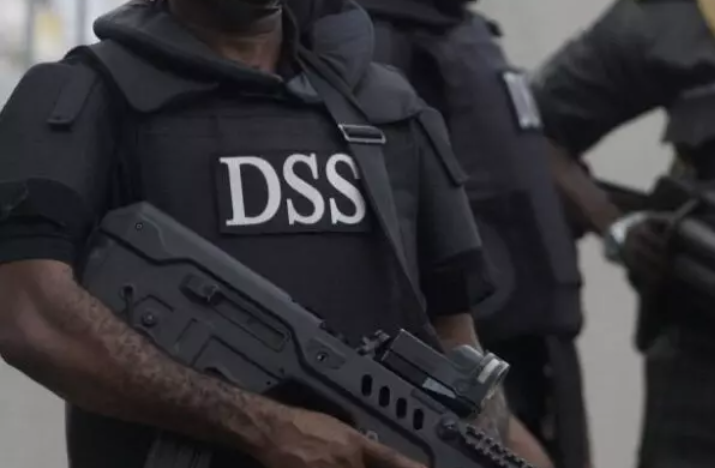
The committee, chaired by retired Deputy Director-General of the Department of State Services (DSS), Jonathan Kure, is expected to establish the identities of the deceased and investigate the circumstances surrounding their arrest and detention.
It will also determine the cause and circumstances of the deaths, establish responsibility, complicity, negligence or misconduct, and recommend appropriate action, including compensation where applicable. The panel is also expected to recommend measures to prevent a recurrence.
The committee has two weeks to complete its investigation and submit its report to the Minister of Interior.
The NSCDC initially attributed the deaths to a suspected disease outbreak, but the official cause has not been established.
The Federal Government has ordered a comprehensive investigation into the circumstances surrounding the deaths.
The incident has generated widespread public outrage, with survivors and relatives making allegations about the conditions in which the detainees were held. Reports have included claims of overcrowding and poor ventilation, as well as allegations that an unidentified substance was sprayed inside the cell. Those claims remain subject to investigation.
Following the incident, the Federal Government suspended the Niger State NSCDC Commandant, Suberu Siyaka Aniviye, along with 20 other officers pending the outcome of the investigation.
The NSCDC subsequently paraded the suspended commandant and other officers linked to the incident at its national headquarters in Sauka, Abuja, as the Corps presented preliminary findings to journalists.
President Bola Tinubu had earlier ordered a full and transparent investigation, saying the government would not tolerate mass deaths arising from official negligence, dereliction of duty or failure by public officials to protect people placed in their care.
Channels Television
-
News23 hours agoFCT minister Wike’s words on marble
-
News22 hours ago2027: Wike Reveals Why APC Governors Are Opposing Rainbow Coalition
-
News14 hours agoChristian candidates will punish Nigerian Muslims if elected in 2027 elections: APC Lawmaker Ibrahim Shittu
-
News13 hours agoNigeria signs acquisition agreement for 12 Viper Attack helicopters from U.S
-
Sports14 hours agoMohammed Salah Fined, Banned In UK From Driving For Six Months Over Speeding Case
-
Politics14 hours ago2027: APC, APGA disagree over Anambra ‘alliance’

Warning: Undefined variable $user_ID in /home/naijuinz/public_html/wp-content/themes/zox-news/comments.php on line 49
You must be logged in to post a comment Login