Connect with us

News

Obasanjo reveals how ICPC, EFCC secured debt relief for Nigeria

Published

on

ADVERTISEMENT
Zoom Ad
ADVERTISEMENT
Zoom Ad

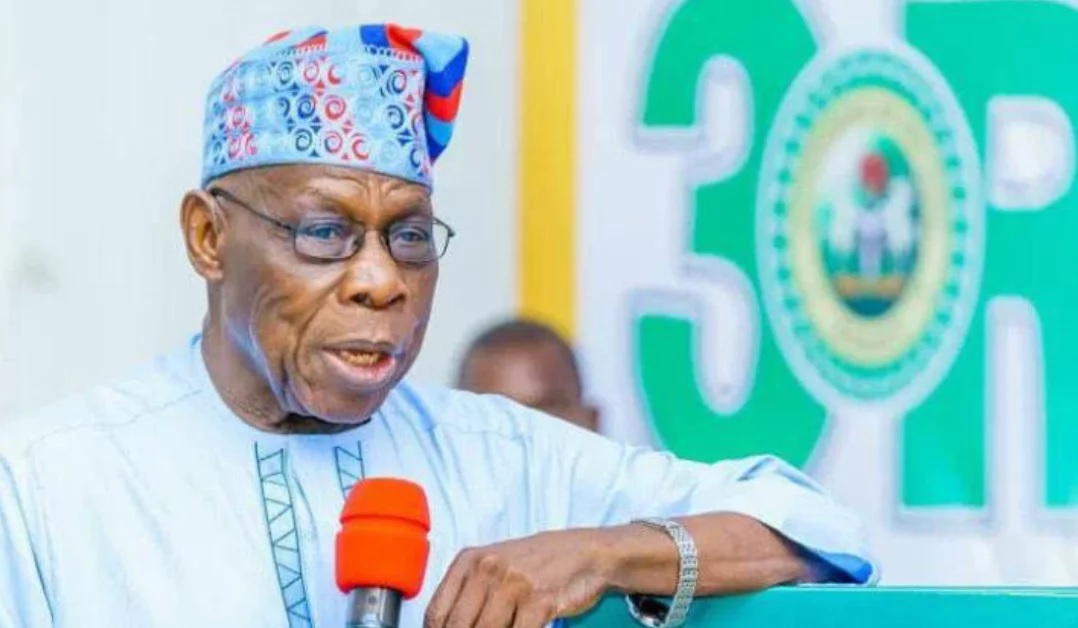
Former President Olusegun Obasanjo has outlined the steps he took to secure substantial debt relief for Nigeria during his tenure from 1999 to 2007.


He noted that the creation of the Independent Corrupt Practices & Other Related Offences Commission, ICPC, and the Economic and Financial Crimes Commission, EFCC, were part of his policy moves that convinced Nigeria’s creditors to write off debts.

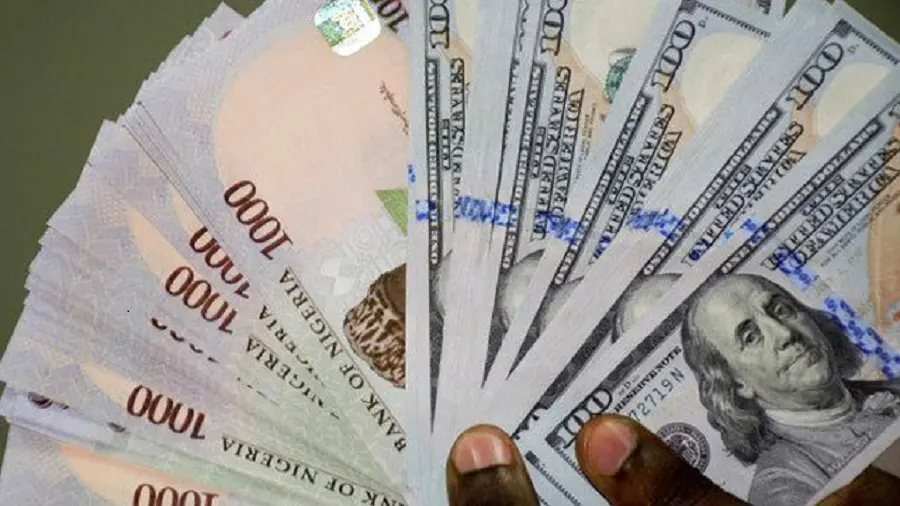
Obasanjo highlighted the challenges he faced upon assuming office, including Nigeria’s debt servicing burden of $3.5 billion annually and a total debt of approximately $36 billion, while the nation’s reserves stood at a modest $3.7 billion.

Obasanjo revealed that he successfully negotiated debt forgiveness by convincing international lenders of his administration’s commitment to channeling the funds saved into developmental projects aimed at sustainable growth.

Advertisement

He emphasised that presenting a credible and transparent plan was key, as global financial institutions required assurances that forgiven debt would foster positive development outcomes.

Reflecting on the current state of leadership in Nigeria, Obasanjo expressed concerns about a perceived decline in ethical leadership and effective planning.

He stressed that without a genuine development-oriented approach, requests for debt forgiveness are unlikely to gain international approval.

“When I became elected President of Nigeria, one of the things that worried me and that I wanted to do something about was debt relief. The quantum of debt that we were carrying, the burden was too heavy. We were spending $3.5bn to service debt, yet the quantum was not going down and I believed that we should seek debt relief.

Advertisement

“Many people inside and outside Nigeria thought it was a bad dream but I was convinced. I went to the World Bank and I started talking to our creditors,” Obasanjo said.

He explained that in his moves he found why the world lenders “did not feel that they owe us”, disclosing that they give consideration “when you make your case if they find that you are genuinely showing and trying to carry out what they call reforms, and the reforms they are asking us to carry out are reforms we should ordinarily carry out.

“How do you have public service delivered, how do you drastically reduce corruption, how do you manage your finances? And all these are reforms that nobody needs to tell us to do.”

Obasanjo noted that international lenders are more willing to engage with nations demonstrating accountability, stating, “when the world lenders believe that you’re doing what they expect of you, they will listen and you may even find the world more sympathetic than you thought. The world does not feel it owes you anything but if you show responsibility.”

Advertisement

He said, “I took over and I found they were using over $3.5b to service debt, that’s a lot of money but the problem was that the quantum of debt was not going down because that amount of money was being spent together to pay interests and to pay what they call penalties, because (for) any default you pay penalties and you can’t show good course for the debt.”

Illustrating the misuse of loans, he referenced a state project where a loan intended for carpet production was fully spent without any work being done on-site. He was told, “a small print which says once you sign, how the money is spent is not the responsibility of the lender, it’s the responsibility of the borrower.”

“With all these, I was convinced that I could make a credible case, a serious case, and then of course on the other hand they wanted me to do what’s right that I should not continue with the irresponsibility of the past, the corruption of the past.

“The point is that the international community know us more than we know ourselves and at times we bow our heads like ostrich in the sand. They know what you do,” he said.

Advertisement

The former president said the creation of the Independent Corrupt Practices & Other Related Offences Commission and the Economic and Financial Crimes Commission was borne out of the move to satisfy the course to secure debt forgiveness, as part of reforms to prove readiness to eliminate the stench of corruption and mismanagement.

“Of course, if you remember one of the first bills that I sent to the National Assembly was the ICPC bill to fight corruption. I followed that up later with the EFCC bill, again to fight corruption because the international community knows what you’re doing.

“So, convinced of the fact that we could not sustain the amount of money we were spending to service debt with the quantum of debt not going down, anytime we defaulted they gave us heavy penalties, and my determination to do what would convince Nigerians internally and convince our development partners/creditors, then it took almost six years before we got there and at the end of the day, they were satisfied.

“I even gave them assurance that the money saved from our debt relief would be spent on the sustainable development goals and that was been done.

Advertisement

“The world out there doesn’t feel that it owes you anything but if you do what is right, there’s a lot you can get out of the world,” the former president explained.

Obasanjo who lamented a situation “where leaders rather than manage the economy and prosperity of the nation for all, they manage it for themselves,” said, “Where there is no development you are actually inviting problems.”

He explained “When I came in 1999, I met $3.7bn in the reserves, and as I have told you, we were spending $3.5bn to service debt. That’s all we have. When I came in we had debt overhand of close to $36bn, by the time we left eight years later, with the debt relief and clearing what we had to clear, the quantum of debt I left was about $3.5/3.6bn from over about $36bn dollars.

“At the same time, the reserves that was $3.7bn went to $45bn, at the same time we had what we call the excess crude, the amount in excess between what we budgeted at which we seek to sell crude oil and we actually sold it.

Advertisement

“Normally, we were conservative in budgeting, we had about $25bn (in the excess crude account). When you add that to the reserves, we are talking about $70bn dollars.”

He however lamented, “The point is that I left in 2007, between 2007 and 2024 all that amount of money had gone. Not only that, all that money they made during that period had gone and today we own more than we owed when I came to government in 1999. Why? Poor leadership, poor management of economy, corruption galore, pervasive corruption.”

Expressing his disappointment in successive administrations, Obasanjo decried “the deficit of leadership” that has hindered the nation’s progress, adding, “I feel bad.”

“As I always say, leadership is not a thing that you pick on the road, and not everybody is given to it. When we identify leadership we should appreciate it and use it to good advantage…

Advertisement

“The point in Nigeria particularly is that we take two steps forward, we take one sideways and take two or three backward, that can’t get us far.

“Leadership is something we should pay attention to. What do you say of a Nigerian president who came to office without a plan? And then he woke up and just said three-point plans. What are the plans, what are they going to achieve, and who are the people who have worked on it? You came and just opened your mouth and make a pronouncement on something that has not been studied,” Obasanjo said.

VANGUARD
Advertisement
Continue Reading
Advertisement
Click to comment

You must be logged in to post a comment Login

Leave a Reply

News

$516m loan request: Tinubu’s borrowing bonanza mortgaging Nigeria’s future

Published

on

By

ADVERTISEMENT
Zoom Ad
ADVERTISEMENT
Zoom Ad

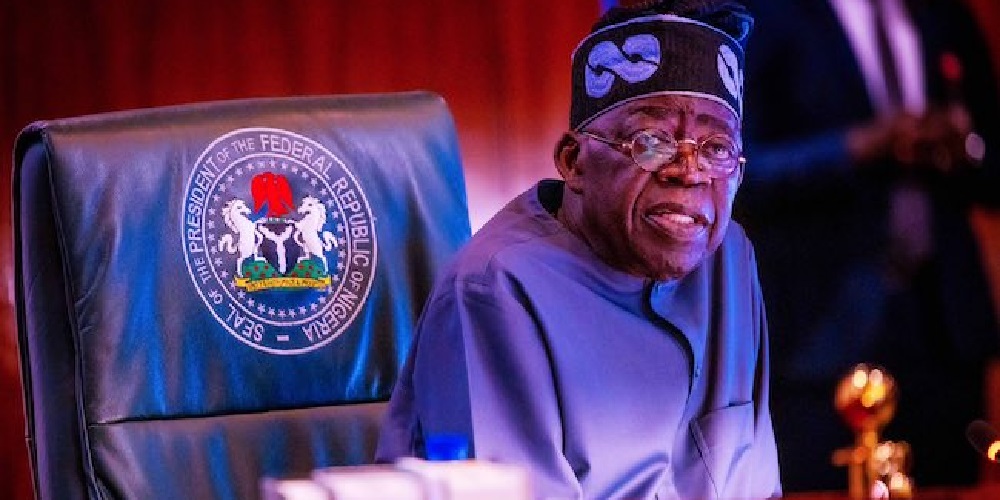
The African Democratic Congress (ADC) Legislators’ Forum has strongly condemned the latest move by President Bola Ahmed Tinubu to secure Senate approval for an additional external loan of $516,333,070, ostensibly for the Sokoto–Badagry Super Highway project. 

This was contained in a statement issued and signed by the regional leaders of the Forum: Hon. Uko Ndukwe Nkole ,PhDChairmanADC -National Legislators’ Forum African  Democratic Congress (ADC)
Hon Nnenna Ukeje-SEHon Sergius Ogun-SSHon Ajagbe H -SWHon Zakari Mohammed -NCHon Koko Shehu -NWHon Maigari Bello M-NE stating that:
“This request is not only alarming but emblematic of an administration that has made reckless borrowing its default economic policy, with little regard for sustainability, accountability, or the wellbeing of future generations.

“While no responsible opposition undermines the importance of infrastructure development, we must ask: at what cost, and under what conditions? This government has failed to convincingly demonstrate that its endless appetite for loans is guided by a coherent, transparent, and economically viable repayment strategy. 

“Instead, Nigerians are witnessing a troubling pattern; one where debt accumulation is prioritized over prudent fiscal management, innovation, and domestic resource mobilization.

Advertisement

“Nigeria is already weighed down by a crushing debt burden, with debt servicing swallowing a staggering proportion of national revenue. Yet, rather than confronting this reality with discipline and reform, the Tinubu administration continues to plunge the country deeper into what can only be described as a looming debt catastrophe. Each new loan tightens the noose around the nation’s economic sovereignty, leaving future generations to pay for today’s lack of foresight.

“Even more disturbing is the timing of this request. As the nation inches closer to a major general election cycle, Nigerians are right to question the motives behind this borrowing spree.

” Is this truly about development, or is it another attempt to create avenues for political patronage and electoral advantage? History has taught us to be wary of last-minute, large-scale financial commitments made under the guise of national interest.

“The ADC Legislators’ Forum insists that the National Assembly must not act as a rubber stamp or Pro group of President Bola Ahmed Tinubu in this matter. 

Advertisement

“The Senate, in particular, must rise to its constitutional responsibility by demanding full disclosure of the project’s financial details, procurement processes, cost-benefit analysis, and a credible repayment plan. 
“Anything short of this would amount to a betrayal of public trust.

“Furthermore, we call on the administration to redirect its focus toward policies that can genuinely strengthen Nigeria’s economy; policies that promote productivity, industrial growth, job creation, and the plugging of revenue leakages. 

“Borrowing should never be a substitute for leadership, creativity, and accountability.

“We must clearly state that governance is not a free ride without consequences. Those who make decisions today that endanger the economic future of millions of Nigerians must understand that a day of reckoning will inevitably come. The Nigerian people will demand answers, accountability, and justice for policies that have deepened hardship and mortgaged the nation’s destiny.

Advertisement

“Nigeria stands at a critical crossroads. We can either choose the path of responsibility, discipline, and sustainable growth, or continue down this perilous road of debt dependency and economic vulnerability. The Tinubu administration must decide where it stands; but Nigerians are watching, and history will not be kind to those who fail this nation.

Continue Reading

News

ISWAP commander, 24 others killed as troops repel Kukareta attack in Borno

Published

on

By

ADVERTISEMENT
Zoom Ad
ADVERTISEMENT
Zoom Ad

At least one ISWAP fighter has been captured alive while top commander identified as Abu Umar Bundi Munzir has been neutralised alongside 24 other insurgents in Borno.

The development followed a foiled coordinated attack on Kukareta community in Borno by troops of Operation HADIN KAI.

Maj.-Gen. Abdulsalam Abubakar, Theartre Commander, North East Operation Hadin Kai, disclosed this to the News Agency of Nigeria (NAN), in Maiduguri on Thursday, while providing situational update on the failed attack by ISWAP terrorists.

NAN report that the insurgents launched the attack in the early hours of Thursday, shortly after midnight, in an attempt to overrun the location but were decisively engaged by troops of Sector 2 in a sustained counter-offensive that lasted till about 3;00 a.m.

Advertisement

Abubakar said that during the encounter, the terrorists’ commander, Abu Umar Bundi Munzir, was reportedly among those neutralised as troops repelled the assault and forced the remaining attackers into a disorganised withdrawal.

The theartre commander also confirmed that a total of 24 other terrorists were killed in the operation, bringing the overall neutralised figure to 25.

”Troops subsequently conducted exploitation of the battlefield, leading to the recovery of a large cache of arms and ammunition, including 18 AK-47 rifles, three General Purpose Machine Guns, two PKT automatic anti-aircraft guns and three RPG tubes.

”Others include two mortar tubes, four hand grenades, 18 AK-47 magazines, and large quantities of belted 7.62mm ammunition,” he said.

Advertisement

According to him, two soldiers sustained gunshot wounds during the encounter and have since been stabilised, while an armoured reinforcement vehicle had its tyres damaged during the firefight.

He added that further exploitation operations were ongoing to recover fleeing terrorists bodies, and abandoned equipment along withdrawal routes reportedly marked by blood trails and medical items.

The commander described the operation as a significant success in ongoing counter-insurgency efforts, noting that sustained pressure would be maintained to deny terrorist elements freedom of action in the North-East theatre.

(NAN)

Advertisement
Continue Reading

News

APC Shifts Presidential and Governorship Primaries

Published

on

By

ADVERTISEMENT
Zoom Ad
ADVERTISEMENT
Zoom Ad

The All Progressives Congress has officially rescheduled its presidential and governorship primary elections ahead of the 2027 general elections.

The party’s Deputy National Publicity Secretary, Duro Meseko, announced the change in Abuja this Thursday, stating that the presidential primary earlier slated for May 15 and 16 will now hold on May 23, 2026, while the governorship primaries are set for May 21.

Meseko explained that the adjustment was made to align with the revised timetable released by the Independent National Electoral Commission and the 2026 Electoral Act.

The party also confirmed that nomination forms will be available to all interested aspirants starting this Saturday, April 25 to Saturday, May 2, with no exclusive reservations for any individuals.

Advertisement
Continue Reading

Trending

Copyright © 2024 Naija Blitz News