

News
MOHAMMED MAIGARI DINGYADI: A QUINTESSENTIAL PATRIOT JOINS PRESIDENT TINUBU’S RENEWED HOPE CABINET
BY. DELE AILEMEN
Having been involved for most of my life in working class and progressive activism, and journalism nationally and globally, I must admit my hopefulness at the inspirational nomination of Hon. Mohammed Maigari Dingyadi for the Labour and Employment portfolio. These are simultaneously defining and trying times for President Bola Tinubu administration. Undeniably, the helms of the labour and employment is an existential artery for oxygenerating our national socio-economic health. The choice of President Tinubu for the phenomenal task of the ministry is vitally consequential.
After months of speculations and serial rumour, President Tinubu announced changes and rejuvenation in the federal executive council. In swift action, he named seven ministerial nominees supplanting five others. As expected, the ministerial-shake up has elicited energetic comments in the media and other platforms.

While some have vilified and minimized the efforts of Tinubu saying that the changes were not far reaching, others believe that the administration deserves commendation for the courage to effect potentially profound reforms.
Amid the cacophony of talks about the cabinet changes, there are indisputable silver linings of positivity; for the first time, since the birth of the fourth republic in 1999, Tinubu attached portfolios to the list of ministerial nominees for the Senate screening. With this audacious decision, the President has responded to the yearning of Nigerians who have clamoured for such feature in the nomination process in a way that enables the Senate to engage in direct interrogation and thoughtful scrutiny of every nominee.
To every discerning, and informed mind interested in national growth and development, the labour and employment portfolio is very paramount. In developed climes, necessary, and imperative details are devoted to who manages this strategic ministry in every administration. From empirical studies, countries like the United States, United Kingdom, and Australia conscious of the importance of labour and employment to growth and development ensure that whoever heads the sector must possess criterion fitting for necessary collaboration, and realistic synergies between the government, organised labour, and private sector.
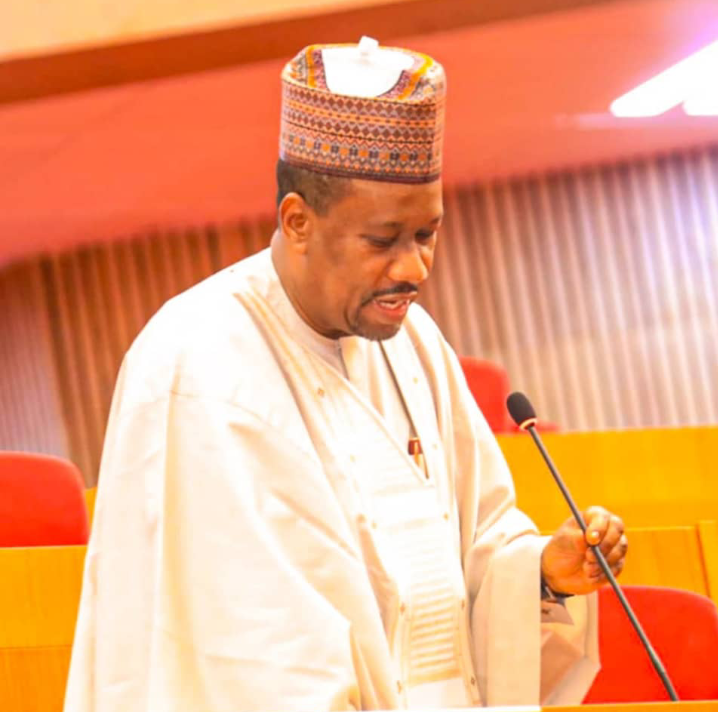
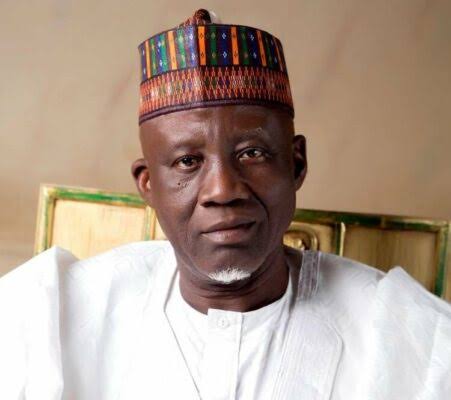
For every Nigerian that has followed the distinguished public service career of Alhaji Mohammed Maigari Dingyadi, his choice as a ministerial-nominee by Tinubu is well-deserved. Also, his expected deployment to labour and employment is akin to putting a round peg in round hole. Indeed, it is apposite to commend Tinubu for the nomination which depicts his commitment, and determination towards having all-round, all-inclusive, robust, and results-yielding labour-government relations as necessary impetus for national development.
In his over four decades post-graduation career as a dedicated civil servant; consummate administrator; resourceful security expert; responsive lawmaker; altruistic politician; and serial philanthropist, Dingyadi has carved enviable niches for himself. Deploying boundless energies, bountiful courage, consistent candour, and ceaseless competencies in the discharge of every duty, assignment and responsibility, Dingyadi has recorded unblemished records of excellence, and achievements in his numerous services to the country, state, community, and humanity.
That Tinubu has found him worthy to oversee the labour and employment portfolio speaks volumes about his high-rating, and affirmation of his achievements as the police affairs minister, between August 2019 and May 2023 in the Buhari administration. That he is the sole nominee; from the last government to deserve a positive look-in confirms, in many ways the acknowledgement of his performances in the last administration, and recognition of his consistency, character, capabilities, and competencies.
From available records, Dingyadi is arguably, the best police affairs minister since 1999. Under his leadership, the Nigerian Police Force, and other agencies such as the Police Academy, Wudil; Police Training Colleges; and Nigerian Police Trust Fund witnessed improved operations, and service deliveries. Numerous initiatives were emplaced towards capacity building, ethical standardization, and operational sustainability of agencies under the ministry.
Under his supervision, the police affairs ministry posted many laudable achievements including:- presidential assent to the elevation of the Police Academy, Wudil to a full-fledged degree awarding institution; presidential assent to the establishment of the federal government Public-Private Security Fund; review, and upgrade of training curriculum for police institutions to align with contemporary policing realities; full implementation of the Integrated Payroll and Personnel Information System (IPPIS) at all agencies; establishment of the Interpol Cybercrime Reportorial Platform; commissioned the NPF Crime and Incident Database Centre; establishment of the NPF Cybercrime Control Centre; deployment of ICT-based apparatus at strategic commands and units in fighting crime; improved operational apparatus of the Interpol Cybercrime Unit; and launch of “NPF Rescue Me” application.
Dingyadi also ensured that officers, personnel, and staff of the ministry, and agencies benefited from various operational, empowerment, and welfare initiatives towards encouraging commitment, and service deliveries at all levels. These included:- construction, renovation and rehabilitation of police stations and barracks at FCT, Lagos, Gombe, Kebbi, Abia, Plateau, Edo, Ogun, Borno, Sokoto, Niger, Bayelsa, and other states; construction and rehabilitation of hospitals and health centres; provision of operational vehicles, arms and ammunition, and others; provision of intelligence equipment at Abuja Force Headquarters, and Headquarters Annex in Lagos; provision of medical equipment, kits, and other consumables; recruitment of about 100,000 constables through open, transparent, and credible processes; recruitment of young WASC holders into the Nigerian Police Academy, Wudil for Assistant Superintendent of Police (ASP) training; and many others.
Given his broad-based experiences, and multi-disciplinary competencies which has attracted national and global recognition over the years, Dingyadi is best-suited to be the labour and employment minister. As a top civil servant in Sokoto state where he rose to the position of Secretary to State Government; having functioned as Permanent Secretary in the Career, Special Services, and other strategic ministries, he had excellent working relationship with civil servants such that at no time did workers embarked on any strike action. As a federal lawmaker, he played useful roles in every legislative intervention with the organised labour. At the ministry of police affairs, labour unions, and workers had productive synergies with him. One is confident that leveraging on his manifested love for humanity, and the general well-being of people, Dingyadi would help advance smooth, better, and fruitful government-labour relations towards immense benefits to the Nigerian worker, and the nation.
* DELE AILEMEN, Co-Convener, 2002 Los Angeles (California)People’s Convention; and Chairman, defunct Bendel State Council of Nigeria Union of Journalists writes from Benin.

News
2027: Rainbow Coalition Signals Fresh Political Realignment in Nigeria — Sokoto PDP Guber Candidate
The Peoples Democratic Party (PDP) governorship candidate in Sokoto State, Abubakar Sokoto, has described the emerging Rainbow Coalition as another chapter in Nigeria’s long history of political alliances and realignments.
Sokoto, in a statement issued in Sokoto on Tuesday, said political coalitions had remained a recurring feature of Nigeria’s electoral history, with parties and political groups often coming together to pursue shared political objectives.
According to him, while the names, personalities, circumstances and goals behind such alliances may change, political realignment remains an established part of the country’s democratic process.
He cited the 1999 AD-APP joint presidential ticket of Olu Falae and Umaru Shinkafi as one of the notable examples of political cooperation in Nigeria.
He also recalled the Coalition of Progressive Political Parties ahead of the 2015 general elections, as well as the merger involving the Action Congress of Nigeria (ACN), Congress for Progressive Change (CPC) and All Nigeria Peoples Party (ANPP), which eventually led to the formation of the All Progressives Congress (APC).
“The greatest lesson from these experiences is that political coalitions are about people as much as they are about parties,” he said.
On the latest political realignment, Sokoto noted that the Minister of the Federal Capital Territory (FCT), Nyesom Wike, had described the Rainbow Coalition as a multi-party platform mobilising support for President Bola Tinubu’s 2027 re-election bid.
He added that Wike had also maintained that the coalition was not an APC structure.
Sokoto said concerns reportedly expressed by some APC governors over the emerging coalition should be viewed within the broader context of Nigeria’s history of political alliances and realignments.
He urged APC governors and other party leaders to adopt what he described as a pragmatic approach to the developing political configuration ahead of the 2027 elections.
The PDP candidate also called on Nigerians to support efforts aimed at ensuring that the 2027 general elections are free, fair and credible.
News
2027: Rainbow Coalition Signals Fresh Political Realignment in Nigeria — Sokoto PDP Guber Candidate
The Peoples Democratic Party (PDP) governorship candidate in Sokoto State, Abubakar Sokoto, has described the emerging Rainbow Coalition as another chapter in Nigeria’s long history of political alliances and realignments.
Sokoto, in a statement issued in Sokoto on Tuesday, said political coalitions had remained a recurring feature of Nigeria’s electoral history, with parties and political groups often coming together to pursue shared political objectives.
According to him, while the names, personalities, circumstances and goals behind such alliances may change, political realignment remains an established part of the country’s democratic process.
He cited the 1999 AD-APP joint presidential ticket of Olu Falae and Umaru Shinkafi as one of the notable examples of political cooperation in Nigeria.
He also recalled the Coalition of Progressive Political Parties ahead of the 2015 general elections, as well as the merger involving the Action Congress of Nigeria (ACN), Congress for Progressive Change (CPC) and All Nigeria Peoples Party (ANPP), which eventually led to the formation of the All Progressives Congress (APC).
“The greatest lesson from these experiences is that political coalitions are about people as much as they are about parties,” he said.
On the latest political realignment, Sokoto noted that the Minister of the Federal Capital Territory (FCT), Nyesom Wike, had described the Rainbow Coalition as a multi-party platform mobilising support for President Bola Tinubu’s 2027 re-election bid.
He added that Wike had also maintained that the coalition was not an APC structure.
Sokoto said concerns reportedly expressed by some APC governors over the emerging coalition should be viewed within the broader context of Nigeria’s history of political alliances and realignments.
He urged APC governors and other party leaders to adopt what he described as a pragmatic approach to the developing political configuration ahead of the 2027 elections.
The PDP candidate also called on Nigerians to support efforts aimed at ensuring that the 2027 general elections are free, fair and credible.
News
Niger Miners’ Deaths: ‘Anyone Who Tampers With Evidence Will Face Full Wrath of Law’ — Tunji-Ojo
The Federal Government has warned that anyone who attempts to destroy or conceal evidence, intimidate witnesses or obstruct investigations into the deaths of 37 suspected illegal miners in Niger State will face prosecution.
Minister of Interior, Olubunmi Tunji-Ojo, issued the warning on Tuesday in Abuja while inaugurating a 10-member independent investigative committee set up to establish the circumstances surrounding the deaths of the detainees in the custody of the Nigeria Security and Civil Defence Corps (NSCDC).
The 37 detainees died on September 17, days after they were arrested during NSCDC operations against suspected illegal mining in the M.I. Wushishi and Lukoto areas of Niger State on September 15 and 16.
The circumstances and actual cause of the deaths remain under investigations.
Speaking at the inauguration of the panel, Tunji-Ojo directed the NSCDC leadership and all officers linked to the incident to cooperate fully with investigators and ensure that all relevant records and material evidence are preserved.
“All records and material evidence connected to this incident, I have directed that they must be preserved and made available,” the minister said.
He added: “Any attempt by anybody to destroy or conceal evidence, intimidate witnesses or obstruct this investigation will be treated as a serious offence against the nation and it will not be tolerated.
“If it ever happens, I give you my word, the full hammer of the law will descend on such an individual.”
‘We Owe Nigerians the Truth’
Tunji-Ojo said the Federal Government was determined to establish the truth and ensure accountability, regardless of the status of anyone found culpable.
“To Nigerians, I say this: we owe you the truth.
This committee will give you the truth. No officer, no matter how highly placed, or any individual will be shielded if found culpable,” he said.
The minister also appealed to the families of the deceased to remain calm, assuring them that the government would not abandon them.
“To the families who lost loved ones, I appeal for calm and patience. This government will not and will never abandon you,” he said.
Tunji-Ojo charged the committee to conduct a thorough investigation and promised that its findings would not be ignored.
“I challenge you: let your antecedent speak when the report is submitted, and I assure you of one thing: this report will not be swept under the carpet,” he said.
He added that those found culpable would face the appropriate legal consequences.
“We will call a meeting like this; we will present the report, and whoever needs to be prosecuted will be prosecuted, and whoever needs to be dealt with in line with the law will be dealt with,” the minister said.
Panel to Determine Cause of Death, Responsibility
The committee, chaired by retired Deputy Director-General of the Department of State Services (DSS), Jonathan Kure, is expected to establish the identities of the deceased and investigate the circumstances surrounding their arrest and detention.
It will also determine the cause and circumstances of the deaths, establish responsibility, complicity, negligence or misconduct, and recommend appropriate action, including compensation where applicable. The panel is also expected to recommend measures to prevent a recurrence.
The committee has two weeks to complete its investigation and submit its report to the Minister of Interior.
The NSCDC initially attributed the deaths to a suspected disease outbreak, but the official cause has not been established.
The Federal Government has ordered a comprehensive investigation into the circumstances surrounding the deaths.
The incident has generated widespread public outrage, with survivors and relatives making allegations about the conditions in which the detainees were held. Reports have included claims of overcrowding and poor ventilation, as well as allegations that an unidentified substance was sprayed inside the cell. Those claims remain subject to investigation.
Following the incident, the Federal Government suspended the Niger State NSCDC Commandant, Suberu Siyaka Aniviye, along with 20 other officers pending the outcome of the investigation.
The NSCDC subsequently paraded the suspended commandant and other officers linked to the incident at its national headquarters in Sauka, Abuja, as the Corps presented preliminary findings to journalists.
President Bola Tinubu had earlier ordered a full and transparent investigation, saying the government would not tolerate mass deaths arising from official negligence, dereliction of duty or failure by public officials to protect people placed in their care.
Channels Television
-
News23 hours agoFCT minister Wike’s words on marble
-
News23 hours ago2027: Wike Reveals Why APC Governors Are Opposing Rainbow Coalition
-
News14 hours agoChristian candidates will punish Nigerian Muslims if elected in 2027 elections: APC Lawmaker Ibrahim Shittu
-
News14 hours agoNigeria signs acquisition agreement for 12 Viper Attack helicopters from U.S
-
Sports14 hours agoMohammed Salah Fined, Banned In UK From Driving For Six Months Over Speeding Case
-
News14 hours agoAlleged Forgery: Court Releases International Passport Of Ex-Minister Nnaji

Warning: Undefined variable $user_ID in /home/naijuinz/public_html/wp-content/themes/zox-news/comments.php on line 49
You must be logged in to post a comment Login