Connect with us

News

Nigeria Loses $500m Annually, $2.5bn In Five Years For Non-implementation Of ICTN

Published

on

ADVERTISEMENT
Zoom Ad
ADVERTISEMENT
Zoom Ad
…as shipping lines association rejects
proposed cargo tracking bill
By Gloria Ikibah
The Executive Secretary, Shippers Council of Nigeria, Pius Akutah, in his submission said that the country lost $2.5 billion in five years and $500 million annually over the non-implementation of the international cargo tracking notes (ICTN).
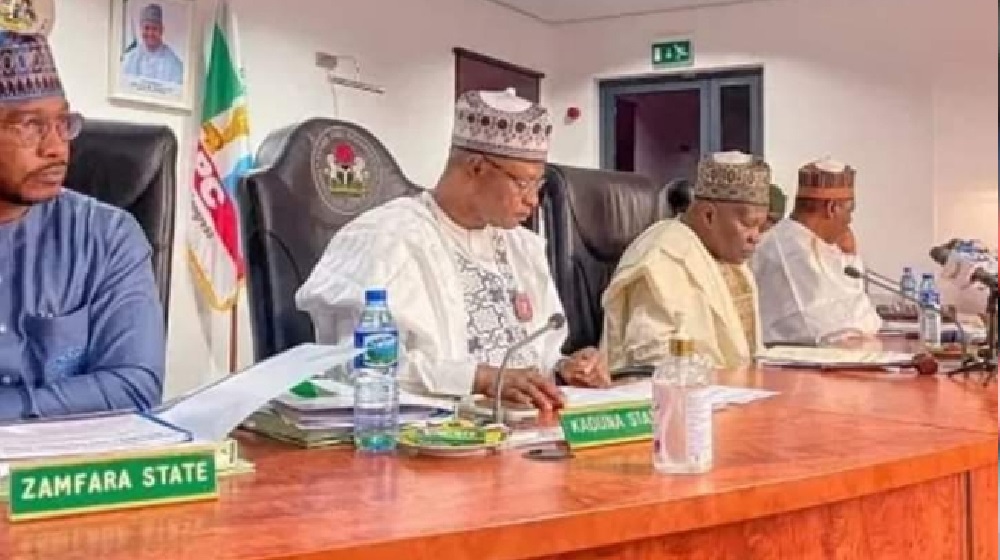
The Executive Secretary made the revelation at an investigative heaqring organised by the House of Representative Committee On Shipping Services and Related Matters, on the circumstances surrounding the non-implementation of the International Cargo Tracking Notes, whicglh identifies challenges faced by the Nigeria Shippers Council in carrying outfits roles effectively.
Akutah said: “Nigeria has lost almost 2.5 billion dollars. Within the last five years that Nigeria has not implemented this.Because of some investigations that arose out of which EFCC conducted some of its investigations, a period of five years passed.
“Within the last five years. They implemented for two years and somehow stopped.In the last five years they have not done it.We are losing that amount in dollars.
“So in Nigeria today, there have been some attempts that were made at implementing this. Altogether a period of two years, was the period in which this was implemented. And some revenue was generated at that time. But because of some issues surrounding the implementation, and the issues that were raised that led to investigation by even the law enforcement agencies, this only took place within a period of two years.
“And within the last five years or thereabouts that this has not been implemented, Nigeria has lost not less than one to five billion dollars. If we implement it, that is what we should be able to put in the economy, within a period of two years. And the implementation as at that time was very brief, but it generated quite a good number of income for the country. So this is just part of what Nigeria is losing”.
Minister of Marine and Blue Economy, Gboyega Oyetola, explained said that though the Federal Executive Council of the previous administration approved the contract at the tail end of the administration but the process of award of the contract was wrong.
According to the  Minister who represented by Director, Maritime Services in the Ministry, Babatunde Sule, the process that led to the approval of the Contract by the previous administration was wrong.
The chairman of the Commitee on Shipping Services and Related Matters, Rep.  Abdussamad Dasuki asserted that the ICTN is far more than an administrative requirement but an essential tool designed to bring transparency, security, and operational efficiency to the movement of cargo across borders.
But the Chairman , Shipping Lines Association of Nigeria, Boma Alabo SAN, in her submission vehemently rejected the proposed Cargo Tracking Bill, as she described it as another toll gate for government, and that it will not amplify the ease of doing business and trading in Nigeria.
According to her, the shipping industry in Nigeria was already over burdened with red tape and does not need another layer of bureaucracy which is what the proposed Cargo Tracking Bill will result in.
She said: “All exporters and importers are able to track their goods on the website of the shipping lines generally speaking. In addition, the shipping lines have to upload their manifest to the Customs NICIS portal which is connected to the CBN single window. They also have to upload this information to NPA, NIMASA, NDLEA, and DSS.
“Adding, the ICTN without streamlining the existing process will only result in further delays and congestion”.

Continue Reading
Advertisement
Click to comment

Warning: Undefined variable $user_ID in /home/naijuinz/public_html/wp-content/themes/zox-news/comments.php on line 49

You must be logged in to post a comment Login

Leave a Reply

News

2027: INEC extends nationwide Continuous Voter Registration, introduces full online registration

Published

on

By

ADVERTISEMENT
Zoom Ad
ADVERTISEMENT
Zoom Ad

The Independent National Electoral Commission (INEC) has extended Phase III of the ongoing Nationwide Continuous Voter Registration (CVR) exercise by two weeks and approved the deployment of a full online voter registration platform.

According to an official circular dated July 3, 2026, and signed by the Secretary to the Commission, Dr. Rose Oriaran-Anthony, the extension follows the Commission’s meeting held on July 2, 2026, where it reviewed the progress of the exercise.

The Commission said the voter registration, which was initially scheduled to end on July 10, 2026, will now continue from July 11 to July 26, 2026, including weekends and public holidays, to allow more eligible Nigerians to register.

INEC also announced the introduction of a full online voter registration platform, enabling prospective voters to begin and complete their registration process online without visiting any Continuous Voter Registration (CVR) centre.

Advertisement

The Commission noted that all necessary logistics for the extension have been approved, including special allowances for Registration Officers (ROs) required to work during weekends.

Resident Electoral Commissioners (RECs) across the country have been directed to take note of the extension and ensure full compliance with the Commission’s directive.

The move is expected to increase voter participation by making the registration process more accessible and convenient ahead of future elections.

Advertisement
Continue Reading

News

Despite FG’s denial, documents show the accountant-general’s office posted foreign affairs officials to PFIPC

Published

on

By

ADVERTISEMENT
Zoom Ad
ADVERTISEMENT
Zoom Ad

Amid the controversy over the existence of the Presidential Foreign Intervention Promotion Council (PFIPC), official documents have shown that the Office of the Accountant General of the Federation (OAGF) approved the redeployment of some staff members from federal ministries to the agency last year.

The documents surfaced amid public outrage that trailed the federal government’s denial of the agency’s existence and the appointment of its director-general, Adeniyi Adeyemi.

A circular dated August 28, 2025, and signed by Dauda Abdulhamid, Director of Administration at the OAGF, showed that some treasury officers from the Federal Ministry of Foreign Affairs and other departments and agencies were also posted to the agency.

The permanent secretaries and heads of key federal institutions, including the Office of the Secretary to the Government of the Federation (OSGF), were among the recipients of the circular approving the postings, which the OAGF said was intended to strengthen service delivery.

Advertisement

Affected officers were directed to submit their assumption-of-duty certificates to the Office of the Accountant-General on or before Thursday, September 11, 2025.

The OAGF had also warned that failure by affected officers to comply with the posting directive would attract sanctions under the Public Service Rules.

“I am further directed to reiterate that all officers are to note that failure to comply with this posting instruction shall be treated in accordance with the provisions of the Public Service Rules PSR 020602 (iv),” he wrote.

Omeh Amarachukwu Henry, a principal auditor on Grade Level 12, was posted from the foreign affairs ministry to the audit unit of the Office of the Director-General, Presidential Economic Advisory Council (PEAC), specifically to the Presidential Foreign Intervention Promotion Council (PFIPC).

Advertisement

Also redeployed from the foreign affairs ministry to the PFIPC account unit were Wakili Saidu Lampo, a senior auditor on Grade Level 10, and Ojo Akinpelu Victor, an accounts officer on Grade Level 13.

Bawa Salihu Mokwa, the spokesperson for the Office of the Accountant-General of the Federation (OAGF), could not be immediately reached for comments.

Earlier, the president’s chief of staff, Femi Gbajabiamila, denied that the agency existed under President Bola Tinubu’s administration and that Mr Adeyemi had never been appointed to head it.

Reacting, Mr Adeyemi, at a press conference, alleged that Mr Gbajabiamila had collected N400 million through a proxy and demanded an additional N200 million to secure his appointment.

Advertisement

The PFIPC chief questioned how the agency appeared on pages 50 and 51 of the 2026 appropriation budget and how it secured a space at the federal secretariat if it did not exist.

However, the federal government has maintained that the agency does not exist and that Mr Adeyemi is an impostor, despite documents indicating that the PFIPC had been operating. The development has generated outrage among Nigerians, who have questioned the authenticity of the Tinubu-led government’s claims.

Continue Reading

News

How Yahoo boys stole judge’s N7.2m child’s school fees overnight — EFCC chair

Published

on

By

ADVERTISEMENT
Zoom Ad
ADVERTISEMENT
Zoom Ad

The Chairman of the Economic and Financial Crimes Commission, Ola Olukoyede, has narrated how suspected internet fraudsters, popularly known as Yahoo Boys, allegedly stole over N7.2 million from a serving judge’s bank account in the middle of the night.

Olukoyede said the money represented six years of savings the judge had kept aside to fund her child’s education.

According to Vanguard on Friday, the anti-graft agency boss said this at the public presentation of two books written by retired High Court judge, Justice Alaba Omolaye-Ajileye.

The EFCC chairman said the judge contacted him around 1 a.m. after receiving multiple debit alerts.

Advertisement

He said, “She had just been scammed of the money she had been putting together for six years to send her child to school. She said it was alerts that woke her up. She received debits at that time of the day. Before she knew it, she had been scammed of about N7.2 million.”

Olukoyede disclosed that the judge immediately appealed to the commission to intervene and recover the stolen funds.

He added that the incident occurred in a state where the EFCC had previously faced legal restrictions in investigating certain financial crimes.

“Incidentally, it was the state where they got an order against the EFCC from investigating certain crimes. She said, ‘My lord, I have an order, an injunction not to investigate financial crimes in that state.’

Advertisement

“She said, ‘No, no, no! This is an exception. You must do something immediately!’” he recounted.

According to him, the commission successfully recovered the entire sum before the end of the same day.

“Before 6 p.m., we recovered the entire money for her. I am very sure that if an application comes before her to stop the EFCC from carrying out its mandate, she will dismiss it because she has become a victim.

“So, it is important for us to understand the depth of this problem,”he said.

Advertisement

Olukoyede stressed that tackling cybercrime requires collective action involving security agencies, the judiciary and ordinary Nigerians.

“Not until we, as Nigerians, come together and agree to face this challenge, law enforcement agencies playing their role, citizens doing their part, and the judiciary too doing its part, it is only then that we will be able to put this problem behind us. We can do it. Nigeria can do it, and we will do it and succeed,” he said.

The EFCC chairman also highlighted the growing role of artificial intelligence in criminal investigations, calling for legal reforms to address emerging technological challenges.

“Now we have already started deploying the tools of AI in the investigation of crime. But what I am cracking my brain about is how to generate evidence and make it admissible?

Advertisement

“This is because now we talk of a robot. Is a robot a human being? Being an electronic device doing the work of a human being, robots can now think for you. Robots can do anything human beings can do.

“So we are looking at that area. I wish our legislators and professors of law will take time and come together to look at this area and come up with laws that will help us in the area of AI,”he said.

Also speaking at the event, former Attorney-General of the Federation and Minister of Justice, Chief Kanu Agabi (SAN), urged the EFCC and other anti-graft agencies to intensify efforts to recover public funds allegedly looted and hidden abroad.

Advertisement
Continue Reading

Trending

Copyright © 2024 Naija Blitz News