News
Equatorial Guinea restricts WhatsApp amid sex scandal




By Francesca Hangeior
The Government of Equatorial Guinea has restricted its citizens from downloading and sharing multimedia files using mobile data on WhatsApp.
This decision was followed by the guidelines that the country’s government gave to telecommunications operators when it urged them to implement measures to restrict access to inappropriate content.
The country’s Director General, National Financial Investigation Agency, Baltasar Engonga, was enmeshed in a sex scandal involving the wives of notable people.
The scandal emerged in the course of a fraud investigation against the 54-year-old Economist which resulted in the search of his house and office on impromptu notice by ANIF officials who came across several CDs that later revealed his sexcapades with different married women.
The over 400 videos reportedly include encounters with high-profile individuals, such as his brother’s wife, his cousin, the sister of the President of Equatorial Guinea, the Director General of Police’s wife, and about 20 of the country’s ministers’ wives, among others.
The footage, discovered in his office, was said to have been recorded with consent and has since been leaked online, causing a media uproar.
However, in a new development on Tuesday, a local news platform, Ahora EG, reported that the citizens have been lamenting their inability to share photos, videos, and audio when using a mobile data connection, leading users to rely exclusively on WiFi networks to share such content.
Speaking with a source, the platform quoted a source as saying, “Should an entire country pay for the actions of a few? The likely decision to restrict access to essential communication functions seems disproportionate and punitive, affecting thousands of users of these platforms who, in addition to serving them for entertainment, also use them for their work and/or educational activities.
“In a world where digitalisation is becoming more and more important, should we shut down our platforms and paralyse our activities due to the actions of a few? Currently, users are forced to rely exclusively on WiFi connections, which not only limits their ability to communicate but also interferes with their daily activities.
“This situation has generated a heated debate among the population, where many believe that the measure seems to be more focused on controlling than facilitating communication,” the report added.
Ahora EG also quoted another querying, “Is it really fair that everyone should suffer the consequences of the actions of a few? The authorities have not yet provided any explanation for the reasons behind this restriction, as well as the duration of the same. At a time when information and communication are more vital than ever, the lack of transparency only aggravates citizens’ concerns.”
Earlier, the Vice President of Equatorial Guinea, Teddy Nguema, announced plans to install surveillance cameras in all state body offices.
This sweeping measure is part of an ongoing effort to ensure strict adherence to public service laws and combat misconduct among officials.






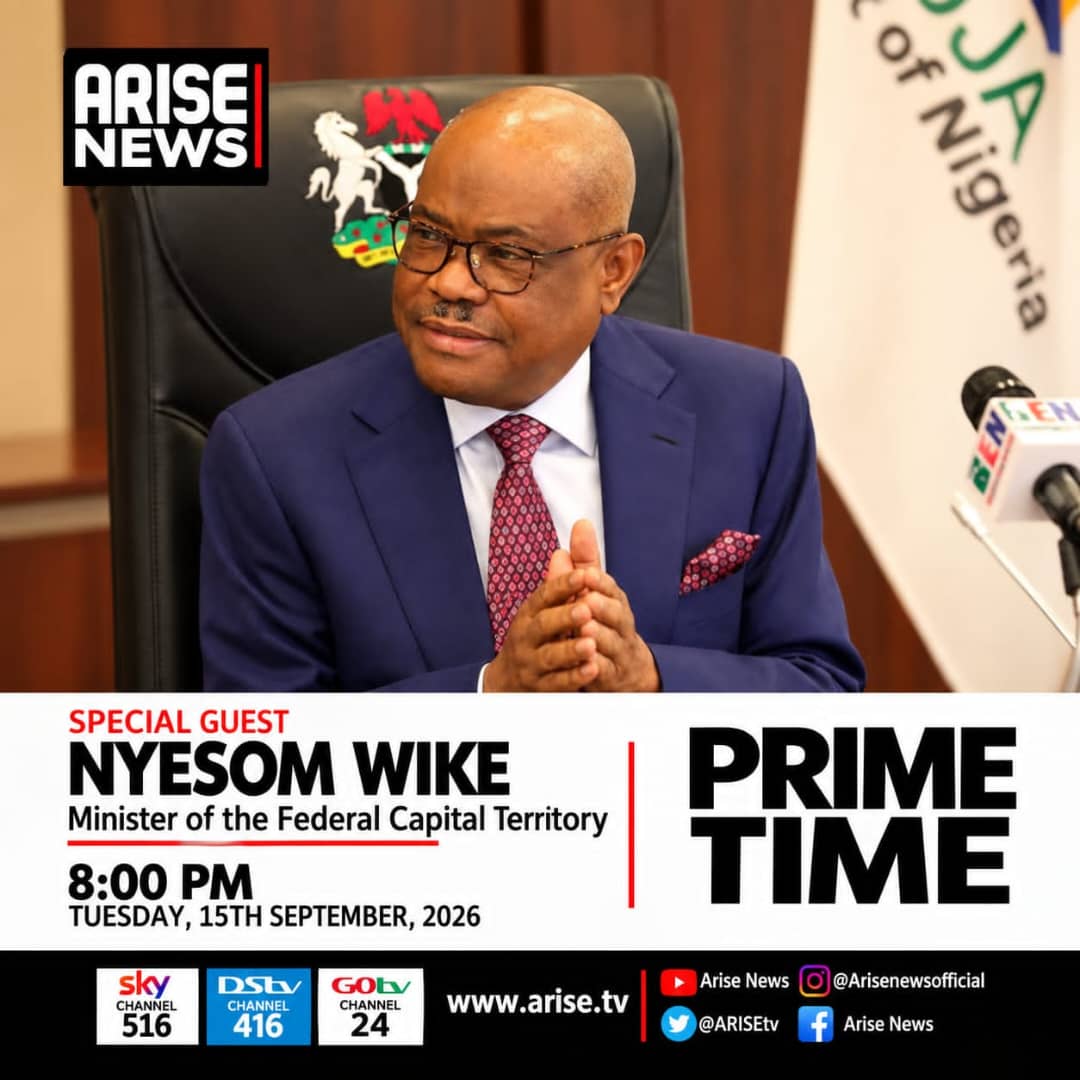
The Minister of the Federal Capital Territory (FCT), Barr. Nyesom Wike, has said President Bola Ahmed Tinubu is fully aware of his “Rainbow Coalition” and all his political activities.
Wike made the declaration on Tuesday night while speaking on Arise News Prime Time.
“There is nothing that I do that I don’t tell Mr. President,” he stated.
The FCT Minister said he was mobilizing support across party lines for the reelection of President Tinubu in 2027 under what he termed a “Rainbow Coalition.”
He has consistently maintained that his support is solely for the President, and not for the All Progressives Congress (APC), as a party.
Wike, a chieftain of the Peoples Democratic Party, (PDP), said his actions are not done in secret, stressing that the President is carried along at all times.
Wike also said he is not answerable to governors elected on the platform of the APC.
“I’m not answerable to APC governors.
“If people fail to learn from other people, they don’t grow. I took 31 days to commission projects in the FCT and they are not happy,” he added.
Turning to the Governor of Imo State, Hope Uzodimma, Wike said: “Hope Uzodimma should be lucky that I’m not in the APC. Hope fears for nothing.
“When I look at the APC governors who held the press conference, I see some people who are smart but politically lazy. Hope Uzodinma was the governor of Imo State, yet President Tinubu could not secure 10% of the votes there.
“Hope in his own state, Imo state, he was Governor. President Tinubu didn’t get 10% votes in the 2023 elections, but he took two senators and Labour Party took one senator. Is he saying Imo people were confused, or were they not confused?
“The governors of Osun, Anambra and Abia States are supporting the President reelection. Won’t they still support the candidates of their parties in other elections? So where is the confusion?”
Speaking about Rivers State, the Minister said; Becauseof our rainbow coalition, we no longer have Rivers of blood. There is no litigation on party candidates in Rivers State, unlike Imo State.”
When asked where else in the South-South the President can win, the Minister replied: “That can happen in Bayelsa State. The whole PDP there is working for the President. The founder of the NDC is not the founder of Bayelsa.”
“As I sit here today, I will tell you that the President will win in the FCT,” he added.

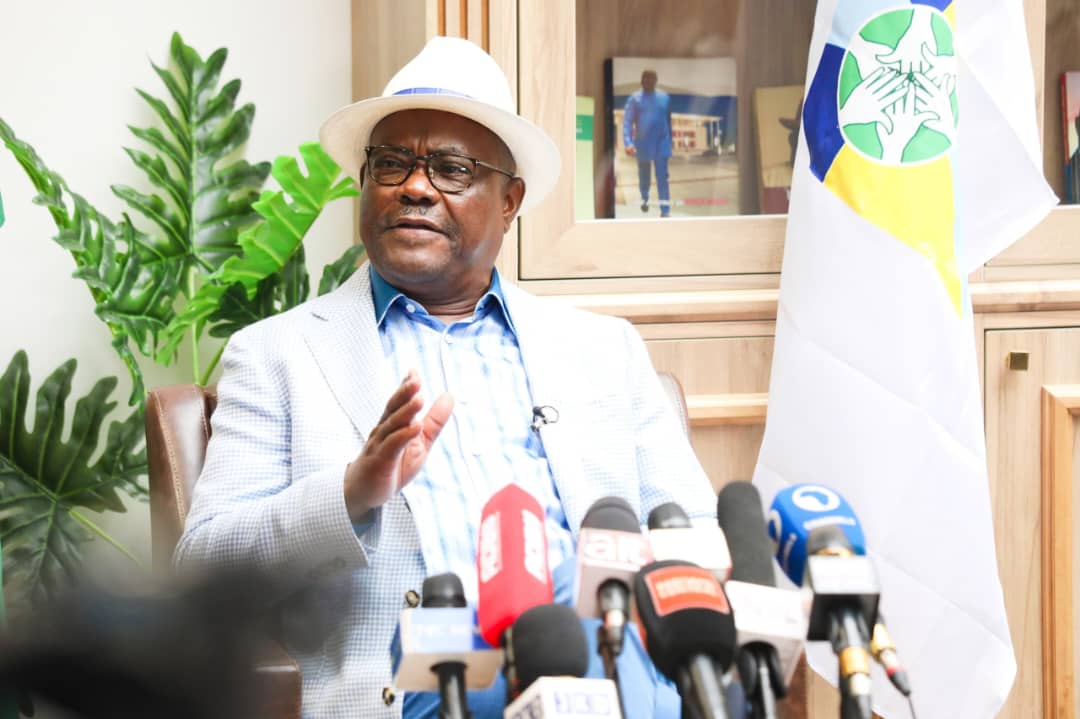
Federal Capital Territory FCT minister Nyesom Wike has said the Governor of Imo State, Hope Uzodinma and his cohorts are politically lazy.
Wike who is in Spain made this assertion during an ongoing interview with Arise tv.
He said all they said during a press briefing is neither here nor there.
He went memory lane saying, “Hope supported Ahmad Lawan during APC Presidential primaries and TInubu lost the election in his state.
Details shortly….
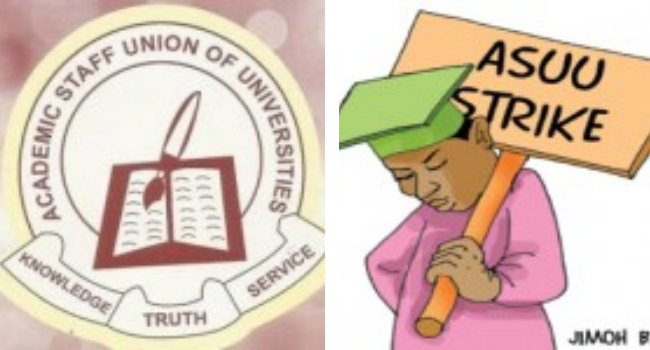
The Academic Staff Union of Universities (ASUU) has declared a total and indefinite strike across Lagos State-owned universities, citing the failure of the state government to implement key provisions of its 2025 agreement with the Federal Government.
The strike affects Lagos State University (LASU), Lagos State University of Education (LASUED), and Lagos State University of Science and Technology (LASUSTECH) and takes effect immediately.
ASUU’s Joint Campus Group covering the three institutions announced the industrial action in a statement on Tuesday, following the expiration of a 14-day ultimatum issued to the Lagos State Government on August 31.
According to the union, the ultimatum expired without a satisfactory resolution or a concrete commitment from the government to address its demands.
The union said its final warning on September 10 had made it clear that “silence is no longer an option,” but the government failed to initiate meaningful discussions before the September 13 deadline.
“ASUU Joint Campus Group comprising ASUU-LASU, ASUU-LASUED, and ASUU-LASUSTECH hereby declares a total, comprehensive, and indefinite strike action effective immediately,” the union said.
Why ASUU Is Striking
At the centre of the dispute is ASUU’s demand for the full domestication and implementation of the December 2025 agreement between the union and the Federal Government in all Lagos State-owned universities.
The union specifically demanded the implementation of provisions covering the Consolidated Academic Tools Allowance (CATA) as well as welfare protections for serving and retired academic staff.
ASUU said it arrived at the decision “with a heavy heart,” acknowledging that the strike could disrupt the academic calendar and affect students, parents and university administrators.
Addressing students, the union said the action was ultimately aimed at protecting the quality and sustainability of higher education in the state.
“This fight is fundamentally about preserving the quality and sustainability of your education,” it said, arguing that a demoralised academic workforce could not deliver the standard of education students deserved.
The union urged students to remain calm, peaceful and law-abiding while efforts continued to secure what it described as a lasting resolution.
It also acknowledged the concerns of parents and guardians over possible delays to their children’s education, saying its patience had “been tested and toyed with over the last eight months.”
Strike Not Against University Management
ASUU said the industrial action was not directed at the management of the three universities.
“This decision is by no means an adversarial action against your office,” the union said, urging the university administrations to understand the action as an effort to secure better working conditions for academic staff.
It commended the managements of LASU, LASUED and LASUSTECH for their efforts towards domesticating the agreement.
The union, however, accused the Lagos State Government of continued inaction and failure to implement agreements that it said had already been adopted by some neighbouring states.
National ASUU Backs Action
ASUU said the strike had the backing of its national leadership, which it said had supported the process from the initial correspondence to the university authorities, governing councils and the Visitor, through to the issuance of the 14-day ultimatum.
The union urged the Lagos State Government to follow the example of other state governors who had intervened to resolve similar disputes in their universities.
It also called on traditional rulers, religious leaders, alumni associations, civil society groups and other stakeholders to support its campaign for what it described as the rescue of education in Lagos State.
The strike, ASUU said, would remain in force until meaningful negotiations produce a satisfactory resolution and the Lagos State Government signs, domesticates and fully implemented.

Wike: Tinubu privy to my rainbow coalition, says I’m not answerable to APC governors

2027: Uzodinma and his cohorts are politically lazy- Wike

ASUU Shuts Down Lagos State Universities, Declares Indefinite Strike




-
 News18 hours ago
I’Ve Nothing To Hide, Nothing To Fear – Senator Buba On Banditry Allegations
-
 News18 hours ago
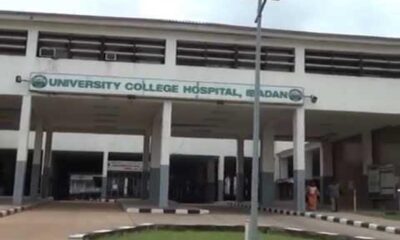
UCH Ibadan Emerges As Nigeria’s Top Health Institution In 2026
-

 Economy18 hours ago
Dangote Refinery IPO Rush Overwhelms Two Investment Sites
-

 News18 hours ago
I Don’t Want To Be Called The Richest Man In Africa — Dangote
-
 Metro18 hours ago
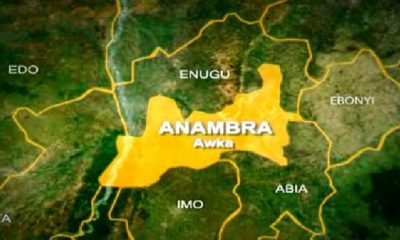
Kidnappers Abandon Victim, Flee At Police Checkpoint In Anambra
-
 Entertainment17 hours ago
I Know I’ll Win — Carter Efe Challenges Wizkid To $1m Boxing Bout
Warning: Undefined variable $user_ID in /home/naijuinz/public_html/wp-content/themes/zox-news/comments.php on line 49
You must be logged in to post a comment Login