Connect with us

News

Bayelsa demands reparation, environmental cleanup over oil pollution

Published

on

ADVERTISEMENT
Zoom Ad
ADVERTISEMENT
Zoom Ad

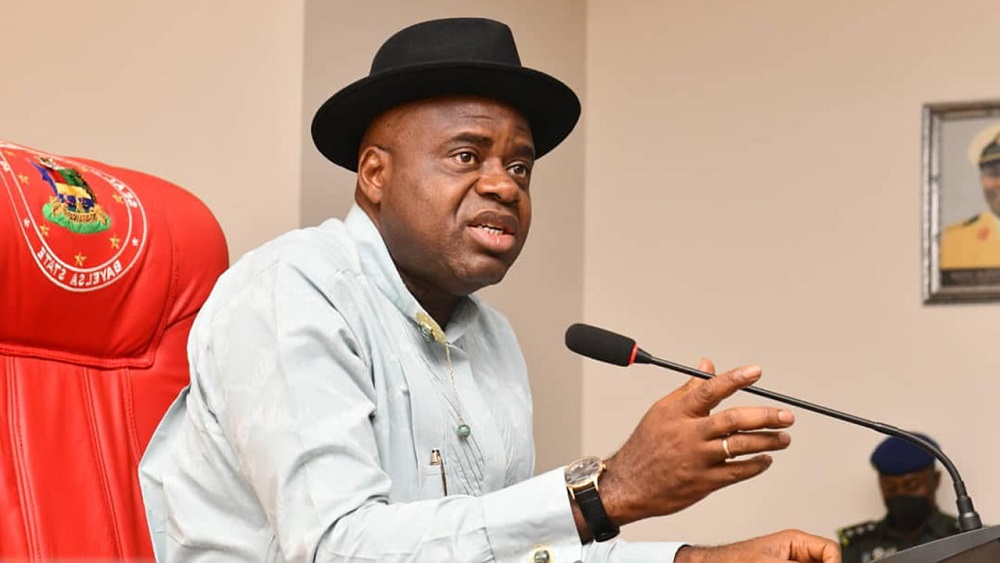
Bayelsa Governor, Douye Diri, has demanded reparations and an extensive environmental cleanup to address decades of ecological devastation caused by crude oil exploration in the State.


Speaking to journalists at the State House, Abuja, after a meeting between Bayelsa’s political and traditional leaders and President Bola Ahmed Tinubu, Diri highlighted the severe environmental and health crises facing his state due to unchecked oil activities.

The Bayelsa leaders said they were paying a thank you visit on the President for the appointment of one of their daughters, Mrs. Didi Lawson-Jack, as the Head of the Civil Service of the Federation, among other important appointments from the state.

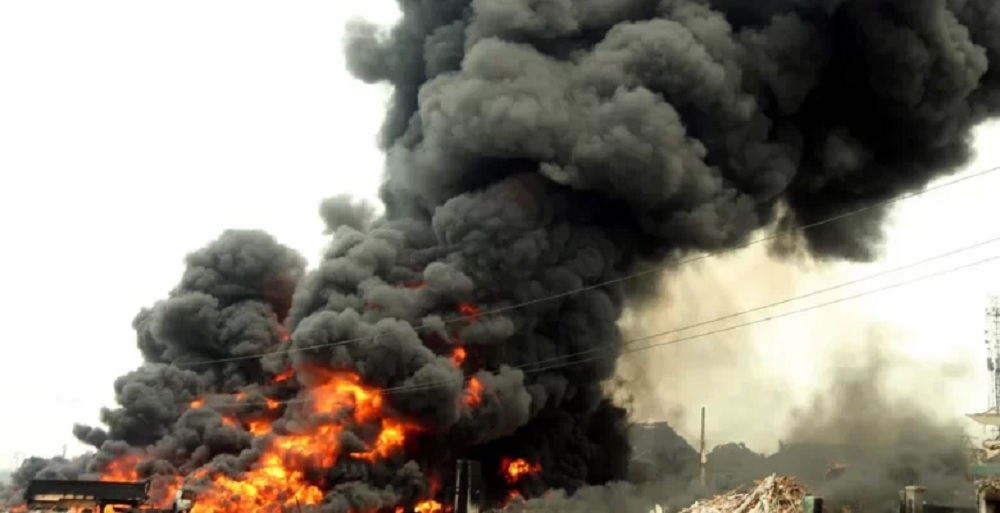
Diri, who presented the Bayelsa State Oil and Environment Commission Report to Tinubu during the meeting, pointed to the extensive damage in the state’s rivers and rural areas, where oil pollution has permeated the waterways, damaging the ecosystems and local economies.

Advertisement

The Governor also raised concerns over the alarming rise in cancer cases and other unusual illnesses among Bayelsa’s residents, linking these health crises to prolonged oil pollution.

The report he referenced traces these health issues directly to the oil industry’s operations, underscoring the urgent need for a comprehensive response.

He stressed that the livelihoods of Bayelsa residents, many of whom rely on fishing and farming, have been devastated by widespread pollution.

Diri urged the Federal Government to prioritise environmental restoration, similar to ongoing efforts in Ogoniland through the Hydrocarbon Pollution Remediation Project (HYPREP).

Advertisement

Diri noted that oil companies must assume responsibility for the damage, regardless of whether it was caused by equipment failure or acts of sabotage, pointing out that international laws hold companies accountable for pollution resulting from their facilities and equipment.

“Well, the report is there. If you’re asking for the recommendations, they are not just one. They are not two. But what is more important there is the issue of our environment and in that recommendation, they are talking about the clean-up, you know about the Ogoni situation, and HYPREP, and our environment is totally gone.

“If you go into the rivers and the rooflets of Bayelsa state, you will be perceiving oil, economic activities of our people have been grounded, and up until today, you still have oil pollution all over the state.

“So the number one thing is, first of all, restore the environment, clean up the environment, and of course, you have to pay reparations, and those who have caused these damage, most times they say, Oh, it is as a result of sabotage.

Advertisement

“But international law doesn’t recognize sabotage. You own those facilities and equipment, whether the oil spillages were as a result of sabotage or ageing equipment, which is most times the case, equipment failures, reparations have to be paid.

“As I speak with you today, issues about cancer are now almost like a normal thing in Bayelsa state, and this report has traced it to the activities of the oil companies, oil exploration and all other types of very bizarre types of sicknesses that were not hitherto known to the people of Bayelsa”, he said

Continue Reading
Advertisement
Click to comment

Warning: Undefined variable $user_ID in /home/naijuinz/public_html/wp-content/themes/zox-news/comments.php on line 49

You must be logged in to post a comment Login

Leave a Reply

News

Osun Guber: 15,000 Police Officers To Be Deployed For August 15 Poll — CP Etaifo

Published

on

By

ADVERTISEMENT
Zoom Ad
ADVERTISEMENT
Zoom Ad

The Commissioner of Police in charge of the August 15 Osun governorship election, Samuel Etaifo, has said no fewer than 15,000 operatives will be deployed for the poll.

Etaifo disclosed this in Osogbo, Osun State on Wednesday during a meeting with police personnel deployed for the election.

He said the deployment will include conventional policemen, specialists, the dog section, medical team and the Police Mobile Force, PMF.

According to him, a Deputy Inspector General of Police, DIG, and an Assistant Inspector General of Police, AIG, will also be in the state to oversee the exercise.

Advertisement

“As I speak with you the total number of officers that will come for this election should be nothing less than 15,000. This includes conventional policemen, specialists, dog section, medical, PMF. The DIG and AIG in charge of these operations are coming,” he said.

“I will be the CP in charge of the election. That is why the IGP has deployed me here. We are supposed to arrive here about four or five days before the election but because of the heightened tension the IGP said I should come earlier.”

Etaifo said some personnel had earlier been deployed to the state following an escalation of violence ahead of the poll.

He urged officers on duty to uphold high ethical standards and act within the ambit of the law.

Advertisement

He warned that anyone caught trying to disrupt the conduct of a free and fair election, regardless of status, would face the full weight of the law.

*“Arrested Violators Will Be Moved To Abuja”*

The CP said anyone arrested during the election would be moved to Abuja for prosecution, noting that the governorship poll is a national event.

“Arrested violators of electoral laws will be moved straight to Abuja. No one arrested here in Osun during the course or after the election will be taken to any state command. This election is a federal government election. Anybody arrested will be taken to Abuja. That’s the order,” Etaifo stated.

Advertisement

Electorate in Osun State will go to the polls on August 15 to elect a governor.

Fourteen candidates, including the incumbent Governor Ademola Adeleke, are contesting in the election.

Continue Reading

News

FG Sets Aside N2.47tn For 124 Strategic Road Projects In 2026 Budget

Published

on

By

ADVERTISEMENT
Zoom Ad
ADVERTISEMENT
Zoom Ad

The Federal Government has earmarked N2.47 trillion in the 2026 budget for the rehabilitation and reconstruction of 124 roads considered critical to Nigeria’s economic activities.

An analysis of the 2026 budget shows the road projects are spread across both northern and southern Nigeria, targeting key transport corridors that support agriculture, trade and the movement of goods. Analysts say improving these routes could reduce logistics costs, enhance market access and stimulate economic growth.

Among the priority projects is the 105-kilometre road linking Borno and Kano states, for which the government has allocated N13.3 billion for dualisation. The project is expected to improve the transportation of agricultural produce from Borno, Yobe, Jigawa and Bauchi states to Kano, the commercial hub of the North-West.

Next is the Lokoja-Abuja Road, which serves as a major gateway between the North and the South. The road is divided into two sections, both of which will cost the sum of N12.6 billion for construction and rehabilitation.

Advertisement

Another important road that the Federal Government is embarking on this year is the Enugu-Port Harcourt Road, targeted at linking the South-East to the South-South, connecting major industrial, commercial and logistics hubs. The road, divided into sections III and IV, is expected to cost N19.6 billion.

The government is also planning to rehabilitate the Gbagi-Apa-Owode Road in Badagry, which is aimed at connecting communities in Badagry to the Owode/Seme border with the Republic of Benin. The 30.6-kilometre road, which is expected to boost cross-border trade and movement and lower logistics costs for businesses, will cost N4.2 billion.

The government has also earmarked N1.4 billion for the construction of access roads linking the Second Niger Bridge to both Onitsha in Anambra State and Asaba in Delta State.

The Kano–Katsina Road is one of the most important highways in northern Nigeria, connecting two major commercial centres and serving as a gateway to the Niger Republic. The Federal Government plans to spend N23.6 billion for the dualisation of the critical road.

Advertisement

‘You know, the road links Kano’s markets with Katsina and neighbouring Niger Republic, supporting domestic and cross-border trade. Farmers of crops like sorghum, millet, groundnuts, onions, rice and tomatoes can easily find a ready market in Kano. Infrastructure can be an enabler for most of the roads in the 2026 budget’, said an emerging markets analyst, Ike Ibeabuchi.

The Federal Government is also funding the Aba-Owerri-Ikot Ekpene Road, a strategic economic corridor linking Akwa Ibom, Abia and Imo states. It connects major commercial, industrial and agricultural centres in the South-South and South-East, making it one of the region’s most important highways. The government will spend N7.7 billion on the road, which will create a ready market for Aba shoe makers.

The government will likewise spend N1.4 billion to rehabilitate Ikorodu-Shagamu Road, which serves as an alternative route to the ever-busy Lagos-Ibadan Expressway to boost trade and industries. The government also plans to spend N1.4 billion to repair Iganmu Bridge in Lagos. Economists say the bridge will connect the Lagos port corridor with the rest of the city.

Moreover, there is a plan to construct rural farmers’ feeder roads in Ikirun, Kwara State, at the cost of N1.75 billion. The road, analysts say, will connect farming communities with markets and processing centres while reducing post-harvest losses.

Advertisement

Similarly, there is N3.5 billion set aside for the upgrade of Ekiti Cargo Airport, N7 billion for the construction and rehab of Abeokuta-Ibooro Road, as well as N4.2 billion for Ibi Bridge construction in Taraba State to connect Ibi with communities across the Benue River.

About N7 billion has been set aside for the construction of Kano-Dayi Road to serve farming communities and link them to Kano. Also, N4.2 billion will be used for the rehabilitation of Kunya-Kanya-Barbura-Mutum Road in farming communities of Jigawa State, while N6.3 billion is devoted to the rehab of FCET New Site-Bagwai-Gwarzo Road in Kano.

The government is equally setting aside N25.2 billion for the construction of the four sections of Ota-Idiroko Road, including N3.5 billion for the dualisation of Bende-Ohafia Road with four bridges.

The Federal Government intends to spend N3.5 billion for the rehabilitation of Kabba in Kogi State (Iyamoye – Omuo – Ekiti – Ikole – Ifaki-Ado Ekiti (Omuo), with a view to linking these communities. Another N7 billion is earmarked for washout sections of Rivers, Delta and Akwa Ibom states, while N17.8 billion serves for the dualisation of phases 1 & 2 of the Benin-Akure-Ijesha Road.

Advertisement

Again, the sum of N14 billion is budgeted for the Kano Bypass, while N12.6 billion is earmarked for the rehab of the Onitsha-Owerri Road to make trading between Onitsha and Imo and Abia states easy.

The PUNCH found that if the budget is implemented religiously, there will be appreciable growth in Nigeria’s infrastructure stock, estimated at 30 per cent to 35 per cent of the Gross Domestic Product. This level falls far below the international benchmark of 70 per cent recommended by the World Bank for middle-income and growing economies.

The ex-Minister of Finance and Coordinating Minister for the Economy, Olawale Edun, disclosed that Nigeria has a $14 billion annual infrastructure investment gap.

The Alvin Report says decades of underinvestment in infrastructure have led to the present predicament, and with Nigeria’s population growing by about three per cent annually, the infrastructure deficit could balloon to about $20 billion–$25 billion by 2035.

Advertisement

‘Nigeria risks slower growth, higher poverty, and reduced competitiveness if it does not close this gap’, the report warned,

According to the Nigerian Economic Summit Group, Nigeria’s weak physical and technological infrastructure continues to erode its competitiveness relative to peer economies (see Figure 1). It added that data reveal significant gaps in basic infrastructure, such as unreliable power supply, inadequate transport networks, and limited logistics capacity, which raise business costs and constrain productivity.

‘These shortcomings have discouraged investment, undermined efficiency, and left Nigeria lagging behind countries that have modernised their infrastructure to drive competitiveness and economic growth.

A consultant economist, Chukwunonso Iheoma, is worried that the money will not all be released, stressing that such a situation will be another missed opportunity for Africa’s fourth biggest economy.

Advertisement

‘It is not just about how much is budgeted; it is how much is released. We have been struggling with the implementation of the budgets since this administration came to power.

‘Right now, the 2025 budget is still being implemented. So, tell me, when will this budget be implemented? There is no guarantee that half of the budget will be implemented’.

Continue Reading

News

Canada’s Ontario Opens New Permanent Residence Programme For Foreign Workers

Published

on

By

ADVERTISEMENT
Zoom Ad
ADVERTISEMENT
Zoom Ad

The Canadian province of Ontario has opened applications for its newly introduced Workforce Priority Stream, creating a fresh pathway for eligible foreign workers seeking permanent residence through the Ontario Immigrant Nominee Program (OINP).

The province announced that, effective August 4, 2026, eligible foreign nationals can now submit an Expression of Interest (EOI) through Ontario’s e-Filing Portal, provided they have a qualifying job offer from an eligible employer in the province.

According to a post shared on the Canada Visa X account on Wednesday, the new immigration stream is structured into three categories: one for higher-skilled workers, another for lower-skilled workers, and a third for self-employed physicians registered to practise in Ontario and eligible to bill the province’s public health insurance plan, the Ontario Health Insurance Plan (OHIP).

To be considered for provincial nomination, applicants must create an EOI linked to a qualifying job offer submitted by an eligible employer through the OINP Employer Portal.

Advertisement

Although the Workforce Priority Stream was officially launched on June 26, 2026, candidates could not enter the selection pool until the e-Filing Portal became operational this week.

Ontario said all active EOIs will be assessed under a points-based ranking system introduced on July 20, 2026, with invitations to apply to be issued through periodic invitation rounds.

The province explained that each EOI will remain valid for up to 12 months. Applicants who do not receive an invitation within that period will be required to submit a new Expression of Interest to remain eligible for future draws.

Once invited, candidates will have 17 calendar days to submit a complete application, while their employers must apply for approval of the offered position within 14 calendar days of the invitation.

Advertisement

Successful nominees under the job-offer categories will receive a provincial support letter, enabling them to apply for a federal work permit while their permanent residence applications are being processed.

Ontario also noted that applicants under the Higher-Skilled Worker Stream and the Self-Employed Physician Stream may qualify for the Enhanced Provincial Nominee Program linked to Canada’s Express Entry system, potentially allowing for faster permanent residence processing.

The Workforce Priority Stream is the first immigration pathway introduced under Ontario’s restructured OINP after the province closed all existing streams on May 30, 2026, as part of a broader overhaul of its immigration program.

The provincial government said additional pathways, including a Priority Healthcare Worker Stream, an Entrepreneur Stream and an Exceptional Talent Stream, will be rolled out during the second phase of the OINP modernisation initiative.

Advertisement
Continue Reading

Trending

Copyright © 2024 Naija Blitz News