When Harris argued that her Republican rival was no champion of the working class, the union bosses grilled her, questioning whether she and President Joe Biden had done enough for union workers, according to a Teamster leader who recounted the Sept. 16 meeting to Reuters.


Within days, the union publicly embarrassed Harris by declining to endorse a Democratic presidential candidate for the first time since 1996.
In the wake of Harris’ loss in the 2024 presidential election, her tense exchange with union leaders underscores a critical failure of her campaign – connecting with working-class voters anxious about the economy and high prices. 
Following Biden’s dramatic withdrawal just months before Election Day, Harris threw her campaign together as if it were an airplane being built while in flight, her advisers told reporters.
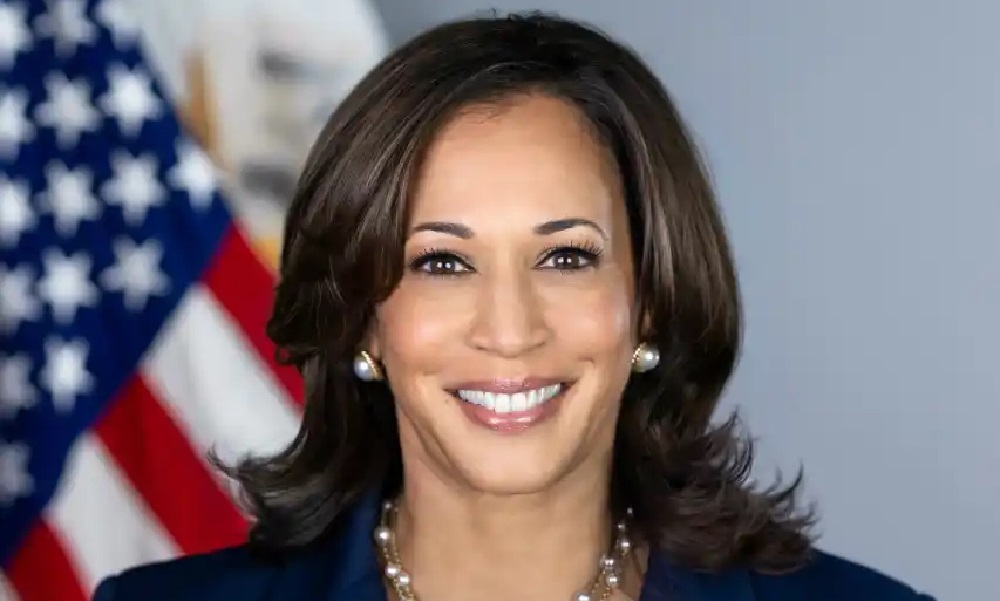
The 60-year-old former prosecutor and U.S. senator pressed a case that Trump was a threat to democracy and women’s rights while promoting a populist economic platform and reproductive freedoms.
Her entrance upended a race that her party had looked set to lose. She made history as the first woman of colour at the top of a major party ticket.
She triggered a surge in enthusiasm and broke fundraising records – raising one billion dollars in less than three months.
She drew endorsements from celebrities ranging from pop star Taylor Swift to actor and former California Governor Arnold Schwarzenegger.
But Harris’ campaign ultimately failed to overcome deep-seated voter concerns about inflation and immigration – twin issues that opinion polls showed favoured Trump.
Her loss underscores a profound shift in American politics over the past decade as blue-collar voters have turned increasingly Republican – a trend Trump appears to have accelerated.
Harris also struggled to counter another Trump-era trend – a torrent of misinformation unprecedented in modern U.S. elections.
An avalanche of misrepresentations and falsehoods about her record was spread by the former president and amplified on right-wing websites and media, including conspiracy theories on issues ranging from migrant crime to voter fraud.
When asked by Reuters during the race about misinformation amplified by Trump, his campaign officials typically either repeated the falsehoods or did not respond to requests for comment.
By early Wednesday morning, Trump had won 279 electoral votes to Harris’ 223, with several states yet to be counted.
This account of how Harris lost is based on Reuters interviews with Harris campaign staffers, White House officials, Democratic Party advisors, and close allies.
It was always going to be a heavy lift. The U.S. has only once elected a president – Barack Obama in 2008 and 2012 – who wasn’t a white man.
As the daughter of an Indian mother and Jamaican father, Harris had risen higher in the country’s leadership than any other woman.
The only other woman to get as close as she did – Hillary Clinton, defeated by Trump in 2016 – staked her candidacy in part on becoming the first female president.
In the wake of Clinton’s loss, Harris resisted putting her identity at the center of her campaign, said close aides and advisors. Instead, she tried to galvanise voters on issues that mattered to women and Black voters in the election – from abortion rights to middle-class tax cuts and housing affordability.
But those messages struggled to break through at a time when many voters were fixated on rising consumer prices during the first three years of the Biden administration.
“Despite fairly strong economic growth, especially after a major global pandemic, most Americans weren’t feeling like they were getting ahead economically,” said Melissa Deckman, a political scientist and chief executive of Public Religion Research Institute, a nonpartisan research firm.
“The Harris campaign did not necessarily do a good job of explaining how her policies would help the middle class, or at least that message wasn’t really resonating with a lot of voters.”
A majority of voters said they trust Trump more to handle the economy, with 51 per cent saying they did so compared to 47 per cent for Harris, according to a preliminary national exit poll conducted by data provider Edison Research.
And the voters who identified the economy as their primary concern voted overwhelmingly for Trump over Harris – 79 per cent to 20 per cent.
The economy proved to be a much bigger concern among voters than reproductive rights, with 31 per cent of voters saying the economy mattered most in deciding how to vote compared with 14 per cent who cited abortion.
The election also saw a large gender gap. Harris won 54 per cent of women voters in the country, while Trump won 44 per cent, the preliminary exit polls showed.
The Harris and Trump campaigns and the White House did not immediately respond to requests for comment.
“America has given us an unprecedented and powerful mandate,” Trump said early on Wednesday to a roaring crowd of supporters at the Palm Beach County Convention Center.
The election was punctuated by dramatic twists, including two assassination attempts against Trump and the stunning decision by Biden to abandon his re-election bid on July 21.
Democrats coalesced behind Harris with astonishing speed, locking up her party’s nomination within two weeks, excited by her potential to flip the generational argument on Trump.
Two decades her senior, Trump had successfully cast the 81-year-old Biden as a frail and confused old man. She would turn that on its head, many Democrats hoped.#
Some Democratic strategists questioned the wisdom of one of her first big decisions: picking Minnesota Governor Tim Walz as running mate over Pennsylvania Governor Josh Shapiro, a deft speaker with proven political strength in a must-win state.
Her campaign had hoped the gun-owning Walz, a liberal policy champion and plain-speaking National Guardsman from the Midwest, would help her win over rural white voters.
Walz had generated buzz before Harris picked him by branding Trump and his running mate, Senator JD Vance of Ohio, as “weird” on national television in July, winning Democratic hearts and media attention.
Later, though, Walz gained unwelcome attention for misstatements of his biography, including his military service, and for an uneven debate performance against Vance.
Walz and Vance didn’t immediately respond to requests for comment.
Still, the Harris campaign believed her signature issues – reproductive rights and Trump’s divisiveness – would energize a coalition of women,
Black voters, young Americans, independents and “Never Trump” Republicans, sweeping her to the White House.
Well before the race began, Harris emerged as a spokesperson for abortion rights.
When the U.S. Supreme Court in 2022 officially reversed Roe v. Wade, declaring the constitutional right to abortion no longer existed, the setback for women’s reproductive rights created an unexpected opening for Harris.
The ruling catapulted her from the political periphery into the heart of America’s culture wars.
Opinion polls showed most Americans disapproved of the court’s decision – and Harris became the face of an issue that Democratic strategists saw as electoral gold.
For the first time in Biden’s presidency, he handed a decisive issue entirely to his vice president.
She went on the road, speaking forcefully on a subject that played an outsized role in helping Democrats stave off an expected bloodbath in the 2022 congressional elections.
After the midterms, with the Democrats having held the Senate and swung to a slight minority in the House of Representatives, Harris was now seen as a viable future leader in the party.
Still, even after Biden stepped aside, concerns lingered among some top White House aides over the former San Francisco district attorney’s political skills – including a perception that she hadn’t made a mark as VP, her short-lived campaign for the 2020 Democratic nomination and her limited experience courting conservative voters in battleground states.
Some also questioned whether she could overcome the long history of racial and gender discrimination in the U.S.
After securing the nomination, Harris initially put many of those concerns to rest. She revitalized a beleaguered Democratic campaign, attractingrecord-funding and a groundswellofsupport,
She soon moved ahead of Trump in the polls, a sign she was sparking enthusiasm among voters, particularly among women.
Trump had previously been seen as the frontrunner, partly based on his perceived strength on the economy after several years of high inflation under Biden.
She aced her first big test – a Sept. 10 televised debate against Trump.
As Harris’s team prepared for what would be her only in-person face-off with Trump, they focused on ways to unnerve the former president and draw attention to his frequent falsehoods on policies, according to several aides involved in the preparations.
Harris holed up in Pittsburgh with advisers and conducted mock debates for the prime-time showdown, the aides said.
The strategy paid off. Harris appeared to get under her rival’s skin during the debate. She pressed Trump on the economy, Ukraine, healthcare, the January 2021 Capitol riots and abortion, leaving him rattled and struggling to respond.
Fundraising spiked: Her campaign said it raised 47 million dollars in the 24 hours after the debate.
Most voters thought Harris had won, polls showed.
Trump shot down offers for another debate, claiming he’d already beaten her.
On the campaign trail, Harris mocked Trump’s debate performance, including his comment that he had “concepts of a plan” to replace a federal health care law.
As she gained in polls, Harris’ campaign believed she was opening up states that had been out of reach for Biden, including North Carolina, where the president had his narrowest loss against Trump in 2020 and where she was drawing even in the polls with Trump.
North Carolina was the scene of her next big test, the late September Hurricane Helene, one of the deadliest storms to hit the U.S. in the last 50 years.
The storm shifted focus from messages at the foundation of Harris’ campaign to the handling of the disaster by the Biden-Harris administration.
It hit just as her lead was narrowing. Trump went on the attack, criticizing the Democratic administration’s response to the disaster and tying it to his strongest issue, immigration.
As the death toll rose and swathes of North Carolina lay devastated, Trump amplified and spread falsehoods, including a claim that Harris spent disaster-assistance money on housing illegal migrants.
In response to a recent request for comment by Reuters about false claims about how disaster funds were being used, the Trump campaign repeated accusations that money had been spent on housing migrants in the country illegally.
Harris cut short a campaign swing and flew to Washington on Sept. 30 for a briefing on Biden’s emergency response.
On her plane, three staffers sat on the floor, ripping apart briefing books, replacing the pages with new notes, a Reuters reporter witnessed.
The disaster, which killed more than 200 people, marked a shift in the race, as misinformation around the administration’s response and Trump’s hardline rhetoric on immigration gained traction.
The baseless claims included that the government covered-up deaths, confiscated charitable donations and diverted disaster funds to help immigrants.
Harris’ campaign struggled to address both the false claims and voters’ concerns about an uptick in illegal border crossings during Biden’s presidency.
One jurisdiction that illustrated the risks for Harris was Buncombe County, a North Carolina Democratic stronghold of about 280,000 people hammered by the storm. In its aftermath, Democrats stopped targeting potentially persuadable Republican voters there because of concerns they had become too hostile amid the misinformation, Kathie Kline, Buncombe County Democratic chair, told Reuters.
In the end, Trump won the state.
As the race tightened through October, and polls indicated a toss-up, alarm spread among Democratic strategists.
They focused on shoring up the so-called Blue Wall of Democratic states: Michigan, Pennsylvania and Wisconsin.
Eight years ago, when Trump beat Hillary Clinton, he breached the Blue Wall by winning all three states, each by less than a percentage point.
In 2020, Biden won them back. Holding the Blue Wall now was Harris’ best path to the White House, the strategists reasoned.
But they had a problem: Michigan and the Gaza War.
Michigan’s large population of Arab Americans and Muslims helped cement Biden’s 2020 victory in the state.
Trump turned off many of these voters in his first term, in part by banning immigration to the U.S. from a number of Muslim countries early in his tenure.
In the race’s final stretch, Muslim and Arab-American voters told Reuters they were disappointed Harris did not distance herself more from Biden’s unwavering support of Israel during the Gaza war.
In the final weeks, Trump aggressively courted their vote.
Many said they would sit out the election or vote Republican.
Harris staffers knew that disillusioned Muslim and Arab-American Democrats were a risk.
“It could cost us the election,” said a senior Michigan operative for Harris in July.
The campaign ultimately concluded it was impossible to fully win back those voters.
To offset their loss, campaign officials said they focused in the final weeks on marshaling enough support from union workers and Black voters in Detroit, the nation’s largest Black-majority city.
But few issues threatened Harris like inflation.
Her campaign had hoped the economic recovery from the pandemic would be a winning issue.
Growth is markedly more robust in the U.S. than in other major industrial nations.
Stock-market indexes are near record highs.
Instead, the issue eroded Democratic support throughout much of 2024 as union workers and non-college-educated white voters broke for Trump, polls showed.
Sharp increases in housing and food costs frustrated voters, overshadowing a strong job market.
Trump blamed Harris for the spike during her and Biden’s time in office.
While most unions have long supported Democratic candidates, rank-and-file workers in recent years have moved behind Trump, proving a decisive factor in his victory.
There were some positive signs for Harris.
The AFL-CIO, the largest federation of unions, saw a surge in female members supporting Harris and willing to volunteer for her, AFL-CIO President Liz Shuler told Reuters.
In the final weeks of the race, Harris’ momentum appeared to have stalled, with polls showing her edge over Trump narroewing.
By mid-October, the race was a dead heat in crucial states.
Democratic Vice President Kamala Harris’ election battle intensified as she gave up a marginal lead over Republican former President Donald Trump among U.S. registered voters nationally, Reuters/Ipsos polls showed.
A pronounced gap in polling between men and women had emerged, too. While Harris cut away at the Republicans’ longstanding edge with white voters overall by gaining ground with white women, Trump appeared to be boosting his advantage with men.
Harris shifted strategy in an attempt to win over more men and Republicans. The campaign dispatched running mate Walz on a tour in mid-October to reach male voters.
Harris also held campaign events with former lawmaker Liz Cheney, one of Trump’s fiercest Republican critics and one of the most prominent conservatives to endorse the Democrat.
Days later, Trump suggested Cheney should face gunfire in combat, drawing outrage among Democrats and pundits.
The vice president also sharpened her attacks on Trump.
In an Oct. 29 speech billed as her closing argument, Harris warned of the dangers of another Trump presidency.
He was “unstable” and sought “unchecked power,” she told a rally held at the spot in Washington where Trump addressed his supporters before they attacked the U.S. Capitol on Jan. 6, 2021.
With a well-lit White House behind her, she cast herself as a defender of democracy, unity, and freedom.
She also sought to reassure voters about the cost of living.
She said that Trump’s proposals to raise tariffs would amount to “a 20 per cent national sales tax” on imported goods.
She vowed to “protect hard-working Americans who aren’t always seen or heard.”
In the end, not enough of those Americans believed her.
(NAN)