Connect with us

News

Nigeria Seeks Permanent Spot on UN Security Council

Published

on

ADVERTISEMENT
Zoom Ad
ADVERTISEMENT
Zoom Ad
…Builds Stronger Regional Alliances to Boost Global Standing
By Gloria Ikibah
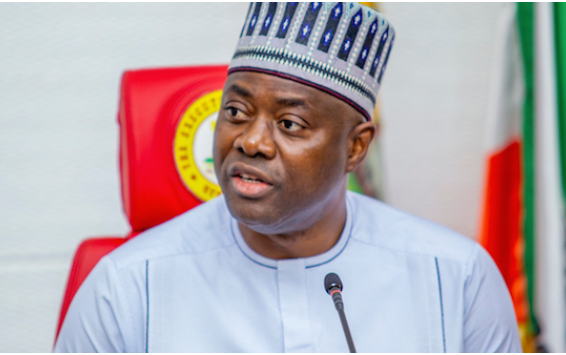
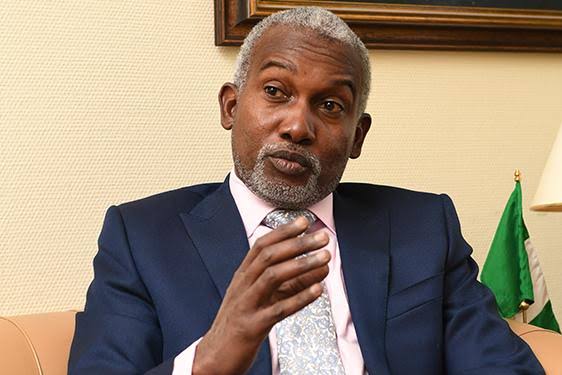
Nigeria’s Minister of Foreign Affairs, Ambassador Yusuf Tuggar, has stated again strongly the commitment of the country to securing a permanent seat on the United Nations Security Council (UNSC), even as he stressed Nigeria’s unique role in representing Africa’s interests on the global stage.
The Minister who stated this at a media conference on Thursday in Abuja, highlighted the imbalance in Africa’s representation on the Council, despite the continent being central to many of its decisions.
He appreciated President Bola Tinubu’s strong commitment to achieving this goal, noting the progress being made, and seeks support for Nigeria’s bid.
He said: “The United Nations Security Council remains important because 68% of decisions made there concern Africa, yet not a single African country has a permanent seat. It’s important that Nigeria is there to represent not just ourselves, but our region, our continent, and the world as a whole.
“For the first time, the United States has publicly supported permanent seats for Africa on the Security Council. Other African leaders have also suggested innovative approaches, including a seat for the African Union and another that rotates among countries”.
He further emphasized Nigeria’s track record of selfless leadership, focusing on her role in supporting neighboring countries and its contributions to the fight against racism in Africa.
“Nigeria has consistently been a stabilizing force, never threatening its neighbors, and always standing firm for the collective good of the continent,” Tuggar added.
Tuggar also stressed the importance of the Security Council in addressing global challenges, including health, climate change, population, and education, as outlined in the UN’s Sustainable Development Goals (SDGs).
“The UNSC remains critical because this is where key decisions on global priorities are made.
“68% of Security Council decisions concern Africa, yet no African country has a permanent seat. Nigeria is best suited to represent the continent,” he said.
Nigeria’s bid for a seat is part of broader efforts to ensure Africa’s voice is heard on the international stage, and Tuggar expressed optimism about the growing support for this initiative.
Ambassador Tuggar also revealed the outcomes of his recent diplomatic mission across West Africa, where he engaged in discussions on economic collaboration, regional security, and Nigeria’s global aspirations.
He stated that during his visit to Togo, the talks was on economic opportunities, particularly in the mineral and fertilizer industries.
“Togo is rich in phosphate, which is used in making fertilizer, and Nigeria has many blending plants. We discussed opportunities for investment between our two countries,” Tuggar said.
In Guinea Bissau, he highlighted the discussions was on security within the Economic Community of West African States (ECOWAS). Nigerian troops stationed there have been supporting stability, and Tuggar emphasized Nigeria’s role as a mediator in resolving parliamentary challenges.
He also explored investment opportunities in fisheries, agriculture, and fibre optics, assuring that recommendations would be made to relevant Nigerian agencies.
In Gambia, Tuggar noted Nigeria’s longstanding support, particularly in judiciary development and education and enhancing economic integration and security cooperation.
“The Vice President and Foreign Minister of Gambia reminded us that without Nigeria, they would not have a judiciary today. Through the Technical Aid Corps, we will continue providing professionals, especially university lecturers,” he said.
The final stop was Côte d’Ivoire, where the minister emphasised the importance of the Abidjan-Lagos trade and transport corridor as a key infrastructure project for ECOWAS.
Amb. Tuggar further said talks also included collaboration in cashew production, where Côte d’Ivoire leads globally, and partnerships in coffee and other agricultural sectors.
“We saw Côte d’Ivoire’s efforts to improve roads on this route, which facilitates significant trade and movement across the region,” he stated.
He described the mission as the first phase of broader shuttle diplomacy, with plans to continue engagements after addressing other commitments.

Continue Reading
Advertisement
Click to comment

Warning: Undefined variable $user_ID in /home/naijuinz/public_html/wp-content/themes/zox-news/comments.php on line 49

You must be logged in to post a comment Login

Leave a Reply

News

2027: Tinubu’s good governance ‘ll secure FCT victory – Wike

Published

on

ADVERTISEMENT
Zoom Ad
ADVERTISEMENT
Zoom Ad


Minister of the Federal Capital Territory (FCT), Nyesom Wike, has expressed confidence that the visible achievements of President Bola Tinubu’s administration will secure victory for the ruling party, All Progressives Congress (APC) in the FCT during the 2027 general elections.

Wike, who stated this after inspecting the ongoing Apo-Karshi and Bwari-Kubwa road projects, stressed that good governance remains the most reliable metric for political success.

He said that the administration’s performance in infrastructure delivery, particularly in long-neglected satellite towns, leaves the opposition with nothing to offer voters beyond empty stories.

Advertisement

He argued that the tangible results on the ground make an unassailable case for President Tinubu’s re-election, including Sen. Philip Aduda (FCT) and House of Representatives candidate John Gabaya (Bwari Federal Constituency).

He said; “If good governance is a barometer to measure whether a government has succeeded or not, then we have nothing to fear.

“Now, the Tinubu administration has come and it’s not only listening to you, it’s not only caring for you, it’s solving your problems. Why will they want to change their mind?”

Dismissing opposition rhetoric, the minister said; “This is the campaign. The people who will come, what will they come with?

Advertisement

“They will tell them stories. But we have not come with stories, we have come with facts, verifiable facts. I can beat my chest, I can close my eyes and go home and sleep with my two eyes closed, that Tinubu will emerge. I have no fear at all.”

The minister pointed out that Tinubu’s Renewed Hope Agenda has shifted development priorities beyond the city centre to directly touch satellite communities.

“The Renewed Hope administration has redefined infrastructure delivery as far as FCT is concerned, not just within the city, but also within the satellite towns.

“We thank God Almighty that has given us a President who has come to listen and to change the narrative that development must not only be concentrated within the city centers, but also spread in the satellite towns,” he said.

Advertisement

Speaking on the projects, Wike said the long-delayed Apo-Karshi road project was on course for completion in November.

He also said that the dualisation of the Bwari-Kubwa road, where residents turned out in large numbers to welcome his delegation, would also be delivered in December.

“Work on site is set to intensify by the first week of October as seasonal heavy rains abate,” he said.

Advertisement
Continue Reading

News

NDLEA busts Nigerian-Mexican meth cartel, docks kingpins over Enugu clandestine lab(Photos)

Published

on

ADVERTISEMENT
Zoom Ad
ADVERTISEMENT
Zoom Ad

. Dismantling the syndicate is another proof transnational drug networks won’t have any space to operate in Nigeria, says Marwa

The National Drug Law Enforcement Agency (NDLEA) has once again struck a decisive blow against transnational organised crime with the dismantling of a Nigerian-Mexican drug cartel operating a clandestine methamphetamine laboratory in Eziama community in Obeagu, Awgu Local Government Area of Enugu State.

Two kingpins: 45-year-old Chukwu Obumneme Christopher, alias Brown, and 60-year-old Chukwu Georginus Monday, alias George, were arrested in connection with the operation of the meth lab in partnership with a notorious Mexican drug cartel member, Rodriguez Villanueva, based in Mexico City, Mexico, after several months of intelligence and surveillance on the syndicate.
As a result, they were arraigned before Hon. Justice Mabel Taiye Segun-Bello of the Federal High Court, Enugu Judicial Division, on a five-count charge bordering on conspiracy, the organisation, management and financing of a Drug Trafficking Organization, and unlawful possession of precursor chemicals used in methamphetamine production, contrary to the NDLEA Act. After their plea, Justice Segun-Bello has now scheduled their trial for 21st October 2026, following an application by the Agency for an accelerated hearing.

Also named in the charge, and currently at large, are Uchenna, alias Uche; Celestine Ikemefuna Iwuchukwu; and Rodriguez Villanueva, who is a notorious member of a Mexican drug cartel.

Investigations by a Special Operations Unit (SOU) of NDLEA revealed a sophisticated, transnational operation by the Nigerian-Mexican cartel. Surveillance activities by NDLEA between 1st and 4th December, 2025, tracked Brown’s movements between Lagos, Enugu and Anambra States, ultimately leading operatives to a compound in Obeagu where a clandestine laboratory capable of producing methamphetamine in commercial quantities was uncovered. The lab, fitted with improvised reactors and distillation apparatus, mirrored similar facilities recently dismantled in Ogun, Oyo and Ebonyi.

A search of the premises led to the recovery of vast quantities of precursor chemicals, including 690 litres of methylamine, 1,000 litres of isopropyl alcohol, 300 litres of hydrochloric acid, 290 litres each of toluene and acetone, 400 litres of liquid sodium hydroxide, 125 kilograms of N-phenylacetamide, 414 kilograms of lead acetate, and 769.6 kilograms of tartaric acid, among other controlled substances, a haul consistent with a high-potency, P2P-based methamphetamine manufacturing operation.

A related search of George’s family residence yielded eight large fuel tanks, four commercial gas burners, four dehydrators, and 11 kilograms of ephedrine, further underscoring the scale of the cartel’s operations.
Reacting to the development, Chairman/Chief Executive of the NDLEA, Brig. Gen. Mohamed Buba Marwa (Rtd), reaffirmed the Agency’s unwavering resolve to track down every fleeing suspect connected to the cartel, and ensure that they all face the full weight of the law.

He
commended all NDLEA officers involved in the operation for their professionalism and doggedness in cracking yet another international drug syndicate. He described the Enugu lab bust as further proof that Nigeria will not be allowed to become a haven for transnational drug cartels, warning that the Agency’s intelligence-driven operations and international partnerships would continue to close every loophole exploited by drug barons, whether local or foreign. He reiterated his charge to all NDLEA personnel to sustain the momentum of relentless enforcement until the nation is rid of the scourge of illicit drug production and trafficking.

Advertisement
Continue Reading

News

MURIC Faults NMDPRA Over 830,000-Tonne Petrol Import Approval

Published

on

ADVERTISEMENT
Zoom Ad
ADVERTISEMENT
Zoom Ad


The Muslim Rights Concern (MURIC) has criticised the Nigerian Midstream and Downstream Petroleum Regulatory Authority (NMDPRA) for approving the importation of 830,000 tonnes of Premium Motor Spirit (PMS) in the fourth quarter of 2026.

MURIC described the approval as unnecessary, wasteful and counterproductive, arguing that greater priority should be given to Nigeria’s domestic refineries.

The organisation made its position known in a statement signed by its Executive Director, Prof. Isiaq Akintola, and made available to journalists on Thursday.

Advertisement

NMDPRA recently approved the importation of 830,000 tonnes of PMS for the fourth quarter of 2026. However, MURIC said the decision was difficult to justify amid increased domestic refining capacity, particularly with the operations of the Dangote Refinery.

Akintola urged the petroleum industry regulator and other relevant government agencies to work closely with local refineries and reduce the country’s reliance on imported refined petroleum products.

According to him, continued importation could undermine investments in Nigeria’s refining sector and frustrate efforts to achieve greater domestic fuel production.

“We expect NMDPRA and all other government agencies in the petroleum industry to cooperate with our local refineries. The importation of refined fuel should stop forthwith,” he said.

Advertisement

The group argued that Nigeria should prioritise locally refined petroleum products as part of efforts to strengthen the domestic economy and maximise investments in the country’s refining infrastructure.

“The Downstream Petroleum Regulatory Authority, NMDPRA, has approved 830,000 tonnes of Premium Motor Spirit, PMS, imports for the fourth quarter of 2026 despite ample evidence of petrol self-sufficiency in the country with the presence of local production efficacy courtesy of Dangote Refinery.

“MURIC considers this move as unnecessary, wasteful, counterproductive, regressive and unpatriotic. We therefore condemn it in the strongest terms,” the statement added.

Advertisement
Continue Reading

Trending

Copyright © 2024 Naija Blitz News