Connect with us

News

COP29: Reps, Others Advocate Equitable Policy For Energy Transition

Published

on

ADVERTISEMENT
Zoom Ad
ADVERTISEMENT
Zoom Ad
By Gloria Ikibah
The House of Representatives has solicited for accessible and equitable policies, including tax breaks and vocational grants to empower youth in renewable energy in African nations, and most especially in Nigeria.
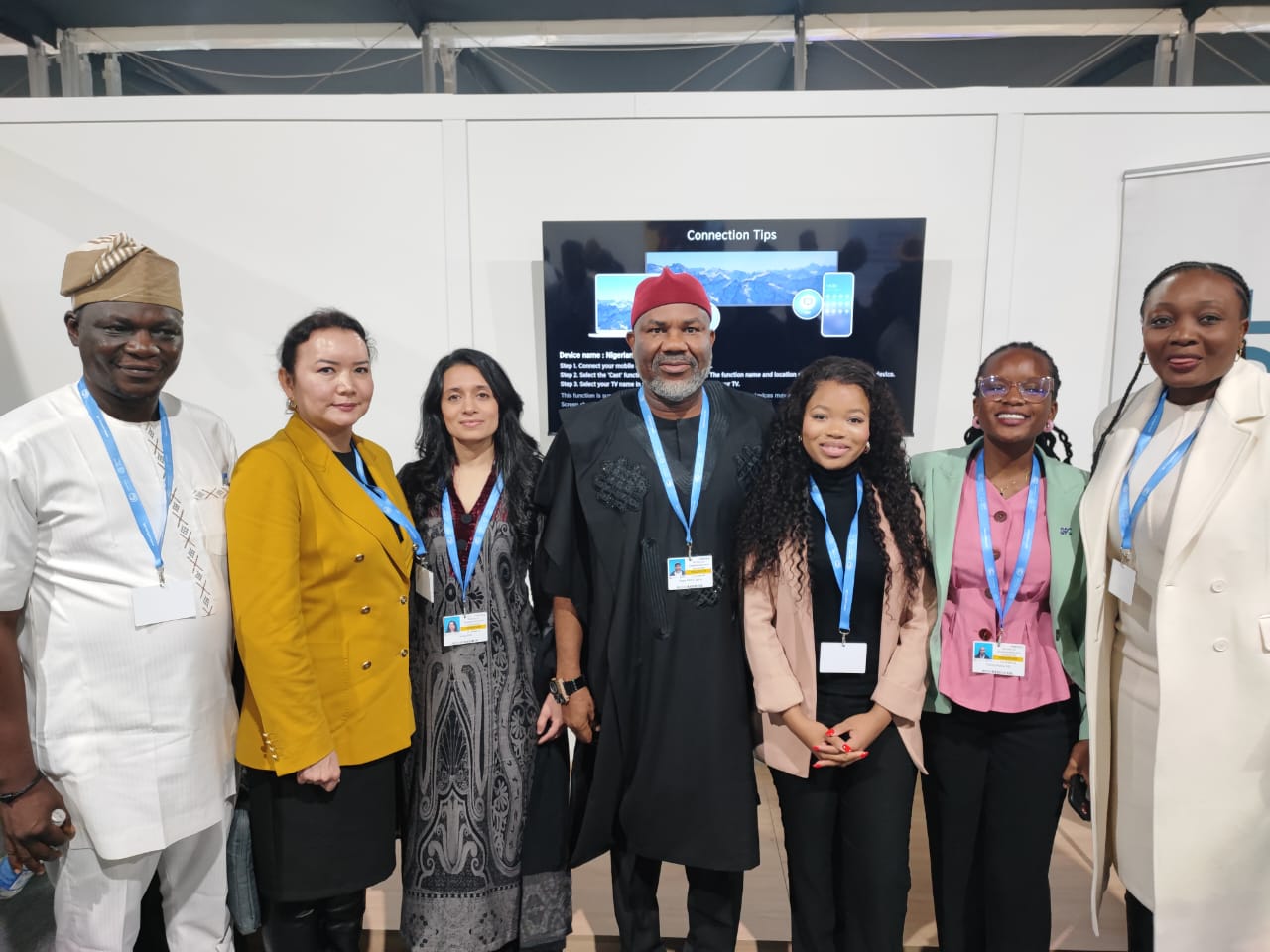
Chairman, House Committee on Renewable Energy, Rep. Victor Afam Ogene made this call alongside other stakeholders at a side event co-hosted by the Committee on Renewable Energy and INCLUDE, a Netherlands based knowledge platform, at the ongoing Conference of Parties, COP29 in Baku, Azerbaijan, where world leaders are gathered to discuss issues of climate change.
Rep. Ogene also want the inclusion of youths and legislators in conferences and workshops where issues involving policies regarding developments in climate change and energy transitions are discussed, for a better understanding that would engender right policy formulation and intentional youth involvement.
The side event, titled “Driving the Just Transition: Labor-Based Incentives and Youth-Centric Policies for a Sustainable Future,” according to a statement endorsed by both Hon. Ogene and Anika Altaf, PhD, Executive Director, INCLUDE, focused on actionable strategies to foster a fair and inclusive renewable energy transition in Africa. The discussions centered around labor-based incentives, youth-centered policies, and the intersection of equity, sustainability, and job creation.
Speakers at the side event included Ogene, Dr. Altaf, Victoria Manya, (Knowledge Broker, INCLUDE), Nurgul Iliazova, Professor of Economics, Bishkek State University, Kazakhstan, Farida Ally, Kenyan youth leader, Solomon Abu, a nuclear scientist and Kgaugelo Mkumbeni, research officer, Institute for Security Studies, Kenya.
Dr. Altaf in her presentation suggested mentorship programmes and international funding to authentically support youth-led renewable energy projects.
The conversations outlined a comprehensive approach to design labour incentives that not only support job creation, but also address the specific needs of young people. This includes accessible financial incentives, such as grants for youth-led startups and subsidies for skills acquisition in renewable energy industries; and policies that will integrate transparency and inclusivity to ensure equitable access.
The outcomes of the event reflected a unified approach to addressing Africa’s unique challenges and opportunities in the global energy transition.
The statement said further: “Victoria Manya set the scene for the panel’s conversation predicated on three critical points:
• Africa has pressing needs, like job creation and energy access, to address energy poverty.
• Africa contributes less than 4% of global emissions, so our transition must prioritize fair, localized strategies.
• For this transition to truly benefit Africa, we must base it on labour incentives that empower youth to take the lead.
“The event underscored the importance of crafting policies that resonate with young people. This involves using youth-friendly language, actively involving young voices in policy formulation, and prioritizing initiatives that align with their aspirations, such as meaningful, skill-based employment opportunities in the renewable energy sector.”
The various speakers were also in agreement that “Young people are emerging as key contributors to renewable energy solutions tailored to their communities. These innovations are not only effective but scalable, demonstrating the transformative potential of youth-led technological advancements in combating climate change. Emphasis was placed on the role of AI and digital technologies in enabling this progress. Early exposure, such as teaching coding skills to children as young as eight, was highlighted as a critical step in fostering a generation capable of driving impactful solutions.”
Participants also stressed the importance of involving youths, not merely as advisors but as decision-makers in climate policy formulation.
Standardized toolkits and training programmes were identified as essential for equipping youth with the skills necessary to thrive in the renewable energy sector.
The session called for partnerships between governments, educational institutions, and private sector actors to develop and implement targetted technical and vocational training.
A critical theme in the conversation was ensuring that vulnerable and marginalized communities are not left behind in the renewable energy transition. Inclusive policies must address systemic inequalities by bridging access gaps, particularly for young people in underprivileged regions.  This approach includes promoting social equity in labour opportunities and decision-making processes.
Global and regional collaboration,
international organizations and regional stakeholders were urged to provide authentic support for youth-led initiatives. These includes mentorship programs, direct funding for grassroots projects, and platforms for cross-sector collaboration that prioritize local solutions.

The event concluded with a call for turning discussions into actionable frameworks, including involving piloting labour-based incentives, integrating youth-focused priorities into national renewable energy policies, and leveraging global forums such as COP 2024 to amplify Africa’s voice in the energy transition.
Participants unanimously urged international organizations and regional stakeholders to provide authentic support for youth-led initiatives. This includes mentorship programmes, direct funding for grassroots projects, and platforms for cross-sector collaboration that prioritize local solutions.
Continue Reading
Advertisement
Click to comment

Warning: Undefined variable $user_ID in /home/naijuinz/public_html/wp-content/themes/zox-news/comments.php on line 49

You must be logged in to post a comment Login

Leave a Reply

News

Just in: WAEC releases 2026 WASSCE results as girls top boys in Maths, English

Published

on

ADVERTISEMENT
Zoom Ad
ADVERTISEMENT
Zoom Ad

…English and Mathematics:
641,631 candidates (32.89%) were female
558,883 candidates (28.65%) were male

The West African Examinations Council (WAEC) has officially released the results of the 2026 West African Senior School Certificate Examination (WASSCE) for School Candidates as girls top boys in English and Mathematics.

The release brings to an end weeks of anxious waiting for nearly two million candidates across Nigeria and parts of West Africa, who sat for the examination.

The examination body announced the development on Wednesday through its official X (formerly Twitter) account, directing candidates to generate their result-checking PIN and access their results online.
“UPDATE: 2026 WASSCE (SC) results have been released. Generate your PIN at http://waec.org and check your results now on http://waecdirect.org,” WAEC stated.
Speaking during a press conference in Lagos, the Head of the WAEC Nigeria National Office, Dr. Amos Dangut, disclosed that the council withheld the results of 167,486 candidates, representing 8.59 per cent of those who sat for the computer-based 2026 WASSCE for school candidates.
According to him, the affected results were withheld over alleged cases of examination malpractice and will remain under investigation until the council concludes its review.

Advertisement

WAEC revealed that 1,959,668 candidates from 24,207 secondary schools registered for the examination conducted across Nigeria, Benin Republic, Côte d’Ivoire and Equatorial Guinea.
Out of those registered, 1,950,726 candidates eventually sat for the examination.
The council disclosed that 1,834,695 candidates, representing 94.05 per cent, have had their results completely processed and released.

However, the results of 116,031 candidates (5.95 per cent) are still being processed and will be released once the exercise is completed.
Over 1.2 Million Candidates Scored Five Credits Including English And Mathematics

WAEC’s statistics show that 1,200,514 candidates, representing 61.54 per cent of those who sat the examination, obtained credits and above in at least five subjects, including English Language and Mathematics.
Meanwhile, 1,687,378 candidates (86.50 per cent) secured credits in at least five subjects, irrespective of whether English Language and Mathematics were included.

Despite the strong overall performance, the council noted a slight decline in the number of candidates who achieved the benchmark five credits including English and Mathematics.
Also Read: Police foil kidnap plot, arrest two suspects, recover firearms in Delta
Compared to the 2025 examination, the pass rate dropped by 1.42 percentage points.
Female Candidates Outperformed Male Candidates

Advertisement

WAEC also released a gender breakdown of the successful candidates.
Of the 1,200,514 candidates who obtained five credits, including English and Mathematics:
641,631 candidates (32.89%) were female
558,883 candidates (28.65%) were male
Overall participation also showed that female candidates slightly outnumbered their male counterparts.
According to the council:
997,267 females (51.12%) participated in the examination.
953,459 males (48.88%) sat for the examination.
With the release of the results, thousands of candidates are expected to begin admission processing into tertiary institutions, while those whose results were withheld will await the outcome of WAEC’s ongoing investigation into alleged examination malpractice.

Continue Reading

News

Just in: Ten days to guber election, EFCC freezes Osun govt First Bank account

Published

on

ADVERTISEMENT
Zoom Ad
ADVERTISEMENT
Zoom Ad

Ten days to the gubernatorial election in Osun State, the Economic and Financial Crimes Commission (EFCC) has frozen Osun State Government account domiciled with First Bank of Nigeria.Lagos News Updates

The account used for the payment of workers’ salaries, was placed on “Post No Debit” status by the anti-graft agency.

Though, this is coming after Governor Ademola Adeleke alleged that the EFCC was plotting to freeze the state’s accounts and those of top government officials.

In a statement issued on Wednesday by the Commissioner for Information and Public Enlightenment, Kolapo Alimi, Adeleke described the reported move as an attempt to cripple government activities ahead of the August 15 governorship election.

Advertisement

He reiterated that there was no legal basis for freezing the accounts of the state government, arguing that the EFCC lacked the statutory powers to take such action.

Meanwhile, the EFCC is yet to issue an official statement in respect to the development.

Vanguard

Advertisement
Continue Reading

News

FG Reopens Portal For Nigerians To Obtain N50,000 Grant(See how to apply)

Published

on

ADVERTISEMENT
Zoom Ad
ADVERTISEMENT
Zoom Ad

Small business owners in Nigeria have a fresh opportunity to access government funding as the Small and Medium Enterprises Development Agency of Nigeria (SMEDAN) reopens its Conditional Grant Scheme.

The programme provides qualified nano and micro enterprises with a one-off N50,000 grant that beneficiaries are not expected to repay.

The funding is intended to give small businesses additional resources to strengthen their day-to-day operations, invest in growth and increase their workforce.

However, the grant comes with a job creation condition. Businesses that benefit from the scheme are required to employ at least one additional worker.

Advertisement

Why SMEDAN is offering the grant

SMEDAN designed the Conditional Grant Scheme to make financial support more accessible to small businesses, particularly enterprises that may find it difficult to obtain conventional business loans.

Unlike a loan, the N50,000 support does not attract interest or require repayment, provided beneficiaries meet the conditions attached to the programme.

The agency said the initiative is also aimed at encouraging entrepreneurship, improving productivity and supporting economic activity at the local level.

Advertisement

The CGS should not be confused with the Presidential Conditional Grant Scheme. While the two programmes are separate, both provide N50,000 grants to qualifying nano businesses.

Which businesses does the scheme target?

The funding is primarily aimed at nano and micro enterprises operating within local government areas across Nigeria.

Information applicants need

Advertisement

Business owners seeking the grant will have to provide personal and business details during the application process.

The information requested includes:

Applicant’s full name

Email address

Advertisement

Phone number

Business name

CAC registration number, if applicable

Type of industry or business

Advertisement

Years in business

Applicants should ensure that the details supplied are correct and correspond with their business information.

The grant is intended for legitimate business-related expenses that can help improve the performance of an enterprise.

Depending on their needs, beneficiaries can channel the funds towards:

Advertisement

Equipment purchases

Technology improvements

The support is therefore designed to go beyond immediate cash assistance by helping businesses improve their ability to operate and compete.

Participants in the Conditional Grant Scheme (CGS) for micro enterprises receive financial assistance tailored to their business needs.

Advertisement

These nano businesses get a sum of ₦50,000 grant on the condition of employing one person in order to encourage job creation.

Business owners interested in the N50,000 Conditional Grant Scheme should use the application portal designated by SMEDAN.

Applicants should carefully complete the registration process, provide accurate information and confirm that their businesses satisfy the conditions for participation before submitting their applications.
(VANGUARD)

Advertisement
Continue Reading

Trending

Copyright © 2024 Naija Blitz News