Connect with us

News

Just in: Court order EFCC to confiscate Abuja estate with 753 duplexes

Published

on

ADVERTISEMENT
Zoom Ad
ADVERTISEMENT
Zoom Ad

The EFCC said in a release that this was the single largest asset recovery by the Commission since its inception in 2003.


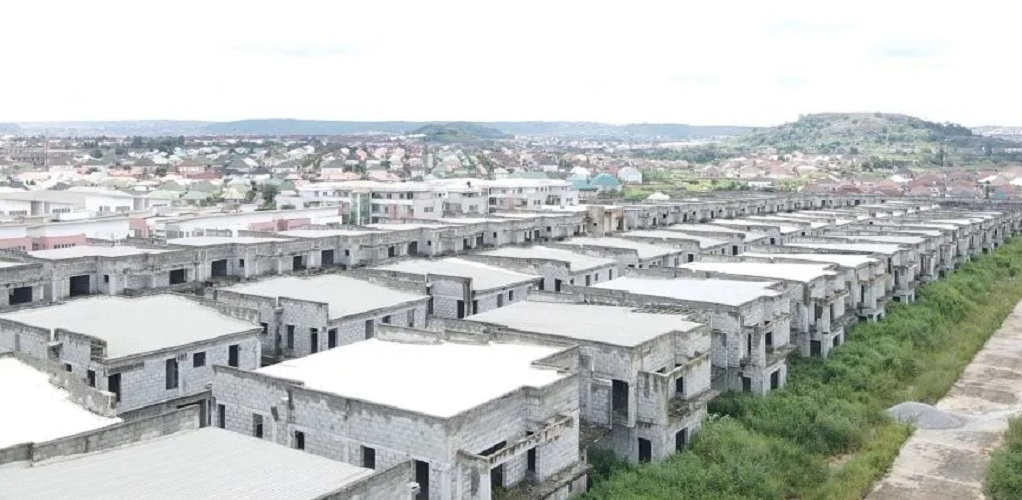
Justice Jude Onwuegbuzie, on Monday, ordered the final forfeiture of an estate in the Federal Capital Territory, Abuja, measuring 150,500 square metres and containing 753 Units of duplexes and other apartments.

The EFCC said in a release that this was the single largest asset recovery by the Commission since its inception in 2003.

The estate rests on on Plot 109 Cadastral Zone C09, Lokogoma District, Abuja.

Advertisement

“The forfeiture of the property to the federal government by a former top brass of the government was pursuant to EFCC’s mandate and policy directive of ensuring that the corrupt and fraudulent do not enjoy the proceeds of their unlawful activities.

“In this instance, the Commission relied on Section 17 of the Advance Fee Fraud And Other Fraud Related Offences Act No 14, 2006 and Section 44 (2) B of the Constitution of the 199 Constitution of the Federal Republic of Nigeria to push its case,” the EFCC said.

Ruling on the Commission’s application for the final forfeiture of the property, Justice Onwuegbuzie held that the respondent have not shown cause  as to why he should not lose the property, “which has been reasonably suspected to have been acquired with proceeds of unlawful activities, the property is hereby finally forfeited to the federal government.”

The road to the final forfeiture of the property was paved by an interim forfeiture order, secured before the same Judge on November 1, 2024.

Advertisement

The government official which fraudulently built the estate is being investigated by the EFCC.

The forfeiture of the asset is an important modality of depriving the suspect of the proceeds of the crime.

The justification for the forfeiture is derived from Part 2, Section 7 of  the EFCC Establishment Act, which stipulates that the EFCC “has power to cause investigations to be conducted as to whether any person, corporate body or organisation has committed any offence under this Act or other law relating to economic and financial crimes and cause investigations to be conducted into the properties of any person if it appears to the Commission that the person’s lifestyle and extent of the properties are not justified by his source of income.”

The Commission’s Executive Chairman, Mr. Ola Olukoyede, has repeatedly described asset recovery as pivotal in the fight against corruption, economic and financial crimes and a major disincentive against the corrupt and the fraudulent.

Advertisement

In the release by the EFCC Head of Media and Publicity, Dele Oyewale, addressing members of the House of Representatives Committee on Anti-corruption recently, he said, “If you understand the intricacies involved in financial crimes investigation and prosecution you will discover that to recover one billion naira is war. So, I told my people that the moment we start investigation we must also start asset tracing because asset recovery is pivotal in the anti-corruption fight; and one of the potent instruments that you can deploy as an anti-corruption agency for an effective fight is asset tracing and recovery.

“If you allow the corrupt or those that you are investigating to have access to the proceeds of their crime, they will fight you with it. So one of the ways to weaken them is to deprive them of the proceeds of their crime. So, our modus operandi has changed simultaneously. The moment we begin investigation, we begin asset tracing. That was what helped us to make our recoveries.”

The Establishment Act of the Commission places huge emphasis on asset recovery. Subject to the provisions of Section 24 of the Act, “whenever the assets and properties of any person arrested under the Act are attached, the Commission shall apply to the court for an interim forfeiture and where a person is arrested for an offence under the Act, the Commission shall immediately trace and attach all the assets and properties of the person acquired as a result of such economic and financial crime and shall thereafter cause to be obtained an interim attachment order from the Court.

“And where the assets or properties of any person arrested for an offence under the Act has been seized or any assets or property has been seized by the Commission under the Act, the Commission shall cause an application to be made to the Court for an interim order forfeiting the property concerned to the Federal Government and the court shall, if satisfied that there is prima facie evidence that the property concerned is liable to forfeiture, make an interim order forfeiting the property to the Federal Government, which the Commission would usually escalate to earn a final forfeiture”.

Advertisement

This procedure was duly followed in this respect. The recovery of the asset represents a milestone in the annals of operations of the EFCC and infallible proof of the commitment of President Bola Ahmed Tinubu to the anti-corruption war.”
News

33rd Anniversary of June 12: NUPENG Calls on Politicians to Uphold Democratic Values*

Published

on

ADVERTISEMENT
Zoom Ad
ADVERTISEMENT
Zoom Ad

As Nigeria marks the 33rd anniversary of June 12, the Nigeria Union of Petroleum and Natural Gas Workers (NUPENG) has urged political leaders to strengthen and uphold democratic principles.

The union emphasized that Democracy Day should serve as a reminder of the sacrifices made by Nigerians in the struggle for democratic governance, and called on politicians to demonstrate commitment to transparency, accountability, and respect for the rule of law.

The blue collar union also advised the political elites not to allow the struggles of past heroes to be in vain by overheating the polity.

Speaking on this year’s commemoration of the June 12 election, NUPENG President, Comrade (Dr) Salimon Akanni Oladiti (JP), commended President Bola Ahmed Tinubu for deepening recognition for the sacred date and giving it the right status in the nation’s history.

Advertisement

The Union leader added that the date has indeed vindicated the union and its leadership who fought for the democracy being enjoyed by all in Nigeria today.

Dr. Oladiti emphasized the urgent need for political leaders to confront and resolve issues that pose a threat to Nigeria’s democracy. He stressed that government must prioritize tackling insecurity while also advancing programs that enhance workers’ welfare and rights. This includes providing strong legal protections, improving working conditions, and safeguarding the health, safety, and dignity of the workforce.

The astute labour leader further charged politicians to eschew acts that can cause chaos and division in the polity.

Comrade Oladiti, however, said all those involved in the struggle should be consistently celebrated or possibly immortalized.

Advertisement

He said: “While it is appropriate to recognize June 12 as the democracy day in this country, it is also our wish and prayer that posterity will continue to be kind to all the heroes who dared the military jackboots in restoring democracy in Nigeria. Among them were President Bola Ahmed Tinubu (GCFR), late Comrade (Chief) Frank Ovie Kokori, the late politician and lawyer, Chief Bola Ige and human rights activist and lawyer, Chief Gani Fawehinmi (SAN); Nobel Laureate, Prof. Wole Soyinka, Femi Falana (SAN), Comrade Joseph Akinlaja, as well as former External Affairs Minister, Prof. Bolaji Akinyemi.

“We recalled the role NUPENG and PENGASSAN played and the price paid by both unions and their leadership at that time for the actualisation of the democracy that is now being enjoyed in the country.

“While the leadership of these unions were dissolved by the late military junta, Gen Sani Abacha and sole administrators appointed for them, they were also starved of funds.

“The two general secretaries, Comrade Gilchrist Dabibi and Comrade Frank Ovie Kokori, and Comrade Frank Addo of PENGASSAN as well as other leaders of the unions, including the then Port Harcourt Refinery Branch Secretary were casted in jail.

Advertisement

“Many activists of the Campaign for Democracy and union leaders, including the then PENGASSAN President, Comrade Ganiu Owoduni were hounded out of the country to seek asylum in foreign countries.

“There are many stories about the struggle against military rule that have not been told. Some may never be told or have only been relayed in half. The story of the over 3,400 sacked workers of the NSPMC and their contributions to the exit of military tyranny is one of such.

“Though many of the actors have died, including the former General Secretary of Nigeria Union of Petroleum and Natural Gas Workers (NUPENG), late Chief Frank Ovie Kokori who spent 4 years in Bama prison in Maiduguri and was declared a prisoner of conscience by the International Labour Organisation (ILO) and Amnesty International (AI).

“Few of them who are still alive have hardly spoken about their heroic exploits in one of Nigeria’s most deadly battles against entrenched principalities and powers. The workers were sacked after the military tagged them as ‘agents of opposition.’ The workers sought revenge in an underground movement that shook the bedrock of the country.

Advertisement

“In those dark days in Nigeria, those who raised eyebrows were arrested and detained, traced to their homes, harassed and faced humiliation, victimization, incaseration and some even paid the supreme price during the struggle.

“Today, we are pleased to note that Nigeria’s democracy continues to mature with time. Although it is not without its imperfections, the system has firmly taken root. Encouragingly, President Asiwaju Bola Ahmed Tinubu has initiated reforms that hold the potential to positively transform the nation’s fortunes.

“What remains is our collective responsibility to refine the process, address lingering challenges, and strengthen the path we are on. Democracy is both a learning curve and a work in progress. Our leaders must consistently dedicate their time, energy, and resources to deepening democratic practices and safeguarding democratic ideals,” Oladiti said.

Advertisement
Continue Reading

News

ECOParl PAC Plans Public Hearings on Audit Reports to Deepen Accountability

Published

on

ADVERTISEMENT
Zoom Ad
ADVERTISEMENT
Zoom Ad

…set to probe Auditor General’s findings as lawmakers push for stronger oversight powers

By Gloria Ikibah

The Public Accounts Committee (PAC) of the ECOWAS Parliament has announced plans to begin public hearings on audit reports submitted by the Community’s Auditor General as part of efforts to strengthen transparency and financial accountability within regional institutions.

The committee’s First Rapporteur, Senator Osita Izunaso, disclosed the development after the conclusion of a three-day capacity-building workshop for PAC members in Accra, Ghana.

Advertisement

Izunaso commended committee members for their commitment throughout the training programme, noting that participation remained high despite the meeting being held away from the Parliament’s headquarters.

He explained that the timing of the committee’s inaugural public hearing will depend on when the Auditor General formally submits the relevant reports for review.

Reflecting on discussions during the workshop, Izunaso said members examined the structures and powers of several regional legislative bodies, including the East African Legislative Assembly (EALA), the Pan-African Parliament (PAP) and the ECOWAS Parliament.

According to him, the comparative review revealed that the European Parliament remains the only regional legislature with full autonomy.

Advertisement

He said: “Our powers are limited in terms of enforcement and implementation.

“We are looking at how to expand these issues, and one of the things we were told to do is to conduct oversight and hold public hearings.”

Izunaso said that audit reviews often involve sensitive findings, with auditors sometimes preferring not to be publicly identified when irregularities are uncovered. For that reason, he stressed the importance of ensuring audit reports are fully prepared and available before committee deliberations begin.

To strengthen its effectiveness and ensure continuity in its work, the committee has resolved to hold meetings on a more regular basis.

Advertisement

He further disclosed that recommendations and findings arising from the committee’s activities would be presented to the ECOWAS Parliament during its Second Ordinary Session scheduled to hold in Abuja, where the full assembly will take a final position on the matters raised.

The planned public hearings are expected to mark a significant step in the committee’s efforts to reinforce financial oversight and improve accountability across ECOWAS institutions.

Continue Reading

News

ECOWAS Parliament Sharpen Oversight Skills at Ghana Workshop

Published

on

ADVERTISEMENT
Zoom Ad
ADVERTISEMENT
Zoom Ad

…as PAC strengthen audit monitoring,accountability mechanisms across regional institutions

By Gloria Ikibah

Members of the Public Accounts Committee (PAC) of the ECOWAS Parliament have concluded a three-day capacity-building workshop in Accra, Ghana, designed to enhance their ability to scrutinise public spending and strengthen accountability across institutions of the regional bloc.

The training programme focused on improving lawmakers’ understanding of oversight responsibilities, particularly in monitoring expenditure by the ECOWAS Commission, the ECOWAS Parliament and the Community Court of Justice.

Advertisement

Speaking after the workshop, the Committee’s First Rapporteur, Senator Osita Izunaso from Nigeria, described the exercise as highly beneficial, saying it had provided participants with practical knowledge to perform their duties more effectively.

“This capacity building has helped us to carry out our legislative oversight duties more effectively,” he said.

According to him, the committee had in the past struggled to fully discharge some of its responsibilities due to limited understanding of its mandate and operational procedures.

“Members did not fully understand their roles or what they were supposed to do,” Izunaso explained.

Advertisement

Over the course of the training, participants examined audit-tracking mechanisms and explored ways of strengthening collaboration with other parliamentary committees responsible for administration, finance and budget matters.

“Today we looked at the recommendations of the tracking system, how we can track the audit, and we examined our job as it relates to the administration, finance, and budget committee. We reviewed both our mandate and theirs to ensure there is no friction,” he added.

He noted that discussions also highlighted some of the challenges confronting the committee, particularly regarding the scope of its authority within the ECOWAS Parliament.

The workshop forms part of broader efforts by the regional legislature to improve transparency, accountability and institutional effectiveness across ECOWAS bodies, while equipping lawmakers with the tools needed to strengthen financial oversight and ensure prudent management of community resources.

Advertisement
Continue Reading

Trending

Copyright © 2024 Naija Blitz News