News
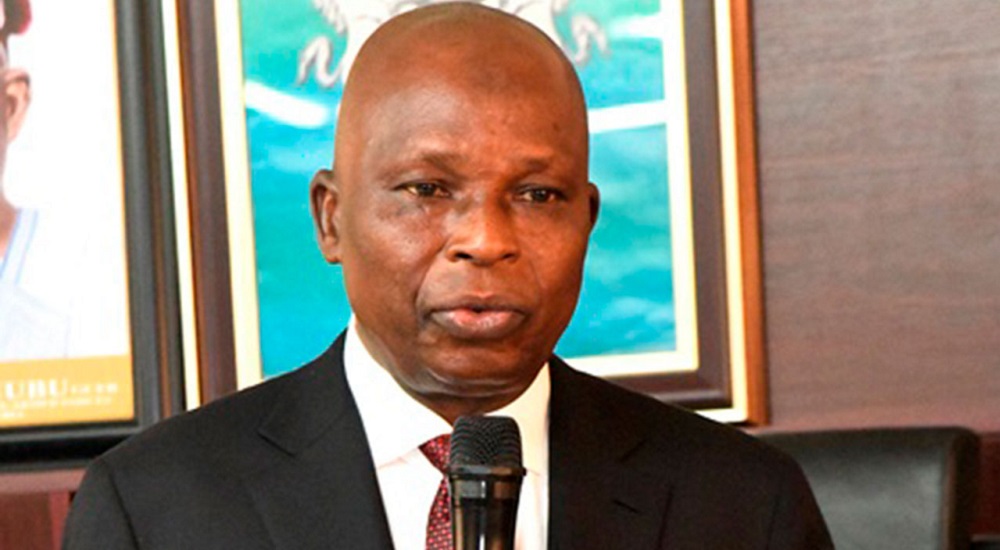
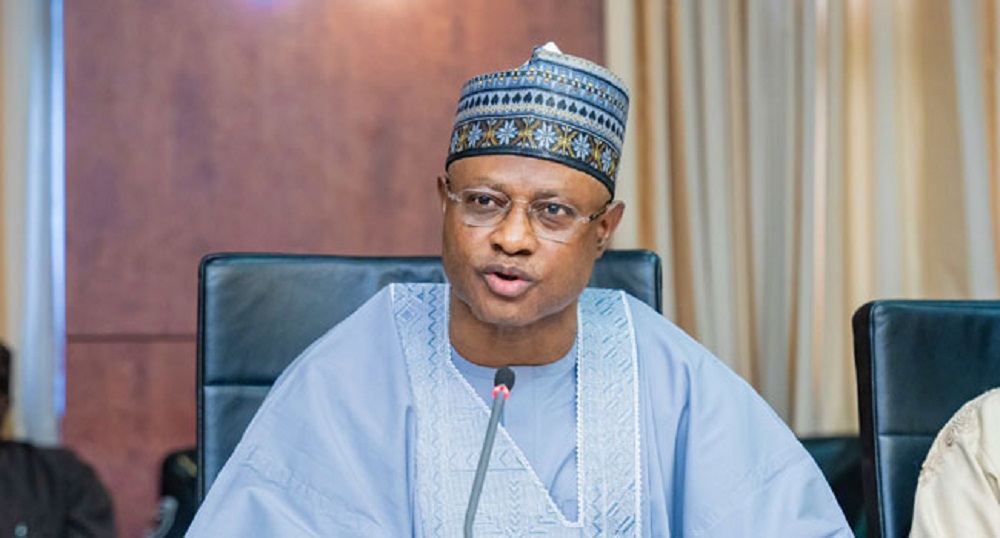
Governor Sani Presents N790bn Budget To Kaduna Assembly For 2025
- /home/naijuinz/public_html/wp-content/plugins/mvp-social-buttons/mvp-social-buttons.php on line 27
https://naijablitznews.com/wp-content/uploads/2024/12/Uba-Sani.jpg&description=Governor Sani Presents N790bn Budget To Kaduna Assembly For 2025', 'pinterestShare', 'width=750,height=350'); return false;" title="Pin This Post">
- Share
- Tweet /home/naijuinz/public_html/wp-content/plugins/mvp-social-buttons/mvp-social-buttons.php on line 72
https://naijablitznews.com/wp-content/uploads/2024/12/Uba-Sani.jpg&description=Governor Sani Presents N790bn Budget To Kaduna Assembly For 2025', 'pinterestShare', 'width=750,height=350'); return false;" title="Pin This Post">
Governor Uba Sani of Kaduna State has presented a budget proposal of N790 billion for the year 2025 to the state House of Assembly for approval, with critical sectors like education, infrastructure, human capital development, security, and agriculture taking the largest allocation.

Presenting the draft budget at the chambers of Kaduna State House of Assembly on Monday, the governor said that his administration adopted a conservative but strategic approach to resource allocation, given the prevailing financial headwinds.
The governor disclosed that the 2025 budget earmarked N553 billion for Capital Expenditure while N237 billion is for Recurrent Expenditure.

According to him, “the capital allocation reflects our continued focus on infrastructure, with particular emphasis on rural roads, healthcare facilities, education infrastructure, and housing projects.
“We have deliberately focused on projects that will have a lasting impact on the economic wellbeing of our citizens,’’ the Governor further emphasized.
Governor Sani pointed out that N206.6billion has been allocated to education, representing 26.14% of the 2025 budget proposal.
“This will fund the construction of new schools, the rehabilitation of existing ones, the recruitment and capacity development of teachers, and the provision of learning materials,’’ he added.
The health sector has been allocated N127 billion, which is 16.07% of the budget, Governor Sani said, explaining that the amount will be used “to upgrade our healthcare facilities, procure medical equipment, and expand our mobile healthcare services, ensuring that no community is left behind in access to quality healthcare.’’
The Governor said that N106 billion, which is 13.14% of the 2025 budget, has been earmarked for infrastructure, adding that the administration will ‘’focus on completion of ongoing road construction, rural electrification, water supply and other critical public works across the State.’’
He said that N74 billion or 9. 36% of the budget will be devoted to agriculture, promising that “we will invest in agricultural innovation, providing support for smallholder farmers, promoting agro-processing, and expanding irrigation projects.’’
According to him, N11.2 billion has been allocated for Security to enhance “the capacity of our state security agencies, purchasing equipment, and supporting community policing efforts.’’
Governor Sani also said that Social Welfare has been allocated N9.8 billion or 1.24% of next year’s budget, to cover ‘’the expansion of social safety nets, including support for the elderly, women and children under the Ministry of Human Services and Social Development, as well as other social interventions programmes targeted at the poor and vulnerable, to be conducted by the newly created Ministry of Humanitarian Affairs.’’
He said that the 2025 draft Budget represents a bold commitment to the future of Kaduna State.
The Governor said that “it is a reflection of our determination to drive inclusive development, create jobs, improve infrastructure, and invest in the people of Kaduna State. We remain steadfast in our resolve to build a state that is safe, prosperous, and equitable for all.’’
The Governor explained that ‘’the budget process has been consultative, and we have engaged widely with the people of Kaduna State to ensure that the budget reflects their aspirations, addresses their concerns, and lays a solid foundation for long-term development.
He thanked the legislators and all stakeholders for their contributions and support, adding that ‘’the feedback from the Town Hall meetings, engagements with civil society groups, and inputs from various sectors have been invaluable in shaping the framework of the 2025 draft budget.’’
While urging the House of Assembly to give the budget the necessary support it deserves, he promised that they will ‘’ work together to turn these plans into reality.’’
“The 2025 fiscal year will be a year of transformation, and with your cooperation, we shall continue to make Kaduna State a place where everyone has the opportunity to thrive,’’ he added.
Governor Sani also highlighted his administration’s achievements in 2024 in the areas of safety and security, upgrade of infrastructure, housing development, trade and investment, agriculture, Human Capital Development, Health and Social Welfare.
On Safety and Security, he said that government has recruited and trained 7,000 Personnel of the Kaduna Vigilance Service (KADVS) to enhance security across the State.
“We distributed 150 Hillux Security Vehicles and 500 Patrol Motorcycles to all security operatives in the State. We constructed the maiden Kaduna State Forensic Laboratory and Training Center,’’ he added.
The Governor said that his administration has “recorded major milestones in the conflict – impacted Birnin Gwari, Chikun, Giwa, Igabi, Kachia, Kajuru and Kagarko LGAs.”
“Through the efforts of the Peace Dialogue Group established by the Kaduna State Government in collaboration with federal agencies and security services, peace has returned to Birnin Gwari.
“I was in Birnin Gwari on Thursday, 28th November 2028 to reopen the famous and strategic Kara Livestock Market, thus signaling the commencement of commercial activities. The long abandoned Birnin Gwari Road is now back to life,’’ he added.
He said Kaduna State is partnering with local and international investors to frontally address our housing deficit, adding that ‘’we have successfully reduced housing deficit in the state through the development of 300 housing units at Millennium City, Kaduna.’’
“The first phase of the construction of mass housing for the less privileged at Kaduna Economic City is about 95% completed. This project is a partnership between Qatar Charity and the Kaduna State Government,’’ he said.
Governor Uba Sani disclosed that his government has attracted over $503 million worth of actualized investments to the State. Amongst them are 4 Foreign Direct Investments (FDIs), namely: Sunagrow International Oil Ltd for the construction of $50 Million Soya Bean Oil Refining Plant, StarAgric West Africa Ltd for the establishment of the Kaduna Agri-Market System Initiative, Qatar Sanabil Kaduna Economic City Project, and Ming Xing Lithium Processing Plant. ‘’
“We are finalizing arrangements for the commencement of the Special Agricultural Processing Zone (SAPZ), a partnership between the Kaduna State Government and the African development Bank (AfDB),’’ he added.
The Kaduna State Government, through the Kaduna State Enterprise Development Agency (KADEDA), has supported 8,649 nano and micro businesses with grants to expand their business operations, he disclosed.
The governor said that ‘’the support ranged from N300,000, N200,000, N150,000, N100,000, to N50,000. The A Kori Talauchi program, led by the Kaduna State Government, empowered 4,912 underserved women across the state.’’
News
Zulum Pledges More Secure, Prosperous Borno For Successor
Borno State governor, Prof. Babagana Umara Zulum, has pledged to hand over a more stable, secure, and economically prosperous state to the next administration as he continues efforts to consolidate gains made in governance and security.
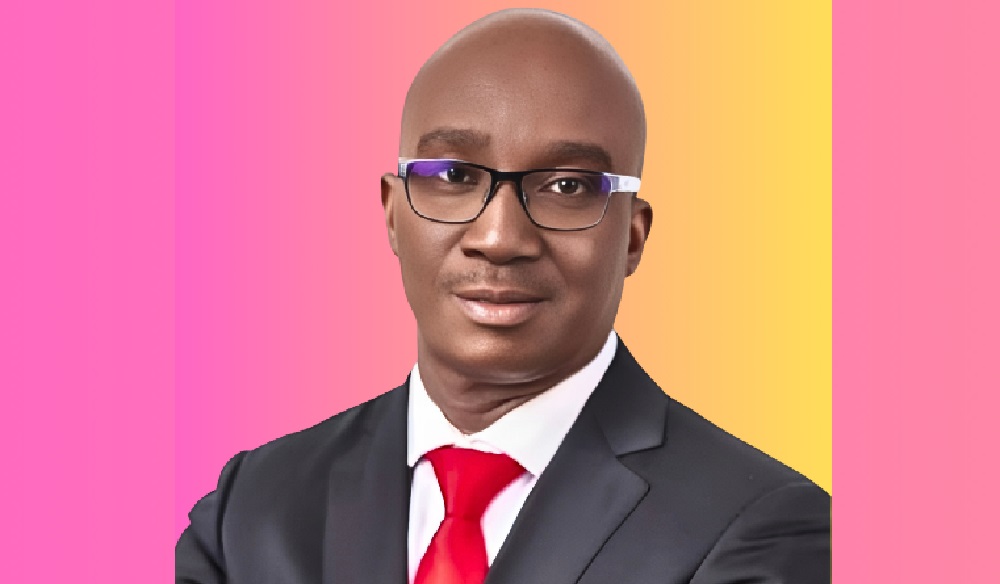
Zulum gave the assurance on when he received prominent sons and daughters of Gubio Local Government Area at the Government House, Maiduguri, alongside the APC governorship candidate for 2027, Engr. Mustapha Gubio.
The delegation, led by elder statesman Alhaji Gambo Gubio, included top political figures, retired security officers, and former public office holders from the area.
The governor said despite persistent security challenges in the state, his administration remains committed to strengthening stability and deepening development across all sectors.
“Security is the most difficult issue. Insha Allah, before I leave, the situation will be better than now. I will hand over a more stable, more prosperous, and more secure government to Engr. Mustapha Gubio, Insha Allah,” Zulum said.
He stressed that sustaining progress is often more difficult than achieving it, urging continued prayers and support for the APC governorship candidate.
“What matters is not just success; managing success is more difficult than achieving success itself,” he said.
Zulum also described Engr. Mustapha Gubio as a long-time associate with strong character and leadership qualities.
“I have known him for the past 26 years since he was a student at the University of Maiduguri. His integrity is evident; he is humane, very gentle, and composed,” he said.
The governor recalled the difficult early days of his administration in 2019, noting the sacrifices made in addressing insecurity and humanitarian crises in the state.
“When I took over the leadership of the state, in the first 55 days of my administration, I saw my children only three times. The first four years were really challenging,” he said.
He expressed appreciation to the delegation for the visit and reaffirmed his commitment to continued progress in the state.
Leader of the delegation, Alhaji Gambo Gubio, thanked the governor for his support and described the APC governorship candidate as a worthy successor.
He also commended Zulum’s achievements in security, infrastructure, and governance, saying the governor had made significant progress in stabilising the state.
The visit was attended by top government officials, including the APC State Chairman, Secretary to the State Government, commissioners, and special advisers.
News
Senate Calls For Total Ban On Importation Of Textile Materials
The Senate has asked the Federal Government to impose an outright ban on the importation of foreign textile materials as part of efforts to revive Nigeria’s struggling textile industry and stimulate local cotton production.
The upper chamber also urged the Federal Government, through the Ministries of Agriculture and Trade and Investment, to take urgent steps to resuscitate textile manufacturing across the country, particularly along the Kaduna-Kano industrial corridor, citing its potential to create jobs and address rising youth unemployment and insecurity.
The resolutions followed the adoption of a motion titled ‘urgent need to revive the textile industries in Nigeria with particular reference to the Kaduna-Kano Axis’, sponsored by Senator Sunday Katung (APC, Kaduna South) and co-sponsored by several lawmakers across party and regional lines.
Presenting the motion, Senator Katung recalled that Nigeria’s first large-scale textile manufacturing mill was established in Kaduna in 1957, a development that later spread to other regions and contributed significantly to industrial growth and employment generation.
According to him, government intervention policies in the 1960s and 1970s, including restrictions on textile imports, encouraged investment in local production and helped the industry flourish.
He noted that by the late 1970s and 1980s, Nigeria had about 167 textile mills employing more than 500,000 workers directly, making the sector the second-largest employer of labour after the Federal Government.
Katung further lamented the sector’s steady decline, attributing it to obsolete equipment, inadequate capital, inconsistent power supply and policy challenges.
The senator expressed concern that more than six decades after the industry’s golden era, Nigeria’s textile sector has deteriorated significantly, leaving once-thriving industrial facilities abandoned and reducing the industry to one of the weakest segments of the nation’s manufacturing sector.
Lawmakers who supported the motion underpinned the need for deliberate government intervention to restore the industry’s competitiveness, boost local production, reduce dependence on imports and create sustainable employment opportunities for Nigerians.
The Senate subsequently called for increased funding to the Bank of Industry (BoI) to support the revival of textile companies and requested the Federal Ministry of Agriculture to intensify efforts to encourage cotton farming, describing cotton production as critical to the survival of the textile sector.
Following deliberations, the Senate adopted the motion and urged the Federal Government to implement policies aimed at revitalising the textile value chain, from cotton farming to manufacturing and distribution, as part of broader efforts to strengthen the country’s industrial base and economic growth.
News
Tinubu launches Ebola response task force, approves N10bn emergency fund
President Bola Tinubu has approved the establishment of a Presidential Task Force on Ebola Virus Disease Preparedness and Emerging Public Health Threats and authorised the immediate release of N10 billion to strengthen Nigeria’s emergency response capacity against the deadly virus.
The intervention comes amid renewed concerns over the resurgence of Ebola cases in the Democratic Republic of Congo (DRC) and Uganda, prompting the Federal Government to activate measures aimed at preventing the importation of the disease into the country.
The emergency funding is expected to bolster the operational readiness of the Nigeria Centre for Disease Control and Prevention (NCDC) and support critical public health response activities nationwide.
The newly constituted Presidential Task Force will be chaired by the President’s Chief of Staff, Femi Gbajabiamila, with membership drawn from key Ministries, Departments and Agencies (MDAs), alongside representatives of state governments.
President Tinubu’s approval followed a high-level stakeholders’ meeting convened by Gbajabiamila to assess Nigeria’s preparedness and develop strategies to forestall any outbreak within the country’s borders.
Participants at the meeting included officials of the Ministry of Interior, the Federal Airports Authority of Nigeria (FAAN), the Nigeria Immigration Service (NIS), the Nigerian Civil Aviation Authority (NCAA), the Lagos State Government and other critical institutions involved in disease surveillance and border management.
As part of the emergency measures, the President directed all states hosting international airports and major border corridors to submit detailed preparedness plans, funding requirements and intervention needs for coordinated implementation by the Federal Government.
The Task Force is also expected to immediately intensify passenger screening at international airports through enhanced temperature checks and stricter crowd-control measures.
Authorities have been directed to strengthen monitoring of travellers arriving through identified high-risk routes, including flights operated by Air Uganda, RwandaAir, Air Tanzania, Air Angola, Kenya Airways and Ethiopian Airlines.
In addition, referral and isolation centres are to be activated without delay at the Lagos and Abuja international airports, while similar facilities will subsequently be established at other designated entry points across the country.
The government further ordered the mandatory deployment of QR code-based pre-arrival health declaration systems for passengers originating from, or transiting through, countries classified as high risk.
Other precautionary measures include the disinfection of departure halls, cargo terminals, baggage handling areas and other airport facilities.
President Tinubu also mandated the advisory group to engage security, diplomatic and aviation authorities on possible regulations governing flights from affected countries.
The Task Force is expected to recommend the designation of specific airports or terminals for high-risk flights to facilitate controlled screening and isolation procedures, as well as consider adjustments to flight schedules to minimise contact between high-risk travellers and other passengers.
The latest measures signal the administration’s determination to avoid a repeat of past public health emergencies by strengthening early detection systems, tightening border surveillance and ensuring rapid response capacity in the face of emerging disease threats.
-
News18 hours agoThe 30 Days of Projects Commissioning in the FCT starts today
-
News18 hours agoSad: Nigerian Labour Leader Dies At International Labour Conference In Geneva
-
News16 hours agoTinubu Swears In New Ministers
-
News20 hours agoNCC appoints Princess Emiko as interim chair to drive Digital Bridge Institute transformation
-
News17 hours agoIran holds funeral ceremony for two air defense personnel slain in Israeli airstrikes
-
News16 hours agoReps Demand Answers on Defence Spending, Summon Service Chiefs, Finance Minister
-
News13 hours agoTinubu Commissions OSEX Main Carriageway, Vows End To Era Of Abandoned Projects(Photos)
-
News13 hours agoINEC Parleys With Parties, Defends Decision To Appeal Court Ruling On Primary Deadlines

Warning: Undefined variable $user_ID in /home/naijuinz/public_html/wp-content/themes/zox-news/comments.php on line 49
You must be logged in to post a comment Login