News
Wike’s aide replies wife of late Col Ogbebor: “Your husband knows the land was not his, stop lying”
- /home/naijuinz/public_html/wp-content/plugins/mvp-social-buttons/mvp-social-buttons.php on line 27
https://naijablitznews.com/wp-content/uploads/2024/12/Screenshot-2024-12-16-at-08.56.06-870x600.png&description=Wike’s aide replies wife of late Col Ogbebor: “Your husband knows the land was not his, stop lying”', 'pinterestShare', 'width=750,height=350'); return false;" title="Pin This Post">
- Share
- Tweet /home/naijuinz/public_html/wp-content/plugins/mvp-social-buttons/mvp-social-buttons.php on line 72
https://naijablitznews.com/wp-content/uploads/2024/12/Screenshot-2024-12-16-at-08.56.06-870x600.png&description=Wike’s aide replies wife of late Col Ogbebor: “Your husband knows the land was not his, stop lying”', 'pinterestShare', 'width=750,height=350'); return false;" title="Pin This Post">
…insists it’s no longer business as usual

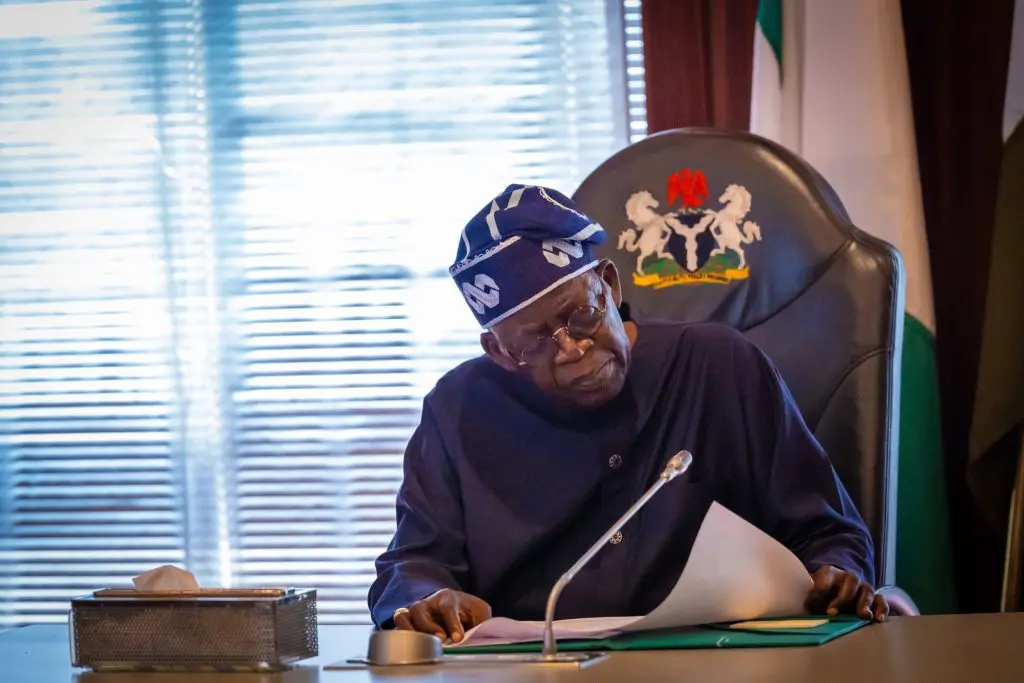
Lere Olayinka, Media Aide to the Federal Capital Territory (FCT) Minister, Nyesom Wike on Public Communications has alleged that those making allegations of land grabbing against his principal are only angry it is not business as usual any longer.
Olayinka in an interview, noted that people are not happy with what the FCT minister is doing in Abuja, but the allegations of grabbing other peope’s land are not true.

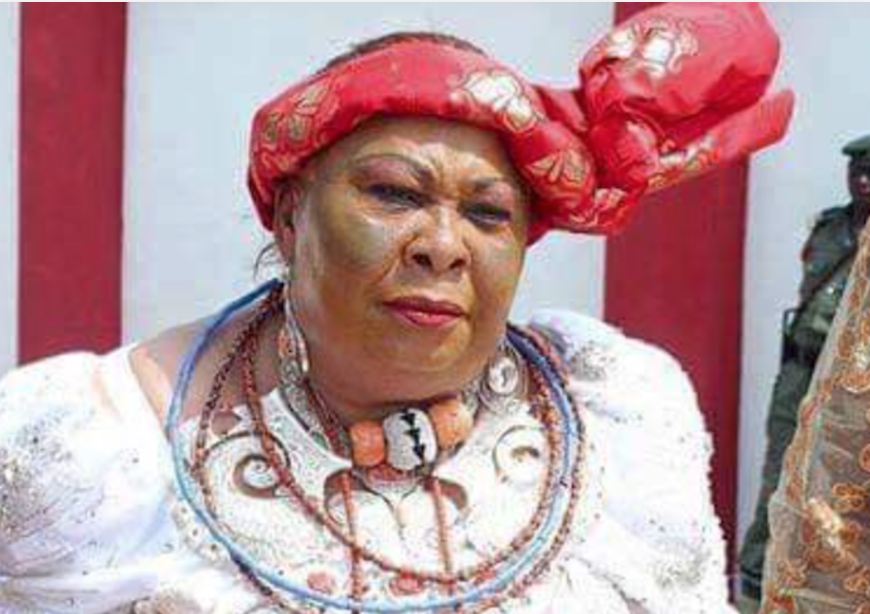
Speaking specifically about a land involving Chief (Mrs) Rita Lori-Ogbebor and Paulosa Nigeria Ltd, Olayinka stressed that the woman’s late husband knew the history and truth about the land, with the understanding that the land does not belong to him.
According to the aide, the land was allocated temporarily to construction companies that got contracts in the 80s and the contractors are expected to leave after concluding their work.
Olayinka said while others left, Paulosa didn’t leave and after his death, the family is trying to inherit a big parcel of government land.
The Minister’s media aide said: “Land grabbing is just a cliché that people use because Wike is doing things differently now. He is insisting that if you must own land in the FCT, you must own it legally, you must own it, not because you know him or because you are from the South or North. He is operating the FCT as it should be. A lot of people are not happy.
“The issue on the front burner now is the one a woman, Chief (Mrs) Rita Lori-Ogbebor, brought to the media, sponsoring some social media content creators to make noise. The issue is simple. You are saying that someone grabbed your land, does the land in question belong to you? It never belonged to her husband, who was the owner of Paulosa Nigeria Ltd.
“The land was allocated to construction companies that got contracts in the 80s. That area of Abuja is called Life Camp, because construction companies built camps there for their workers; that is why it is called Life Camp. They were given allocations to temporarily use the land as a temporary site office. When a contractor gets a job to construct a road and you choose to say, ‘Contractor, take and use my family land as your office,’ when the contractor finishes his job, is the contractor not supposed to leave the land?
“In this case, Paulosa, one of the contractors, did not leave. Paulosa built permanent structures on the land and rented the structures out to Lebanese mostly and was collecting rent for close to 40 years. Other construction companies that had the same opportunities left. Costain shared a fence with the land Paulosa was claiming and now Costain had left. The only construction company claiming ownership of land at that place till today is Paulosa.
“You may ask why Paulosa is claiming ownership of land when other contractors given temporary allocation the same way had left. The issue is simple, people still believe that it is business as usual, that in Nigeria, we can do whatever we like, we can make noise, we whip up sentiments, raise emotion, go to television stations and cry, ‘Oh, my husband was a soldier, he fought for Nigeria!’ Yes, the husband was a soldier, but she failed to tell Nigerians that her husband was also a contractor after being a soldier.
“Her husband (the owner of Paulosa) got a contract to build underground drainage in Abuja and collected his pay. If Paulosa collected his money, why should Paulosa now take government land? If they knew that the land actually belonged to them as the woman is claiming, why did they write to the government in 2020, seeking approval to own the land permanently? They wrote to the government asking for the right of occupancy to own the place. They did that when the owner of the company had died.
“The questions I ask here are – Why didn’t the owner of the company, her husband, apply to the government before he died? Why didn’t the owner claim ownership of the land when he was alive? He knew the history. He knew that he was not the owner of the land. But the moment he died, some people saw the opportunity of inheriting a big parcel of land, so they asked the government to approve the land for them.”
He further argued the ownership of the Abuja land in question, challenging Mrs Lori-Ogbebor to produce documents if she has contrary evidence to his submission.
“At the time that land was allocated, it had never been allocated to any human being. The first permanent allocation, right of occupancy that was given on that land was the one recently given. The mistake people are making is that the FCT revoked allocation, no. There was no allocation to Paulosa at all. If that woman knows what she is talking about, let her come to the public. The Senate has called for an investigation. Let her take her documents to the Senate. Let the FCT also take its documents to the Senate,” he said.

News
National tv signal fails in Niger after heavy gunfire
Niger’s national television was off air on Saturday after a night of heavy gunfire in parts of the capital, including around a military base near the city’s airport which has been attacked twice this year by jihadists.
Niger has been ruled for three years by a military junta that has struggled to contain jihadist violence, which has blighted the West African country for around a decade.
The origins of Saturday’s shooting were not immediately clear but the military said: “In light of current events, let us remain calm and avoid sharing unverified information.
“Our defence and security forces have been mobilised for the defence of the homeland,” it wrote on its official social media pages.
One local resident told AFP that there was “heavy gunfire and explosions” at Base 101 in Niamey, a report confirmed by several other witnesses.
At 9:00 am (0800 GMT), a black screen had replaced Tele Sahel’s programming both via satellite and online. Soldiers blocked access to the presidential palace and national television, residents added.
The first shots were heard at about 1:00 am local time (0000 GMT) and continued until daybreak, according to a video published by a local journalist filming the area around the airport.
Another local resident said he heard “bursts of gunfire” at about 7:00 am local time.
“I went to get credit for my phone. I saw a military vehicle heading towards the base that had to turn back,” he added.
“The weapons we’re hearing are not the kind that terrorists on motorbikes can carry. The fighting has been non-stop since last night.”
Another resident in the west of Niamey said he heard sporadic small arms fire at about 5:00 am.
Several social media posts also reported shooting and explosions in the city, particularly in the administrative area where the presidential palace and national television station are located.
Videos online showed armoured vehicles deployed to reinforce the neighbourhood near the airport.
– Rival jihadist groups –
Niamey airport has been targeted twice this year by jihadists, first by the Islamic State in the Sahel (EIS) in January, then in late June by their rivals the Group for the Support of Islam and Muslims (JNIM), the Sahel branch of Al-Qaeda.
The jihadist groups not only target civilians and the military but are also struggling for dominance over each other in the Sahel, and especially in Niger.
News
Obasanjo jokes at Olota’s 60th birthday, says I’ll attend your 70th, may miss 80th
Ex-President Olusegun Obasanjo brought humour to the 60th birthday celebration of the Olota of Ota, Oba Professor Abdulkabir Obalanlege, as he jokingly promised to attend the monarch’s 70th birthday while asking to be excused from the 80th.
Obasanjo, who is 89, made the remark while speaking in Yoruba at the anniversary celebration held in honour of the traditional ruler.
The former president recalled calling Obalanlege earlier in the morning to pray for him before turning his attention to the monarch’s future milestone birthdays.
“Kabiyesi, I called you this morning and prayed for you,” Obasanjo said.
He then calculated his own age in relation to the monarch’s next major birthday celebrations, telling the gathering that he would be 99 when Obalanlege clocks 70 in 10 years.
“I’m here celebrating your 60th birthday. I’ll join you for your 70th birthday in 10 years,” he said.
However, Obasanjo joked that attending the monarch’s 80th birthday celebration 20 years from now might be beyond his reach.
“But for your 80th birthday, which is 20 years from now, ẹ yonda mi (you’ll excuse me); you’ll celebrate that one the way it pleases you,” he added.
The comment drew laughter from dignitaries, traditional rulers and other guests who gathered to celebrate the Olota’s diamond jubilee.
The celebration also featured a notable display of Yoruba cultural respect when Fuji musician, King Wasiu Ayinde, popularly known as K1 De Ultimate, prostrated fully before Obasanjo after coming on stage.
The gesture further added to the cultural significance of the event held to mark Oba Obalanlege’s 60th birthday.
News
SAD! Former Supreme Court Judge, Kalgo is dead
The judiciary has been thrown into mourning following the death of Hon. Justice Umaru Atu Kalgo, JSC (Rtd.), CON, a former Justice of the Supreme Court of Nigeria and distinguished jurist whose judicial career spanned several decades.
Justice Kalgo reportedly died at about 3:00 a.m. on Tuesday after a prolonged illness.
A resident of Kalgo community, who requested anonymity, said the retired Supreme Court Justice was buried at about 2:30 p.m. in Sokoto in accordance with Islamic rites.
His death marks the end of a distinguished legal career spanning nearly five decades, during which he contributed to legal practice, judicial service, law reform and the development of Nigerian jurisprudence.
Born on May 12, 1937, in Kalgo, present-day Kebbi State, then part of the old North-Western State, Justice Kalgo began his education at Elementary School, Kalgo. He later attended Middle School Sokoto, Middle School Birnin-Kebbi and Government College, Zaria, between 1953 and 1958.
He subsequently pursued legal studies at the Institute of Administration, Ahmadu Bello University, Zaria; the Council of Legal Education, London; the College of Law, Holborn, London; and the Nigerian Law School, Lagos. He was called to the Nigerian Bar in 1965.
Justice Kalgo began his public service career as an Administrative Officer in Northern Nigeria before moving into legal practice in government service. Between 1965 and 1972, he served as State Counsel and later rose to become Deputy Solicitor-General of the North-Western State.
His judicial career began in 1974 when he was appointed a Judge of the High Court of Kano and North-Western State. He subsequently served on the Sokoto State High Court Bench.
On January 1, 1981, Justice Kalgo was elevated to the position of Chief Judge of Sokoto State, a position he held until 1988.
In February 1988, he was appointed a Justice of the Court of Appeal, where he continued to contribute to the development of Nigeria’s appellate jurisprudence.
A decade later, on November 25, 1998, Justice Kalgo reached the pinnacle of his judicial career when he was elevated to the Supreme Court of Nigeria.
He served on the apex court until his statutory retirement at the age of 70 in May 2007.
During his years on the Court of Appeal and Supreme Court benches, Justice Kalgo delivered and participated in numerous judgments covering constitutional, civil and criminal law. His contributions formed part of the body of judicial precedents that continue to influence Nigerian jurisprudence.
Beyond the courtroom, the late jurist played significant roles in national law reform and constitutional development. He served on the Constitution Review Committee between 1987 and 1988, participated in the Constituent Assembly between 1988 and 1989, and was a member of the Law Revision Committee for the Laws of the Federation in 1990.
His public service therefore extended beyond adjudication to the broader development of Nigeria’s constitutional and legal framework.
Justice Kalgo was also recognised for his contributions to national service and was conferred with the national honour of Commander of the Order of the Niger, CON.
His passing brings to a close the life and career of a jurist whose professional journey took him from public administration and government legal service through the High Court and Court of Appeal to Nigeria’s highest court, leaving behind a significant legacy in the country’s legal and judicial history.
-
Metro15 hours agoPolice Parade Doctors, Others Over Alleged Organ Trafficking In Nasarawa
-
News15 hours agoUgandan King Who Became Monarch At Age 3 Di£s Aged 34
-
News15 hours agoNYSC sets September 7 for 2026 batch C registration
-
News14 hours agoFG moves to harmonise salaries of federal government workers
-
News14 hours agoPolice-Led Joint Team Arrests Nine, Recovers Three AK-47 Rifles, Pump-Action Gun in Anambra
-
News9 hours agoConfusion in Niger as gunfire, explosions rock presidential palace, airport
-
News14 hours ago2027 Presidency: Very Unlikely North Will Support Obi-Kwankwaso Ticket — Datti
-
News9 hours agoPolice rescue two abducted Colombian women in Lagos

Warning: Undefined variable $user_ID in /home/naijuinz/public_html/wp-content/themes/zox-news/comments.php on line 49
You must be logged in to post a comment Login