Connect with us

Entertainment

Osimhen joins Davido, Wizkid, Burna Boy at Tony Elumelu’s all-white party

Published

on

ADVERTISEMENT
Zoom Ad
ADVERTISEMENT
Zoom Ad

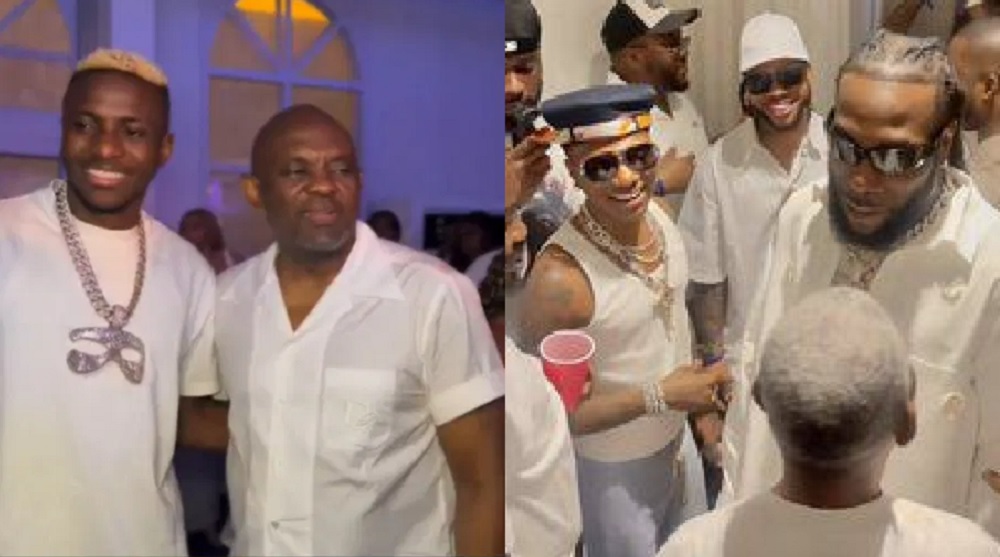
Super Eagles striker Victor Osimhen on Monday joined Nigeria’s elite at billionaire Tony Elumelu glamorous all-white party in Lagos, embracing the holiday festivities during a visit to his home country.


The Galatasaray forward, who has been in prolific form, was seen mingling with top celebrities at the event hosted by Tony Elumelu, Chairman of the UBA Group, with an estimated net worth of $700 million according to Forbes.

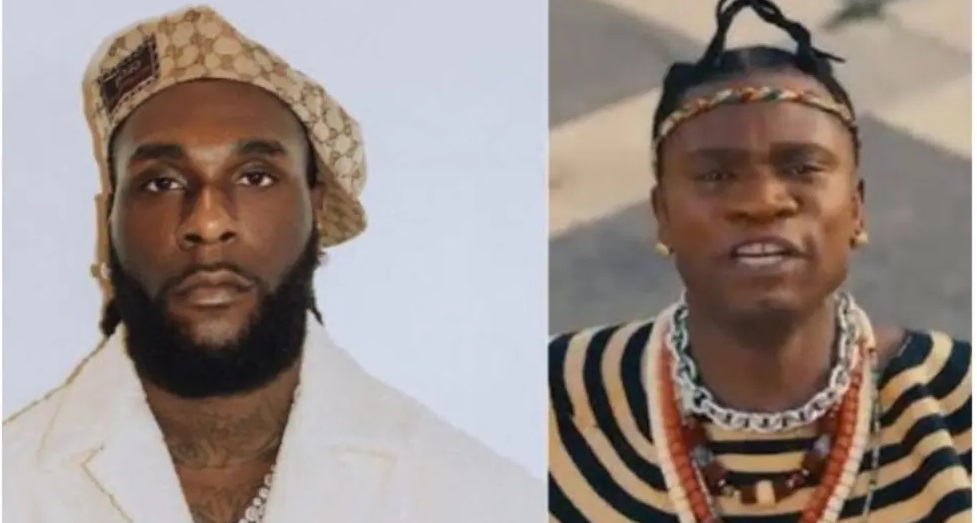
The star-studded affair featured electrifying performances by some of Nigeria’s biggest music icons, including Wizkid, Davido, Burna Boy, and Flavour.

Prominent political figures also graced the occasion, with Lagos State Governor Jide Sanwo-Olu and Ogun State Governor Dapo Abiodun among the notable attendees.
Advertisement

Entertainment

Olu Jacobs: The Life, Times and Legacy of a Nollywood Legend

Published

on

ADVERTISEMENT
Zoom Ad
ADVERTISEMENT
Zoom Ad

Oludotun Baiyewu Jacobs, popularly known as Olu Jacobs, was far more than a movie star.

For generations of Nigerians and African audiences, he represented the power, discipline and dignity of the professional actor.

His career crossed theatre, television and film, taking him from Nigeria to Britain and back, and ultimately making him one of the most recognisable faces of African cinema.

Olu Jacobs died on September 16, 2026, at the age of 84, after a career spanning several decades.

Advertisement

His death was announced by his family through his wife, veteran actress Joke Silva, who described him as “The Lion of Lufodo” and asked the public to respect the family’s privacy.

His death marked the end of an extraordinary chapter in Nigerian acting.
Early life: From Abeokuta roots to Kano
Olu Jacobs was born July 11, 1942, to parents of Egba Alake heritage from Abeokuta, Ogun State. Although his family roots were in southwestern Nigeria, he spent part of his childhood in Kano, in northern Nigeria.

As a young boy, Jacobs developed an interest in performance. His involvement in drama and debating during his school years helped nurture that interest.

Accounts of his early life also recall his fascination with stage performances, including the concert parties of legendary Nigerian dramatist Hubert Ogunde. Those experiences helped convince the young Jacobs that acting could become more than a childhood fascination—it could become his life’s work.

Advertisement

He attended Holy Trinity School, where he became involved in debating and drama activities.

The decision to pursue acting professionally was not necessarily an easy one. Jacobs eventually made the bold decision to travel to Britain to obtain formal dramatic training.
The RADA years: Building a professional actor
Jacobs trained at the prestigious Royal Academy of Dramatic Art (RADA) in London, one of Britain’s most respected institutions for dramatic training.

This period was critical to the development of his craft.

Rather than entering the entertainment industry solely through popular theatre or television, Jacobs received rigorous professional training in acting. After his studies, he worked with repertoire theatre companies in Britain and developed experience on stage and television.

Advertisement

His British career included appearances in television productions such as The Goodies, Till Death Us Do Part, The Professionals, The Tomorrow People and The Venturers, according to biographical accounts.

He also appeared in international films, including The Dogs of War, Pirates and Baby: Secret of the Lost Legend.

African Movie Database

These experiences gave him something that would later distinguish him in Nigeria: the combination of formal dramatic training, stage discipline and international performance experience.

Advertisement

Coming home: The Nigerian stage beckoned
After years working in Britain, Jacobs eventually returned to Nigeria.

His return came at a particularly important period in the development of Nigerian television, theatre and film.
He became involved in Nigerian stage and television productions and emerged as one of the country’s most respected professional actors.

One of the productions associated with his early Nigerian television prominence was the NTA detective series The Third Eye. His work in Nigerian television helped establish him as a household name before the explosion of home-video filmmaking that would later become known as Nollywood.

This distinction is important.

Advertisement

Olu Jacobs was not a product of Nollywood alone.
He belonged to an earlier generation of Nigerian performers who had already established careers in professional theatre and television before the Nigerian home-video industry became a global phenomenon.

That background helped make him one of the bridges between Nigeria’s old theatrical tradition and the emerging film industry.

The Nollywood explosion

During the 1990s and 2000s, Nigeria’s home-video industry expanded dramatically.

Advertisement

Films began reaching audiences throughout Nigeria and across Africa, and Jacobs became one of the industry’s most dependable and recognisable performers.

He appeared in more than 100 films, with some sources putting his career output at more than 120 productions.

His distinctive voice, commanding screen presence and ability to portray authority figures made him particularly memorable.

He could play:
a traditional ruler;
a wealthy patriarch;
a village elder;
a political leader;
a businessman;
a father;
a villain;
a respected community leader;
or a deeply flawed and conflicted character.
His portrayal of kings and traditional rulers became so strongly associated with his public image that he acquired the nickname “Igwe of Nollywood.”

Advertisement

But reducing him to kingly roles would underestimate his range.

His greatest strength was his ability to make characters appear lived-in rather than performed.

Why Olu Jacobs stood apart

At a time when Nigerian films were increasingly being produced quickly for the home-video market, Jacobs brought a different level of theatrical discipline.
He understood:
voice.
movement.
timing.

Advertisement

silence.
facial expression.
character development.

He could dominate a scene without shouting.

A look, pause or change in tone could communicate authority, anger, disappointment or affection.

That quality helped establish him as one of the actors whom younger performers could study.

Advertisement

His deep, unmistakable voice became one of his trademarks, while his physical presence often made him believable as a king, elder or patriarch.

The man behind the legend: Joke Silva
One of the most important chapters in Jacobs’ personal and professional life was his relationship with fellow Nigerian acting legend Joke Silva.

The two met through theatre. Silva has recalled that Jacobs told her early in their relationship that he would marry her—something she initially did not take seriously.
They eventually married in 1989.

Their marriage became one of the most enduring partnerships in Nigerian entertainment.
They were not simply husband and wife.

Advertisement

They were also acting partners, theatre practitioners, business partners and mentors.

Together, they became one of Nigeria’s most celebrated entertainment couples.

In 2025, Silva spoke publicly about their relationship and the age difference between them, explaining that love was central to her decision to marry Jacobs.

Their relationship also produced a professional partnership that would have an important impact on Nigerian performing arts.

Advertisement

The Lufodo legacy
Jacobs and Silva established Lufodo, a company through which they pursued their interests in theatre, film production and the development of performing artists.

The organisation eventually expanded into the Lufodo Academy of Performing Arts, reflecting the couple’s interest in training and developing the next generation.

Their work was therefore not limited to appearing in front of cameras.
They were also involved in building structures around the performing arts.

That is part of the reason Silva’s description of Jacobs as “The Lion of Lufodo” carries particular significance following his death.

Advertisement

A decorated career
Jacobs’ contribution to Nigerian entertainment was recognised with major awards and honours.

Among them was the Africa Movie Academy Award for Best Actor in a Leading Role, which he won in 2007.

He was also honoured with the Member of the Order of the Federal Republic (MFR) by the Nigerian government in 2011 for his contribution to the arts.

Other major recognitions included:
Industry Merit Award – Africa Magic Viewers’ Choice Awards, 2013
MAA Lifetime Achievement Award, 2016
AMAA Lifetime Achievement recognition, shared with Joke Silva in 2016.

Advertisement

The honours reflected something larger than popularity: Jacobs had become part of the institutional history of African cinema and theatre.

A career that survived changing generations

One of the remarkable things about Olu Jacobs was his longevity.
He belonged to a generation that worked primarily in theatre and television.

Then came Nigerian home videos.
Then came the internationalisation of Nollywood.

Advertisement

Then came streaming platforms and a new generation of Nigerian filmmakers.

Through all those transformations, the name Olu Jacobs remained recognisable.

Younger Nigerian actors came into the industry and audiences continued to associate Jacobs with professional acting.

In this sense, he became what many observers described as a bridge between generations—connecting Nigeria’s theatrical tradition with contemporary Nollywood.

Advertisement

His battle with illness and withdrawal from the screen
In the later years of his life, Jacobs increasingly withdrew from public acting.

His wife, Joke Silva, publicly disclosed that he had been living with Lewy body dementia, a progressive neurological condition. She spoke about the challenges the illness presented to the family and to Jacobs himself.

Pulse Nigeria +1
His health also became the subject of repeated false reports of his death.
In 2021, 2022 and again in 2024, rumours circulated online claiming that Jacobs had died. His family and colleagues repeatedly rejected those reports.
NTA – Nigerian Television Authority
The repeated rumours demonstrated just how recognisable Jacobs had become: even during his years away from the spotlight, his name continued to attract enormous public attention.
The difference on September 16, 2026, however, was that the announcement came from his family.

His final chapter
Jacobs celebrated his 84th birthday on July 11, 2026.

Advertisement

Just over two months later, his family announced his death.
The statement issued by the family described him as:
“The Lion of Lufodo.”

It expressed gratitude for his life and asked bloggers and social-media influencers to respect the family’s privacy while they mourned. �
The Guardian Nigeria +1
His dates of birth and death were given as:
11 July 1942 – 16 September 2026.
The Guardian Nigeria
Olu Jacobs’ place in Nigerian cinema
The easiest way to understand Olu Jacobs’ importance is to look beyond the number of films he made.
His influence existed on several levels.
1. He helped professionalise acting
His RADA training and years of British theatre experience demonstrated the value of formal dramatic education and professional stagecraft.
2. He connected theatre and cinema
Jacobs carried the discipline of the stage into Nigerian television and film.
3. He helped define the image of the African patriarch
His commanding performances as kings, fathers, elders and leaders became part of the visual language of Nigerian cinema.
4. He influenced younger performers
Generations of actors grew up watching him and studying his performances.
5. He helped build institutions
Through Lufodo and the Lufodo Academy of Performing Arts, he and Joke Silva extended their contribution beyond performance.

6. He gave Nollywood international visibility
His earlier British and international work meant that he had already crossed cultural and geographical boundaries before Nollywood itself became globally prominent.
The legacy of “Uncle Olu”
To many younger Nigerian actors, Olu Jacobs was affectionately known as “Uncle Olu.”
The title reflected something deeper than age.
It represented respect.

He was one of those rare actors whose reputation existed independently of any single film.
A movie could be poorly produced, the script could be weak, or the production could have a limited budget—but the appearance of Olu Jacobs often immediately gave the project a sense of seriousness.

Advertisement

That was his reputation.
His career demonstrated that an actor could move from the stage to television, from television to international productions, and from international productions back into Nigeria’s emerging film industry, while remaining relevant across generations.
The partnership with Joke Silva
The story of Olu Jacobs cannot be completely told without Joke Silva.

Together, they represented a remarkable professional partnership in African entertainment.
Both had substantial acting careers.
Both understood theatre.

Both worked in television and film.
Both received national and international recognition.
And together they invested in developing the performing arts.

Their marriage, which began in 1989, lasted more than three decades and became one of the best-known unions in Nigerian entertainment.

Advertisement

Premium Times Nigeria +1
Following his death, Silva’s role in protecting and preserving his legacy will inevitably become an important part of the story of the Jacobs family.
What he leaves behind
Olu Jacobs leaves behind much more than a filmography.
He leaves behind a tradition of professional acting.
He leaves behind the memory of an actor whose voice could command a room and whose presence could transform a scene.

He leaves behind a generation of performances that introduced millions of viewers to stories about family, power, tradition, love, betrayal, leadership and African identity.
He leaves behind the work done with Joke Silva through Lufodo.
He leaves behind younger performers who were influenced by his example.

And he leaves behind a name that had become almost synonymous with the history of Nigerian acting.
A life larger than Nollywood
It would therefore be incomplete to describe Olu Jacobs simply as a “Nollywood actor.”

He was a theatre actor who became a television star, an international performer who returned home, a pioneer of Nigerian film, an educator and mentor, a cultural figure and one of the defining actors of his generation.
His journey began with a young Nigerian fascinated by stage performance, continued through formal training at RADA and British theatre and television, and eventually brought him home to become one of the central figures in Nigeria’s entertainment industry.
For more than half a century, he performed.
For decades, he entertained.

Advertisement

For generations, he influenced.
And on September 16, 2026, Nigeria lost one of the most recognisable figures in its performing-arts history.
Olu Jacobs, 1942–2026: the curtain has fallen on a remarkable career, but the performances—and the legacy—remain.

The Guardian Nigeria +1
Selected career milestones
Year/Period
Milestone
1942
Born Oludotun Baiyewu Jacobs on July 11

Early years
Developed interest in drama and debating
1960s–70s
Travelled to Britain and trained at RADA
British career
Worked in theatre and appeared in television and international films
Return to Nigeria
Became prominent in Nigerian theatre and television
1980s–90s
Established himself as a major Nigerian stage, television and film actor
1989
Married actress Joke Silva
1990s–2000s

Became one of the defining faces of the emerging Nollywood industry
2007
Won AMAA Best Actor in a Leading Role
2011
Received the national honour of MFR
2013
Received Africa Magic Viewers’ Choice Industry Merit Award
2016
Received MAA Lifetime Achievement recognition
2021 onward
His family publicly discussed his battle with Lewy body dementia
July 11, 2026
Celebrated his 84th birthday
September 16, 2026
Died at age 84; family announced his passing
**In the history of Nigerian cinema, Olu Jacobs belongs to that rare group of performers whose careers became part of the history of the industry itself.**

Advertisement
Continue Reading

Entertainment

BREAKING: Nollywood Loses Iconic Actor Olu Jacobs at 84

Published

on

ADVERTISEMENT
Zoom Ad
ADVERTISEMENT
Zoom Ad

Nollywood has been thrown into mourning following the death of veteran actor and cultural icon, Oludotun Baiyewun Jacobs, popularly known as Olu Jacobs, at the age of 84.

His wife, celebrated actress Joke Silva, announced his death in an Instagram post on Wednesday, September 16, 2026.

Sharing a photograph of the veteran actor, Silva wrote: “It is with gratitude to God for a life well lived and fought, that we announce the passing of our dear husband, father, grandfather and uncle.”

She described him as “The Lion of Lufodo” and identified him as Oludotun Baiyewun Jacobs (MFR), giving his dates as July 11, 1942 – September 16, 2026.

Advertisement

Silva also appealed to the media and members of the public to respect the family’s privacy as they mourn the veteran actor.

“ We call on all bloggers and social media influencers to respect our family’s privacy at this time,” she added.

Born in 1942, Olu Jacobs was one of Nigeria’s most recognisable and respected screen and stage actors. He trained at the Royal Academy of Dramatic Art (RADA) in London and began his professional career in British theatre and television before returning to Nigeria, where he became a major figure in the country’s growing film industry.

His international credits included appearances in productions such as The Dogs of War, Pirates and Baby: Secret of the Lost Legend, while his extensive Nigerian film career helped establish him as one of the defining actors of the Nollywood era.

Advertisement

Over a career spanning several decades, Jacobs appeared in more than 100 films and became particularly known for portraying authoritative, complex and commanding characters.

His contribution to African cinema earned him several honours, including the African Movie Academy Award for Best Actor in a Leading Role in 2007 and lifetime achievement recognition from major industry bodies.

Jacobs and Joke Silva, who married in 1989, became one of Nigeria’s most celebrated couples in the entertainment industry.

The veteran actor’s death also brings to an end a remarkable career that helped bridge Nigeria’s early stage and television traditions with the modern Nollywood era.

Advertisement

The news comes years after false reports of his death circulated online. His family had previously dismissed such reports and publicly confirmed that he was alive.

Olu Jacobs is survived by his wife, Joke Silva, their children and grandchildren.

Continue Reading

Entertainment

BBNaija S11: Barry secures finalist spot after winning HoH

Published

on

By

ADVERTISEMENT
Zoom Ad
ADVERTISEMENT
Zoom Ad

Big Brother Naija season 11 housemate, Barry has secured a finalist spot after winning Head of House, HoH for eight week.

Barry became the first contestant to secure a place in the final of the ongoing ‘Show Ya Sef’ edition of the reality show after winning the HoH game on Monday.

After his win, Barry was named the “ultimate veto power holder” for this year’s season.

As a veto power holder, Barry was granted immunity for the next two weeks’ eviction and also confirmed as first finalist of the season.

Advertisement

Unlike previous weeks, the authoritative voice in the house, Biggie instructed Barry to save one housemate and he picked Aikou.

Big Brother then put up the remaining housemates for possible eviction this week.

BBNaija S11 was premiered July 26, 2026 and expected to end October 4.

Advertisement
Continue Reading

Trending

Copyright © 2024 Naija Blitz News