Connect with us

News

About 20 Nigerians Killed In South Africa In Last One Year Without Justice – Community President

Published

on

ADVERTISEMENT
Zoom Ad
ADVERTISEMENT
Zoom Ad

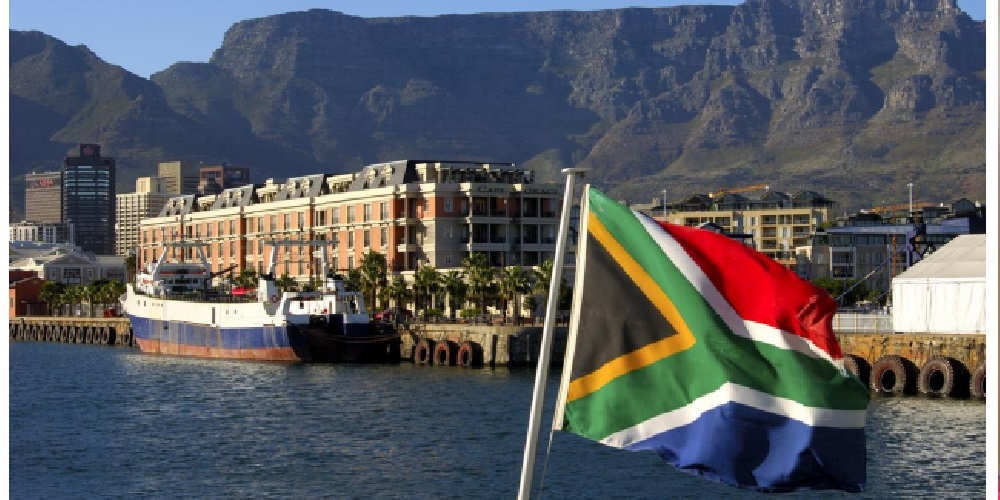
At least 20 Nigerians have been extrajudicially killed in South Africa over the past year, according to Frank Onyewekelu, President of the Nigerian Citizens Association in South Africa.


The disturbing trend is highlighted by the recent killing of Julius Chukwunta, who was brutally murdered by four individuals in Johannesburg.

Most of the victims, Onyewekelu revealed, were killed by security agencies, which is particularly concerning given the lack of accountability and transparency in the cases.

The Nigerian High Commission has been criticised for not doing enough to prevent the extrajudicial killings and ensure that justice is served.

Advertisement

Onyewekelu emphasised that if anyone commits a crime, they should be put on trial and face the consequences, rather than being subjected to extrajudicial killings.

The killing of Chukwunta, who lived in Midrand, Johannesburg, is a tragic example of this trend.

According to his partner, Chukwunta was attacked and killed on December 7, 2024, after some individuals blocked the entrance to his complex.

This is not an isolated incident, as the Nigerian government has previously condemned the killing of Nigerians in South Africa.

Advertisement

It is estimated that 116 Nigerians have been killed in South Africa through extrajudicial means over the past two years, with the majority of the killings carried out by the South African Police.

Onyewekelu who spoke in an interview with The PUNCH on the unfortunate killing of Chukwunta  stated: “The unfortunate incident that led to his death happened on December 7, 2024. Based on the information we received from his partner, he was coming back from work with his partner. They already drove inside the complex when some guys blocked the entrance.

“He told them to move their vehicle so that he could have access to the parking lot. They refused, and that led to an exchange of words. When he saw that they remained adamant, he walked towards the estate security post to lodge a complaint. As he walked in that direction, the four guys followed him. They stopped him and a fight started. The four guys pounced on him. They inflicted heavy injuries on him.

“When his partner, who was waiting in the car for him, did not see him, she walked towards the security post and saw him on the ground, bleeding. She started calling for help but nobody came. This was for almost an hour, according to her. When there was no help from passersby, she called her father on the phone. Her father came to the scene of the incident. That was how they rushed Mr Chukuwnta to the general hospital on Saturday. He died on Tuesday which was December 10.”

Advertisement

Explained that Chukwunta died as a result of loss of blood because of the heavy injuries on his skull. “They hit a brick on his head. This opened a big wound on his skull. As a result of this, he succumbed to death.”

He noted that three of those four guys that killed him were originally from Zimbabwe although they have South Africa’s residence permits and identity documents.

He regretted that though they were charged for murder, three of the accused persons – Zimbabwean were granted bail in the sum of 10,000 rand each. “The fourth person was also supposed to be granted bail but as of the time of the bail hearing, he had not appointed a legal representative for his bail application.

“He was advised by the magistrate to formally apply for bail and when he does, there is a possibility that he will also be granted, while the case was adjourned till February 2025.”

Advertisement

Noting that he is working on trying to stand before the Senate or the House of Representatives to tell them about many of these sad experiences, Nigerians had been subjected, said:

“If I have to be specific with you, between November last year and December this year, we have had between 15 and 20 Nigerians who have died under this similar kind of death that could have been avoided,” he said.

“Let me mention just a few. Last week, a young Nigerian man was buried in Cape Town. He was arrested by the police authorities. He died in the holding cell due to the injuries inflicted on him by the police. Earlier this year in May, I drove to Northern Cape, another province in South Africa, which required a six-hour drive to report a case to the commissioner of police.

“The case was about police officers who searched his house and suffocated him while trying to search his house. He died in the hands of the police. There was an autopsy report and they refused to give it to us. Another Nigerian died in Johannesburg in the hands of the police. I was there at the scene of the incident and at the police station where he died. Nigerians came out en masse to protest.”

Advertisement

He added, “We have tried to reach out to the government through the Nigeria’s High Commission but they have not done enough. I understand the diplomatic ties and procedures. But, I’m expecting more steps to be taken by them such as media briefings to let South Africans understand that our lives matter.”

“A person is considered innocent until proven guilty. When they arrest anybody, we are not stopping them from letting the person face the wrath of the law if found guilty. But we are against letting Nigerians die through intimidation and brutalisation in the name of hatred against Nigerians. Many Nigerians have died and their bodies repatriated without their families knowing the cause of their deaths.

“This is why our government needs to come to our rescue. We want the Nigerian government to address this with the South African authorities. The Presidency and the Ministry of Foreign Affairs should understand that we are not just making up these stories. There is evidence. There are cases with the police and the courts lying there without being attended to and with no legal representation to fight for justice.”

He however, noted that the xenophobic attacks and hatred for foreign nationals in South Africa are not only against Nigerians.

Advertisement

“There is a kind of general hate for foreign nationals whether Africans or Westerners by South Africans, but Nigerians are on top of the list. I may not be able to explain what led to the hatred but the allegation that Nigerians are taking up their jobs is false. Well, in terms of marriage, when love happens, love happens. Nigerian men are lovable and caring. They know how to take good care of women. That is the reason I think South African women prefer Nigerian men to their men.

“But when it comes to jobs, that’s not true. I can tell you that 90 per cent of Nigerian men in South Africa are self-employed. They build their companies, develop their businesses, and grow their careers. They also employ some of these South Africans to work with them. You can only count a few Nigerians who work for the government or industries. Nigerians are mostly into business; they are medical professionals, lawyers, and others. Some are students, and others are involved in carpentry and hair styling. They open their shops.

“Statistics have proven that the percentage of South Africans in employment is higher than the percentage of foreign nationals put together. But still, you will hear complaints that they are taking their jobs. This rumour has been carried by South Africans who probably are lazy or trying to put up a defence or an excuse for their loitering around and not being serious about getting something to do.

“Our position is that somebody doesn’t have to die because he committed a crime. If there is a crime committed and the person is found guilty, we are not excusing anybody because in some of our programmes we also educate the Nigerian community on the rule of law.”
Advertisement

News

Just in: Andy Burnham Emerges as UK PM

Published

on

ADVERTISEMENT
Zoom Ad
ADVERTISEMENT
Zoom Ad

Veteran British politician Andy Burnham has emerged as the new leader of the United Kingdom’s governing Labour Party, clearing the way for him to become the country’s next Prime Minister following the resignation of Keir Starmer.

Burnham was confirmed as Labour leader on Friday after no other candidate secured the required nominations to challenge his bid during a special Labour Party conference, effectively handing him the leadership unopposed. The outcome was officially announced by the UK’s Interior Minister, Shabana Mahmood, who declared Burnham the duly elected leader of the Labour Party.

“There being no other eligibly nominated candidate, it is therefore my honour to declare that the duly elected leader of the Labour Party is Andy Burnham,” Mahmood told party delegates.

Burnham’s emergence comes at a pivotal moment for the Labour Party, which has been grappling with internal uncertainty following Starmer’s decision to step down as party leader amid mounting pressure from within the party. A seasoned politician, Burnham has held several senior ministerial positions under previous Labour governments.

Advertisement

He later became Mayor of Greater Manchester, where he built a strong national profile through his advocacy for greater regional autonomy, improved public services, and increased investment in local communities.

His tenure as mayor earned him widespread recognition, particularly during periods of national crisis when he repeatedly called for increased financial support and greater decision-making powers for local authorities. Burnham is expected to complete the constitutional process and formally assume office as the United Kingdom’s Prime Minister on Monday.

In his acceptance speech, the incoming Labour leader pledged to reunite the governing party after a period of internal divisions and restore public confidence in government.

He also promised to devolve more powers from central government to local authorities, arguing that local communities should have greater control over decisions affecting their economies and public services.

Advertisement

Among his key priorities are strengthening the National Health Service (NHS), improving public transport, stimulating economic growth, and expanding opportunities across every region of the United Kingdom. Political analysts believe Burnham’s administration will focus heavily on regional development, investment in public infrastructure, and reforms aimed at reducing economic inequalities across the country.

His confirmation has already drawn reactions from political leaders, Labour members, and supporters, many of whom expressed optimism that his leadership could mark the beginning of a new chapter for both the Labour Party and the United Kingdom. Attention is now expected to shift to the formation of Burnham’s cabinet and the policy agenda his government intends to pursue during its first weeks in office.

Continue Reading

News

Senate moves to amend archaic provisions in Petroleum Laws

Published

on

ADVERTISEMENT
Zoom Ad
ADVERTISEMENT
Zoom Ad


The Chairman of the Senate Committee on Petroleum (Upstream), Senator Williams Eteng, has revealed that the National Assembly is moving to amend Nigeria’s petroleum laws to align them with current economic realities, describing many of the existing provisions as obsolete.

Speaking with journalists after the committee’s meeting, the Cross River Central lawmaker said the committee’s priority is to strengthen the petroleum sector by improving infrastructure, increasing crude oil production and providing a legal framework capable of supporting sustainable growth.

“We are looking at ways of improving the petroleum sector, strengthening infrastructure, and increasing crude oil production. That is our major focus,” Eteng said.

Advertisement

The senator disclosed that the committee had already received a proposal seeking amendments to the principal petroleum laws, noting that several penalties and fines currently contained in the legislation have remained unchanged for decades.

“A presentation has been made for us to amend the principal petroleum laws. The penalties are old and outdated. Some of the fines were enacted in 1951, while others date back to 1962. There is a need to bring these laws in line with present-day realities,” he stated.

According to him, reviewing the laws has become imperative to ensure they adequately reflect modern economic conditions and provide an effective regulatory framework for the petroleum industry.

“Laws are made to serve society, and they must be amended from time to time to reflect current economic realities,” he added.

Advertisement

Eteng also addressed reports suggesting that the Nigerian National Petroleum Company Limited (NNPCL) delegated a junior officer to appear before the committee, dismissing the claim as inaccurate.

He clarified that the official seen at the committee meeting was merely the company’s liaison officer to the National Assembly and not a representative appearing on behalf of the NNPCL management.

“There was no junior officer representing NNPCL before the committee. The person you saw is the liaison officer between the National Assembly and NNPCL. Please get that right. NNPCL requested an excuse, and another date will be fixed,” he explained.

The chairman reaffirmed the committee’s commitment to engaging relevant stakeholders as it advances legislative reforms aimed at modernising Nigeria’s petroleum industry, enhancing regulatory efficiency and creating an enabling environment for increased investment and production.

Advertisement
Continue Reading

News

Ex-Miss Universe Nigeria Chidimma Adetshina appears in South African court to fight deportation

Published

on

ADVERTISEMENT
Zoom Ad
ADVERTISEMENT
Zoom Ad


Ex-Miss Universe Chidinma Adetshina, returned to the Cape Town Regional Court on Thursday, July 16, 2026 as she continued her legal fight against deportation after her arrest for allegedly being in South Africa illegally.

Proceedings resumed shortly after 2pm, when the former Miss South Africa contestant was expected to submit an affidavit detailing the steps she says she has taken to regularise her immigration status.

According to an update from eNCA reporter Nobesuthu Hejana, the affidavit forms part of her effort to challenge the Department of Home Affairs’ deportation case.

Advertisement

Adetshina was arrested on 6 June and first appeared in the Cape Town Regional Court on 9 June.

She was released on warning while the matter was postponed to allow the legal process to continue.

The Department of Home Affairs alleges that she and her minor son were living in South Africa without lawful immigration status and is seeking her deportation through the courts.

Court documents previously filed by immigration officials state that authorities believe Adetshina entered South Africa while prohibited from doing so.

Advertisement

Those allegations remain before the court and have not been tested at trial.

Speaking outside court, Nobesuthu Hejana reported: ‘After 14H00 she will present an affidavit on steps she’s taken to regularise her status in the country.’

The court is expected to consider the affidavit alongside the Department of Home Affairs’ submissions before deciding on the next steps in the deportation proceedings.

The court proceedings mark the latest development in the immigration dispute surrounding the beauty queen, whose nationality became the subject of intense public debate during her participation in the 2024 Miss South Africa pageant.

Advertisement

Adetshina, who was born in Soweto, South Africa, to a Nigerian father and a Mozambican mother, had initially contested for the Miss South Africa 2024 crown before withdrawing from the competition amid controversy surrounding her family’s citizenship status.

Her withdrawal followed an investigation by South African authorities into allegations concerning her mother’s identity and citizenship documentation.

The controversy also sparked widespread social media attacks directed at Adetshina because of her Nigerian heritage, despite the fact that she was born in South Africa and had met the eligibility requirements for the beauty pageant.

In August 2024, the South African government stated that Adetshina’s mother, at the time the contestant was a finalist in the Miss South Africa competition, may have been involved in identity theft.

Advertisement

Adetshina was later accepted an invitation to compete in the Miss Universe Nigeria pageant, and emerged as the winner, earning the opportunity to represent Nigeria at the global Miss Universe competition.Africans & Diaspora

At the 73rd Miss Universe pageant held in Mexico City, Adetshina, finished as the first runner-up and was also crowned Miss Universe Africa and Oceania.

Continue Reading

Trending

Copyright © 2024 Naija Blitz News