

Connect with us

News

GHANA, RAISING THE BAR OF DEMOCRACY IN AFRICA

Published

on

ADVERTISEMENT
Zoom Ad
ADVERTISEMENT
Zoom Ad

BY BOLAJI AFOLABI

The out-going year has being a special one; variously described, and decorated with flowing and fitting epaulettes. To many people, 2024 is a year of elections. As though planned, about four-dozen countries in Europe, America, Asia, and the Middle East conducted national and regional elections into various legislative and presidential positions. Elections held in the United States of America; Britain; Portugal; Finland; Uruguay; India; Mexico; Jordan; South Korea; Croatia; and Pakistan. Others included Dominican Republic; Belgium; Austria; Venezuela; Indonesia; Sri Lanka; Syria; North Korea; Romania; Bolivia; and Bangladesh. Less popular, and little known nations including El Salvador; Azerbaijan; Taiwan; Panama; San Marino; Solomon Islands; Bhutan; Palau; Tuvalu; and Mongolia also made the cut.

Africa is not left out. About twelve countries in the continent conducted presidential, legislative or local elections. In Comoros; aptly dubbed small archipelago off Africa’s east coast, President Azali Assoumani; former military officer who staged successful coup in 1999 won fourth-term election into the country’s highest office. The Frelimo Party, and Daniel Chapo won the presidential elections in Mozambique, extending it’s dominance to almost 50 years. In Namibia, the SWAPO party consolidated it’s total grip of power and governance by electing Ms. Netumbo Nandi-Ndaitwah as the country’s first female president. Though Cyril Ramaphosa won re-election as South Africa’s president but his party, the African National Congress (ANC) failed to post outright majority, for the first time since Late Nelson Mandela emerged the “rainbow” country’s president in 1994. The ANC had to form a unity government; coalition with other political parties.

Elsewhere, history was made in Senegal, a country that prides herself as the home of democracy in Africa. Forty-four year old Bassirou Diomaye Faye became president in a largely one-sided elections. By this pace-setting feat, the country’s opposition leader who was released from prison few weeks to the elections, became African’s youngest (democratically elected) president. In Botswana, for the first time in 6 decades, an opposition leader; Duma Gideon Boko was elected as president. The development was a milestone as the country has being governed by one party in about 60 years. President Paul Kagame of Rwanda won with about 100 percent of the votes to extend his foothold for close to 30 years.

Advertisement

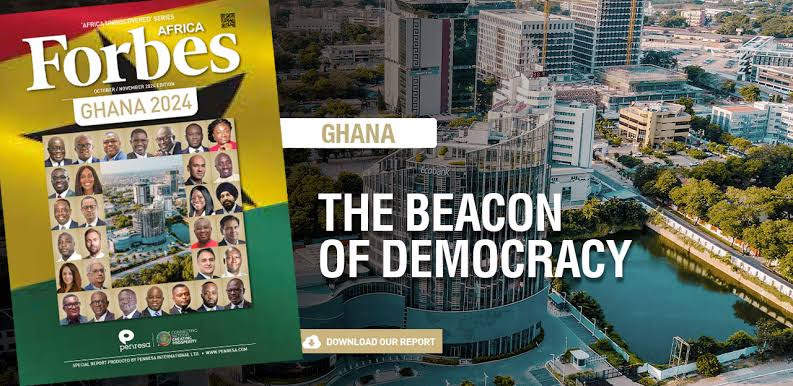
The December 7 presidential and parliamentary elections in Ghana was unique in several ways. Regarded as West Africa’s democracy lodestar, the elections emerged as arguably the most predictable since the country transitioned to democratic rule in January 1993. Given the preponderance of economic, social, political, and development challenges, many people in various platforms, and handles had postulated victory for the opposition. Like most countries in Africa, Ghana, the 2nd largest cocoa producer in the world, was battling with pervading inflation; accentuating poverty; spiraling depreciation of the national currency; and escalating indebtedness. Also the nation got stuck with non-ingenious foreign borrowings; multifaceted corruption; disabling unemployment; decapitated infrastructure; illegal, mindless gold mining (famously called “galamsey”); leadership ineptness; and citizens unbelievability in government.

Little wonder at the end of the December 7 elections, a new dawn was opened in Ghana’s democratic odyssey. The National Democratic Congress, (NDC) defeated the New Patriotic Party, (NPP) in both the presidential and parliamentary elections. The NDC’s John Dramani Mahama recorded 6,328,397 (56.55 percent) as against NPP’s Mahamudu Bawumia who polled 4,657,304 (41.61 percent) to emerge as the president-elect. At the parliamentary elections, the NDC won 186, while NPP got 81 out of the 267 results declared so far in the 276-legislative body. The parliamentary result is historic and trail-blazing in many ways. The NDC did not only achieved the threshold of 139 seats to have majority but won 47 seats more, and thus became the first political party to achieve this enviable record. The NDC’s electoral triumph was comprehensive, and overwhelming such that Bawumia of NPP conceded victory while few of the results were just being declared by the country’s Electoral Commission headed by Ms. Jean Adukwei Mensa, who was appointed in July 2018, and allegedly accused of being pro-NPP.

The Ghana’s elections presents remarkable, and inspiring templates. The NDC’s candidate, former Ghana’s vice president (2009 – 2012) became president after the death (while in office) of John Atta Mills in July 2012. Mahama, like Goodluck Jonathan subsequently got elected for a 4-year term in December 2012, when he defeated the out-going president, Nana Akufo-Addo, who was the NPP candidate then. Mahama, by the way lost his re-election aspiration in 2016 to Nana Akufo-Addo. By that defeat, like Jonathan, Mahama became the first and only sitting Ghanian president to lose elections while in office. Mahama, whose late father; Emmanuel Adama Mahama was a former member of parliament, Minister and Adviser in Nkrumah and Liman’s respective government lost again to Nana Akufo-Addo in 2020, still as the NDC candidate.

NDC’s victory meant it avoided the negative honour of being the first party to be in opposition after three consecutive elections. Conversely, it denied the NPP of becoming Ghana’s first party to break the circle of eight years dominance. Thus, since 1992 when Ghana embraced democracy, no political party has won beyond 2 consecutive terms at the country’s presidential election. Bawumia, the 61 year old out-going vice president, and NPP candidate; Head of Nana Akufo-Addo’s Economic Management Team, and former Deputy Governor, Ghana’s Central Bank, arguably becomes the country’s first-sitting number 2 man to lose presidential elections. Mahama’s running mate; Prof. Jane Naana Opoku-Agyemang, who was his former Education Minister made history as the first female vice president of the country. That she was picked as running mate; second time in two consecutive elections, is a measure of Mahama’s confidence in the capacities of the 72 years old retired academic, and his believe, respect for gender inclusivity in governance.

Advertisement

As expected, the thrills and frills of Ghana elections has generated reactions. Across the world, the effects and lessons of the polls keeps reverberating in public discourses within and outside Africa. Given the unique, and salient features and outcomes of the elections, many people in Nigeria have learnt their voices to it. The deluge of comments and opinions are far-reaching and encompassing. From policy makers to politicians, institutions, and individuals, many Nigerians are having “their say” on the matter. While few of the comments are logical, some lacked merit, and many are outrightly deceptive, cynical, and comical. They can be described as ego-tripping, and tongue-foolery.

One is happy that the opposition parties are sounding upbeat, and brimming with confidence that the Ghana-experience can happen in Nigeria in 2027. Few opposition leaders even pontificate that with Ghana’s NDC having similar logo-colour with the PDP, it is hopeful that the umbrella party have realistic chances of re-capturing political power in 2027. It is good to dream but such should be backed with very realistic, and focussed doggedness. Perhaps it is trite to reiterate that election winning goes beyond similarities of logo, and colour. The PDP; being the major opposition party should show the way to others in it’s group.

True Ghana’s presidential and parliamentary elections holds once every 4 years; like Nigeria but can one rightly equate party politics in both countries? On the writer’s first visit to Ghana in 2011, after interaction with different categories of people, it was evidently clear that our neighbors, though smaller in population and geographical size are ahead of our dear country in many ways. The reality is that in Ghana, politics is built on ideologies, and ingrained on members from generation to generation. Dramani’s long history with the NDC, and Nana Akufo-Addo’s stay with the NPP are obvious proofs of the party culture, focus, and discipline in Ghana. Party leaders and members are resolute to swim or sink with their respective parties not minding results of elections. Dramani, since he lost the presidential election to Nana Akufo-Addo in 2016, stayed with the NDC by frontally playing his role as the leader, and face of opposition. Happily, his consistency, reliability, doggedness, and commitment was rewarded by Ghanaians at the December 7 elections.

Do we have a semblance of similitude in Nigeria. Here, it is bad that almost all the political parties do not have known ideologies. Even where they have, are they followed with iron-cast resoluteness and believe? Political parties are mainly, and merely used as special purpose vehicles to gain power, and have access to the perks of office. The common, and easily noticeable feature among majority of our politicians is “jumpology.” They regal in shameless, rudderless, and unprincipled gale of defections from party to party after every election circle. Painfully, this disturbing trend has become normalized since 1999, such that very few politicians have not moved from one divide to the other. Sadly, unlike Ghana, politics here is driven by greed, selfish desires, and personal ambitions; which are most cases inordinate and self-seeking.

Advertisement

True democracy can only thrive where there is credible opposition that can effectively and efficiently check and balance the ruling party. Rather than making juicy comments, and salacious opinions about the reenactment of the Ghana political heroics in Nigeria, politicians should do the needful. In doing this, there must be sincere house-cleaning whence some politicians would have to go upstairs and assume advisory roles in their respective parties. Some would have to “sacrifice” their ambitions to various positions. Many should consciously imbibe the true meaning of politics as service to the people. True party discipline should be enthroned. Without operationalizing these, and more necessary fundamentals, expectations of the Ghana-experience will remain a vaunting ambition, and mirage.

* BOLAJI AFOLABI, a development communications specialist was with the Office of Public Affairs in The Presidency.
News

Reps Probe Alleged Fake Presidential Council as Head of Civil Service Confirms Budget Participation, Approval for 314 Posts

Published

on

ADVERTISEMENT
Zoom Ad
ADVERTISEMENT
Zoom Ad

By Gloria Ikibah

The House of Representatives on Monday intensified its investigation into the controversial Presidential Economic Advisory Council/Presidential Foreign Intervention Promotion Council (PEAC/PFIPC), as the Head of the Civil Service of the Federation (HCSF), Didi Walson-Jack, confirmed that representatives of the body participated in the 2025 Annual Manpower Budget Defence and obtained approval for 314 positions.

The disclosure came during the inauguration of the House Ad-hoc Committee investigating the circumstances surrounding the existence and operations of the council, chaired by Rep. Yusuf Gagdi.

The probe follows growing public concern over reports that the council, whose legal status has been questioned, appeared in official government processes, including budget preparations and personnel planning, despite uncertainty surrounding its establishment and operational mandate.

Advertisement

Appearing before lawmakers in Abuja, Walson-Jack explained that while the Office of the Head of the Civil Service of the Federation (OHCSF) has no authority to establish government agencies, it received a request from the council seeking approval of its organisational structure.

She said the request was first submitted on 6 August 2025 but was initially rejected because the required supporting documents were not attached.

According to her, after the necessary documentation was later presented, approval was granted for a workforce comprising 14 existing personnel already engaged by the council and an additional 300 positions.

She said: “The Council in question submitted a request to the OHCSF for approval of its organisational structure on the 6th of August 2025 without providing the requisite documents.

Advertisement

“The request was earlier declined due to non-submission of relevant documents. However, after the required documents were submitted, approval for a total workforce of 314 positions, comprising 14 existing officers engaged by the Council and 300 additional positions, was issued.”

The Head of Service also disclosed that official records showed the approved establishment was collected by a representative of the council.

“The records of the Organisation Design and Development Department further confirmed that the authorised establishment was collected on behalf of the Council by a certain gentleman who represented the PEAC/PFIPC,” she stated.
Walson-Jack further revealed that officials representing the council took part in the 2025 Annual Manpower Budget Defence Exercise.

According to her, “Representatives of the Council participated in the 2025 Annual Manpower Budget Defence Exercise. They were led by a lady who identified herself as the Deputy Director of Administration and appeared before officers of the Organisation Design and Development Department during the organisation’s bilateral manpower defence.”

Advertisement

She explained that following the engagement, the request was processed in line with existing administrative procedures and subsequently approved.

However, she insisted that the Office of the Head of Service never posted any civil servants to the council.

“Following the bilateral engagements with the Council’s representatives during the 2025 Annual Manpower Project Defence Exercise, the request was reviewed by officers of the Organisation Design and Development Department and, in accordance with the Office’s established administrative procedure, the fourth batch, comprising 88 Ministries, Extra-Ministerial Departments and Agencies, including the Agency in question, was approved on the 18th of July 2025 by the Permanent Secretary, Common Services Office, who was overseeing the Office of the Head of the Civil Service of the Federation at that time.

“There was no deployment of officers by the OHCSF to the Council because recruitment and placement of staff in agencies are not within the responsibility of the Office,” she said.

Advertisement

She also clarified that staff salaries and allowances are handled by other statutory agencies.

“Remuneration and emoluments of personnel are under the purview of the National Salaries, Incomes and Wages Commission, while the Revenue Mobilisation Allocation and Fiscal Commission is responsible for the remuneration of political appointees and chief executive officers,” she explained.

Walson-Jack further disclosed that the office occupied by the council at the Federal Secretariat belonged to the Office of the Secretary to the Government of the Federation (OSGF).

“The office occupied by the Council in Phase Three of the Federal Secretariat forms part of the office spaces allocated to the Office of the Secretary to the Government of the Federation through a letter dated 16 November 2023,” she said.

Advertisement

She maintained that every matter relating to the council’s establishment, administration and supervision falls under the jurisdiction of the OSGF and other relevant government institutions.

The Head of Service also confirmed that two officials linked to the approval process had been released to the Nigeria Police for questioning.

According to her, Mrs Patricia Akhigbe, under whose supervision the approval was processed, alongside Mr Jacob Oluwafemi David, are currently assisting investigators.

She disclosed that the approval process was carried out manually because the electronic document management system was not functioning at the time.

Advertisement

“The approval was done using physical files because the management system was down during the period. I personally discovered that all the documents relating to the Council were fake, although this was after the matter became public,” she added.

Also testifying before the committee, Governor of the Central Bank of Nigeria (CBN), Yemi Cardoso, represented by the Director of Banking Services, Hamisu Abdullahi, disclosed that the apex bank opened two accounts for the council.

He said one was a domiciliary dollar account while the other was a pound sterling account.

According to him, both accounts have remained inactive since they were created.

Advertisement

“The mandate to open the accounts was received on 30 July 2025 from the Office of the Accountant-General of the Federation through a letter dated 29 July 2025. The necessary verification was conducted, but no further instruction followed. There has been no inflow or outflow on both accounts from inception till date,” he said.

Chairman of the Independent Corrupt Practices and Other Related Offences Commission (ICPC), Dr Musa Aliyu, informed lawmakers that the anti-graft agency had already launched its own investigation.

He appealed for more time to conclude preliminary findings.

“We have commenced investigation and collecting documents as well as interacting with officials that we feel are necessary in order to help us unravel this issue.

Advertisement

“I urge the Ad-hoc Committee to give the Commission a little time, maybe between today, tomorrow and the next day, so that we can return and inform the House how far we have gone and what we have discovered,” he said.

Declaring the investigative hearing open, Speaker of the House of Representatives, Rt. Hon. Tajudeen Abbas, represented by the House Majority Leader, Rep. Julius Ihonvbere, said the investigation was aimed solely at establishing the facts.

“The discussions surrounding the Presidential Foreign Investment Promotion Council have dominated media reports, public commentary and policy debates regarding its legal status, institutional mandate, operational framework, relationship with existing agencies and, importantly, its appearance within the Federal Budget Framework despite widespread uncertainty regarding its establishment.

“These questions deserve clear, factual and authoritative answers. The House of Representatives has therefore not constituted this Committee to validate speculation or amplify controversy. Neither is this a political exercise. Our objective is simply to establish the facts,” he said.

Advertisement

He stressed that the investigation was about safeguarding public institutions rather than targeting individuals.

“This investigation is not about any individual. It is about the integrity of public administration. Conduct your proceedings with fairness and, as much as possible, protect the rights of every witness. Give every interested party an opportunity to be heard. Follow the evidence wherever it leads. Let your conclusions be guided neither by public pressure nor political convenience, but by facts, the Constitution and the law.

“The credibility of parliamentary oversight rests not on the conclusions it reaches, but on the integrity of the process by which those conclusions are reached. As the People’s House, we are committed to ensuring that every institution entrusted with public authority is subject to public accountability,” he said.

At the close of proceedings, the committee resolved to invite the Secretary to the Government of the Federation, Ministers of Finance, Budget and Economic Planning, Attorney-General of the Federation, Accountant-General of the Federation, Director-General of the Budget Office, Inspector-General of Police, as well as heads of several key agencies, including the Federal Character Commission, Revenue Mobilisation Allocation and Fiscal Commission, and Fiscal Responsibility Commission.

Advertisement

The committee also directed the Inspector-General of Police to ensure the appearance of the two officials from the Office of the Head of the Civil Service to provide further explanations on their roles in the matter when the investigation resumes on Tuesday.

Continue Reading

News

FHC grants Miyetti Allah President N2.6bn bail over $2.63m money laundering

Published

on

ADVERTISEMENT
Zoom Ad
ADVERTISEMENT
Zoom Ad

Justice Inyang Ekwo of the Federal High Court in Abuja has granted the National President of Miyetti Allah Kautal Hore, Bello Bodejo, bail in the sum of ₦2 billion over alleged money laundering charges involving $2.63 million.

In a ruling delivered on Tuesday, Justice Ekwo held that Bodejo was entitled to bail because the offences for which he was charged are bailable under Nigerian law.

The court ordered that the defendant must produce one surety in the like sum, adding that the surety must be a resident of Abuja, possess a three-year tax clearance certificate and own landed property worth ₦2 billion within the Federal Capital Territory.

Justice Ekwo further directed that the property documents be verified by the court registrar before the bail conditions could be perfected.

Advertisement

The court also ordered Bodejo to surrender his international passport to the registrar and barred him from travelling outside Nigeria without the permission of the court.

Following the ruling, the judge adjourned the case until October 5, 6 and 7 for the commencement of trial.

Bodejo was arraigned by the Economic and Financial Crimes Commission (EFCC) on multiple counts of alleged money laundering after the anti-graft agency accused him of receiving large cash payments outside the banking system in violation of Nigeria’s anti-money laundering laws.

According to the EFCC, the Miyetti Allah leader allegedly accepted cash payments totalling about $2.63 million from a former Accountant-General of Bauchi State, Sa’idu Abubakar, in separate transactions conducted between 2022 and 2024 without routing the funds through financial institutions as required by law.

Advertisement
Continue Reading

News

Court sentences pastor to death for killing daughter over witchcraft claim

Published

on

ADVERTISEMENT
Zoom Ad
ADVERTISEMENT
Zoom Ad

A Cross River High Court sitting in Calabar has sentenced a 51-year-old apostle, Ubong Bassey Etim, to death by hanging for the murder of his 16-year-old daughter, Deborah Bassey, who had Down syndrome and was falsely accused of being a witch.

Justice Blessing Egwu of High Court No. 11 delivered the judgment on Friday finding Etim guilty of murder and ordering that he be executed by hanging.

The court heard that the incident occurred on February 15, 2025, when Deborah was killed after being branded a witch, a case that sparked outrage among child rights advocates and organisations campaigning against witchcraft branding.

Continue Reading

Trending

Copyright © 2024 Naija Blitz News