Connect with us

Economy

Tinubu’s 15 percent inflation targets for Nigeria in 2025 unrealistic – Rewane

Published

on

ADVERTISEMENT
Zoom Ad
ADVERTISEMENT
Zoom Ad

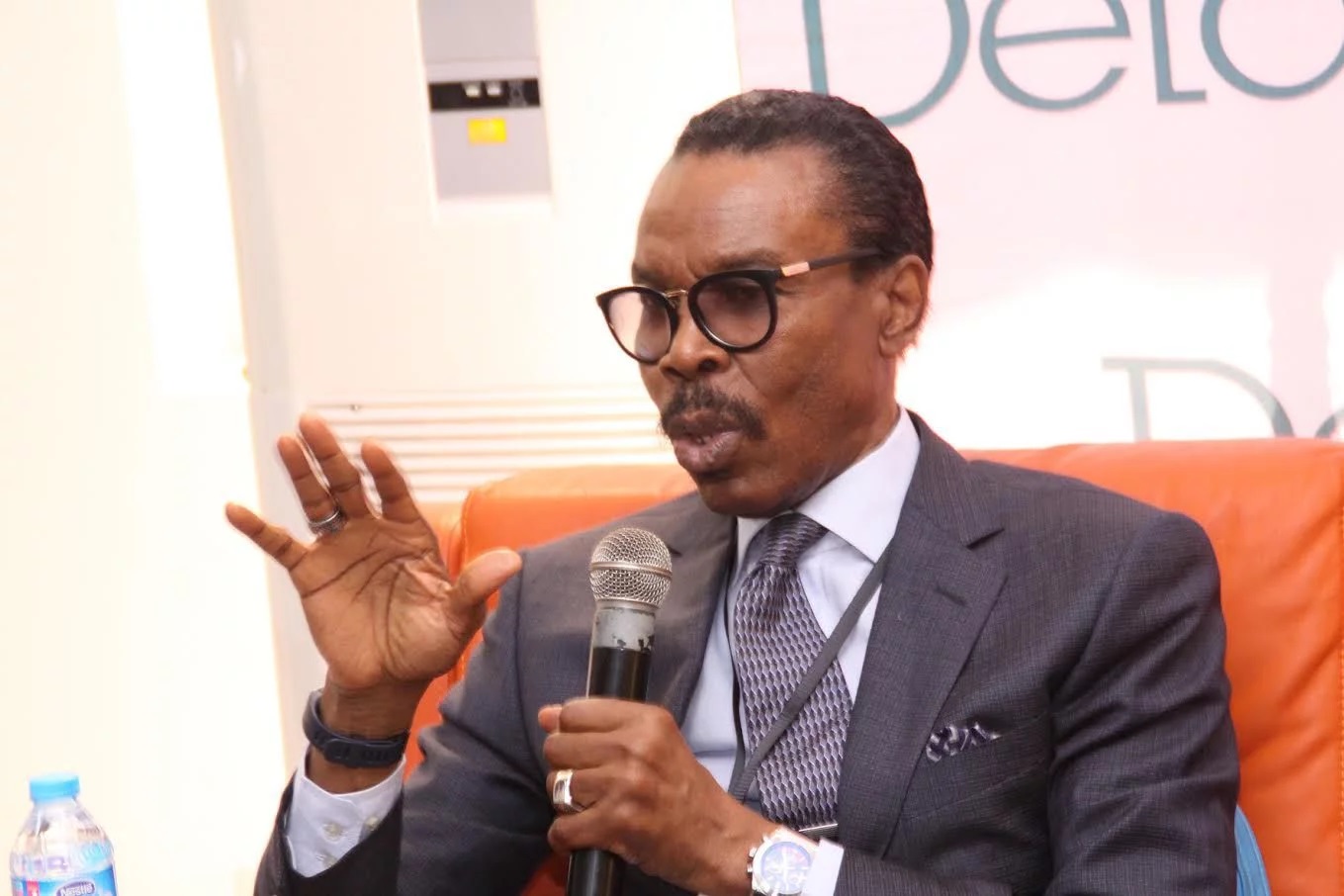
The Chief Executive of Financial Derivatives and popular economist, Bismark Rewane said President Bola Ahmed Tinubu’s 15 percent inflation target in 2025 is unrealistic and a mere aspiration.


Rewane disclosed on Channels Television’s program on Thursday.

DAILY reports that during Tinubu’s N49.7 trillion budget presentation before the National Assembly on December 18, 2024, he expressed optimism that Nigeria’s inflation rate would decline from 34.60 percent to 15 percent in 2025.

However, Rewane said the President’s target isn’t realistic.

Advertisement

According to him, Nigeria’s inflation can decline to 25 or 27 percent, but the 15 percent is unrealistic.

“Well, the target is an aspiration; the reality that we think is inflation could reduce from approximately 35 percent to somewhere like 27 percent or 25 percent, but a 15% rate on inflation is very bullish and aspirational, but we are free to have our aspirations.

“We deal in the world of reality, and in the world of reality, we see more of 27% to 25%. I would rather bet on that than bet on much more optimistic scenarios,” he said.

When Tinubu was sworn in as Nigeria’s president in May 2023, Nigeria’s inflation rate was 22.41 percent, according to official numbers by the National Bureau of Statistics, NBS.

Advertisement

The inflation rate rose astronomically to 34.6 percent in November 2024, more than 12 percent higher, a development that economic experts have attributed to Tinubu’s twin policies of petrol subsidy removal and unification of the foreign exchange rates.
Economy

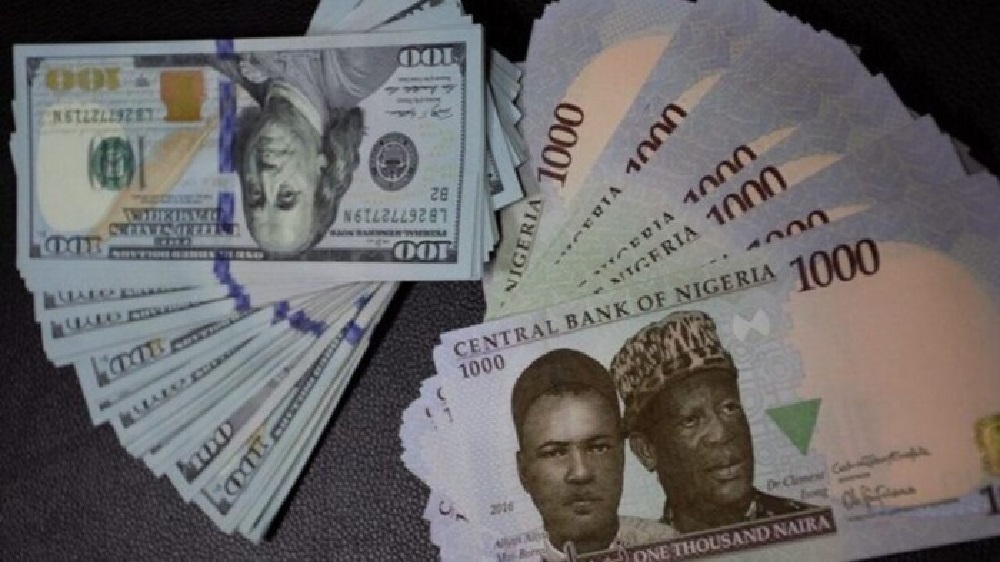
See Black Market Dollar To Naira Exchange Rate Today 5th August 2026

Published

on

ADVERTISEMENT
Zoom Ad
ADVERTISEMENT
Zoom Ad

The Black Market Dollar-to-Naira Exchange Rate for 5th August 2026 Can Be Accessed Below.

NOTE: The exchange rate changes hourly. It depends on the volume of dollars available and the Demand. This means…you can buy or sell 1 dollar at a certain rate, and the price can change (high or low) within hours.

The official naira black market exchange rate in Nigeria today, including the Black Market rates, Bureau De Change (BDC), and CBN rates.

The exchange rate fluctuates hourly based on the supply and demand of dollars in the market.
What’s the dollar to naira black market today, 5th August 2026?
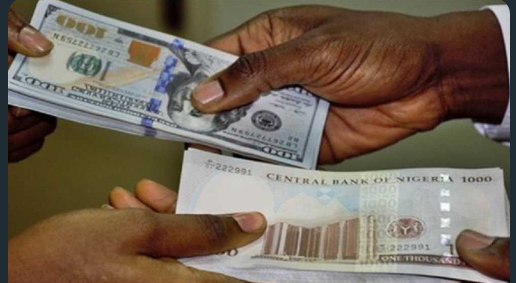
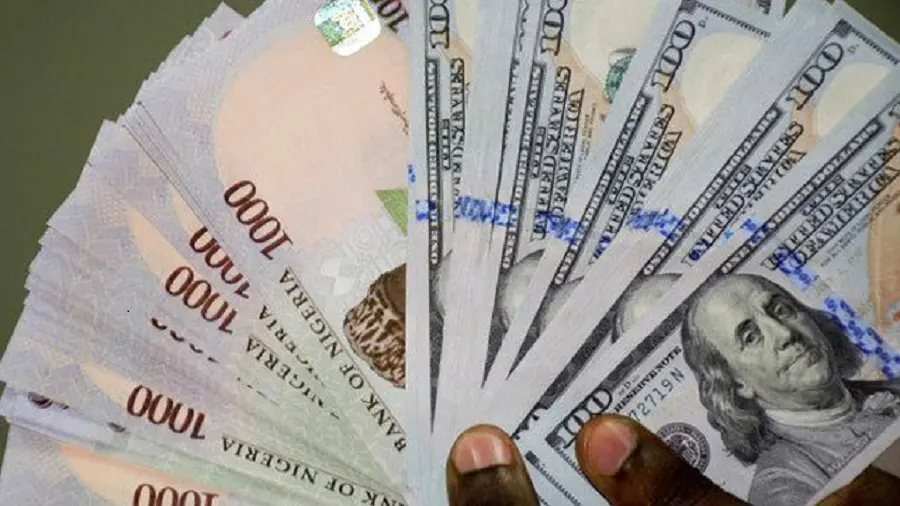
The exchange rate for a dollar to naira at Lagos Parallel Market (Black Market) players sell a dollar for ₦1425 and buy at ₦1410 on Wednesday, 5th August, 2026, according to sources at Bureau De Change (BDC).
Please note that the Central Bank of Nigeria (CBN) does not recognize the parallel market (black market), as it has directed individuals who want to engage in Forex to approach their respective banks.

Advertisement

Dollar to Naira Black Market Rate Today
Dollar to Naira (USD to NGN) Black Market Exchange Rate Today
Selling Rate ₦1425
Buying Rate ₦1410
Dollar to Naira CBN Rate Today
Dollar to Naira (USD to NGN) CBN Rate Today
Highest Rate ₦1364
Lowest Rate ₦1361

Continue Reading

Economy

FG to Roll Out 90,000km Fibre Optic Network within Weeks – Minister

Published

on

By

ADVERTISEMENT
Zoom Ad
ADVERTISEMENT
Zoom Ad

Minister of Communications, Innovation and Digital Economy, Dr. Bosun Tijani, has disclosed that the federal government will, in a matter of weeks, roll out a 90,000-kilometre fibre optic network nationwide.

He described it as one of the country’s most ambitious digital infrastructure projects targeted at transforming broadband connectivity across the country.

Tijani, who spoke with newsmen yesterday after briefing President Bola Tinubu at the State House, Abuja, on the progress of three flagship digital projects being implemented by his ministry, said government had completed the resource mobilisation and contractual processes required for the fibre project and was ready to begin deployment across the country.

He said: “We’re now at the point where, in a few weeks’ time, we should start to lay those fibre, so people will start seeing us around the country deploying the fibre. This is going to transform Nigeria for good.”

Advertisement

According to him, the project would extend fibre optic infrastructure to every state, geopolitical zone, local government area and ward, significantly improving the quality and reach of internet connectivity.

“This is a project where every state, every geopolitical zone, every local government and every ward in this country will be covered with fibre optic cables, which will transform the quality of connectivity,” he added.

Tijani also appreciated Tinubu for policy reforms that have strengthened the communications sector, including the designation of digital infrastructure as Critical National Infrastructure, tariff adjustments and tax harmonisation.

“I think our sector has been extremely fortunate. With Mr. President, as you can imagine, he’s given us quite a number of things that the sector has been demanding for a long time. Whether it’s the critical national infrastructure designation for all digital infrastructure, or the slight adjustment in tariff, which you’ve seen, the tax harmonisation, which the sector has been asking for.

Advertisement

“I think it’s probably the sector that is most appreciative of this government because when we came in, the sector was contributing between 16 to 18 per cent to our GDP, but today that sector is tracking close to 21 per cent, so it’s a significant growth”, he said.

On rural connectivity, the minister stressed that the government would begin deploying about 3,700 telecommunications towers from October to provide network coverage for more than 20 million Nigerians currently living in communities without access to telecommunications services.

He stressed: “Mr. President also sanctioned that project. Today we’re in a place where, before the end of the year, we’ll also start to deploy close to 3,700 towers. It’s taken a lot of time putting this project together, raising the capital for it, but we are at a point where we should now start deploying around October.”

Tijani also stated that Nigeria would launch an alphanumeric postcode system on October 1, placing the country among a small number of nations using the advanced addressing technology.

Advertisement

“Nigeria will be amongst maybe 10 or 15 countries in the world with an alphanumeric postcode. It’s the latest design in the postcode system where we can now identify every property in this country. We’re hoping to launch that one on the 1st of October”, he said.

The system, the minister said, will assign a unique address to every building, making deliveries faster, boosting e-commerce, strengthening security and improving public service delivery.

“Inability to locate places comes at a cost. You can start to imagine what this will do to e-commerce. This would transform e-commerce completely because it means that things can now be delivered in record time”, Tijani said.

According to him, integrating the postcode system with existing government identity databases would enhance security and improve the efficiency of government services.

Advertisement

“Our alphanumeric postcode is unique because it allows us to have unique addresses for every property. In a lot of countries, like the UK, postcodes are not unique to one building; they’re typically for a cluster of buildings. But what we have here is one where you can identify every building. That will change the game significantly for Nigeria in terms of the delivery of public services,” he added.

Continue Reading

Economy

NEC approves $4.5bn refinancing of $3.3bn oil-backed loan

Published

on

By

ADVERTISEMENT
Zoom Ad
ADVERTISEMENT
Zoom Ad

The National Economic Council on Monday approved the refinancing of the $3.3bn Project Gazelle Pre-Export Finance Facility through a new $4.5bn facility named Project Gazelle 2.

The approval came at the 159th meeting of NEC, held virtually and chaired by Vice President Kashim Shettima, following a presentation by the Minister of Finance and Coordinating Minister of the Economy, Dr Taiwo Oyedele, on the significance of the refinancing arrangement.

The approval allows the Nigerian National Petroleum Company Limited to refinance the outstanding balance of approximately $1.5bn under the original 2023 facility while unlocking an additional $3bn in liquidity to strengthen Nigeria’s external reserves and support ongoing fiscal and infrastructure priorities.

Senior Special Assistant to the President on Media and Communications in the Office of the Vice President, Stanley Nkwocha, revealed details of the approval in a statement he signed Monday titled ‘NEC Approves Refinancing of $3.3bn Project Gazelle to Optimise Cost, Unlock Additional Liquidity.’

Advertisement

According to Nkwocha, Council observed the significance of unlocking additional liquidity for the federation and pledged its support for the actualisation of the initiative.

Briefing journalists after the meeting, Oyedele explained that the new arrangement had been structured on considerably more favourable terms than the original facility, including a substantial reduction in the volume of crude oil pledged to secure the loan.

He explained, “The refinancing has been structured on more favourable terms than the original facility, including a reduction in the volume of pledged crude oil from 90,000 barrels of oil per day to approximately 78,750 barrels of oil per day, a 12.5 per cent reduction.”

Oyedele said the reduction in pledged volume translated directly into more crude available for the federation to sell and retain revenue from outside the terms of the facility.

Advertisement

“Under the new arrangement, an additional 11,250 barrels of oil per day for the federation will be released, while there will be a reduction in the pledged crude volumes by NNPC Limited,” he said.

The Minister described the refinancing as a dual achievement, improved liquidity access on better terms while simultaneously strengthening the country’s overall financing structure.

He stated, “While accessing additional liquidity on improved terms, the arrangement is freeing up resources for strategic national priorities while strengthening the country’s financing structures.”

In his opening remarks to Council, Vice President Shettima called for the design of a responsive, scalable and data-driven social protection policy to confront multidimensional poverty in Nigeria, framing the challenge in vivid and deeply human terms.

Advertisement

He argued, “Government policies are often heard before they are seen they speak through the price of food, the condition of hospitals, the records in schools, the strain on families, the confidence of those who invest their labour in the nation’s future, and, very importantly, the ambitions of state governments.”

The VP urged Council members to ensure that every decision reached at NEC left ordinary Nigerians with confidence that their government was attentive and responsive to their daily struggles.

“Every decision we make must assure the citizens that their government is paying attention to the pulse of the nation and is resolved to respond with competence, compassion and purpose,” he said.

Project Gazelle was originally structured in 2023 as a pre-export finance facility secured against future crude oil sales, designed to provide Nigeria with dollar liquidity to defend the naira and support foreign exchange market stability amid the sharp currency volatility that followed the administration’s unification of exchange rate windows.

Advertisement

The refinancing under Project Gazelle 2 extends and restructures that facility on improved terms, reflecting both the larger size of the new facility and NNPC Limited’s improved negotiating position following three years of oil sector reforms aimed at attracting fresh investment from international oil companies and boosting domestic production capacity.

Continue Reading

Trending

Copyright © 2024 Naija Blitz News