Economy
Why 1,000 workers left CBN – Cardoso




The Central Bank of Nigeria has again clarified that the 1,000 staff members who opted out of service in December 2024 were not forced to quit their jobs.
The CBN Governor, Olayemi Cardoso, stated this on Friday in Abuja at an investigative hearing of the House of Representatives’ ad-hoc committee probing the circumstances leading to the exit of the staff members and how the sum of N50bn severance package for the affected persons was arrived at.
Cardoso added that the affected persons opted to disengage through the voluntary Early Exit Program with payment of full benefits.
Represented by Deputy Director, Corporate Service of the CBN, Bala Bello, Cardoso explained. “The Early Exit Program, Restructuring and Re-organization “are basically ways and means through which the performance of an organization is optimized by ensuring that round pegs are put in right holes. The manpower requirement of the bank is actually met.
“I’m very happy to mention that the early exit program of the CBN is 100 per cent voluntary. It’s not mandatory. Nobody has been asked to leave, and nobody has been forced to leave. It’s a completely voluntary programme that has been put in place.”
He also noted that the exercise was not restricted to government agencies alone, saying, “I believe several organisations across the world, and even within this country, both in terms of the private sector and the public sector, are undertaking similar exercises.”
Continuing, Cardoso said, “In the past, we had instances in which cases of stagnation and lack of career progression appear. In an organisation, you’ve got a pyramid where from each level to the next level, the gap keeps narrowing. If not, you are going to have a quasi-organisation, an inverted pyramid.
“It gets to the level where you have, for example, 30 departments in the Central Bank. You cannot have 60 directors manning 30 departments. It’s not going to work.
“Once those vacancies are filled, it gets to a level where some people, even though they are very qualified, able, and willing, but the vacancies are not there. And then they got to a level where they are stagnated for a period of time.”
Speaking earlier, the chairman of the committee, Bello Kumo, noted that the committee’s responsibility was to submit the report to the House.








The Black Market exchange rate today 16th September 2026 can be assessed below:
NOTE: The exchange rate changes hourly. It depends on the volume of dollars available and the Demand. This means…you can buy or sell 1 dollar at a certain rate, and the price can change (high or low) within hours.
The official naira black market exchange rate in Nigeria today, including the Black Market rates, Bureau De Change (BDC), and CBN rates.
The exchange rate fluctuates hourly based on the supply and demand of dollars in the market.
What’s the dollar to naira black market today, 16th September 2026?
The exchange rate for a dollar to naira at Lagos Parallel Market (Black Market) players sell a dollar for ₦1410 and buy at ₦1383 on Wednesday, 16th September, 2026, according to sources at Bureau De Change (BDC).
Please note that the Central Bank of Nigeria (CBN) does not recognize the parallel market (black market), as it has directed individuals who want to engage in Forex to approach their respective banks.
Dollar to Naira Black Market Rate Today
Dollar to Naira (USD to NGN) Black Market Exchange Rate Today
Selling Rate ₦1385
Buying Rate ₦1380
Dollar to Naira CBN Rate Today
Dollar to Naira (USD to NGN) CBN Rate Today
Highest Rate ₦1329
Lowest Rate ₦1324

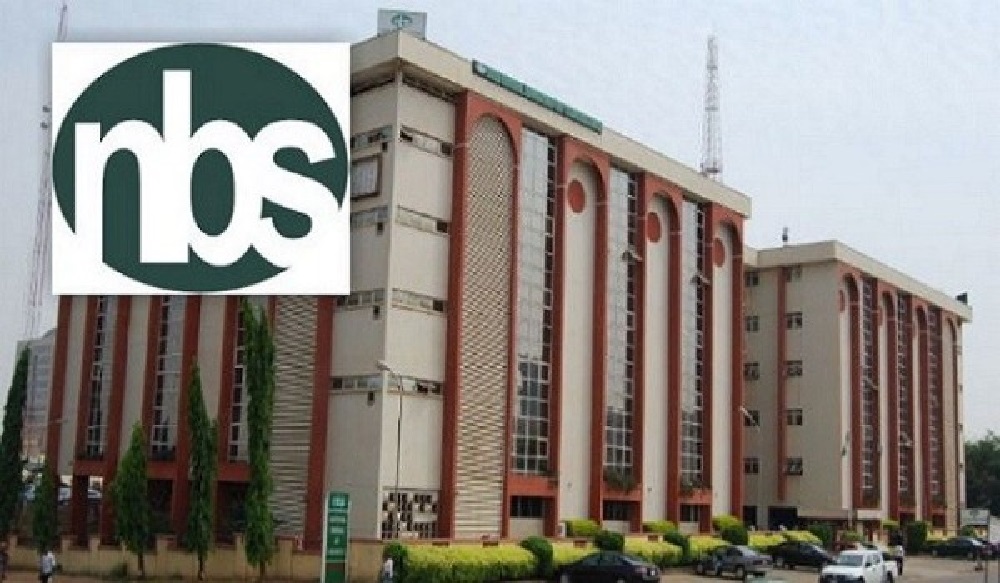
Nigeria’s headline inflation rate declined slightly to 15.39 per cent in August 2026, down from 15.43 per cent recorded in July, according to the National Bureau of Statistics, NBS.
The NBS disclosed this in its Consumer Price Index, CPI, report for August 2026 released on Tuesday.
The bureau said the CPI, which tracks changes in the prices of goods and services, rose to 146.3 points in August from 145.3 points in July, representing an increase of 1.0 point.
According to the report, the headline inflation rate dropped by 0.04 percentage points compared to the 15.43 per cent recorded in July. The figure was also considerably lower than the 23.14 per cent posted in August 2025.
On a month-on-month basis, headline inflation slowed to 0.71 per cent in August from 1.57 per cent in July.
“This means that in August 2026, the rate of increase in the average price level was lower than the rate of increase in the average price level in July 2026,” the bureau stated.
The NBS further reported that the average CPI for the 12 months ending August 2026 rose by 16.30 per cent compared with the average recorded in the preceding 12-month period.
It noted that this represented a decline of 12.02 percentage from the 28.32 per cent recorded in August 2025.
The report showed that urban inflation stood at 15.88 per cent year-on-year in August, while month-on-month urban inflation fell sharply to 0.28 per cent from 1.90 per cent in July.
The 12-month average urban inflation rate was put at 16.28 per cent, compared with 29.73 per cent recorded in the corresponding period of 2025.
For rural areas, the bureau reported a year-on-year inflation rate of 14.23 per cent in August.
However, rural month-on-month inflation rose to 1.79 per cent from 0.78 per cent recorded in July.
The 12-month average rural inflation rate stood at 16.02 per cent in August, lower than the 26.47 per cent recorded a year earlier.
The NBS also reported a moderation in food inflation, which declined to 19.57 per cent year-on-year in August, compared with 25.30 per cent in August 2025.
Month-on-month food inflation also dropped significantly to 1.02 per cent in August from 5.56 per cent recorded in July.
According to the bureau, the easing in food inflation reflected changes in the prices of commodities such as palm oil, carrots, pepper, onions, cassava flour, beef, yam flour, water yam, melon, fresh ginger, fresh fish, Irish potatoes, wheat grain, frozen chicken and turkey meat.
The report indicated that while food prices continued to rise in August, the pace of increase was slower than what was recorded in July.

The launch of the Dangote Petroleum Refinery and Petrochemicals FZE Initial Public Offering on Monday triggered a surge in demand that overwhelmed two popular Nigerian investment platforms, Bamboo and Cowrywise.
Both platforms reported unusually high traffic as retail investors rushed to subscribe to the offer, with some users unable to log into their accounts.
Bamboo announced the access difficulties on X, attributing them to the unexpected volume of traffic generated by investors seeking to participate in the Dangote IPO.
“Hey everyone, we’re getting a much higher than expected traffic trying to get into the Dangote IPO and it’s making it difficult for some users to log into the Bamboo app. We’re working on a fix and it will be up and running shortly,” the platform said.
Cowrywise also acknowledged increased traffic on its platform.
“We’re currently seeing more traffic than usual on the Cowrywise app. Our team is already on it and working to get things back to normal. Thanks for your patience, everyone,” it said in a post on X.
The two platforms are among the approved fintech channels through which investors can subscribe to the Dangote Refinery public offer.
The rush came as the offer opened to investors on Monday, with the public offer seeking to raise about N2.15tn through the sale of 4.1 billion ordinary shares at N525 each.
Investors can subscribe for a minimum of 10 shares, valued at N5,250, a structure designed to encourage broad participation by retail investors.
The Dangote Refinery IPO is one of the largest public share offerings in Africa. The refinery, owned by the Dangote Group, plans to use the proceeds to support expansion and increase its refining capacity.
The offer has generated significant interest among retail investors, following efforts to promote the opportunity as a means of allowing Nigerians and other African investors to own shares in one of the continent’s biggest industrial projects.
The surge in demand highlights the scale of interest in the offer while exposing the pressure that high-demand investment events can place on digital platforms.
The Securities and Exchange Commission had earlier warned investors against unauthorised promotions relating to a purported Dangote Refinery IPO before the formal offer received regulatory approval.
In June, the commission said no application for the IPO had been filed or approved at the time and directed capital market operators to stop accepting deposits or expressions of interest.
Following regulatory approval, the Dangote Refinery public offer was cleared to proceed, with the company publishing a list of approved banks, fintechs, mobile operators and NGX Invest through which investors can subscribe.

Troops rescue 31 abductees, neutralize terrorist kingpin in Katsina, Kebbi

NASS Transmits 2026 Constitution Amendment Bill to 36 State Assemblies

REVEALED: 11 Nigerian-Born Lawyers Hit by U.S. Disciplinary Actions Over Professional Violations




-

 Metro20 hours ago
Nigerian Army Speaks of Possible Attacks on Churches, Schools
-
 News20 hours ago
Suspected Fulani Militias K!ll Christian Leader In Plateau
-

 News17 hours ago
PDP Warns APC Governors: ‘Ignore Wike at Your Own Peril’
-
 News16 hours ago
Obi: Wike Was Happier, Healthier When We Worked Together
-

 Opinion17 hours ago
Surging Energy demands and challenges of Ai
-
 Economy19 hours ago
Nigeria’s inflation falls to 15.39% as food inflation slows – NBS
Warning: Undefined variable $user_ID in /home/naijuinz/public_html/wp-content/themes/zox-news/comments.php on line 49
You must be logged in to post a comment Login