
Sports
Injured Naomi Osaka withdraws from Auckland Classic final

- /home/naijuinz/public_html/wp-content/plugins/mvp-social-buttons/mvp-social-buttons.php on line 27
https://naijablitznews.com/wp-content/uploads/2025/01/Screenshot_20250105-092237-750x532-1.jpg&description=Injured Naomi Osaka withdraws from Auckland Classic final', 'pinterestShare', 'width=750,height=350'); return false;" title="Pin This Post">
- Share
- Tweet /home/naijuinz/public_html/wp-content/plugins/mvp-social-buttons/mvp-social-buttons.php on line 72
https://naijablitznews.com/wp-content/uploads/2025/01/Screenshot_20250105-092237-750x532-1.jpg&description=Injured Naomi Osaka withdraws from Auckland Classic final', 'pinterestShare', 'width=750,height=350'); return false;" title="Pin This Post">


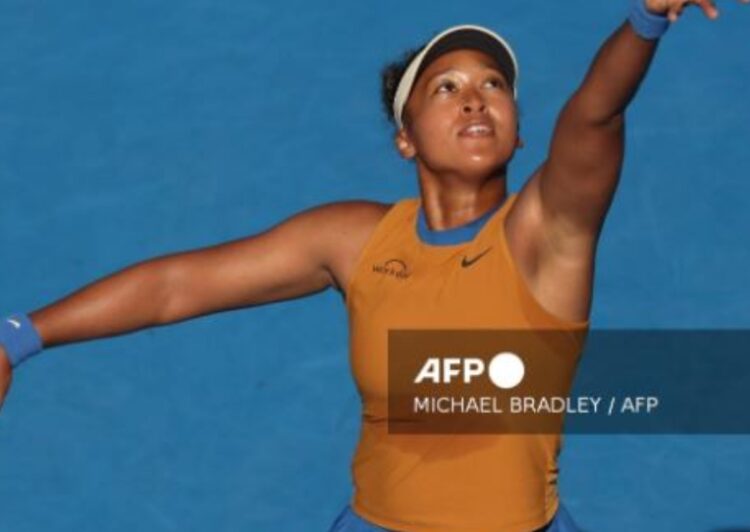
Naomi Osaka withdrew from the final of the Auckland Classic with an abdominal injury Sunday, a blow to the Japanese star just a week before the start of the Australian Open.
Playing in her first WTA final for three years, against Denmark’s Clara Tauson, the four-time Grand Slam champion called for the physio after taking the opening set 6-4 and pulled out shortly afterwards.
Osaka’s sudden withdrawal came as a shock after playing with no apparent problem in the 35-minute opening set, unleashing some powerful groundstrokes to break her opponent in the third and fifth games.
At the changeover, the 27-year-old stood and performed a series of stretches during a medical timeout.
After consulting with the trainer she shook the hand of Tauson, who picked up a third career title and her first since 2021.
Osaka didn’t divulge details of what forced her withdrawal in a short courtside interview.
However, in a statement, the WTA said she retired “due to an abdominal injury”.
“I just want to thank everyone for welcoming me to such a beautiful city. I had a lot of fun playing here and I’m sorry about how it ended.
“I hope you did enjoy the tennis that we did play and I’m just really grateful to be here,” Osaka said.
It was an anti-climactic finish to the week for Osaka, who was chasing her first title since winning the 2021 Australian Open.
Her most recent final appearance was at the Miami Open the following year, before taking a 15-month break and giving birth to her first child midway through 2023.
She returned to tennis 12 months ago and has climbed to 57th in the world rankings.
AFP












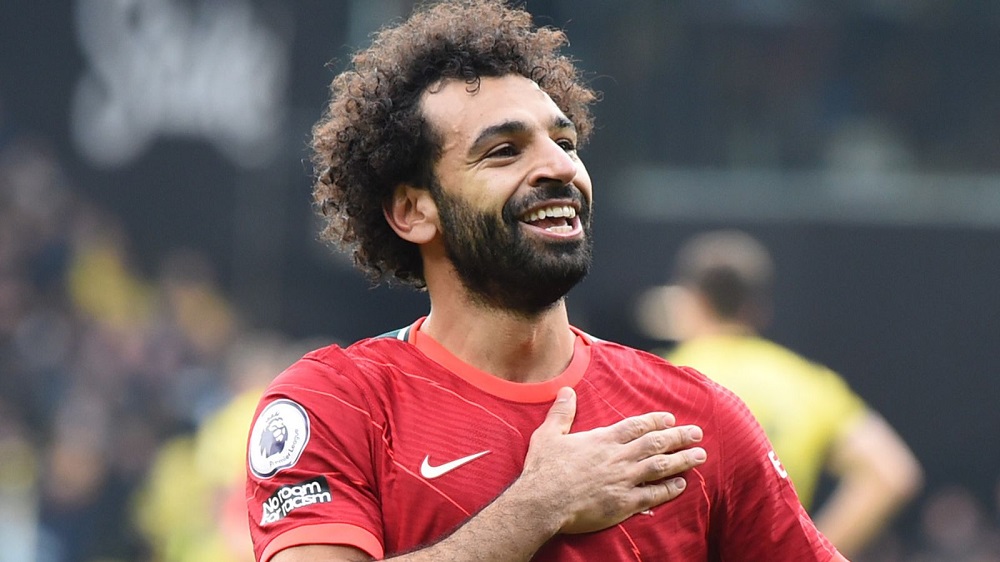
Mohamed Salah has described his country’s 3-1 victory over New Zealand at the FIFA World Cup 2026 as one of the most significant moments in Egyptian football history, after the Pharaohs secured their first-ever win at the global tournament.
Salah, who has carried the hopes of a football-mad nation for more than a decade, could barely contain his emotions after Egypt overturned a first-half deficit to defeat the Oceania side and keep alive their hopes of finishing top of Group G.
For a nation that has dominated African football with a record seven Africa Cup of Nations titles but struggled to make an impact on the World Cup stage, the victory represented a long-awaited breakthrough.
Speaking after the match, Salah reflected on the significance of the achievement and challenged his teammates to build on the result.
“I told the players before the game that they could write history today,” Salah said.
“This is our first World Cup win ever. If we can qualify as group winners in the next game, it will be remembered for years to come.”
The result marked a historic moment for Egyptian football, ending decades of frustration on the world’s biggest stage. Despite their pedigree in Africa, Egypt had previously failed to register a victory at the World Cup, with past appearances yielding disappointment rather than celebration.
Salah, who has been a fixture in the national team for 14 years, said the victory was particularly satisfying because of the sacrifices made by generations of Egyptian players.
“I always try to give my best to the national team and share my experience with the younger players,” he said. “We have reached the Africa Cup finals before and came close to winning trophies, but this is something special.”
The match itself was far from straightforward.
New Zealand stunned Egypt by taking the lead and looked capable of pulling off a major upset after a disciplined and energetic first-half display. The Kiwis, who had drawn their opening match, once again demonstrated resilience and organisation, forcing Egypt to dig deep.
However, the Pharaohs emerged transformed after the break, showing the determination and mental strength that Salah later praised.
“They scored first and were very sharp in the first half,” the Egyptian captain said.
“But in the second half, we came back into the game and showed strong mentality.”
Egypt’s quality eventually shone through as they struck three times to seal a memorable victory and move into a strong position heading into their final group fixture.
Despite the defeat, Salah reserved praise for the New Zealand side, describing them as a team capable of competing at the highest level.
“It is a very good team with good players,” he said. “Many of them play in Europe.
They are mentally strong and physically strong. They made it very difficult for us.”
While celebrations erupted among Egyptian supporters, Salah’s thoughts also turned to teammate Hossam, who appeared to suffer a concussion during the encounter.
“As captain, I try to check on everybody,” Salah revealed. “I was worried about him and wanted to make sure he was okay.”
The victory places Egypt on the brink of an even greater achievement. Having already secured a point against Belgium in their opening match, the Pharaohs now have an opportunity to finish top of Group G when they face Iran in their final group game.
For Salah, however, the occasion was about more than points or standings. It was about creating a moment that millions of Egyptians could cherish.
“For other countries, winning World Cup games may happen often,” he said. “For us, it doesn’t happen often. This is history for Egypt.”
Egypt now stands one match away from another piece of history. Should the Pharaohs defeat Iran and finish as Group G winners, the team would further cement its place among the country’s greatest football generations.

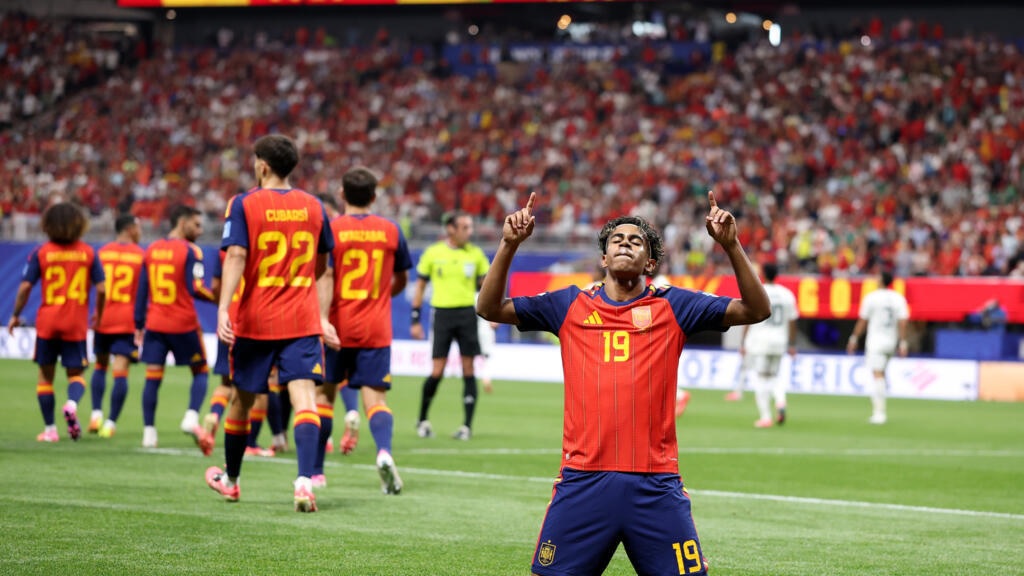
Spain got their 2026 FIFA World Cup campaign back on track in emphatic fashion with a 4-0 win over Saudi Arabia, inspired by teenage star Lamine Yamal, who became the nation’s second-youngest World Cup goalscorer.
The Barcelona teenager had been a second-half substitute in Spain’s opening Group H game against Cape Verde. Still, he was unable to inspire his side to victory as the 2010 winners laboured to a deeply frustrating goalless draw.
As expected, the 18-year-old was restored to manager Luis de la Fuente’s starting line-up against Saudi Arabia – and he wasted little time in making his mark.
Mikel Oyarzabal’s low cross from the left evaded Saudi Arabia defender Hassan Al Tambakti before being tapped in at the far post by Lamine Yamal, who became only the second player aged 18 or younger – after Pele in 1958 – to open the scoring in a World Cup match.
Reluctant to rest on their laurels, Spain continued to swarm forward and doubled their lead through Oyarzabal, who finished low past goalkeeper Mohammad Al-Owais after Saudi Arabia had failed to clear a corner.
The Real Sociedad forward scored his second just three minutes later, sweeping home Dani Olmo’s flick-on at the far post to all but end the game as a contest.
Oyarzabal nearly completed his hat-trick with 10 minutes of the first half remaining, but he could only strike the crossbar after intercepting Al-Owais’ stray pass.
Lamine Yamal and Oyarzabal were both taken off at the interval, but their withdrawals did little to disrupt Spain’s rhythm as De la Fuente’s team continued to pin Saudi Arabia back in the second half.
Al-Owais was equal to Marc Cucurella’s powerful effort three minutes after the restart, only for the ball to rebound off Al Tambakti and into the back of the net to make it 4-0.
Spain took their foot off the gas a little after that, although half-time substitute Ferran Torres almost extended their advantage when he dragged a shot wide after being played through on goal.
Abdullah Al Hamdan registered Saudi Arabia’s only effort on target with 10 minutes remaining, before Torres had a goal disallowed for offside – following a lengthy check by the video assistant referee – deep into stoppage time.
After his lively cameo against Cape Verde on Monday, it would have been a major surprise not to see Lamine Yamal’s name in De la Fuente’s starting XI against Atalanta.
As was the case against the tournament debutants, an expectant buzz swept through the stadium whenever the ball fell to the youngster.
He has only recently recovered from a hamstring injury, but barely allowed Saudi Arabia wing-back Moteb Al-Harbi a moment’s peace early on.
His 10th-minute finish laid the foundation for a relentless first-half performance from the 2024 European champions, who could have gone into half-time with a much more handsome lead after mustering 17 attempts in the opening 45 minutes.
Oyarzabal – who didn’t touch the ball once in the first 30 minutes against Cape Verde – enjoyed a remarkable first half, becoming only the second player on record to register three direct goal involvements in the opening 25 minutes of a World Cup game, after Hungary’s Laszlo Fazekas in 1982.
While there was an element of fortune about Al Tambakti’s own goal, Spain’s four-goal lead after only 49 minutes offered an accurate reflection of their total dominance against the Green Falcons.
Georgios Donis’ side will have been relieved to avoid further damage. It will now need a positive result against Cape Verde in their final group match to avoid a sixth group-stage exit since the 1994 tournament in the USA.
As for Spain, they move top of Group H with four points from their opening two games – and will head into their game against Uruguay brimming with confidence.
Spain concludes their group campaign against Uruguay in Guadalajara, while Saudi Arabia takes on Cape Verde in Houston. Both games kick off at 01:00 BST on Saturday, 27 June.
The 0-0 draw keeps alive Curacao’s hopes of reaching the knockout phase, extending their fairytale journey at their first World Cup.
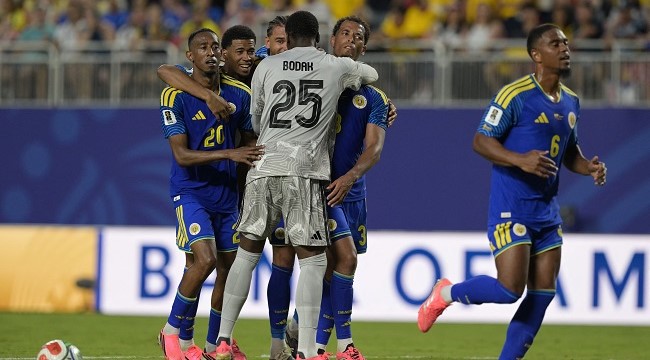
Curacao goalkeeper Eloy Room was the hero on Saturday as the tiny Caribbean island claimed their first-ever World Cup point in a goalless draw against toothless Ecuador.
Ecuador, who finished second in South American qualifying, had 28 shots, including 15 on target in Kansas City but Room stood firm in an astonishing display between the posts.
The 0-0 draw keeps alive Curacao’s hopes of reaching the knockout phase, extending their fairytale journey at their first World Cup.
Curacao’s players celebrate at the end of the 2026 World Cup Group E football match between Ecuador and Curacao at the Kansas City Stadium in Kansas City on June 20, 2026.
The tiny Caribbean island — the smallest country by population ever to play on football’s biggest stage — have Miami FC goalkeeper Room to thank for their point against Ecuador.
Room’s 15 saves are the most on record, since 1966, by any goalkeeper a World Cup match that did not feature extra-time.
The draw in the American Midwest restored pride after a 7-1 hammering by Germany in their opening match.
“History! Our first ever point at the @fifaworldcup,” Curacao posted on X.
Royal backing
Ecuador fans turned the Arrowhead Stadium, the home of NFL team Kansas City Chiefs, yellow, hugely outnumbering supporters of Curacao.
But Curacao had royalty on their side in the form of Dutch King Willem-Alexander and Queen Maxima. The island is an autonomous country within the Kingdom of the Netherlands.
Curacao’s goalkeeper #01 Eloy Room makes a save past Ecuador’s forward #13 Enner Valencia during the 2026 World Cup Group E football match between Ecuador and Curacao at the Kansas City Stadium in Kansas City on June 20, 2026.
Out of their 26-strong squad, managed by vastly experienced Dutch coach Dick Advocaat, 25 were born in the Netherlands, and many play their football there.
The match started at a fizzing pace.
Ecuador seemed certain to open the scoring in the third minute when former West Ham forward Enner Valencia burst through the middle but Room tipped the ball around the post.
Sherel Floranus fired over at the other end as Curacao showed their pace on the break.
Ecuador captain Valencia failed to beat Room from close range before Jordy Alcivar had an effort as Ecuador continued to dominate possession.
The South American team ended the first half with 65 percent of possession but nothing to show for their dominance.
Curacao’s players celebrate in front of their fans at the end of the 2026 World Cup Group E football match between Ecuador and Curacao at the Kansas City Stadium in Kansas City on June 20, 2026.
They went close to breaking the deadlock just before the hour mark but Room kept out a Gonzala Plata header, before a flurry of Curacao chances.
Ecuador, more than 50 places higher than their opponents in the FIFA rankings, looked increasingly frazzled as they pressed for a goal.
They continued to pour forward and rained shots on Room’s goal but he stood firm.
Ecuador substitute Angelo Preciado mishit a cross that bounced off the top of the crossbar and went behind in the final minutes.
The Curacao players swarmed around their goalkeeper Room at the end of the match, celebrating an extraordinary point.
Ecuador have yet to score in two games at the World Cup after netting just 14 goals in 18 qualifying matches.
“There are things you cannot explain in football,” said Ecuador coach Sebastian Beccacece.
“We wanted to win, we didn’t do it. I am the one who is responsible and I’ve told my team, if I see that you are giving it all competing, I have no complaints. No one wants to miss out on scoring.”
Earlier, four-time champions Germany came from behind to beat Ivory Coast 2-1 in Toronto, sealing their qualification for the round of 32. Curacao’s draw ensures Germany will top the group.
Ecuador will play Germany on Thursday while Curacao take on Ivory Coast.
AFP

Tinubu Declares End to Neglect of FCT Satellite Towns as Karu Water Project Comes on Stream(Photos)

110bn SUVs Procurement: Respect Separation of Powers, pro-democracy group warns critics of N’Assembly

Peter Obi advises Tinubu to consider quitting like UK PM




-

 News21 hours ago
Fresh Controversy as Group Petitions INEC Over Tinubu’s Credentials, Seeks Clarification Ahead of 2027 Election
-

 News21 hours ago
Full List: Winners Of By-Elections In Kano, Rivers, Others
-

 News21 hours ago
JAMB ends affiliated degree programmes in Colleges of Education
-

 Metro21 hours ago
Sad: Unidentified lady slumps, dies on Ajah bridge in Lagos
-

 News16 hours ago
Xenophobia: Malawian National K!lled in South Africa
-
 News14 hours ago
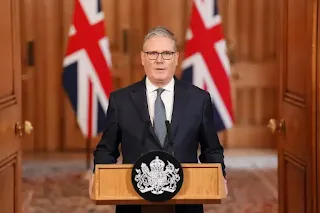
Just in: Finally, Starmer resigns as UK PM
-

 Entertainment21 hours ago
Cubana Chief Priest’s Alleged Babymama, Hellen Ati Uses Her ‘Yansh’ To Curse Him
-

 News21 hours ago
Nnamdi Kanu Expels Chika Edoziem, 9 Other Senior IPOB Members Over Alleged Betrayal, Sabotage, Power Grab
Warning: Undefined variable $user_ID in /home/naijuinz/public_html/wp-content/themes/zox-news/comments.php on line 49
You must be logged in to post a comment Login