Connect with us

News

Abuja residents in trouble as Doctors begin three-day strike

Published

on

ADVERTISEMENT
Zoom Ad
ADVERTISEMENT
Zoom Ad

The Association of Resident Doctors, Federal Capital Territory Administration (ARD- FCTA) has commenced a three-day warning strike over unpaid salaries, allowances, and other demands.


The strike has disrupted activities in government hospitals in Abuja.

The President of ARD-FCTA, George Ebong, announced the commencement of the strike during a press briefing in Abuja on Wednesday.

Mr Ebong decried the neglect of hospitals and doctors’ welfare in the nation’s capital.

Advertisement

He noted that doctors in Abuja have become abandoned projects, calling on the Minister of FCT, Nyesom Wike, to intervene to avoid an indefinite shutdown of hospital activities.

He explained that the strike stemmed from a congress decision held on Tuesday, where the association expressed dissatisfaction with the government’s failure to meet previously agreed- upon demands, despite multiple dialogues.

“The three-day strike is being implemented across all government hospitals in Abuja. From Wuse to Asokoro, Maitama, Kubwa, Zuba, Kwali, Abaji, and Nyanya, and other hospitals in Abuja,” he said.

He said the association gave the government an ultimatum to meet its demands, after which they met and dialogued on several occasions.

Advertisement

He, however, said nothing has been done, not even the minimum thing.

The resident doctors comprise the bulk of medical personnel in Nigeria’s tertiary hospitals; hence health activities are mostly crippled when they are on strike.

Key grievances

Among other unresolved issues is the six months of unpaid arrears for doctors.

Advertisement

“We expected them to pay for the six months of unpaid arrears to doctors. Honestly, doctors have been abandoned projects,” he said.

Mr Ebong said the promises made on accoutrement allowance had not been fulfilled.

“This allowance, meant for the tools we use daily to serve Nigerians, has also been delayed indefinitely. Management assured us this money can be paid, but to date, nothing has been done,” he said.

He explained that these broken promises make it harder for doctors to trust the system.

Advertisement

The association’s president added that doctors who have been promoted are still receiving salaries based on their previous positions, despite having assumed more responsibilities for years.

“Imagine passing a promotion exam years ago, in our case 2-5 years, taking on the responsibilities of your new role, but still being paid for your old position,” he said.

“This is our reality. Doctors who have earned the title of “consultant” are still treated as senior registrars, with no formal recognition or financial benefits. It is a slap in the face to our hard work and commitment.”

He also highlighted the unmet promise of increased hazard allowances, which were approved following the increased risks of diseases like COVID-19 and Lassa fever.

Advertisement

He said the doctors in FCT are still owed 13 months of arrears.

Mr Ebong noted that if nothing is done regarding the doctors’ demands after the three-day strike, they will conduct an appraisal.

“If nothing is done, we will go on an indefinite strike. We want the Minister of FCT to solve this problems to avert an indefinite shutdown of the hospitals in Abuja,” he said.

Read the full communique:

Advertisement

ARD FCTA EMBARKS ON 3-DAY WARNING STRIKE—A CALL FOR URGENT ACTION*

Good day, ladies and gentlemen of the press,

We stand here today, not with joy but with heavy hearts. We, the Association of Resident Doctors, Federal Capital Territory Administration (ARD FCTA), have been left with no other choice but to embark on a three-day warning strike. This decision was not made lightly. It comes after countless meetings—formal and informal—with those in positions to resolve these issues. Despite our efforts, these problems remain unresolved, forcing us into this position to draw attention to the plight of doctors and, ultimately, the Nigerian healthcare system.

Our story is one of perseverance amidst hardship, but there is only so much one can bear.

Advertisement

Unpaid Salaries (1–6 Months): A Breach of Trust

It is painful and deeply disheartening that in the capital city of Nigeria, the heartbeat of our nation, doctors are being owed salaries for up to six months. Think about that. Six months of working tirelessly, day and night, with no pay. Many of our colleagues have resigned, not because they want to leave, but because they’ve been pushed to their limits. They’ve left for other countries, seeking dignity and survival.

We are already struggling with a manpower shortage—one doctor is often forced to do the work of five. Yet, instead of easing our burden, the system keeps pushing us to the brink. Those who remain are mocked for staying. But how can we stay when we can’t afford rent, school fees, or even food?

Medical Residency Training Fund (MRTF): A Right, Not a Favour

Advertisement

The MRTF is meant to assist resident doctors with the enormous cost of professional exams, which can run into millions of naira. Yet, here in the FCT, we are still struggling to receive the fund for 2024, while other centres are already preparing to receive their 2025 allocation. This fund is not a luxury—it is a necessity that helps doctors improve their skills for the benefit of their patients.

When will we stop treating basic entitlements like privileges?

Accoutrement Allowance: Promises Unfulfilled

This allowance, meant for the tools we use daily to serve Nigerians, has also been delayed indefinitely. Management assured us this money can be paid, but to date, nothing has been done. These broken promises make it harder for us to trust the system.

Advertisement

Conversion: Denying Our Worth

Imagine passing a promotion exam years ago, in our case 2-5 years, taking on the responsibilities of your new role, but still being paid for your old position. This is our reality. Doctors who have earned the title of “consultant” are still treated as senior registrars, with no formal recognition or financial benefits.

It is a slap in the face to our hard work and commitment. How do we encourage doctors to stay and train in Nigeria under such conditions? Is it any wonder that so many are leaving for countries where their skills are valued?

Unpaid Hazard Allowance: Neglecting Our Sacrifice

Advertisement

Since 2021, there was an increase in our hazard allowance—an increase approved due to the high risks we face daily. From COVID-19 to Lassa fever, we work on the frontlines, often at great personal risk. Yet, here in the FCT, we are still owed 13 months of arrears.

Is this how we show gratitude to those who put their lives on the line?

Manpower Shortage: A Recipe for Disaster

Doctors are leaving Nigeria in droves, and yet no effort is being made to replace them. This has left the rest of us overworked, burnt out, and struggling to keep the system afloat. We are losing colleagues to stress and exhaustion. We can’t continue like this.

Advertisement

Replacing doctors as they leave is the bare minimum. Without urgent action, our healthcare system will collapse.

THE TRUE STATE OF OUR HOSPITALS AND WHY WE CAN’T CONTINUE THIS WAY:

We have the skills, knowledge, and dedication to deliver excellent healthcare. We have some of the best-trained brains in the medical field. But the truth is, we are working under conditions that are nothing short of appalling.

Hospitals in Decay, Working With Outdated Equipment

Advertisement

Our hospitals are struggling to function with equipment that should be in museums, not in operating rooms. Many of the tools we use were purchased decades ago—some from when I was still in my mother’s womb. They’ve seen no updates, no replacements, and minimal maintenance.

Doctors have now become technicians. We spend as much time fixing broken operating tables and machines as we do saving lives. Oil is constantly applied to squeaky operating tables to keep them functional. Our theatres are held together by improvisation. Our wards are even worse off, with no BP apparatus, not even little things like thermometers or weighing scales, not to mention ventilators and the like.

This is the Federal Capital Territory, yet our hospitals lack basic amenities. Equipment fails mid-procedure, jeopardising lives. How can we offer modern healthcare with tools that belong to a bygone era?

Overcrowding and Burnout: A Recipe for Disaster

Advertisement

Hospitals built to handle 50 beds are now forced to accommodate hundreds of patients daily. Imagine a facility seeing over 5,000 patients a month, performing more than 100 Caesarean sections monthly, with just one consultant and two to three medical officers in the department.

This is beyond capacity, yet doctors are expected to keep pushing. The system is stretched thin, and so are we. When there are no beds, no power for surgeries, no consumables, and no drugs in the pharmacy, patients understandably grow frustrated. But the blame unfairly falls on doctors when it is the government’s failure to provide these essentials.

Hospitals Without Water: A National Embarrassment

Perhaps one of the most shameful realities is that some hospitals in the heart of Abuja—the seat of power—have gone months without water. Yes, you heard that correctly: no water to clean operating rooms, wash hands, or even flush toilets.

Advertisement

Members of our association have shared heartbreaking stories of being forced to defecate or urinate in isolated areas of the hospital because there was no other option. This is not just humiliating—it is a public health hazard. How do we protect ourselves and our patients from deadly diseases when we cannot access something as basic as water?

Doctors Carrying the Burden of a Broken System

Despite these horrendous conditions, we show up every day to do our best. We work long hours, sacrificing our own health and well-being, only to face criticism and blame for systemic failures. When we tell patients there’s no bed, no equipment, or no drugs, the response we often hear is, “Doctors are wicked.”

But let me ask: are we the ones who should be providing beds, light, consumables, and medications? Or is it the government’s responsibility?

Advertisement

The Toll on Our Mental and Physical Health

Doctors are humans too. We are tired, burnt out, and demoralised. We work in an environment where the odds are stacked against us, and no one seems to care. We cannot continue like this.

A Call for Urgent Action

We are striking because we have no other choice. This is not just about salaries or allowances—it is about ensuring that our hospitals can function, that we can work with dignity, and that patients can receive the care they deserve.

Advertisement

We Are Not Fighting for Luxuries, but Survival

Many believe doctors are always demanding money, but this is not about greed—it’s about survival. No Nigerian can go six months without pay. No professional should work 36-72 hour shifts without rest because there are no replacements.

Doctors are human too. We face the same struggles as every Nigerian—rising costs of living, school fees, and basic family needs. How can we care for others when we are unable to care for ourselves?

A Plea to Nigerians

Advertisement

We are not the enemy. This fight is for all of us. A broken healthcare system affects everyone. Before asking us to “consider the poor masses,” we ask you to consider that we are also part of the poor masses.

Our hope is that this warning strike will force the authorities to act. We cannot continue to suffer and smile.

To the public, we plead for your understanding and support. To the government, we demand urgent action. The time to act is now, before it is too late.

Nigerians deserve better. Doctors deserve better.

Advertisement

Thank you.

Dr. George Ebong
President, ARD FCTA

Premium Times
Advertisement

News

EFCC Detains El-Rufai as DSS Files Cybercrime Charges

Published

on

By

ADVERTISEMENT
Zoom Ad
ADVERTISEMENT
Zoom Ad

Former Kaduna State Governor and chieftain of African Democratic Congress (ADC), Mallam Nasiru El-Rufai, has been detained by Economic and Financial Crimes Commission (EFCC) in Abuja, contrary to insinuations by some of his associates that he has been released.

Highly competent sources at the anti-corruption agency told THISDAY last night that El-Rufai “has a lot to answer for” and would most likely remain and spend some time with interrogators.

According to sources close to the interrogation, the scale of interrogation may require a court ordered remand of the former governor to give the agency more time to build a water-tight case against him.

El-Rufai turned himself in for interrogation yesterday following a letter of invitation to him by EFCC, which had been looking into his time as governor of Kaduna State.

Advertisement

Earlier in June 2024, an ad hoc committee set up by Kaduna State House of Assembly to investigate all finances, loans, and contracts awarded under the El-Rufai administration submitted its report to the Assembly.

Chairman of the ad hoc committee, Henry Zacharia, said most of the loans obtained under the El-Rufai’s administration were not used for the purposes for which they were obtained, while in some cases, due process was not followed in securing the loans.

Besides, Speaker of the Assembly, Yusuf Liman, said a total of N423 billion was allegedly siphoned by the El-Rufai’s administration, leaving the state with huge liabilities.

The committee recommended the investigation and prosecution of El-Rufai and some members of his cabinet, by security and anti-corruption agencies for alleged abuse of office, diversion of public funds, and money laundering.

Advertisement

The committee also recommended the immediate suspension of the Commissioner for Finance, Shizer Badda, who also served in the same capacity under El-Rufai’s administration.

However, while responding at the time, El-Rufai’s spokesman, Muyiwa Adekeye, affirmed the integrity of the El-Rufai government and dismissed as “scandalous” the claims by the committee.

El-Rufai was  detained by EFCC for more detailed grilling, just as the Department of State Service (DSS) also filed a three-count criminal charge against him at the Federal High Court, Abuja.

Former Vice President Atiku Abubakar, however, accused the President Bola Tinubu government of persecuting El-Rufai.

Advertisement

Hundreds of protesters, yesterday, stormed the Kaduna State House of Assembly, demanding a formal briefing on the status of the house’s investigation into the administration of El-Rufai.

El-Rufai had arrived the headquarters of EFCC about 11 am in respect of an invitation by the commission. He would be interrogated over corruption allegations levelled against him as governor of Kaduna State from 2015 to 2023.

He was accompanied by hundreds of his supporters to the EFCC head office, at Jabi, Off Airport Road, Abuja. A source at the anti-graft agency, who disclosed, “He is with our investigators,” could not confirm how long the ADC chieftain would be questioned.

However, another source hinted on the possibility of his being arraigned. El-Rufai had refused arrest at the Nnamdi Azikiwe International Airport, Abuja, last Thursday by security operatives.

Advertisement

In a series of interviews granted after the airport drama, El-Rufai accused National Security Adviser (NSA), Nuhu Ribadu, of orchestrating the failed arrest.

El-Rufai Remains in EFCC’s Custody

El-Rufai might remain in the custody of EFCC as his investigation over alleged corruption and abuse of office continued.

El-Rufai arrived the headquarters of the anti-graft agency about 11am yesterday following an invitation by the commission.

Advertisement

Several hours after he honoured the invitation, he was yet to come out to his supporters, who nearly clashed with other groups, who were in support of the invitation and possible prosecution of the vocal critic of the Tinubu administration as well as some previous governments.

A source told THISDAY that shortly after the former governor entered the premises of the anti-graft agency in Jabi, Abuja, he was led to an interrogation room, where he was quizzed by investigators of the agency.

The source added that El-Rufai would definitely spend the night with investigators as the investigation was yet to be concluded.

Asked whether it was legal to detain the former Kaduna governor without a proper and valid court order, an EFCC source said that whatever is pending in terms of getting a court order to extend El-Rufai’s detention will be sorted out today.

Advertisement

Earlier, information had reached judiciary correspondents that the former governor might be arraigned soon before a judge of the Federal High Court, Abuja, for cybercrime offences, in respect of alleged bugging of Ribadu’s phone lines.

DSS also filed a three-count charge against El-Rufai over allegations of unlawful interception of the phone communications of Ribadu. The criminal charge filed at the Abuja division of the Federal High Court was marked: FCT/ABJ/CR/99/2026.

The criminal proceedings were sequel to statements made by the ADC chieftain during a live interview on Arise TV’s Prime Time Programme on February 13, in Abuja.

According to the charge filed by M. E. Ernest on behalf of DSS, El-Rufai, 65, admitted during the broadcast that he and some associates unlawfully intercepted the private phone communications of the NSA.

Advertisement

The federal government claimed that the alleged act amounted to serious breach of Nigeria’s cybercrime and communications laws and posed a threat to public safety and national security.

Court documents further alleged that the former governor not only acknowledged knowledge of those who carried out the interception but also failed to report them to relevant security agencies, despite being aware of the alleged offence.

DSS claimed that the unlawful use of technical equipment to intercept the NSA’s communications compromised national security and created reasonable apprehension of insecurity among Nigerians.

The charge was predicated on the provisions of the Cybercrimes (Prohibition, Prevention, etc.) (Amendment) Act, 2024, as well as the Nigerian Communications Act, 2003.

Advertisement

In a related development, El-Rufai confirmed that Independent Corrupt Practices and Other Related Offences Commission (ICPC) had invited him for questioning in its office.

Sharing the update on his  account on Friday, El-Rufai said he received a letter from the commission asking him to appear before it.

He explained that the invitation required him to report to the commission on Friday, February 13, but stated that the letter reached him around 4.30 pm on Thursday, February12.

The ADC chieftain added that his lawyer had responded to the agency, informing them that he would honour the invitation on Wednesday, February 18, 2026.

Advertisement

Credit: THISDAY

Continue Reading

News

Customs Clarify Forex Rate, Disown ₦1451/$1 Figure

Published

on

By

ADVERTISEMENT
Zoom Ad
ADVERTISEMENT
Zoom Ad

The management of the Nigeria Customs Service (NCS) has clarified how foreign exchange rates are applied in its import and export valuation, stressing that it neither determines nor alters exchange rates used in cargo clearance, but relies solely on official figures transmitted by the Central Bank of Nigeria (CBN).

In a statement released by its National Public Relations Officer, Abdullahi Maiwada, the Service said recent public commentary surrounding forex pricing, investor reactions, and customs valuation had prompted it to explain the operational framework guiding its digital clearance platform.

According to Vustoms, all exchange rates used in trade processing are automatically integrated into its Unified Customs Management System, known as B’Odogwu, which it described as the sole official portal for declarations, clearance and valuation.

The system, it said, receives rates electronically from the apex bank and applies them uniformly across commands nationwide, ensuring transparency, predictability, and compliance with statutory fiscal and monetary policies.

Advertisement

The NCS emphasised that it does not generate or manipulate exchange rates under any circumstances. Instead, it explained that the platform operates structured data-integration protocols designed to ingest and apply exchange-rate feeds exactly as transmitted.

Where there is a temporary change in transmission format or delay, the system is programmed to retain the last valid rate provided by the CBN until an updated feed is successfully processed, thereby preserving valuation continuity and accuracy.

Officials disclosed that the Service is currently collaborating with the central bank to implement an Application Programming Interface-based integration that would allow real-time rate transmission. The initiative, the statement noted, is intended to enhance operational reliability, strengthen audit integrity, and improve system resilience across customs processes.

The clarification followed reports circulating in parts of the trading community referencing an exchange rate of N1,451.63 to one United States dollar for 6 February 2026.

Advertisement

The NCS firmly distanced itself from that figure, stating it did not originate from the B’Odogwu system. Rather, it said, the number was sourced from trade.gov.ng, which it described as a legacy public information portal that does not reflect live customs processing data.

Similarly, the Service said the National Integrated Customs Information System (NICIS) does not provide real-time valuation figures and should not be regarded as an authoritative source for current customs exchange rates.

The Service pledged continued commitment to transparency, consistency, and trade facilitation, assuring importers, exporters, licensed agents, and international partners that Nigeria’s customs valuation system remains accurate, predictable, and aligned with both national regulations and global best practices.

The added that it would continue in strengthening digital infrastructure and operational safeguards in order to support legitimate trade flows and contribute to Nigeria’s broader economic growth through accountable and efficient customs administration.

Advertisement
Continue Reading

News

Senate okays N140bn NCDC budget, seeks priority for agriculture, security

Published

on

By

ADVERTISEMENT
Zoom Ad
ADVERTISEMENT
Zoom Ad

The Senate has called on the management of the North-Central Development Commission (NCDC) to prioritise investments in agriculture and security in the implementation of its 2026 budget.

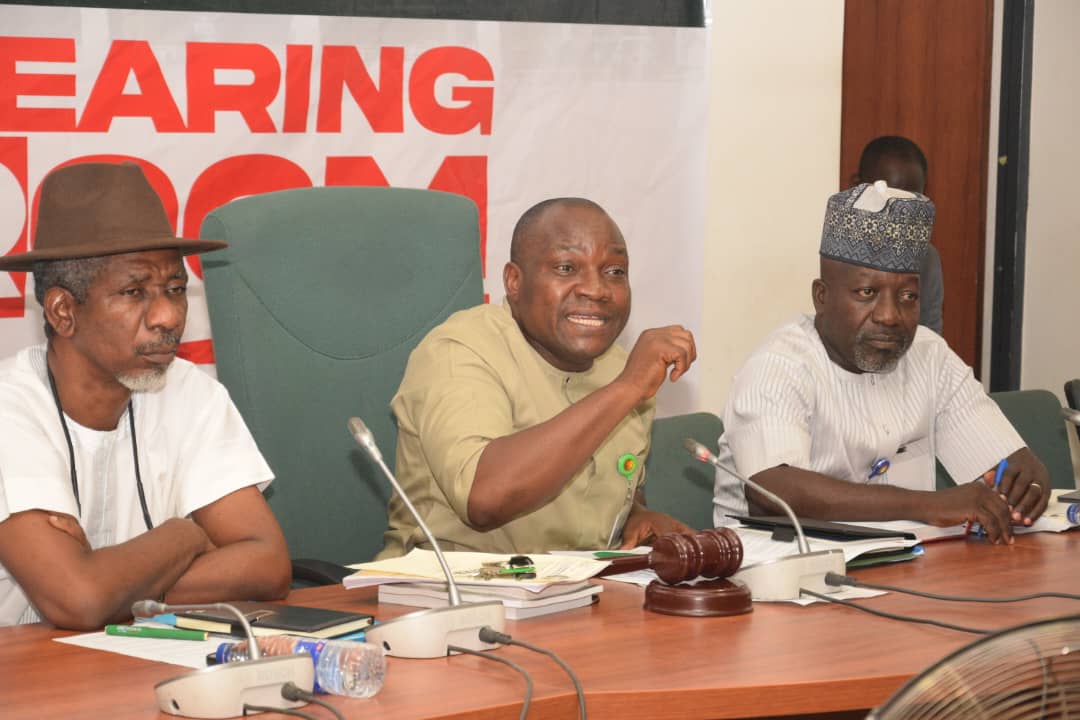
Chairman of the Senate Committee on NCDC, Senator Titus Zam, made the call when the commission’s management appeared before the committee to defend its 2026 budget estimates.

The committee went into a closed-door session shortly after the commencement of the budget defence to review the proposals submitted by the commission.

Addressing journalists after the session, Zam said the committee had scrutinised the estimates and found them relevant to the development needs of the North-Central region.

Advertisement

“We have considered all the items on the estimates and found them very relevant and useful for the north-central region,” he said. “As a committee overseeing this commission, we have requested them to prioritise their expenditures in line with their mandate so that people of the north-central region will benefit from their services and have value for the resources that are allocated to them.”

He stressed that the commission must align its interventions with key sectors of the economy.

“The specific development mandate of the commission cannot just be in a vacuum. It has to fill certain sectors of the economy,” Zam said.

He listed priority sectors to include agriculture, security, health, education, public infrastructure and social services.

Advertisement

“You know that the north-central is mostly agricultural, so agriculture must take pride of place, and it has been so embedded in their budget,” he said.

“They are also thinking about working with security experts and other stakeholders in the north-central region to see to it that they support security agencies to deliver on their mandate.”

The committee, however, expressed dissatisfaction with the implementation of the capital component of the commission’s 2025 budget, though Zam noted that the challenge was not unique to the NCDC.

“It is a national challenge, as the 2025 budget has had implementation issues,” he said.

Advertisement

He disclosed that the committee considered the commission’s proposed total budget of N140 billion for the 2026 financial year and approved it for appropriation.

“This is the resolution of the committee: we hereby approve the total figure of N140 billion for the 2026 financial year for the commission,” Zam said.

Mild drama unfolded shortly after the budget defence session as Senator representing Kogi Central, Natasha Akpoti-Uduaghan, reportedly confronted the office of the committee chairman over the scheduling of the meeting in her absence.

The session, scheduled for 10 a.m., ended shortly after 11 a.m. Akpoti-Uduaghan reportedly arrived around noon and expressed displeasure that the exercise had concluded before her arrival. She was said to have stormed out of the committee room and proceeded to the chairman’s office after a brief confrontation with committee staff.

Advertisement

At the chairman’s office, she reportedly had an altercation with Zam’s secretary while one of her aides brought out a phone to record the exchange. An aide to Zam reportedly seized the phone, triggering further tension.

“You can’t continue to disrespect me like this,” Akpoti-Uduaghan was quoted as saying in high tones, before taking a chair and sitting in front of the chairman’s office, temporarily obstructing entry and exit. As the situation escalated, she reportedly brought out her phone and announced she was going live on social media.

“Must you go live on everything?” Zam’s secretary was quoted as responding. The remark allegedly angered members of the senator’s team, and in the ensuing commotion, one of her aides reportedly slapped the secretary.

The incident reportedly degenerated into a physical fight among the aides, with Akpoti-Uduaghan’s security aide allegedly attempting to bring out his gun before being overpowered and disarmed by aides in Zam’s office. Senator Zam was not present during the incident.

Advertisement
Continue Reading

Trending

Copyright © 2024 Naija Blitz News