
News
Reps Advance Tax Reform Bills Amid Unanimous Support



…as legislators overcome initial opposition to move key revenue laws forward
…weigh concerns over VAT, multiple taxation, Economic Impact
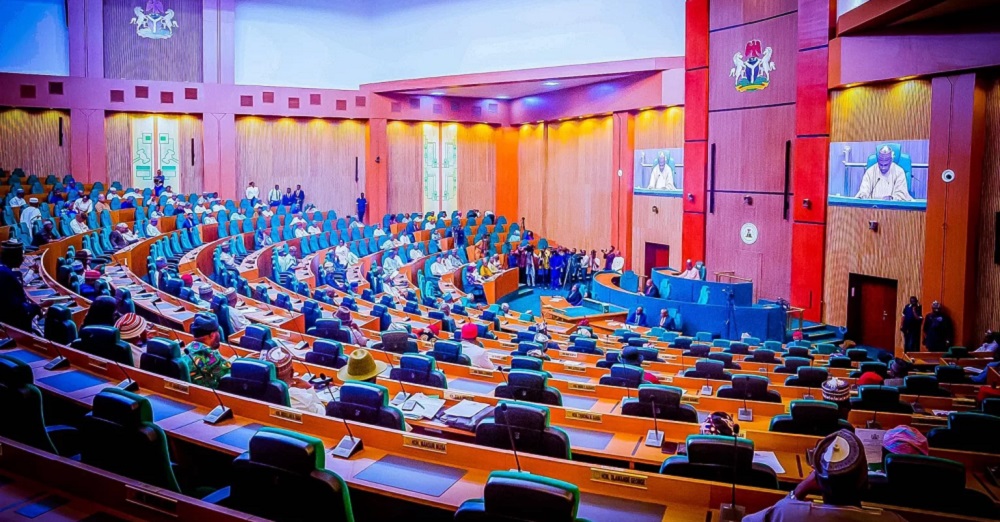
The House of Representatives on Wednesday passed through second reading the four tax reform bills submitted by the President, with no opposition from lawmakers.
The proposed laws include the Nigeria Revenue Service (Establishment) Bill, the Nigeria Tax Bill, the Nigeria Tax Administration Bill, and the Joint Revenue Board (Establishment) Bill.
Originally introduced on October 8, 2024, deliberations on the bills were delayed due to concerns raised by northern leaders and the Nigerian Governors Forum, particularly over the Nigeria Tax Administration Bill, but Speaker Tajudeen Abbas had urged members to consult widely with their constituents before debating the proposals.
Naijablitznews.com reports that ahead of plenary on Wednesday, the four bills were merged into a single document for debate. Despite highlighting potential conflicts with certain constitutional provisions and a few contentious clauses, lawmakers overwhelmingly supported moving the bills forward.
House Minority Leader, Rep. Kingsley Chinda (PDP Rivers, representing minority voices, acknowledged broad support for the reforms but pointed out concerns regarding specific provisions. He emphasized that while the bills aim to restructure the tax system for better revenue generation, the interpretation of certain provisions requires careful review.
The House of Representatives, on Wednesday, continued deliberations on the tax reform bills, with lawmakers expressing mixed reactions to various provisions, including proposed changes to Value Added Tax (VAT) and streamlining of multiple taxes.
Leade of the House, Rep. Julius Ihonvbere commended the President for initiating the reforms, and stated that the bills aim to modernize Nigeria’s tax system, eliminate multiple taxation, enhance revenue collection, and boost economic diversification. He acknowledged opposition to the bills but noted that differing perspectives had strengthened the final proposals.
Ihonvbere highlighted key benefits, including incentives for small businesses, improved revenue generation, and the reduction of tax burdens on low-income earners. He revealed that the reform would consolidate over 60 different taxes into just nine, ensuring quicker resolution of tax disputes within 14 days.
Minority Whip, Rep. Ali Isa (PDP, Gombe) raised concerns over Clause 146 of the Nigeria Tax Bill, which proposes a gradual VAT increase from 7.5% to 10% and later 15%, and cautioned that higher VAT could worsen economic hardship and urged the House to address areas requiring adjustments.
Chairman House Committee on Public Accounts, Rep. Bamidele Salam (PDP, Osun), emphasised that while tax reforms can be challenging, they are necessary for national development. He criticized Nigeria’s complex and duplicative tax laws, arguing that they deter investors and hinder economic growth.
Rep. Stanley Olajide (PDP, Oyo) pointed out that the House regularly establishes new agencies that require funding, making tax reform essential for sustaining government institutions.
Deputy Chief Whip, Rep. Isiaka Ibrahim Ayokunle (APC, Ogun) described the bills as a major step toward tax harmonization but stressed the need for penalties not only for taxpayers who default but also for government agencies failing to implement tax laws effectively.
In his submission, Rep. Sada Soli (APC, Katsina) raised constitutional concerns, particularly regarding Section 141 of the Tax Administration Law, which he said conflicts with existing legislation and creates jurisdictional overlaps. He also criticized ambiguities in VAT and fiscal policies that could overburden taxpayers.
Rep. Babajimi Benson (APC, Lagos) praised the bills for promoting fairness and increasing revenue for states. He also backed the decision to retain key agencies like TETFund, NITDA, and NASENI, stating, “I commend the President for having the guts to push these reforms now.”
Rep. Gboyega Nasiru Isiaka (APC, Ogun) reinforced the House’s commitment to reforms, stating, “From day one, we promised Nigerians a tax overhaul. Our system is outdated, and this is the change we need.”
The debate, which lasted over three hours, showcased a broad consensus on the need for tax reform while highlighting critical areas requiring fine-tuning before the final passage.
During deliberations on the tax reform bills, Rep. Marian Onuoha (APC, Imo) emphasized that the proposed laws aim to create a fairer tax system by placing a heavier burden on high-income earners.
Rep. Abubakar Hassan Fulata raised concerns over the absence of an interpretation clause in three of the four bills, warning that without clear definitions, the laws could be misapplied or exploited by those enforcing them.
Rep. Ademorin Kuye (APC, Lagos) stressed that Nigeria must reform its tax laws to remain globally competitive, while Rep. Leke Abejide (ADP, Kogi) praised President Tinubu for taking decisive steps to rescue the economy from collapse.
Addressing the derivation principle, which had been a contentious issue, Rep. Ahmed Jaha (APC, Borno) insisted that the law must clearly define the specific type of derivation it refers to in order to avoid ambiguity.
Rep. Donald Ojogo (APC, Ondo) highlighted the importance of integrating modern technology into tax administration to curb revenue leakages and boost collection efficiency.
Former House Leader, Rep. Alhassan Ado Doguwa commended lawmakers for their patriotism and Speaker Abbas Tajudeen for allowing thorough consultations before proceeding with the bills. He also praised the President for respecting the legislative process, particularly in retaining key government agencies.
Former Deputy Speaker Rep. Ahmed Idris Wase recalled how the tax reform debate initially caused divisions within the House but credited the Speaker’s diplomacy for maintaining unity. He welcomed the retention of TETFund, arguing that removing it would have harmed the education sector.
In a unanimous decision, the House passed the bills for second reading via a resounding voice vote, with no opposition. The bills have now been referred to the House Committee on Finance, which will conduct a public hearing for further scrutiny and stakeholder engagement.





News
How NDLEA operatives uncovered cocaine, loud in food flasks, snacks, nabs fashion designer, others(Photos)

. Raids Edo, Cross River forests, destroys over 17,000kg skunk; recovers large consignments in Lagos, Delta, Kaduna operations
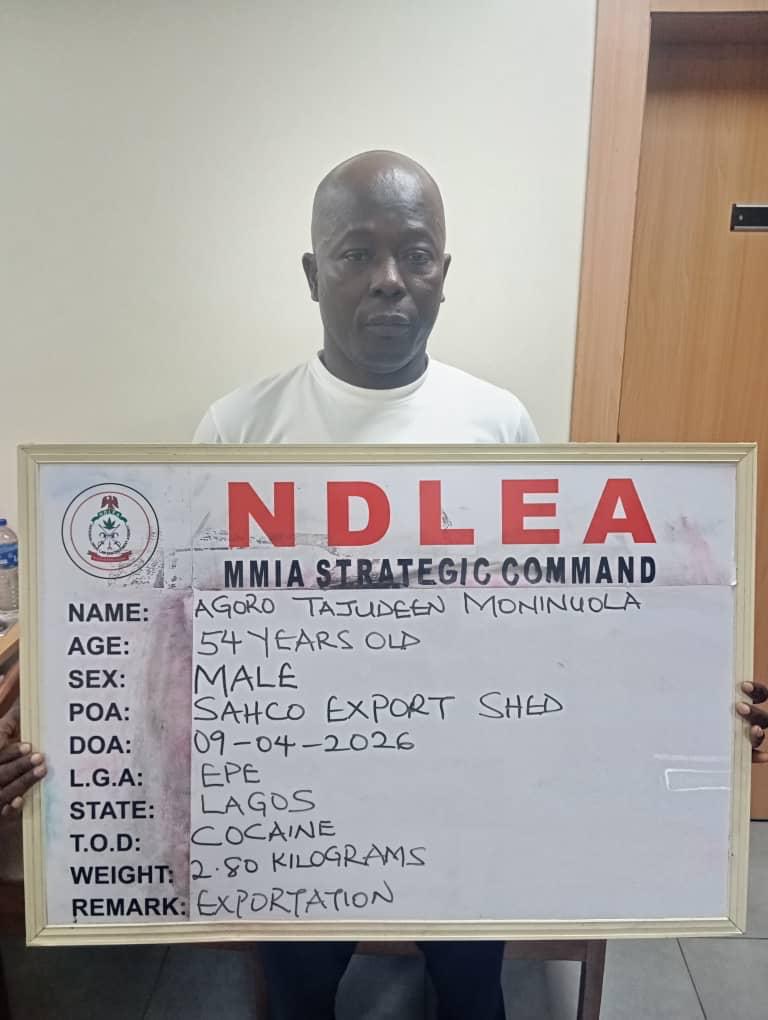
Operatives of the National Drug Law Enforcement Agency (NDLEA) have intercepted 12 large parcels of cocaine concealed in false bottom of food flasks heading to the United Kingdom via a Virgin Atlantic Airline flight from the Murtala Muhammed International Airport (MMIA) Ikeja, Lagos.
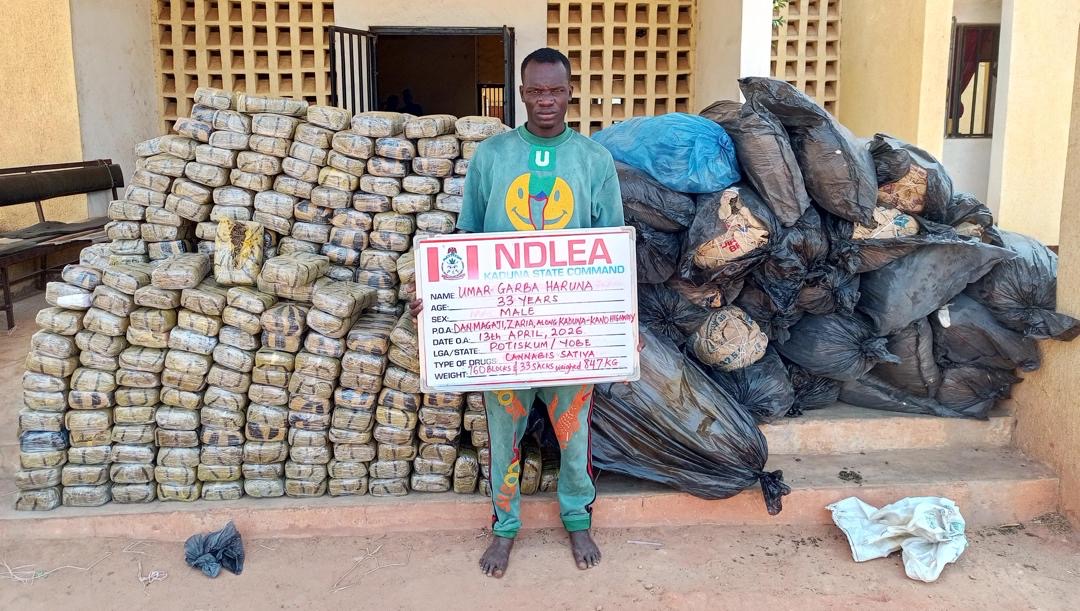
The cocaine consignment with a gross weight of 2.80 kilograms was intercepted on Thursday 9th April 2026 by NDLEA operatives attached to the export shed of the Lagos airport while two cargo agents involved in the export bid: Ama Obinna Ufeim, 33, and Ogabi Monday Akorede, 39, were swiftly arrested. Further investigation revealed a 52-year-old freight and forwarding agent Agoro Tajudeen Moninuola as the sender of the consignment and he was arrested in a follow-up operation.
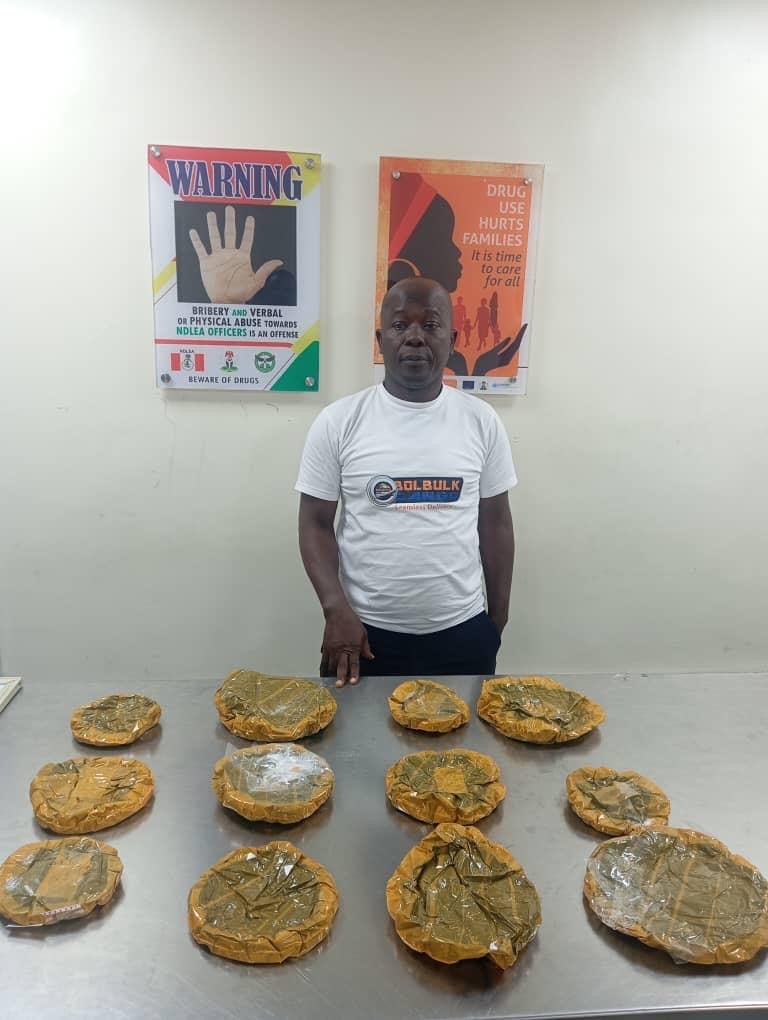
In a similar operation, NDLEA officers at the import shed of the Lagos airport on Wednesday 8th April intercepted a consignment of Loud, a strong strain of cannabis, with a gross weight of 2.90 kilograms and concealed in snack food packs, which arrived from the United States of America aboard a Delta Airlines flight.
Two cargo clearing agents: Animashaun Moshood Adetunji and Mercy Gabriel Oluwasegun, were initially arrested in connection with the seizure before the consignee, Saheed Adeshina Adegoke, a 29-year-old fashion designer, was nabbed in a follow-up operation at 3 Oba Ogunji road, Ogba, Lagos, on Monday 13th April.
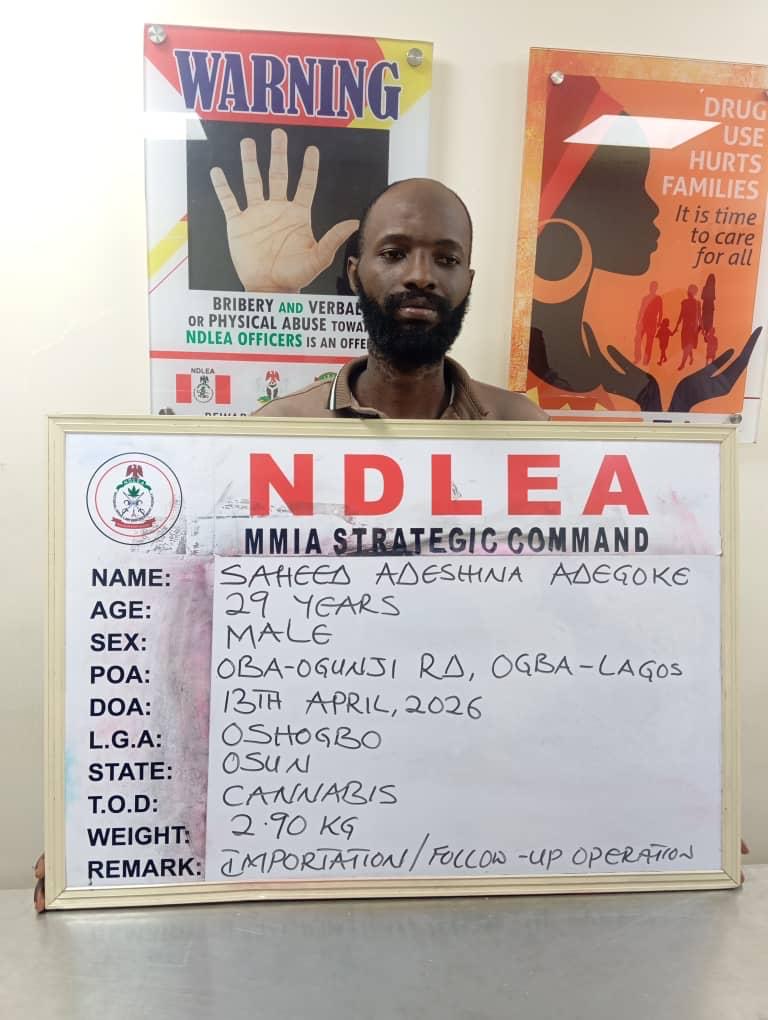
In Kaduna, NDLEA operatives on patrol along Kaduna-Zaria highway by Gwargwaje Zaria on Monday 13th April intercepted a trailer conveying cement heading to Hadeja in Jigawa state. A search of the truck led to the recovery of 760 blocks and 33 jumbo bags of skunk, a strain of cannabis, weighing 847 kilograms. The truck driver Umar Garba Haruna, 33, was arrested in connection with the seizure.
A 53-year-old female suspect, Alice Sunday Udoh, was arrested on Thursday 16th April when NDLEA officers supported by soldiers raided a forest in Uwet community, Akamkpa LGA, Cross River state, where 15,000 kilograms of skunk on six hectares of farmland were destroyed and 119kg of same substance recovered.
Another cannabis farm was raided on Tuesday 14th April at Saboro camp, Ovia North East LGA, Edo state where NDLEA operatives destroyed 2,281.43kg of same psychoactive substance, while three suspects: Nweke Smart, 27; Christopher Egbe, 62; and Monday Ayan, 45, were arrested, with the duo of Christopher and Monday caught with 38.5kg cannabis and its seeds. Two suspects: Sunday Odili, 49, and Ijenebe Joshua, 39, were nabbed with 87.838kg skunk and seeds at Powerline area of Okwo, Delta state on Friday 17th April.
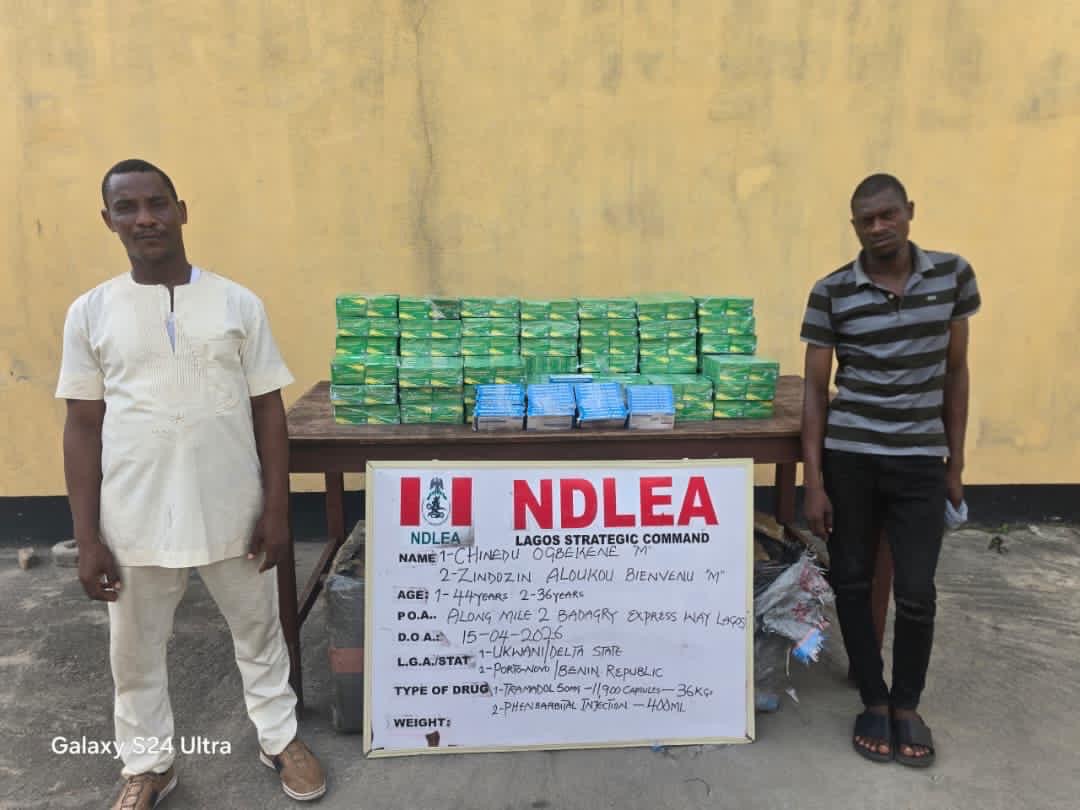
In Lagos, two suspects: Chinedu Ogbekene and Zindozin Aloukou Bienvenu were arrested on Wednesday 15th April at Mile 2, Lagos/Badagry expressway while conveying 11,900 capsules of tramadol and 400 ampoules of phenobarbital injection in a truck to Ghana. Same day, NDLEA operatives raided a two-storey building at Petti, Lagos Island, where a total of 95.8kg skunk was recovered.
With the same zeal, Commands and formations of the Agency across the country continued their War Against Drug Abuse, WADA, sensitization activities in schools, worship centres, work places and communities among others in the past week. These include: WADA enlightenment lecture for students and staff of Alfurgan Islamic School, Paiko, Niger state;
Edgerly Memorial Girls Secondary School, Calabar, Cross River; Heritage Model School, Ankpa, Kogi; Government Day Junior and Senior Secondary School, Kankia, Katsina; Government Senior Secondary School, Rano, Kano, and De Ambassador Secondary School, Epe, Lagos state, among others.
While commending the officers and men of MMIA, Edo, Delta, Cross River, Kaduna, and Lagos Commands of the Agency for the arrests and seizures, Chairman/Chief Executive Officer of NDLEA, Brig. Gen. Mohamed Buba Marwa (Rtd) noted their drug supply reduction efforts balanced with WADA sensitization activities while he charged them and their compatriots across the country to maintain the current tempo.


Five Nigerian soldiers were reportedly killed on Friday, April 17, 2026, when suspected fighters of the Islamic State West Africa Province (ISWAP) attacked a military base in Mussa village, Borno State.
According to militia sources who spoke to AFP, the insurgents stormed the base before being repelled by troops. Following the attack, clashes were also reported in nearby Leho village.
However, the Armed Forces of Nigeria (AFN) have recorded significant operational successes across multiple theatres of operation between April 10 and 16, 2026, as troops sustained coordinated offensives against Boko Haram, ISWAP, JAS, violent extremist groups, kidnappers, and secessionist armed elements nationwide.
According to a statement issued by the Directorate of Defence Media Operations, the operations led to the arrest of several suspects, rescue of kidnapped victims, interception of terrorist logistics supplies, and neutralisation of armed criminals in ongoing efforts to create a safer and more secure environment across the country.
Troops of Operation HADIN KAI in the North East also maintained sustained pressure on insurgent networks across Borno, Yobe, and Adamawa States, recording multiple arrests and seizures.
In Gubio Local Government Area of Borno State, a suspect who confessed to supplying Premium Motor Spirit (PMS) to terrorists for about 10 years was arrested, with 60 litres of fuel, a mobile phone, and cash recovered.
In Adamawa State, 20 suspects were apprehended during raids on criminal hideouts in Mubi North, with items including electronics, cash totaling over ₦2.1 million, and other materials recovered.
In Yobe State, troops arrested three suspected informants linked to monitoring troop movements.
However, the Nigerian military had also in recent times suffered set backs in the fight against insurgency in the North East. Nigeria Tourism Guide
Suspected fighters of Islamic State West Africa Province (ISWAP) had last week attacked a military formation, killing a colonel, I.A. Mohammed, and other soldiers.
Also Brigadier General Oseni Omoh Braimah and 6 soldiers paid the supreme price early in a coordinated attacks by suspected members of the Islamic State of West Africa Province (ISWAP) on military formations in Benisheikh, Kaga Local Government Area, as well as Ngamdu and Pulka town in the Gwoza LGA of Borno state.
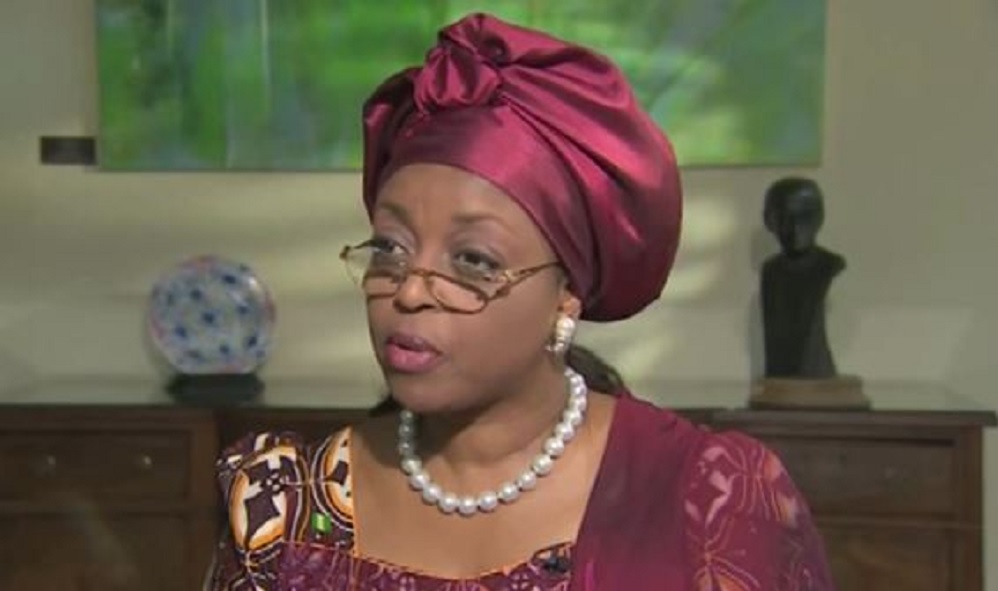
Former Nigerian Petroleum Minister Diezani Alison-Madueke told a UK court that her role in approving oil contracts was largely routine, stating that major decisions were already taken before documents reached her desk.
Speaking at Southwark Crown Court in London, she explained that the structure of Nigeria’s oil sector meant she had limited direct control, as key operations were handled by the leadership of the Nigerian National Petroleum Corporation (NNPC).
“The system was already in motion before files came to me,” she said, adding that the size and complexity of the industry made it difficult for a minister to oversee everything directly.
She said she rarely declined contract approvals because they had already passed through detailed technical and regulatory checks.
“I was, in many instances, a rubber stamp in the process,” she said.
Diezani also recounted a 2014 incident in which she discovered a questionable crude oil deal allegedly linked to businessman Igho Sanomi. She said the matter came to light following a whistleblower report, prompting her to cancel the arrangement.
However, she told the court that powerful individuals opposed her decision and escalated complaints to then President Goodluck Jonathan.
On allegations that $20 billion in oil revenue went missing, she disagreed with former Central Bank Governor Lamido Sanusi, insisting the reports were inaccurate.
“There were no missing funds as widely reported,” she said, explaining that audits and legislative reviews later showed the money was tied to subsidy payments and operational costs.
She acknowledged serious challenges in the fuel subsidy system, including multiple claims by some marketers, but said reforms were introduced to reduce fraud.
According to her, these efforts came with risks. She said she faced security threats, including the kidnapping of family members, which she linked to her attempts to challenge powerful interests in the sector.
She also said politicians and business figures frequently pressured her office for preferential treatment in oil allocations.
“I declined requests that did not follow due process,” she said.
Addressing questions about her personal finances, Diezani said she used Nigerian bank cards even during foreign trips, in line with rules preventing public officials from holding foreign accounts.
She added that the cards sometimes failed abroad, forcing others to temporarily cover expenses.
The court also examined records of her official trips between 2011 and 2015.
She said she usually travelled with about 30 officials, including aides, security personnel, and protocol staff.
“All movements were documented and archived in ministry records,” she said, noting that both commercial and chartered flights were used depending on official requirements.
Despite the allegations against her, Diezani insisted her time in office focused on increasing local participation in the oil sector and improving transparency, saying she has been unfairly portrayed.
She is currently on trial alongside Olatimbo Ayinde and Doye Agama on five counts related to bribery.
All the defendants have pleaded not guilty, and the case is ongoing in London.

How NDLEA operatives uncovered cocaine, loud in food flasks, snacks, nabs fashion designer, others(Photos)
CBN, FMDA introduce the Nigerian Overnight Financing Rate

ISWAP attacks military base in Borno, kill five soldiers



-
 News21 hours ago
Expulsion: Bala, Abejide vow to battle Mark-led ADC faction to finish
-

 News18 hours ago
JAMB: See How To Check, Print 2026 UTME Result Slip
-
 News22 hours ago
Fuel, diesel prices will drop in Nigeria as crude oil slumps
-

 News20 hours ago
Just in: Iran seals Strait of Hormuz again, blames US
-

 News18 hours ago
Troops nab nine suspected terrorists in Plateau, recover arms, ammunition
-

 News22 hours ago
Wife demands divorce from husband for being poor
-
 Metro6 hours ago
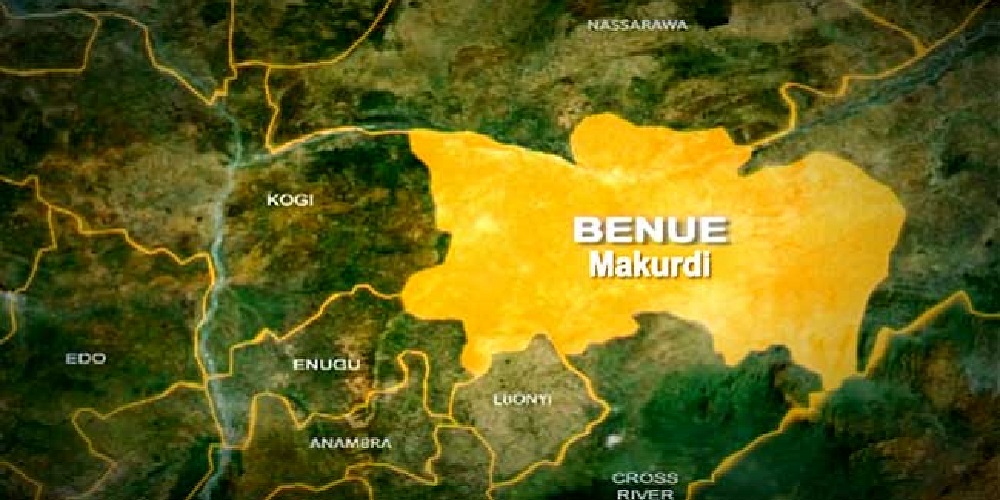
Bandits Demand N9m Per Benue JAMB Victim As Police Nab Seven
-

 Economy22 hours ago
Naira Slumps At Official FX Market
You must be logged in to post a comment Login