Connect with us

News

NUJ @70: Kalu Praise Journalists’ Resilience, Contributions to Democracy

Published

on

ADVERTISEMENT
Zoom Ad
ADVERTISEMENT
Zoom Ad
…advocate for increased partnership
By Gloria Ikibah
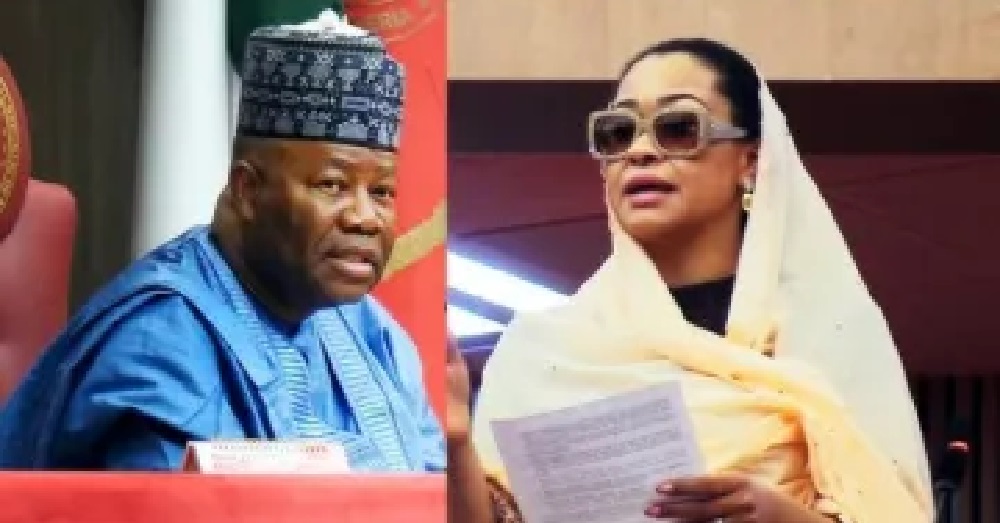
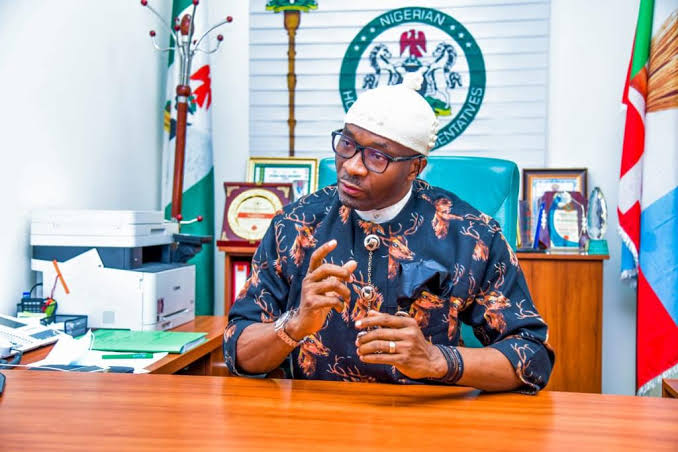
Deputy Speaker of the House of Representatives, Rep. Benjamin Kalu, has lauded the resilience and commitment of Nigerian journalists to national growth and development, as the Nigerian Union of Journalists (NUJ) celebrates its 70th anniversary.
Established on March 15, 1955, the NUJ
has been at the forefront of promoting press freedom, protecting journalists’ rights, and fostering ethical standards in the profession.
In a statement to commemorate the milestone, Kalu acknowledged the significant contributions of the press to Nigeria’s democracy, despite the challenges and risks faced by journalists.
He said: “Journalists have played a crucial role in shaping our democracy, serving as a watchdog of the society and holding those in power accountable for their actions. Their bravery and commitment to truth have been instrumental in promoting transparency, justice, and human rights”.
Kalu also noted that the press has been a vital institution in Nigerian democracy, providing a platform for public debate and discourse.
He also recognized the sacrifices made by journalists and their families, who have faced harassment, intimidation, and violence in the line of duty.
He expressed gratitude to the Nigerian Press for helping to inform the public on the activities and the efforts of the House Committee on Constitution Review which he chairs, calling for more partnerships.
The Deputy Speaker who was also the Spokesperson of the House in the 9th Assembly said that the Legislature will continue to proitize the Press in its people-oriented activities especially through E-Parliament, urging the government and the civil society to continue supporting and protecting journalists.
While calling for stronger press freedom laws, improved security and protection for journalists, and increased media literacy among the public, the Deputy Speaker also enjoined the members of the Fourth Estate of the Realm to always uphold professionalim and their journalistic ethics in their reportage for the good and progress of the country.

Continue Reading
Advertisement
Click to comment

Warning: Undefined variable $user_ID in /home/naijuinz/public_html/wp-content/themes/zox-news/comments.php on line 49

You must be logged in to post a comment Login

Leave a Reply

News

Pope Leo appoints two Nigerians to key Vatican roles

Published

on

By

ADVERTISEMENT
Zoom Ad
ADVERTISEMENT
Zoom Ad

Pope Leo has appointed two Nigerians to key positions in the Vatican’s Dicastery for Evangelization.

According to Fides News Agency, the appointments were announced alongside those of three other African Catholic leaders.

Archbishop Alfred Adewale Martins of Lagos was named a member of the Dicastery for Evangelization (Section for First Evangelization and New Particular Churches), one of the Vatican’s principal departments responsible for missionary activities and the establishment of new local Churches.

Also appointed as a consultor of the same Dicastery is Father Wenceslaus C. Madu, C.M.F., Vice-Chancellor of the Claretian University of Nigeria, Nekede.

Advertisement

Other African appointees as members of the Dicastery are Cardinal Fridolin Ambongo Besungu, OFM Cap, Archbishop of Kinshasa in the Democratic Republic of the Congo, and Archbishop Andrew Nkea Fuanya of Bamenda, Cameroon.

Archbishop François Sylla of Conakry, Guinea, was also appointed as a consultor.

The appointments are expected to strengthen African representation in the Vatican’s evangelization mission and governance of new particular Churches.

Advertisement
Continue Reading

News

Terrorists Now Recruit, Raise Funds Online, Nigerian Army Warns

Published

on

By

ADVERTISEMENT
Zoom Ad
ADVERTISEMENT
Zoom Ad

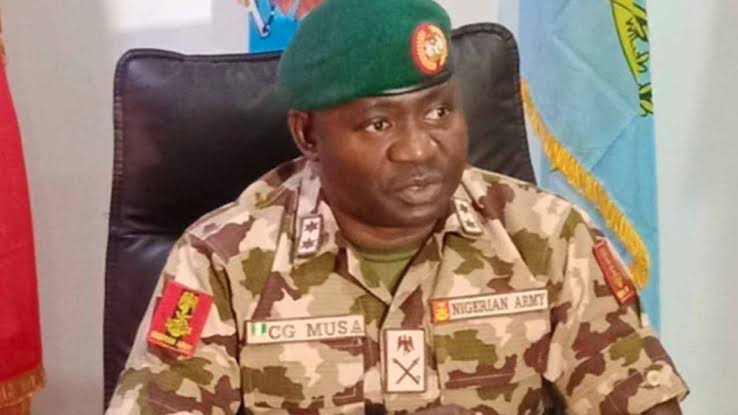
The Nigerian Army has warned that terrorist and criminal groups were increasingly exploiting cyberspace to recruit members, raise funds, coordinate attacks and spread propaganda, describing the trend as a growing threat to Nigeria’s national security.

The Chief of Army Staff (COAS), Lt.-Gen. Waidi Shaibu, raised the alarm on Tuesday at the 2026 Nigerian Army Cyber Warfare School Seminar in Abuja.

Represented by the Deputy Chief of Special Services and Programmes, Maj.-Gen. Jeremiah Manjang, the Army Chief said cyberspace has evolved into a strategic battlefield where both state and non-state actors operate with unprecedented speed, making security threats more complex and difficult to counter.

He noted that hostile actors no longer require physical presence to disrupt critical infrastructure, compromise sensitive information, manipulate public opinion or undermine national security through anonymous cyber attacks.

Advertisement

According to him, terrorism, insurgency, banditry, kidnapping, separatist agitations, organised crime, misinformation and disinformation are increasingly being enabled, coordinated and amplified through digital platforms and cyber networks.

“The reality is that terrorist and criminal groups now exploit cyberspace for recruitment, propaganda, fundraising, intelligence gathering, attack coordination and concealment of illicit financial transactions. This demands a proactive and coordinated national response,” he said.

Shaibu said the changing nature of security threats had compelled the Nigerian Army to strengthen its cyber capabilities to effectively address complex, asymmetric and technology-driven challenges.

He called for stronger cyber intelligence capabilities driven by artificial intelligence (AI), machine learning and advanced data analytics to improve early warning systems, threat detection and predictive security analysis.

Advertisement

The COAS also advocated deeper collaboration among government institutions, the military, law enforcement agencies, academia and the private sector, stressing that cybersecurity can no longer be handled by a single institution.

He emphasised the need for sustained investment in indigenous cyber capabilities, research, technological innovation and human capacity development to protect Nigeria’s digital sovereignty and enhance national resilience against emerging threats.

Shaibu further stated that integrating cyber capabilities into conventional military operations would strengthen surveillance, intelligence gathering, geospatial analysis, command-and-control systems, situational awareness and overall operational effectiveness.

Earlier, the Commandant of the Nigerian Army Cyber Warfare School, Brig.-Gen. Jacob Bawa, said the seminar was organised to deepen cybersecurity awareness, strengthen cyber resilience and promote collaboration among security stakeholders.

Advertisement

Bawa noted that Nigeria’s increasing reliance on digital technologies has exposed critical infrastructure, including telecommunications, power systems, financial institutions and government databases, to cybercriminals, terrorists and hostile state actors.

He said the Cyber Warfare School was established as a centre of excellence for cyber warfare training, education and research.

According to him, participants at the seminar would examine cyber resilience, threat intelligence, incident response, cyber warfare and emerging technologies with a view to developing practical recommendations for strengthening Nigeria’s cybersecurity architecture.

Also speaking, cybersecurity expert Abdulhakeem Ajijola warned that national security now depends significantly on the protection of digital systems, noting that artificial intelligence is transforming military operations, command structures and the protection of critical infrastructure.

Advertisement

Ajijola urged Nigeria to develop sovereign cyber capabilities, warning that excessive dependence on foreign-controlled software, platforms and artificial intelligence systems could undermine national resilience, operational continuity and independent decision-making during periods of crisis.

He stressed that while technology should be deployed to strengthen national sovereignty, responsibility for operational decisions must remain with human commanders.

Continue Reading

News

Kano, Lagos maintain lead in Continuous Voter Registration

Published

on

By

ADVERTISEMENT
Zoom Ad
ADVERTISEMENT
Zoom Ad

Kano and Lagos states have continued to lead the ongoing Continuous Voter Registration exercise ahead of the 2028 general election, with 118,207 and 78,360 registered voters, respectively.

However, the seven states in the North West and their counterparts in the North Central are leading the zonal distribution of registered voters, with 414,208 and 262,252 registered voters, respectively.

These figures are contained in data released by the Independent National Electoral Commission (INEC) at the end of week seven in the last phase of the registration exercise, which began in August 2026.

The CVR exercise, which is expected to conclude on the 20th of July 2026, is suspended in Ekiti and Osun states due to the off-cycle governorship elections in both states.

Advertisement

Kano and Lagos are closely followed by Taraba with 64,293, Sokoto with 64,019, Jigawa with 57,304, Kaduna with 53,998, Benue with 52,861, Bauchi with 52,603, Ogun with 48,684, and Niger with 48,267 registered voters.

Ondo State has the fewest registered voters, with 8,578; Akwa Ibom, 14,253; Plateau, 16,878; the Federal Capital Territory, 21,826; and Enugu and Borno, 24,225.

Meanwhile, the Commission has charged media practitioners in the country to treat vote buying as a frontline investigative priority ahead of the August 15, 2026 Governorship Election and asked journalists to help document incidents with the specificity needed to trigger prosecution.

National Commissioner and Chairman, Information and Voter Education Committee (IVEC), Mohammed Kudu Haruna, made the call at a One-Day Media Stakeholders’ Forum in Osogbo, Osun State.

Advertisement

Haruna described vote buying as the most alarming development to emerge from the June 20, 2026, Ekiti State Governorship Election, saying political actors and their agents were widely reported to have offered cash to voters at polling units, in some cases through numbered vouchers redeemable outside polling locations to evade detection.

Haruna cited Section 22 of the Electoral Act 2026, which prescribes a fine of not less than five million naira, imprisonment of up to two years, or both, and a ten-year disqualification from contesting public office for persons convicted of vote trading.

He called on editors to allocate dedicated resources to the issue before, during and after Election Day, and on reporters to capture names, locations, amounts and the structure of coordination in their investigations, adding that such reporting would feed directly into an enforcement framework involving the Commission, the Economic and Financial Crimes Commission, the Nigeria Police Force and the State Security Service.

He said the Commission had concluded major pre-election preparations for Osun State, including clearing candidates from fourteen political parties, enrolling 381,817 new voters during the Continuous Voter Registration exercise, and arranging the deployment of the Bimodal Voter Accreditation System (BVAS) and the INEC Result Viewing Portal (IReV) across all 30 local government areas.

Advertisement

He cited the performance of these technologies in Ekiti, where BVAS recorded a 96 per cent functionality rate and IReV achieved a 98 per cent result-upload completion rate, as a benchmark for the Osun exercise.

The National Commissioner also highlighted declining voter turnout nationally, noting that accreditation in the Ekiti election covered fewer than four in every ten registered voters. He urged media organisations to extend their reach to voter mobilisation, alongside continued public enlightenment on the dangers of vote buying and the importance of result verification through IReV.

Osun State Resident Electoral Commissioner, Mrs Oluwatoyin Babalola, described the media as an indispensable partner of the Commission in promoting democratic values through objective reporting and public enlightenment, and called for continued collaboration to deliver a peaceful and credible election.

INEC Director, Voter Education and Publicity, Mrs Victoria Eta-Messi, said the forum was designed to strengthen INEC’s working relationship with media professionals, provide updates on election preparations, and clarify the Commission’s processes under the Electoral Act 2026.

Advertisement
Continue Reading

Trending

Copyright © 2024 Naija Blitz News