Connect with us

News

Falana Cautions Senate, Security, Against Probing Natasha’s New York Trip

Published

on

ADVERTISEMENT
Zoom Ad
ADVERTISEMENT
Zoom Ad

…to address IPU amid suspension controversy

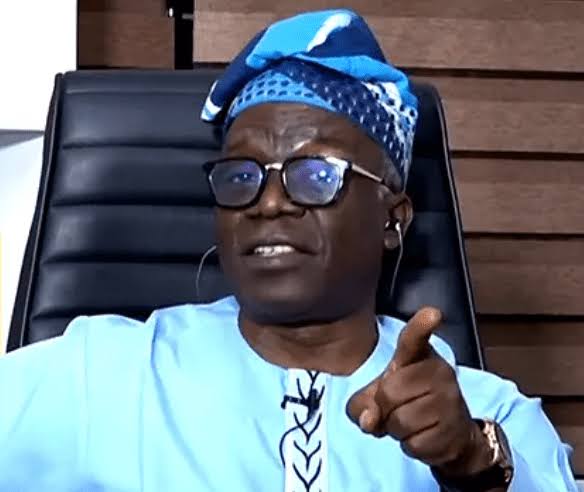
Fiery Nigerian human rights lawyer Femi Falana (SAN) has warned the Senate and security agencies against investigating Senator Natasha Akpoti-Uduaghan over her recent trip to New York, stating that such actions could bring unnecessary embarrassment to the country.

Falana’s statement comes amid controversy surrounding Akpoti-Uduaghan’s engagement with the Inter-Parliamentary Union (IPU) regarding her suspension from the Senate.

Senator Akpoti-Uduaghan earlier reported her suspension by the Senate, as well as her case against Senate President Akpabio, to the IPU.

Advertisement

The Kogi Central lawmaker described the Senate’s action as “illegal” and a reflection of the challenges women face in Nigeria.

Thereafter, Akpabio accused the senator of disgracing the Nigerian government by taking the issue to an international platform.

Meanwhile, Senator Akpoti-Uduaghan has alleged that plans are being made to arrest her upon her return to Nigeria after attending the IPU meeting in New York.

However, Falana in a statement on Sunday, countered this claim, asserting that the real embarrassment lies in the Senate’s decision to involve security agencies like the Department of State Services (DSS) and the National Intelligence Agency (NIA) in probing a legislative matter.

Advertisement

He urged these agencies to study the case of political exiles under the late dictator Sani Abacha before embarking on what he described as a “futile attempt” to penalise Akpoti-Uduaghan.

The human rights lawyer also pointed out the irony in the Senate’s stance, noting that several top officials in President Bola Tinubu’s administration had, in the past, travelLed abroad to challenge Nigeria’s military rulers.

He warned that any probe into Akpoti-Uduaghan’s trip could revive discussions about those past incidents and further expose Nigeria to global scrutiny.

Recalling his own ordeal, Falana recounted how, in 1994, Dr. Beko Ransome-Kuti, then Chairman of the Campaign for Democracy (CD), traveLled to India to attend a meeting of the Commonwealth Human Rights Initiative. At the time, he was the only African member of the body.

Advertisement

Falana explained that around the same period, Ransome-Kuti travelled to Canada to deliver lectures on Nigeria’s human rights situation. While in Canada, he received an award on behalf of the CD.

Upon their return to Nigeria on January 14, 1995, both men were arrested and detained at the Nigeria Immigration Service Guest House in Ikoyi, Lagos.

According to Falana, a combined team from the State Security Service (SSS), the NIA, and the Nigeria Immigration Service interrogated them, accusing them of traveLling out of Nigeria illegally, as they had not passed through official routes.

It was further stated that we ought to have obtained security clearance since we were aware that our names were on a ‘watch list’ compiled by the security forces,” Falana said.

Advertisement

He argued that the so-called watch list was discriminatory and illegal, citing the case of Shugaba v Minister of Internal Affairs, in which the Court of Appeal ruled that a Nigerian citizen has the right to enter and exit the country freely.

He noted that at that stage, security agents demanded that they surrender their passports.

However, Falana and Ransome-Kuti refused, fearing their documents would be confiscated to prevent further travel. They informed the interrogators that their passports were kept with a comrade in Cotonou, Benin Republic, which had become their alternative travel route.

He explained that the security officials confirmed through airport, seaport, and land border checks that the two men had not presented their passports to immigration officers for stamping.

Advertisement

Falana responded that, daily, over a million Nigerians travel across the artificial borders created by colonial powers without stamping their passports, particularly within the Economic Community of West African States (ECOWAS).

Due to mounting international pressure demanding their release, the military government eventually granted them bail.

However, their lawyer, Chief Gani Fawehinmi, stood as surety.

Although they were detained for a week, they were never formally charged with any offence related to “illegal travel.”

Advertisement

The statement read, “In 1994, Dr. Beko Ransome-Kuti, the Chairman of the Campaign for Democracy (CD) travelled to India to attend the meeting of the Commonwealth Human Rights Initiative. At the material time, he was the only African member of the international body. At about the same time, I travelled to Canada to deliver some lectures on the human rights situation in Nigeria. During my stay in Canada, I received an award on behalf of the CD.

“Upon our return to Nigeria on January 14, 1995, both of us were arrested and kept at the Nigeria Immigration Service Guest House at Ikoyi, Lagos State. A combined team of State Security Service, Nigeria Intelligence Agency and Nigeria Immigration Service personnel interrogated us. We were accused of travelling out of Nigeria illegally as we did not pass through any of the official routes.

“It was further stated that we ought to have obtained security clearance since we were aware that our names were on the “watch list” compiled by the security forces. I pointed out to the interrogators that the so-called watch list was discriminatory and illegal. I referred to the case of Shugaba v Minister of Interior wherein the Court of Appeal had ruled that a Nigerian citizen has the right of egress and ingress.

“At that stage, we were asked to produce and submit our passports. We flatly turned down the request on the ground that they were likely to be confiscated to prevent us from further exercising our fundamental right to freedom of movement guaranteed by article 12 of the African Charter on Human and Peoples Rights (Ratification and Enforcement) Act.

Advertisement

“Indeed, we informed our interrogators that the passports were kept in the house of a comrade in Cotonou, Benin Republic which was our adopted route for travelling out of Nigeria.

“Our interrogators said that they had confirmed from the airports, seaports and land borders that we did not present our passports to immigration officers for stamping. We replied that on a daily basis, over a million Nigerian people travel in and out of Nigeria without stamping their passports in the artificial borders created by the British and French colonialists which are maintained by the neo-colonialists in power; in the member states of the Economic Community of West African States (ECOWAS).

As the federal military regime was completely embarrassed by the global demand for our release, the security forces granted us bail pending the conclusion of investigation.”

“Our lawyer, Chief Gani Fawehinmi, stood surety for us and we were released to him. Even though we were detained for a week, we were not charged for the alleged offence of illegal travelling out of Nigeria,” he explained.

Advertisement

Falana drew the attention of the Senate and the security forces to the case of the “Speaker, Bauchi State House of Assembly v Honourable Rifkatu Danna (2017) 49 WRN 82”.

He said the respondent was the only woman in the House of Assembly of 31 members.

Falana said, “She was suspended indefinitely for criticising the relocation of the Tafawa Balewa Local Government Area. As far as the House members were concerned, her speech was considered ‘derogatory’.

“In setting aside her indefinite suspension from the House, the Bauchi Chief Judge held that her suspension beyond 14 days was illegal and uncomfortable. But the Court of Appeal declared that the House lacks the vires to subject her to any form of suspension from the House as it was a denial of the rights of the people of her Bogoro Constituency to be represented in the government.

Advertisement

“In the leading judgment of the Court of Appeal, Tur JCA held inter alia that the acts of the Appellants violated articles 8 and 9 of the African Charter on Human and Peoples Rights Act which guarantee the respondent’s fundamental rights to freedom of conscience, the right to receive and disseminate information and to express opinions within the ambit of the law….Not even the military would have behaved in this dastardly manner.

“This is a flagrant abuse of the constitutional powers vested in the Speaker and members of the Bauchi State House of Assembly which no right- thinking member of the society ought to tolerate.”

Falana said, “Finally, it is public knowledge that the Senate President, Senator Godswill Akpabio had accused Senator Natasha Akpoti-Uduaghan of embarrassing the government and people of the Federal Republic of Nigeria by reporting her suspension by the Senate to the Inter Parliamentary Union.

“Contrary to the jaundiced views of the Senate leader, it is the official probe of the circumstances of her trip by security forces that will expose Nigeria to needless embarrassment and undeserved ridicule

Advertisement

“Therefore, the SSS and NIA may study the report of the investigation of our illegal travelling by the Sani Abacha military junta before embarking on the futile attempt to probe Senator Natasha Akpoti-Uduaghan for having the temerity to externalise the ‘internal affair of the Senate.’”

In fact, the probe will particularly embarrass some top officials of the Bola Tinubu administration who were once accused of travelling out of Nigeria to embarrass the defunct military junta,” Falana added.

Continue Reading
Advertisement
Click to comment

Warning: Undefined variable $user_ID in /home/naijuinz/public_html/wp-content/themes/zox-news/comments.php on line 49

You must be logged in to post a comment Login

Leave a Reply

Foreign

STRATEGIC AUTONOMY: NIGERIA’S DOCTRINE FOR SELF-DETERMINATION IN A MULTIPOLAR WORLD

Published

on

ADVERTISEMENT
Zoom Ad
ADVERTISEMENT
Zoom Ad

In an era defined by geopolitical competition, trade wars, sanctions regimes, and shifting alliances, one phrase has migrated from European policy papers to the heart of African diplomacy: “Strategic Autonomy”.

For Nigeria, this is not a new experiment in isolation, nor is it a nostalgic return to Cold War non-alignment. As I outlined in a recent address from the Ministry of Foreign Affairs in Abuja, it is something far more direct and more urgent.

Strategic autonomy is alignment to Nigerian national interest. Once you are clear in what constitutes your national interest, you align with those interests regardless of which party is at the receiving end. That is the foundation. I am aware of scholarly publications that was recently put together by the Nigerian Institute of International Affairs on the subject.

While the Ministry prepares the full concept note charting new fronts in a multi polar world, let me share the preliminary framework guiding Nigeria’s foreign policy under President Bola Ahmed Tinubu.

Advertisement

Our goal is simple: to ensure that Nigeria, and by extension Africa, is not an object of geopolitics, but a subject that defines its own future.

What Strategic Autonomy means for Nigeria and Africa
Strategic autonomy is often misunderstood as withdrawal. It is the opposite. It is engagement on our terms. Today, Nigerian Foreign Policy has shifted. Gone is the era of reactive alignment. The Tinubu 4Ds agenda is anchored on strategies that are clearly designed to bring succor to Nigerians. The deliberate pursuit of Nigeria’s national interest across economic, security, technological, and diplomatic domains, without being locked into any single bloc. Nigeria’s strategic autonomy rests on 5 pillars in a world of continuous alignment. Together, they form the blueprint for how Nigeria engages a world that is no longer unipolar, but contested, transactional, and opportunity-rich.

NATIONAL INTEREST, NIGERIA FIRST 
Alignment to Nigerian national interest is the guiding rule. For Nigeria, Foreign Policy begins at home. Every treaty, partnership, and diplomatic gesture is measured against one question: does it deliver jobs, infrastructure, security, defence and dignity for Nigerians?

This principle was tested in the enforcement of the One China Policy. When diplomatic lines were blurred, the Ministry acted decisively: relocating trade missions from Abuja to Lagos, Nigeria’s commercial hub, and reaffirming that Nigeria speaks with one voice.  There is no room for diplomatic blunder in Nigeria. The message is clear: Nigeria will be a partner, not a pawn. Strategic autonomy means clarity of position first, and flexibility in tactics second.

Advertisement

ECONOMIC DIVERSIFICATION 
AfCFTA + global partnerships like China’s zero-tariff access. Nigeria is done with aid-for-diplomacy. The new model is trade-for-growth. Under President Bola Ahmed Tinubu’s Renewed Hope Agenda, Nigeria is leveraging two levers simultaneously: 

1. Continental integration through the African Continental Free Trade Area, to build regional value chains. 

2. Global partnerships that open markets. China’s zero-tariff policy for eligible Nigerian exports is a case in point, creating new pathways for agriculture, manufacturing, and solid minerals to reach 1.4 billion consumers.

From the Lagos-Calabar coastal transport system to industrial parks in Ogun and Lekki, Chinese, European, and Gulf investments are being steered toward productive sectors. The goal is not dependency, but diversification: more partners, more markets, more Nigerian-made exports.

Advertisement

SECURITY SOVEREIGNTY
African-led, but open to any partner that delivers results. Nigeria’s security doctrine is rooted in the principle that Africans must lead African solutions. ECOWAS, the AU, and regional counter-terrorism frameworks remain central.

But strategic autonomy also means pragmatism. On terrorism, maritime security in the Gulf of Guinea, and cyber threats, Nigeria is open to cooperation with any partner, East or West that brings intelligence, technology, and capacity without conditions that undermine sovereignty. The benchmark is simple: results for Nigerian communities. Partnerships are judged not by ideology, but by impact on the ground.

TECHNOLOGICAL AGENCY 
Build, don’t just buy. Lead in AI and digital infrastructure. The 21st century will be won on data, chips, and talent. Nigeria refuses to be only a consumer. This is the essence of Minister Bosun Tijjani’s reforms in our digital ecosystem.  Through partnerships in 5G, fiber optics, and smart cities, Nigeria is negotiating technology transfer, not just procurement. Engagement with the World Artificial Intelligence Organization and related partnerships signal intent: to move from adoption to authorship.

The aim is to build domestic capacity in AI, fintech, and digital governance, so that Nigerian developers, not just foreign vendors, shape the platforms used daily by 200 million Nigerians. Technological agency is sovereignty in the digital age.

Advertisement

DIPLOMATIC FLEXIBILITY 
Engage all major powers without being locked into one camp. In a multipolar world, alignment is a choice made per issue, not per decade. Nigeria maintains a Comprehensive Strategic Partnership with China on infrastructure and more. It deepens trade and security ties with the US and EU. It expands South-South cooperation with India, Brazil, and the Gulf. It leads on the continent through AfCFTA and AU reform.

This is not non-alignment. It is multi-alignment: engaging all, belonging to none, and extracting maximum value for Nigeria from each relationship. Strategic autonomy is alignment to Nigerian national interests. Nigeria’s 5 Pillars offer more than a foreign policy. They offer a template for mid-sized and emerging powers navigating great power competition. It is a policy of conviction without rigidity. Of partnership without dependence. Of ambition without illusion.

Nigeria will continue to deepen partnerships that deliver infrastructure, jobs, and technology, but always on Nigerian terms. In 2026, the measure of sovereignty is not who you oppose. It is what you are able to build.

We can no longer afford an economy built only on exporting raw materials to one market and importing finished goods from another. The African Continental Free Trade Area gives us the platform to build regional value chains. At the same time, we must diversify globally. This is why we welcome China’s decision to grant zero-tariff treatment to 53 African countries, while we simultaneously deepen trade with the EU, the US, the Gulf, and our neighbors in ECOWAS. No single partner can meet all our development needs, and we will not be dependent on any one.

Advertisement

The primary duty of any government is the protection of its citizens. That principle must guide our security partnerships. African-led solutions through the AU and ECOWAS remain our first choice. But we will not outsource our judgment. We greatly appreciate the US but if any country says he can help me to wipe out terrorism in Nigeria in the next two weeks, will I say because I’m friend to the US I will not agree? No,”. The safety of Nigerians comes first. Strategic autonomy means we evaluate every security offer by one metric: does it deliver peace, security and stability for our people?

In a multipolar world, we must talk to everyone and be forced to choose no one. This is not duplicity. It is maturity. We have demonstrated this in recent weeks. We condemned Afrophobic attacks in South Africa because the dignity of Nigerians abroad is non-negotiable. We pushed the agenda at the recent ECOWAS Summit in Freetown Sierra Leone where President Tinubu’s voice was clear and unambiguous. At the same time, we are preserving and strengthening the Nigeria-South Africa strategic partnership because both countries benefit from trade, investment, and regional leadership. That is strategic autonomy in practice.

The 4D Agenda meets a fragmenting World
The global shifts make this doctrine necessary today.  Today, we have multipolarity. The unipolar moment has passed. Power is diffused across Washington, Beijing, Brussels, New Delhi, Riyadh, and other capitals. Under President Tinubu’s 4D Foreign Policy Agenda: Demography, Development, Diaspora and Democracy — Nigeria’s diplomacy is calibrated to one question: what does this mean for Nigerian citizens? Ideological blocs are secondary to results.

Africa has 60% of the world’s youngest population. By 2050, one in four people on earth will be African.  Nigeria will be the third most populated country in the world by 2050. We cannot allow our future to be scripted by others. We must define our own development model, centered on jobs, skills, and innovation. In this context, some analysts have described our approach as “pragmatism devoid of doctrine.” I disagree.

Advertisement

“I don’t agree with that kind of characterization. Everything foreign policy is about national interest,”.  What we are doing is giving that age-old principle a modern name and structure. We are drawing from our own history. As one of my lecturers at the University used to say, “ non-alignment is alignment to your national interest.” That remains true. Doctrine without delivery is rhetoric. For strategic autonomy to produce tangible benefits, Africa must take deliberate steps.

We must fully implement AfCFTA to unlock a $3.4 trillion single market. That means reducing tariffs, harmonizing standards, and building cross-border infrastructure. We must invest heavily in energy and infrastructure. No factory runs without power. No trade happens without roads, rail, and ports. Strategic autonomy requires industrial power.

Africa must speak with one voice in global forums — at the UN, G20, and WTO. Africa’s 54 countries carry more weight together than separately. It is time to protect and deepen democratic institutions. Autonomy should never be confused with authoritarianism. The legitimacy of our choices comes from the consent of our people.

Let me be clear. Strategic autonomy is not about turning our backs on partners. It is about choosing partners freely. It is the right to trade with anyone, learn from everyone, and be dominated by no one. The world is fragmenting into blocs. Africa’s best option is not to join a bloc, but to become a bloc ourselves — economically integrated, politically coherent, and diplomatically confident.

Advertisement


Written by Ambassador Sola Enikanolaiye,
Minister of State for Foreign Affairs, Federal Republic of Nigeria

Continue Reading

News

Bode George Still Angry Over His Failed PDP National Chairmanship Bid, No Regret Stopping Him – Wike

Published

on

ADVERTISEMENT
Zoom Ad
ADVERTISEMENT
Zoom Ad

The Federal Capital Territory (FCT) Minister, Nyesom Wike, has said that he had no regret Stopping Peoples Democratic Party (PDP) former Deputy National Chairman, Chief Bode George, from becoming the party National Chairman, saying; “his anger is because we didn’t allow him to be PDP National Chairman and no regret doing so.”

In a statement on Saturday, by his Senior Special Assistant on Public Communications and Social Media, Lere Olayinka, the FCT Minister said the political frustration of Bode George has further been compounded by the emergence of Deji Doherty, a personality he does not want to see as the one in charge of the party in Lagos State.

“He wanted to be PDP National Chairman, and was carrying on like the position was his birthright. We stopped him because it was the turn of the South-South. Since then, he has not stopped being angry.

“As a sitting governor, I visited his house in Maitama, Abuja, to appease him after the national convention, his wife attempted to walk me out, but for the intervention of former governor of Ondo state, Olusegun Mimiko,” the minister said.

Advertisement

He described Bode George as a failed politician, who despite all the privileges and power has not won anything for the PDP in Lagos State since 1999, adding that “We have managed him even though we know that he has no value. But as it is, since he wants to keep dancing naked in the market place of politics, we can’t but allow him.”

The Minister reiterated that leadership of a political party is not by name, title or being a founding father. Rather, it is about what you are able to bring to the table in terms of winning elections, and in this regard, Bode George is a complete disaster.

“Even his Unit 001 in Ward E2, Evans Street, Lagos Island, he has never won for the PDP. In 2019 Presidential election, APC had 84 votes while PDP had 40. In the 2023 elections, he transferred his voter’s card to Eti Osa, PDP had four votes in his polling unit,” Wike said.

Wike said since it appeared that he (Bode George) is not busy, he will continue to make his likes busy by creating reason for them to jump from one television station to the other.

Advertisement
Continue Reading

News

Association of Medical, Dental Academics in Nigeria gives FG three week ultimatum or face strike

Published

on

ADVERTISEMENT
Zoom Ad
ADVERTISEMENT
Zoom Ad


The Nigerian Association of Medical and Dental Academics (NAMDA) has given the Federal Government a three-week extension to conclude negotiations over its outstanding demands, warning that failure to reach an agreement could trigger a three-day warning strike.

The association issued the ultimatum in a communiqué released to journalists in Uyo on Friday, following its Emergency National Executive Council (E-NEC) meeting.

The communiqué, endorsed by the President, Nosa Orhue, and the Acting Secretary-General, Aniekan Peter, said the extension would run until August 31, 2026.

Advertisement

It stated, “A three-week timeline extension was adopted for a possible further consideration. E-NEC further resolved that the extension period should be utilised by government to resolve all outstanding issues.

“Failure to achieve meaningful resolution at the expiration of the period ending on the 31st of August 2026 shall result in the declaration of a three-day warning strike to be announced by NOC.”

NAMDA also directed all its branches nationwide to engage their members through congresses and sensitisation programmes at least twice during the extension period.

The branches are expected to submit evidence and reports of the mobilisation activities to the National Executive Council through the secretariat, indicating their level of preparedness for possible strike action.

Advertisement

The association expressed concern over what it described as the government’s reluctance to conclude negotiations, while commending the Department of State Services (DSS) and other stakeholders for their interventions in the process.

NAMDA also appreciated its members for their patience and cooperation in maintaining stability within the university system.

The association further lamented the alleged neglect of medical education and training amid the shortage of medical and dental doctors and the increasing migration of professionals, popularly known as the “Japa” syndrome.

It reaffirmed its commitment to pursuing the full implementation of all approved benefits for medical and dental lecturers and urged its members to comply with all directives and decisions reached at the meeting.

Advertisement
Continue Reading

Trending

Copyright © 2024 Naija Blitz News