Economy
SEE Current Black Market Dollar (USD) To Naira (NGN) Exchange Rate
- /home/naijuinz/public_html/wp-content/plugins/mvp-social-buttons/mvp-social-buttons.php on line 27
https://naijablitznews.com/wp-content/uploads/2024/04/Naira.webp&description=SEE Current Black Market Dollar (USD) To Naira (NGN) Exchange Rate', 'pinterestShare', 'width=750,height=350'); return false;" title="Pin This Post">
- Share
- Tweet /home/naijuinz/public_html/wp-content/plugins/mvp-social-buttons/mvp-social-buttons.php on line 72
https://naijablitznews.com/wp-content/uploads/2024/04/Naira.webp&description=SEE Current Black Market Dollar (USD) To Naira (NGN) Exchange Rate', 'pinterestShare', 'width=750,height=350'); return false;" title="Pin This Post">
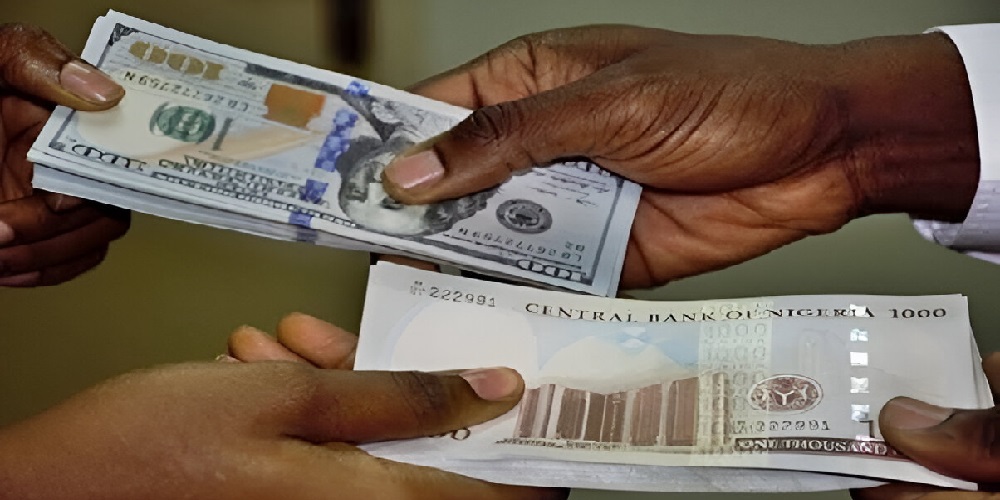
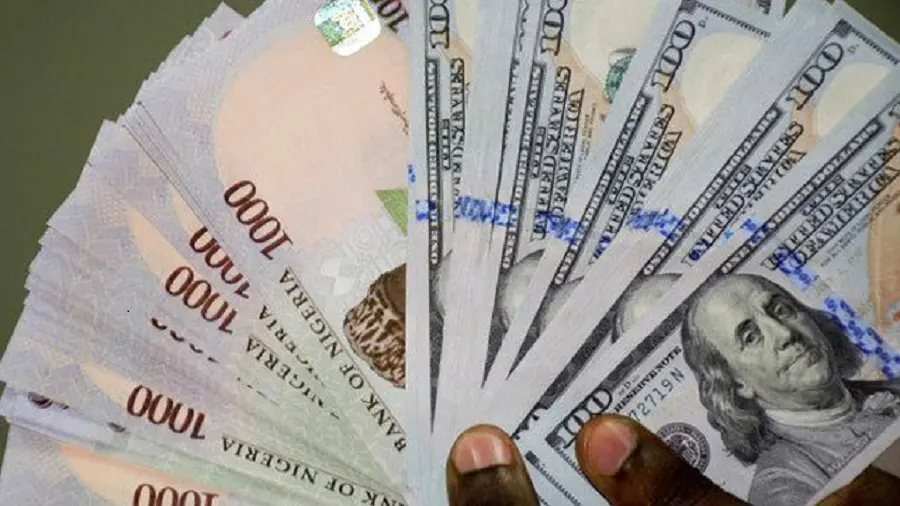
The exchange rate between the US Dollar (USD) and Nigerian Naira (NGN) continues to fluctuate, with notable differences between the official market rate set by the Central Bank of Nigeria (CBN) and the parallel (black) market rates.

Black Market (Parallel Market) Exchange Rate
At the Lagos Parallel Market, also known as the black market, foreign exchange traders are currently buying one US dollar at ₦1,575 and selling it at ₦1,585. These rates are sourced from Bureau De Change (BDC) operators who engage in unofficial currency transactions outside the banking system.
The Central Bank of Nigeria (CBN) maintains a regulated exchange rate for financial institutions and official transactions. Based on recent data:

The highest recorded exchange rate for the dollar stands at ₦1,552 per USD
The lowest rate observed is ₦1,512 per USD
The CBN does not recognize or support the black market, advising individuals and businesses seeking foreign exchange (forex) to obtain their funds through licensed financial institutions such as banks.
Factors Influencing the Exchange Rate
Several economic and market conditions contribute to the fluctuations in Nigeria’s forex market, including:
Dollar Supply and Demand: A shortage of forex liquidity can push black market rates higher, while an increased supply from CBN interventions or foreign inflows can stabilize the naira.
Inflation and Economic Policies: High inflation rates and policy decisions from monetary authorities significantly impact the value of the naira.
Global Economic Trends: The strength of the US dollar in international markets, crude oil prices, and foreign direct investment flows all play a role in determining the naira’s performance.
CBN Regulations and Policies: Restrictions on forex transactions, such as bans on certain imports or tighter controls on foreign remittances, can create fluctuations in the black market rates.
Exchange rates are subject to constant fluctuations, and the rates at which individuals or businesses buy and sell forex may differ from those listed above. It is advisable to consult multiple sources or directly contact banks and financial institutions for the most accurate and up-to-date exchange rates.

Economy
NFIU moves to unite banks, fintechs, regulators against illicit financial flows
Nigerian Financial Intelligence Unit (NFIU) has moved to forge a new public-private partnership that will bring banks, fintechs, insurers, virtual asset providers and regulators together to tackle increasingly sophisticated financial crimes and illicit financial flows.
The initiative, known as the Joint Financial Intelligence Collaboration (JFIC), is designed to create a trusted platform for public and private institutions to share financial intelligence, detect emerging threats and disrupt illicit financial networks.
The NFIU unveiled the framework at a stakeholders’ engagement in Abuja yesterday, with support from the British High Commission and the Convention for Business Integrity (CBi).
Representatives of banks, insurance companies, fintechs, Virtual Asset Service Providers (VASPs), technology firms, regulators and other stakeholders participated in the engagement, which was aimed at moving the proposed partnership from concept to implementation.
Representing the NFIU Chief Executive Officer, Hafsat Bakari, the Unit’s General Counsel, Felix Obiamalu, said the engagement marked a decisive turning point in the development of the initiative.
“We have moved from dialogue to design, to commitment and implementation,” Obiamalu said.
He stressed that the objective was no longer merely to discuss the concept, but to jointly determine the structure, operation and value of the partnership and how it could be sustained.
“The objective is no longer simply to discuss the concept. It is to jointly determine what this partnership should look like, how it should operate, what value it should create and how it can be sustained over time,” he said.
The NFIU said the initiative was premised on the recognition that no single institution could effectively combat modern financial crime in isolation, making intelligence sharing and coordinated action between government and industry increasingly critical.
Speaking on behalf of the British High Commission, Jehanzeb Khan, Illicit Financial Flows Officer at the Foreign, Commonwealth and Development Office (FCDO), reaffirmed the importance of stronger collaboration between government and the private sector in combating illicit financial flows.
Managing Director of the Convention for Business Integrity, Olusoji Apampa, said the process was deliberately structured to place the private sector at the centre of decision-making.
According to him, this would ensure that the emerging framework reflects operational realities and secures broad ownership among stakeholders.
Delivering the keynote presentation, former Chair of the Egmont Group and former Director of South Africa’s Financial Intelligence Centre, Xolisile Khanyile, described private-sector participation in the fight against financial crime as a national responsibility.
She urged Nigeria to adopt a practical and phased approach to implementing the proposed collaboration.
“Trust, shared ownership and collaboration are the foundations of every successful public-private partnership,” Khanyile said.
She added that given Nigeria’s strategic importance within the global anti-money laundering and countering the financing of terrorism (AML/CFT) framework, the initiative was both timely and necessary.
The engagement ended with strong stakeholder support for the proposed JFIC framework and a commitment to advancing a partnership capable of strengthening financial intelligence, improving threat detection and enhancing Nigeria’s response to increasingly sophisticated financial crimes.
Economy
Crude Oil Hits $107 Per Barrel as Fuel Prices Reach Record Highs
Oil prices surged yesterday with Brent crude hitting over $107 per barrel for the first time since May, as traders braced for a more prolonged supply shock caused by the Iran war.
Oil prices have climbed back above the $100 per barrel mark this week as fighting in the Strait of Hormuz and Red Sea has intensified. The US and Iran have traded strikes, while the Iran-backed Houthis have attacked Saudi Arabia and ignited tensions in the Bab al-Mandab Strait.
In Nigeria, fuel prices have continued to rise, with the cost of diesel (Automotive Gas Oil) reaching about N2,000 per litre in some locations, while petrol has climbed beyond N1,400 per litre in parts of the country.
The fresh increases are adding to pressure on businesses and households, particularly manufacturers, transport operators and other users that depend heavily on petroleum products for power and mobility.
The development has also raised concerns over a renewed increase in transportation and production costs, with businesses likely to pass higher energy expenses on to consumers through increased prices of goods and services.
The latest surge in pump prices comes despite increased domestic refining capacity, underscoring the continued impact of crude supply, distribution costs, market conditions and other factors on the pricing of petroleum products.
Yesterday, Brent crude, the global oil benchmark, rose 6.1 per cent and traded at $107.40 per barrel while US crude rose 6.2 per cent and hit $102 per barrel for the first time since May.
Resurgent conflict has stoked concerns of further disruptions to global oil supplies and the flow of crude through the Strait of Hormuz.
“The step up in attacks in the Strait of Hormuz and by the Houthis against Saudi Arabia suggests that Iran and its proxies are trying to regain the initiative in the war,” Jason Tuvey, deputy chief emerging markets economist at Capital Economics, said in a note.
“This could set back the recovery in oil output in the Gulf and raises the risk that global energy prices rise even further in the coming weeks,” Tuvey said.
For the first time since the war started, S&P Global Energy said Thursday it does not expect Middle East oil production to return to pre-war levels by the end of next year. The firm no longer assumes a definitive end to the war nor a return to normal in the Strait of Hormuz by the end of 2027.
S&P now expects oil prices to stay high in the $80 to $100 a barrel range through next year.
The rise in oil prices has added to nerves about inflation and central bank rate hikes, sending ripples through bonds and stocks, a CNN report stated.
Economy
Check Out Full List Of Approved Channels To Buy Dangote Refinery IPO
Dangote Petroleum Refinery and Petrochemicals FZE has approved 32 banks, fintechs, mobile operators and other platforms through which investors can subscribe for its shares when the public offer opens.
The company published the list on its official IPO website, warning investors to subscribe only through channels listed on the platform.
The approved channels comprise 20 banks, 17 fintech companies, two mobile operators and NGX Invest.
The company said, “Only subscribe through the channels listed on this page. Do not subscribe through any channel not confirmed here.”
Access Bank
Ecobank
FCMB
Fidelity Bank
FirstBank
Globus Bank
GTCO
Jaiz Bank
Keystone Bank
Lotus Bank
PremiumTrust Bank
Providus Unity
Stanbic IBTC
Sterling Bank
TAJ Bank
UBA
Union Bank
VFD
Wema Bank
Zenith Bank
Fintechs
Bamboo
CardinalStone
Coronation Wealth
Cowrywise
Flutterwave
InvestNaija
InvestNow
Ladder
Meritrade
Moniepoint
Paga
Payaza
PiggyVest
Revve
Vetiva Invest
we.yan
ZedCrest
Mobile operators
Airtel SmartCash
MTN MoMo
NGX
NGX Invest
The refinery’s website currently lists the offer price at ₦525 per share, with a minimum subscription of 10 shares, valued at ₦5,250.
The public offer is part of the Dangote Refinery’s plan to raise capital from the Nigerian investing public through the sale of ordinary shares.
-
News21 hours agoArewa Group Rejects Viral ‘Anti-North’ Akpabio Quote, Commends Senate President for Promoting National Unity
-
News21 hours agoOil Prices Soar Above $100 as Middle East Tensions Raise Fresh Global Supply Fears
-
News21 hours ago‘ War Will End Immediately After Election’ — Trump Speaks On Iran Crisis
-
News21 hours agoNCC Moves to Block Unapproved Phones From Nigerian Networks — What Users Must Know
-
Economy5 hours agoCheck Out Full List Of Approved Channels To Buy Dangote Refinery IPO
-
News17 hours ago2023 Poll: “I Knew We Would Lose” — Okowa Reveals What He Told Christian Leaders Before Election
-
News21 hours agoCourt Grants 67-Year-Old UK-Based Nigerian Woman N150m Bail Over Alleged 13kg Cocaine Shipment
-
Economy21 hours agoSee Black Market Dollar to Naira exchange rate today 10th September 2026

Warning: Undefined variable $user_ID in /home/naijuinz/public_html/wp-content/themes/zox-news/comments.php on line 49
You must be logged in to post a comment Login