

Connect with us

News

Reps Promise To Give 5% FCT Area Councils Deduction Legislative Backing

Published

on

ADVERTISEMENT
Zoom Ad
ADVERTISEMENT
Zoom Ad

By Gloria Ikibah

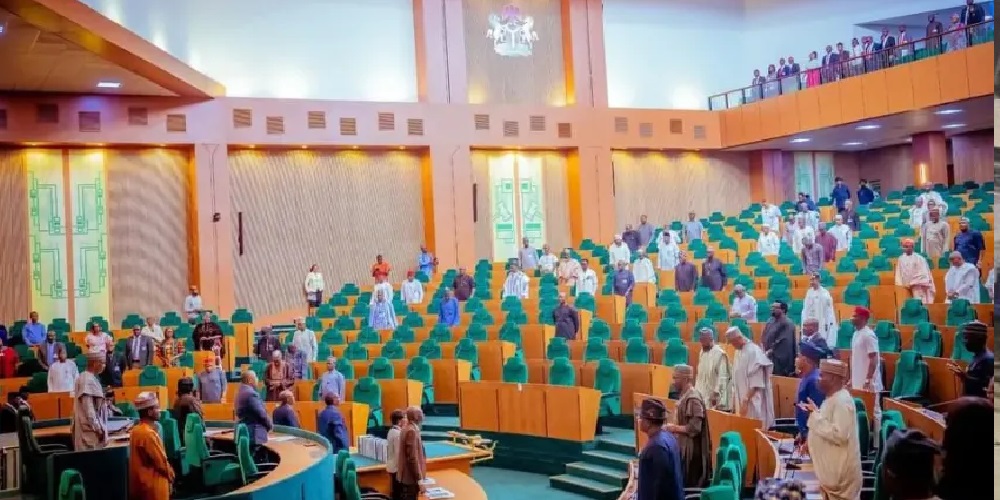
The House of Representatives Committee on the Federal Capital Territory (FCT) Area Councils and Ancillary Matters, has that it will look into the possibility of giving legislative backing to the five percent deduction from Area Councils funds for the traditional institutions, upgrade of the trade stools and creation of more chiefdoms for effective functions.

Chairman of the Committee, Rep. Fredrick Agbedi stated these during an interactive session with the traditional council in FCT on Monday in Abuja.

Agbedi said “We recognize and appreciate the critical role traditional rulers play in cultural preservation, security, conflicts resolution and community development in governance.

Advertisement

“Your leadership has been instrumental in fostering peace and stability within the FCT, and your contributions to local development is invaluable.

“I also want to use this avenue to acknowledge sets of your requests regarding the allocation of five percent from the funds designated for the Area Councils in the Federal Capital Territory, to support traditional institutions. However, the disbursement and allocation of funds within the FCT are governed by provisions of statutory budgetary framework that prioritize various sectors, including infrastructure, healthcare, education and social welfare.

“While we acknowledge the merit of your request, the current financial framework does not explicitly provide for such an allocation to traditional institutions. Any allocation of such funds will require legislative review and policy amendments to ensure compliance with existing financial regulations.

“Additionally, we wish to inform you that there is currently an Area Councils Administration Establishment Bill that has just gone through the first reading in the House of Representatives. This committee will liaise with all relevant stakeholders to consider all avenues for creating provisions that address the concerns of traditional rulers, including the allocation of funds for traditional institutions. In the interim, we encourage traditional councils to also engage with Area Councils to discuss potential avenues for partnerships and mutually beneficial initiatives that align with existing budgetary provisions.

Advertisement

“We also assure you that we’re open to further discussions on this issue, and will continue to support the recognition of traditional institutions within the broader governance structure. That said, we remain committed to collaborative efforts toward enhancing the welfare of traditional institutions and to explore possible mechanisms though which the role of traditional rulers can be better supported within the bigger and financial framework of the FCT and Area Councils”.

In his remarks, Chairman of the FCT Traditional Council, HRH, Alhaji Adamu Baba Yunusa (Abaji Chiefdom) informed the committee that the graded chiefs under the council have 17 chiefdoms across the six Area Councils with Ona of Abaji as the only 1st class chief.

“The Council’s operations are faced with myriads of challenges that inhibit its functioning, including inadequate financing of the institution, lack of existing legal/policy framework that will strengthen the financing of traditional institution in the FCT”, he said.

He therefore appealed that the implementation of five percent of local government allocations as being done by some states for traditional rulers will go a long way to addressing those challenges.
Advertisement

Continue Reading
Advertisement
Click to comment

Warning: Undefined variable $user_ID in /home/naijuinz/public_html/wp-content/themes/zox-news/comments.php on line 49

You must be logged in to post a comment Login

Leave a Reply

News

Ports post robust first-quarter gains as cargo volumes and vessel capacity rise

Published

on

ADVERTISEMENT
Zoom Ad
ADVERTISEMENT
Zoom Ad

…NPA records 46.75m GRT as Cargo throughout hits 32.38m tons

…bigger ships and surging vehicle traffic boost performance across Nigerian terminals

By Gloria Ikibah

Nigeria’s port system delivered a strong showing in the opening quarter of 2026, with fresh figures pointing to notable increases in both vessel capacity and cargo movement.

Advertisement

Data released in the Q1 operational review by the Nigerian Ports Authority showed that Gross Registered Tonnage for ocean-going vessels climbed by 19.5 per cent to reach 46.75 million. Cargo throughput also remained solid, hitting 32.38 million tonnes during the period.

The figures reflect a growing preference for higher-capacity vessels calling at Nigerian ports, a trend widely linked to improving efficiencies and rising confidence among global shipping operators. The shift has been further supported by developments such as the Lekki Deep Sea Port, which continues to attract larger ships and expand handling capabilities.

Vehicle imports recorded a particularly sharp rise, jumping by 67 per cent, adding further momentum to overall port activity.

This uptick comes as authorities push ahead with plans to modernise port infrastructure and streamline operations in a bid to strengthen Nigeria’s position within the African Continental Free Trade Area framework AfCFTA.

Advertisement

Managing Director of the Nigerian Ports Authority, Abubakar Dantsoho, has emphasised the need for faster turnaround times, improved logistics and greater innovation if Nigeria is to secure a larger share of cargo flows in an increasingly competitive African market.

‎Speaking at an industry forum in Lagos, the NPA Boss reiterated that efficiency, speed, innovation and reliability will determine which countries dominate cargo flows in the new continental trade environment.

‎“The time has come for a paradigm shift in the structure of Nigeria’s economy towards the full utilisation of our marine resources. Our port system, if properly harnessed, can serve as a major driver of economic growth,” he said.

Cargo activity across Nigerian ports maintained a steady upward trend in the first quarter of 2026, even when crude oil terminals were excluded. Throughput rose by 11.6 per cent year-on-year to 32.38 million metric tonnes, up from 29.02 million metric tonnes recorded in the same period of 2025.

According to the Nigerian Ports Authority, the increase was driven by higher trade volumes, stronger import and export flows, improved efficiency at the ports and sustained demand for related services.

Exports proved to be a standout performer during the quarter, with outward cargo climbing by 23.7 per cent to 14.13 million metric tonnes. This points to improving competitiveness of Nigerian goods and a deeper foothold in both regional and global supply chains.

Containerised exports also expanded sharply. Outward laden container traffic rose by 67.6 per cent, moving from 61,332 TEUs in the first quarter of 2025 to 102,803 TEUs in the same period this year, reflecting gains in logistics coordination and terminal operations.

Advertisement

Vehicle handling recorded similar momentum, with total units processed surging by 67 per cent to 58,870, compared with 35,262 a year earlier.

Transshipment activity saw one of the most dramatic increases, with container volumes in that category rising by 83.1 per cent. Analysts say this is a key signal that Nigeria is becoming more central to cargo redistribution within West Africa, an important development as the African Continental Free Trade Area continues to lower barriers to trade across the continent.

Ongoing reforms under the administration of Bola Ahmed Tinubu have focused on modernising infrastructure, expanding digital systems and restructuring institutions to position the country as a leading maritime and logistics hub in Africa.

A central part of this effort is the large-scale upgrade of major facilities, including the Lagos Port Complex and the Tin Can Island Port, where rehabilitation works are underway following the approval of a one-billion-dollar overhaul aimed at tackling long-standing infrastructure gaps and improving competitiveness.

Efforts to upgrade Nigeria’s port system are being broadened, with the Minister of Marine and Blue Economy, Adegboyega Oyetola, confirming that procurement is in progress for improvement works at ports in Warri, Port Harcourt, Onne and Calabar. The move is part of a wider plan to ensure more even development across the country’s maritime infrastructure.

Advertisement

Alongside physical upgrades, the administration of Bola Ahmed Tinubu is advancing a strong digitalisation drive. This includes rolling out systems such as the Port Community System and the National Single Window, both designed to simplify cargo clearance, cut delays and improve transparency across port operations.

Stakeholders in the sector say these measures could help reduce the cost of doing business while boosting efficiency and shortening vessel turnaround times.

Attention has also turned to improving cargo evacuation, with increased investment in rail links, inland dry ports, barging services and dedicated export corridors aimed at easing congestion around port access routes.

Security conditions in Nigerian waters have also improved markedly. The country has gone more than four years without recorded piracy incidents, a shift widely credited to the Deep Blue Programme and enhanced maritime surveillance capabilities.

Advertisement

According to the Nigerian Ports Authority, the latest performance figures indicate that the sector is steadily transforming into a more commercially active and cargo-driven system, better positioned to support trade, economic growth and regional integration.

Even so, challenges remain. Despite accounting for a significant share of West Africa’s economic output, Nigeria still handles only about a quarter of the region’s cargo traffic, highlighting the need to sustain reforms and fully unlock the country’s maritime potential.

‎“With sustained commitment to these initiatives, Nigeria’s port system will enter a new phase and emerge as a leading maritime logistics hub in Africa,” he assured.

Continue Reading

News

Galatasaray looking for player who can fill Osimhen’s big shoes

Published

on

ADVERTISEMENT
Zoom Ad
ADVERTISEMENT
Zoom Ad

Galatasaray are looking for a player who can fill striker Victor Osimhen’s shoes at the club in the near future.

This was disclosed by Turkish sports commentator Ibrahim Seten.

Speaking on the 343 Digital YouTube, Seten shared information regarding current events at Galatasaray.

He said, “Galatasaray is looking for a young player who can fill Osimhen’s shoes when he’s not there, but also who can play alongside Osimhen, both on the wings and in the back.

Advertisement

“They told me, ‘Like a younger version of Batshuayi’,” he said.

Osimhen, who led Galatasaray to win the Turkish Super Lig on Saturday, has been linked with a move away from the club this summer.

Continue Reading

News

Serious allegation: Gumi claims US intelligence behind insecurity in Nigeria

Published

on

ADVERTISEMENT
Zoom Ad
ADVERTISEMENT
Zoom Ad

Kaduna-based Islamic cleric Ahmad Gumi has claimed that American intelligence agencies are behind banditry and Boko Haram terrorism in Nigeria.

Gumi made the allegation in a Facebook post on Saturday while reacting to comments by Mike Arnold, who has spoken publicly about alleged persecution of Christians in Nigeria.

Arnold had shared photos of himself with several Nigerians, including former Cross River Governor Donald Duke and Nigeria’s Information Minister Mohammed Idris.

“These are a few of the people I’ve met and places I’ve been to in Nigeria over the years,” Arnold wrote while sharing the photos.

Advertisement

In response, Gumi accused Arnold of spreading what he described as a false narrative about Christian killings in Nigeria.

He also alleged that American intelligence agencies were linked to insecurity in some northern states.

“After all the barking about ‘fake Christian genocide’, it is shameful to realise that this man has been almost everywhere where Christians are prosperous, yet he has not visited Zamfara, Katsina and other northern states suffering from the activities of bandits and Boko Haram allegedly sponsored by the same American intelligence. One of the things Islam abhors is lies and liars,” Gumi wrote.

Gumi has repeatedly criticised US involvement in Nigeria’s security issues.

Advertisement

In December, after airstrikes reportedly ordered by US President Donald Trump targeted suspected terrorist hideouts in Sokoto State, Gumi condemned the action and described it as an attack on Islam.

The latest allegation comes as Nigeria and the United States continue to strengthen security cooperation to combat insecurity.

On Friday, presidential spokesman Bayo Onanuga said National Security Adviser Nuhu Ribadu met with US Vice President JD Vance and other American officials to discuss deeper cooperation on Nigeria’s security challenges.

Advertisement
Continue Reading

Trending

Copyright © 2024 Naija Blitz News