
Foreign
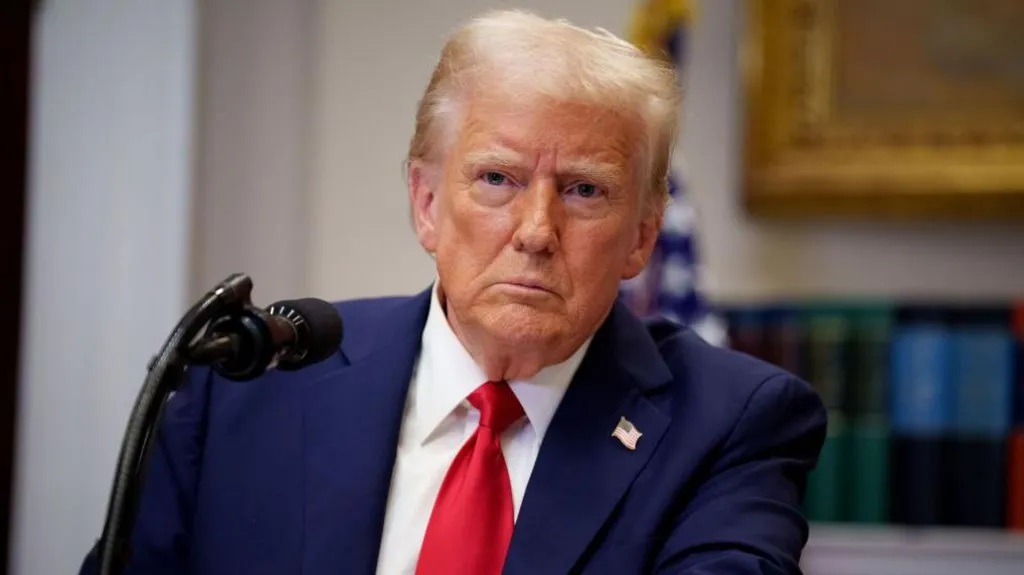
Trump urges Russia to ‘get moving’ on Ukraine as Witkoff meets Putin

- /home/naijuinz/public_html/wp-content/plugins/mvp-social-buttons/mvp-social-buttons.php on line 27
https://naijablitznews.com/wp-content/uploads/2025/01/Donald-Trump-1-1000x575.jpg&description=Trump urges Russia to ‘get moving’ on Ukraine as Witkoff meets Putin', 'pinterestShare', 'width=750,height=350'); return false;" title="Pin This Post">
- Share
- Tweet /home/naijuinz/public_html/wp-content/plugins/mvp-social-buttons/mvp-social-buttons.php on line 72
https://naijablitznews.com/wp-content/uploads/2025/01/Donald-Trump-1-1000x575.jpg&description=Trump urges Russia to ‘get moving’ on Ukraine as Witkoff meets Putin', 'pinterestShare', 'width=750,height=350'); return false;" title="Pin This Post">


US envoy Steve Witkoff wrapped up his latest talks with Russia’s Vladimir Putin on Friday, after President Donald Trump urged his Russian counterpart to move quicker to end what he said was the country’s “senseless war” with Ukraine.
Trump has been pressing Moscow and Kyiv to agree on a ceasefire deal but has failed to extract any major concessions from the Kremlin, despite repeated negotiations between Russian and US officials.
The US leader told NBC News last month he was “pissed off” with his Russian counterpart, while top US diplomat Marco Rubio warned last week that Washington would not tolerate “endless negotiations” with Russia over the conflict.
“Russia has to get moving,” Trump wrote on his Truth Social platform, adding that the conflict, which began in February 2022 when Moscow sent troops into Ukraine, was “senseless” and “should have never happened”.
Kyiv and several of its Western allies suspect Russia of stalling the talks on purpose.
Ukraine’s President Volodymyr Zelensky has accused Russia of dragging Beijing into the conflict and on Friday claimed that hundreds of Chinese nationals were fighting at the Ukraine front line alongside Russian troops.
Trump’s post came just before Witkoff’s meeting with Putin at the presidential library in Saint Petersburg, which state news agencies said lasted four and a half hours.
The Kremlin said afterwards only that the meeting had taken place and “focused on various aspects of the Ukrainian settlement”, without elaborating.
Spokesman Dmitry Peskov had said earlier that he expected no diplomatic “breakthroughs” from the talks — Witkoff’s third with Putin since February.
He also said “maybe” to a question about whether a possible meeting between Putin and Trump would be discussed.
– Kellogg’s ‘zones of responsibility’ –
After their last meeting, Witkoff — a long-time Trump ally who worked with the US president in real estate — said Putin was a “great leader” and “not a bad guy”.
The envoy’s praise of a president long seen by the United States as an autocratic adversary highlights the dramatic turn in Washington’s approach to dealings with the Kremlin since Trump took office for a second term.
Despite a flurry of diplomacy, there has been little meaningful progress on Trump’s main aim of achieving a ceasefire.
Keith Kellogg, Trump’s special envoy to Ukraine, suggested British and French troops could adopt zones of control in the country, in an interview with The Times published Saturday.
Kellogg suggested they could have areas of responsibility west of the Dnipro river, as part of a “reassurance force”, with a demilitarised zone separating them from Russian-occupied areas in the east.
“You could almost make it look like what happened with Berlin after World War II,” he told the British newspaper.
“I was speaking of a post-ceasefire resiliency force in support of Ukraine’s sovereignty. In discussions of partitioning, I was referencing areas or zones of responsibility for an allied force (without US troops),” he said later on X.
– ‘Using Chinese lives’ –
Kyiv said this week that its forces had captured two Chinese nationals in the eastern Donetsk region fighting for Moscow.
The Kremlin denied the claim, while Beijing warned parties to the conflict against making “irresponsible remarks”.
“As of now, we have information that at least several hundred Chinese nationals are fighting as part of Russia’s occupation forces,” Zelensky told military chiefs from allied countries in Brussels.
“This means Russia is clearly trying to prolong the war — even by using Chinese lives.”
The Ukrainian leader also called out Russia for having refused a complete ceasefire proposed by the United States with Ukrainian approval a month ago.
Putin last month rejected a full and unconditional pause in the conflict, while the Kremlin has made a truce in the Black Sea conditional on the West lifting certain sanctions.
– Question of trust –
Trump has pushed for a broad rapprochement with Moscow, which has yielded some results.
On Thursday, Russia freed dual US-Russian ballet dancer Ksenia Karelina from prison in exchange for suspected tech smuggler Arthur Petrov, the second exchange between Moscow and Washington in less than two months.
Karelina, arrested last January while visiting Russia to see family, was serving a 12-year sentence on “treason” charges after she donated the equivalent of around $50 to a pro-Ukraine charity.
The head of Moscow’s foreign intelligence service, Sergei Naryshkin, said Friday that Russia would discuss more prisoner swaps in the future.
Russian Foreign Minister Sergei Lavrov said the swaps helped build confidence between the two sides, which deteriorated under former US president Joe Biden’s administration.
“It helps build trust, which is much needed, but it will take a long time to finally restore it,” he told reporters.
AFP
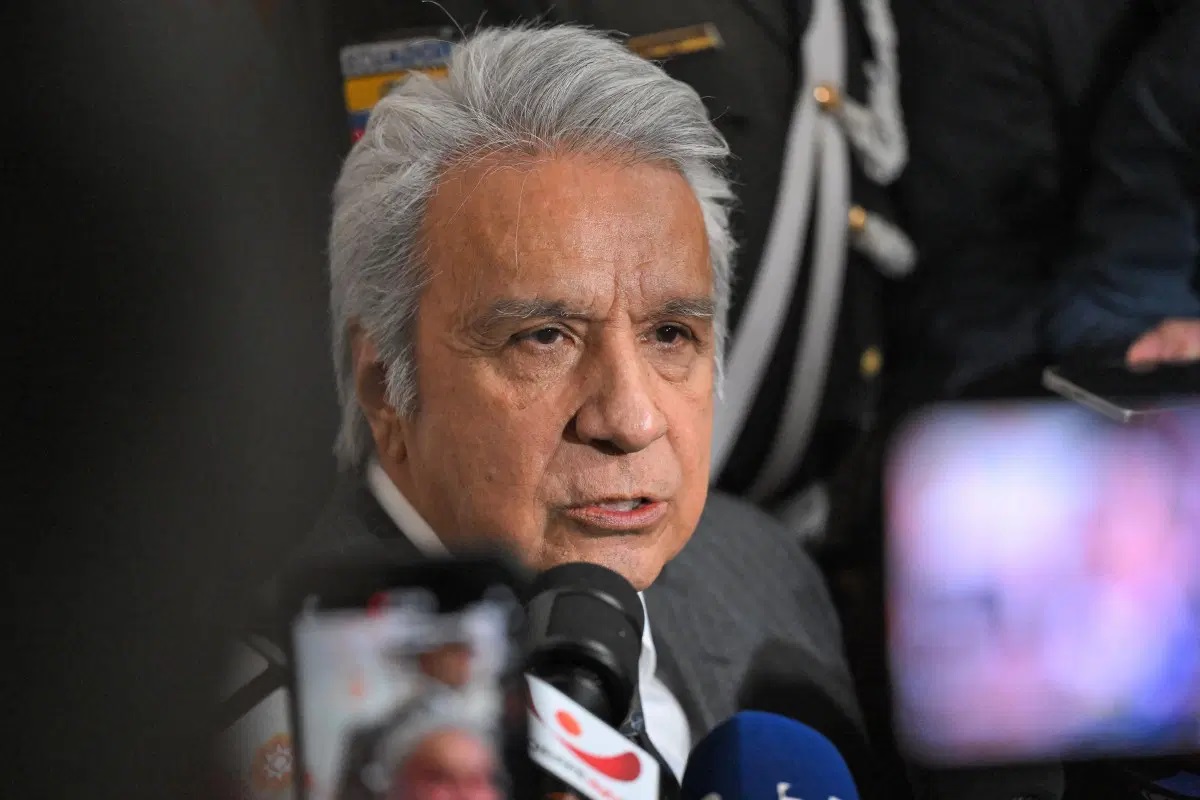
An Ecuadorian court has sentenced former President Lenin Moreno to five years in prison for accepting bribes linked to the construction of the country’s largest hydroelectric dam.
Moreno, who served as president from 2017 to 2021, was among 20 people convicted over corruption allegations surrounding the Coca Codo Sinclair hydroelectric project, which was built by Chinese company Sinohydro.
Prosecutors alleged that Sinohydro paid about $76 million in bribes, representing roughly four per cent of the project’s total cost.
Moreno, 73, denied the allegations and maintained that he never received money from the Chinese company.
Speaking after Friday’s ruling, the former president said he had never received “a single cent” from Sinohydro.
He also blamed the case on the administration of his former political ally and predecessor, Rafael Correa, whom he accused of seeking revenge after their political relationship deteriorated.
Moreno served as Correa’s vice-president between 2007 and 2013 before succeeding him as president. The two later fell out after Moreno moved away from Correa’s socialist policies and developed closer ties with the United States.
The court also sentenced Moreno’s wife and other relatives to nearly three years in prison for complicity in the corruption case.
Two former managers of the Coca Codo Sinclair power plant were also among those convicted.
Prosecutors had initially requested a six-and-a-half-year prison sentence for Moreno.
The former president has announced plans to appeal the judgment.
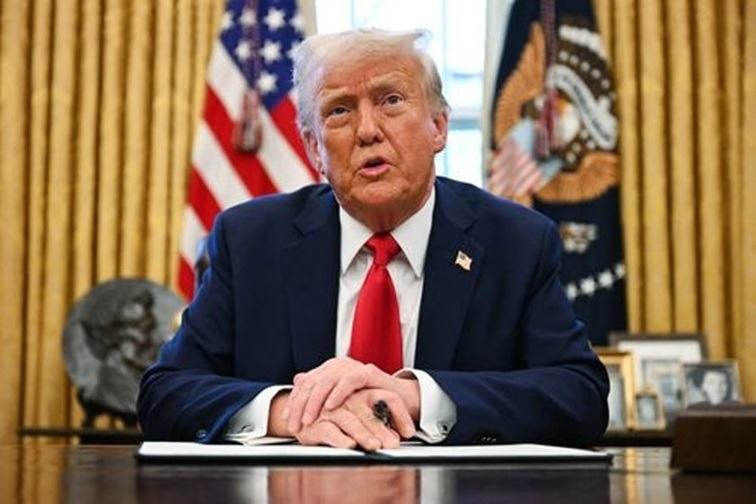
US President Donald Trump has signed an executive order renaming Lake Ontario as “Lake America” for official US federal use, in the latest escalation of his dispute with Canada.
Trump signed the order on Thursday at the White House, saying the change was effective immediately. The order directs the US Department of the Interior to update federal geographic records and naming systems.
Trump justified the move by accusing Canada of treating the United States unfairly in trade and defence. He said Canada had been “ripping us off” in trade and criticised Ottawa over its relationship with Washington.
However, the order does not require Canada or international organisations to adopt the new name. Lake Ontario is shared by the US state of New York and Canada’s province of Ontario, with more than half of its surface area lying in Canadian territory.
Ontario Premier Doug Ford dismissed the move, saying the lake would continue to be known as Lake Ontario by Canadians and much of the rest of the world.
The renaming comes amid a rapidly worsening US-Canada trade dispute. Washington recently imposed 50 per cent tariffs on about $20 billion worth of Canadian goods, while Canada responded with retaliatory tariffs of its own on hundreds of US products.
The latest move echoes Trump’s decision in January 2025 to rename the Gulf of Mexico as the “Gulf of America” for US federal purposes.
Trump also suggested that further geographic name changes could be considered, joking that after a gulf and a lake, the United States might eventually rename the Atlantic or Pacific Ocean.
Canadian Prime Minister Mark Carney’s government had not immediately issued a formal response to the latest order.
The controversy has added another symbolic dimension to already strained relations between the two neighbouring countries, as both sides continue to impose tariffs and seek to protect their economies.
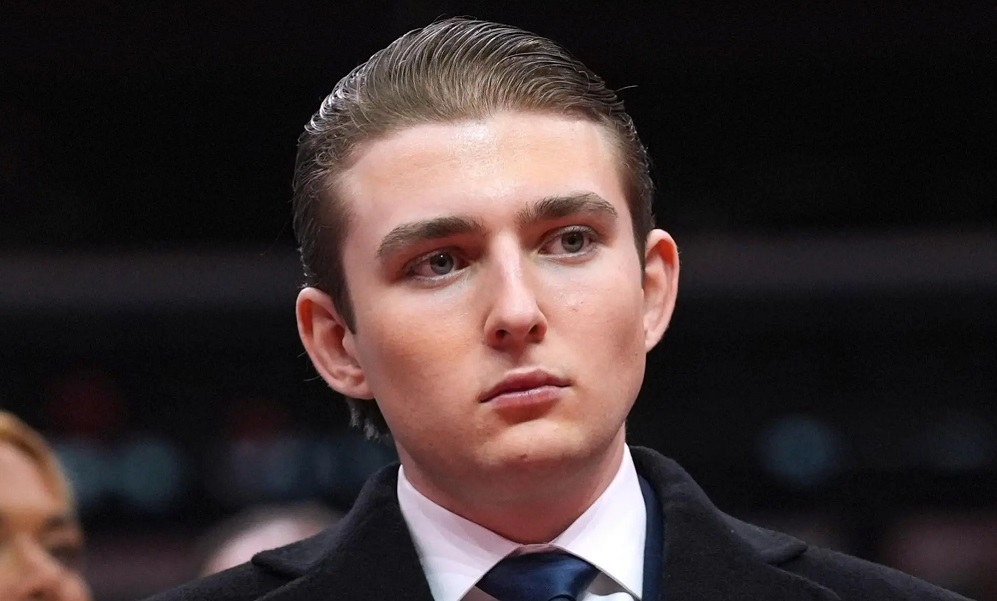
The United States Secret Service has confirmed that it is aware of a video broadcast by Iranian state media that appears to threaten the life of Barron Trump, the youngest son of US President Donald Trump.
The nearly three-minute video, aired by the state-run Islamic Republic of Iran Broadcasting (IRIB), opens with an English-language graphic asking: “Where to kill Barron Trump?!” It then displays stylised graphics identifying places where Barron is publicly known to spend time, including Trump Tower in New York.
The video ends with a narrator referring to people being “eagerly waiting to receive our $10 million reward.”
Secret Service spokesperson Nate Herring confirmed that the agency was investigating the video as a potential threat against one of its protectees.
“The US Secret Service is aware of the video and investigates anything that can be perceived as a threat toward our protectees,” Secret Service spokesperson Nate Herring told CNN in a statement. “Out of concern for operational security, we do not discuss matters of protective intelligence.”
The apparent targeting of Barron marks a new development in a broader pattern of threats directed at Trump and members of his family by hard-line Iranian media.
Iranian media outlets have previously published material threatening President Trump and his family, while first lady Melania Trump has also been the subject of threats. However, the video appears to be the first public instance in which Barron has been specifically singled out.
A federal law enforcement source told CNN that the video forms part of a wider campaign of material from Iran targeting Trump and his family. According to the source, some of the videos have included details about movements and suggestions for killing members of the president’s family.
The security response to such threats involves continuously changing and adjusting protective arrangements, based on information gathered by the Secret Service, other US agencies, police authorities and foreign governments.
IRIB, which broadcast the video, is regarded as aligned with hard-liners within Iran’s regime, while its head is directly appointed by Iran’s supreme leader.
Trump has previously spoken publicly about threats against his life from Iran.
“I’m on whatever list… so far, I guess I’ve been a bit lucky, but maybe that doesn’t last very long. These are evil, sick people.”
He made the comments in July at the NATO summit in Turkey, before secretly leaving the country aboard an alternate military aircraft.
The departure was part of an elaborate security operation reportedly triggered by an Iranian threat. Trump boarded the aircraft while concealed inside a catering truck after officials determined that travelling on either version of Air Force One could expose him to an unacceptable level of danger.
A person familiar with the matter told CNN that the threat involved a shoulder-fired missile and was considered specific enough for officials to fear that Trump’s life would be at enormous risk if he travelled on either version of Air Force One.

Kwara Assembly Declares Two Assembly members’ Seats Vacant Over Defection From APC To PDP

FBI confirms Tinubu was Under Investigation for Drugs

BREAKING: Ondo Universities begin indefinite industrial action




-
 News20 hours ago
EFCC sacks over 40 staff for corruption, prosecutes 5 others
-

 News21 hours ago
Calls Mount for Forensic Audit of Chinua Achebe Airport Over Alleged Revenue Diversion
-

 Economy20 hours ago
NNPCL Increases Price Of Petrol
-
 Metro20 hours ago
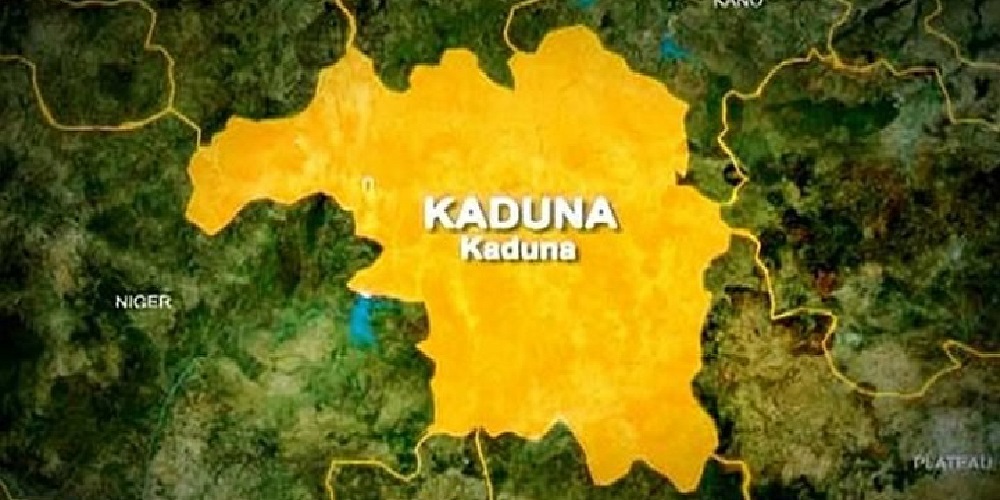
Air Force Officer Narrates How Gunmen Abducted His Wife, Two Children From Kaduna Home
-

 News13 hours ago
Just in: Court fires 2027 APC candidate, orders fresh primaries
-

 News13 hours ago
Intoxicated Pilot Crashes Stolen Plane Near Nuclear Site
-

 Entertainment20 hours ago
Headies dismiss claims of sidelining gospel artistes
-

 News13 hours ago
Breaking Dangote Refinery stops sales of petroleum products to Matrix, AA Rano, others
Warning: Undefined variable $user_ID in /home/naijuinz/public_html/wp-content/themes/zox-news/comments.php on line 49
You must be logged in to post a comment Login