Connect with us

Foreign

Gabon military leader Nguema wins presidential election

Published

on

ADVERTISEMENT
Zoom Ad
ADVERTISEMENT
Zoom Ad

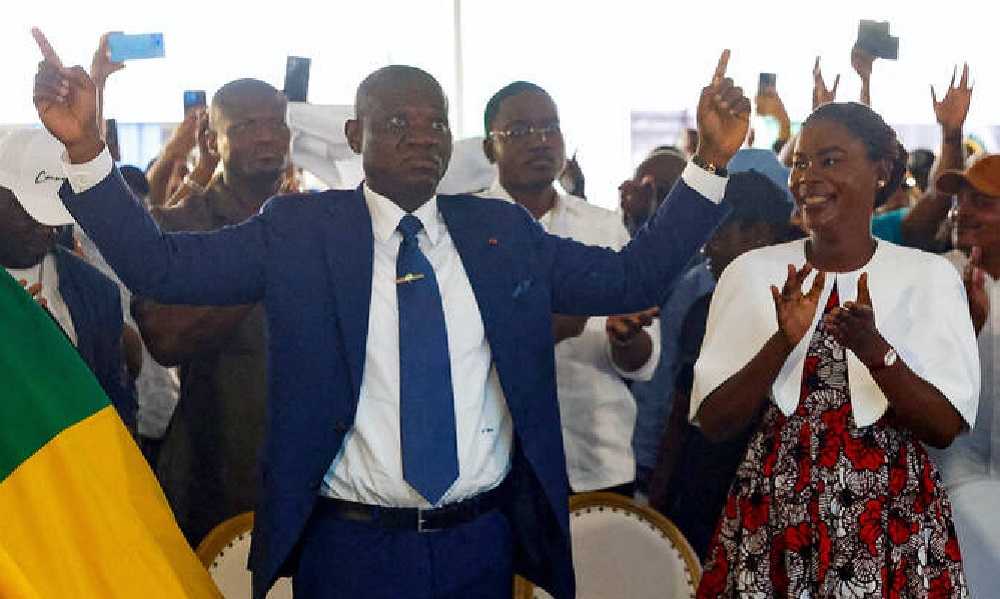
Gabon’s junta chief, Brice Oligui Nguema, has won the presidential election with 90.35 per cent of the vote, according to provisional results released Sunday by the interior ministry.


Oligui, who ended more than five decades of corruption-plagued rule by the Bongo family in August 2023, assuming the role of transitional president, had promised to return the country to democratic rule.

Earlier Sunday, Gabon 24 television had reported that he was “well ahead” in several of the central African country’s provinces.

On Saturday, voters had flocked to the ballot boxes to have their say in an election marking the end of military rule. The latest provisional figures from the interior ministry put the participation rate at 70.4 per cent.

Advertisement

The day after voters poured into polling stations, the streets of the capital Libreville were calm — in contrast with previous elections in 2016 and 2023 marked by tensions and unrest.

“I hadn’t voted in a long time, but this time, I saw a ray or something that made me go out and vote,” 58-year-old Catholic Olivina Migombe told AFP while en route to church on Sunday.

“I believe in change this time,” the professed Oligui voter added.

– Debt and poverty –

Advertisement

Whoever wins will have to reckon with the oil-rich country’s litany of problems, from crumbling infrastructure to widespread poverty, all while labouring under a crushing mountain of debt.

If Oligui is elected president “he will have lots of work to do,” Patrick Essono-Mve, a 48-year-old unemployed technician, also on the way to mass, told AFP.

Oligui has sought to shed his military strongman image and even ditched his general’s uniform to run for a seven-year term.

The junta leader has dominated the campaign, with his seven challengers, led by ousted leader Ali Bongo’s last prime minister, Alain-Claude Bilie By Nze, largely invisible by comparison.

Advertisement

But critics accuse Oligui of having failed to move on from the years of plunder of the country’s vast mineral wealth under the Bongos, whom he served for years.

For the first time, foreign and independent media were allowed to film the ballot count.

International observers at polling stations across the country did not notice any major incidents, according to first reports.

In total, some 920,000 voters were called to cast their ballots at 3,037 polling stations, of which 96 were abroad.

Advertisement

Already, in the first results released by state media CTRI News on Sunday morning, Oligui was the overwhelming favourite to win in around 30 polling stations, some of them returning results of 100 percent of the vote in his favour.

AFP
Continue Reading
Advertisement
Click to comment

Warning: Undefined variable $user_ID in /home/naijuinz/public_html/wp-content/themes/zox-news/comments.php on line 49

You must be logged in to post a comment Login

Leave a Reply

Foreign

Death Toll From Venezuela Quakes Jumps To 188, Over 1,500 Injured

Published

on

By

ADVERTISEMENT
Zoom Ad
ADVERTISEMENT
Zoom Ad

The death toll from Venezuela’s devastating earthquakes has risen to at least 188, with 971 people injured, National Assembly chief Jorge Rodriguez, said on Thursday.

Interim president Delcy Rodriguez had earlier said that round 30 aftershocks have been recorded following the two strongest quakes on Wednesday.

Authorities initially reported 32 dead and more than 700 injured.

The earthquakes of magnitude 7.2 and 7.5 struck the same area of Venezuela on Wednesday, according to the United States Geological Survey (USGS), causing buildings in the capital to crumble and forcing the closure of the country’s main airport.

Advertisement

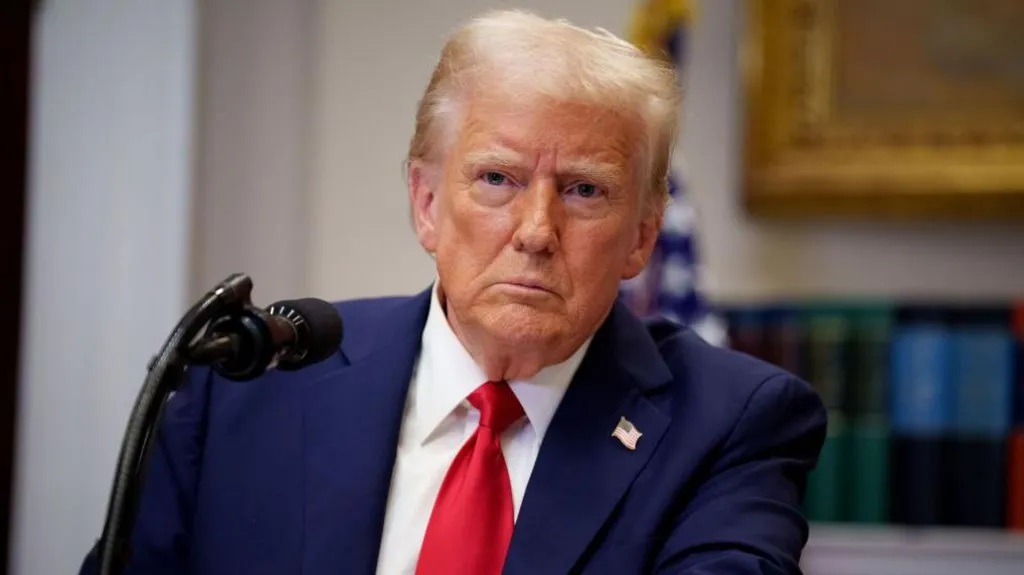
US President Donald Trump said late Wednesday that “the two major earthquakes that just hit the great people of Venezuela are both massive in scale and have left a devastating number of deaths.”

“The U.S.A. stands ready, willing, and able to help! I have instructed all agencies of our government to get ready to move quickly,” the American president wrote on his Truth Social platform.

An AFP journalist saw a 22-story building completely destroyed in the capital’s Altamira neighborhood, where people cried out relatives’ names as volunteers climbed over the rubble.

“We need flashlights,” one of them said.

Advertisement

The first quake, with an epicenter 21 kilometers (13 miles) west of the coastal town of Moron, occurred at 2204 GMT, USGS said. Within a minute, a 7.5-magnitude quake struck about 45 kilometers away.

“This earthquake was the second event in a doublet. This magnitude 7.5 mainshock was preceded by 39 seconds by a 7.2 foreshock,” USGS said.

Continue Reading

Foreign

US Targets Alleged ISIS Funding Network, Names Nigerian

Published

on

By

ADVERTISEMENT
Zoom Ad
ADVERTISEMENT
Zoom Ad

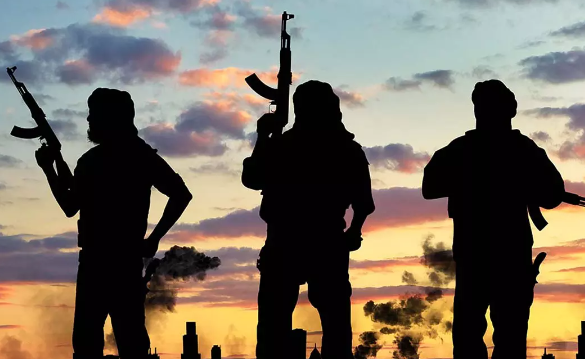
The United States government has identified a Nigerian national among several individuals and organisations accused of facilitating financial operations for the Islamic State of Iraq and Syria (ISIS), as part of a broader crackdown on the group’s global funding network.

In a statement issued by the U.S. Department of State, officials said the action targeted three individuals and six entities operating across Europe, the Middle East, and West Africa, who are allegedly involved in moving funds used to support ISIS activities.

According to the department, the measures are aimed at disrupting the terrorist group’s ability to finance attacks and sustain its international operations.

“Under the leadership of President Trump, the United States is dismantling ISIS’s ability to finance terrorism around the world. We are cutting off the financial lifelines from around the world that enable ISIS to fund attacks, support its regional affiliates, and threaten civilians, including religious minorities,” spokesperson Thomas Pigott said.

Advertisement

The statement noted that the network spans France, Syria, Türkiye, and Nigeria, and is believed to have facilitated the cross-border movement of funds linked to the extremist group.

Officials alleged that the designated individuals include a France-based facilitator connected to explosives-related information shared with ISIS supporters, a Syria-based operator who reportedly used cryptocurrency to transfer funds internationally, and a Nigeria-based facilitator whose money exchange businesses were allegedly used as channels for ISIS financing.

The U.S. government said the designations are part of ongoing efforts to dismantle financial pipelines supporting terrorist organisations and to restrict their global operations.

Advertisement
Continue Reading

Foreign

Seven PMs In 10 Years: Britain’s Decade Of ‘Change’

Published

on

By

ADVERTISEMENT
Zoom Ad
ADVERTISEMENT
Zoom Ad

Britain will have its seventh prime minister in 10 years after Labour leader Keir Starmer was ousted on Monday by his own party.

The party’s self-inflicted wound was a trend set by the Conservatives when they were in office.

Starmer announced his resignation on Monday following months of nose-diving poll ratings and manoeuvring by his own MPs.


Advertisement
Britain’s Prime Minister Keir Starmer makes a statement on his future outside 10 Downing Street on the morning of June 22, 2026, in London. Photo by HENRY NICHOLLS / AFP

Veteran Labour politician Andy Burnham has confirmed he will seek to replace him.

The main opposition Tories went through five prime ministers between 2016 and July 2024 when Starmer swept to power in a landslide general election victory.

The rapid turnover at the top prompted Starmer — before he became prime minister — to call for an end to the “chaos” of chopping and changing leaders.

After less than two years, Starmer has now met a similar fate himself.

Here’s what happened to his predecessors:

Advertisement

David Cameron (May 2010 to July 2016)

David Cameron, Libya, UK
Former UK Prime Minister, David Cameron

Britain’s decision to leave the European Union ended Cameron’s second term as prime minister.

After the country voted to leave in a June 2016 referendum, Cameron, who had campaigned to remain in the bloc, resigned.

Theresa May (July 2016 to July 2019)

Britain’s Prime Minister Theresa May announces her resignation outside 10 Downing street in central London on May 24, 2019. Beleaguered British Prime Minister Theresa May announced on Friday that she will resign on June 7, 2019 following a Conservative Party mutiny over her remaining in power.
Tolga AKMEN / AFP

May took over amid the fallout from the Brexit referendum after a long tenure in the notoriously difficult post of interior minister.

She called a snap election the following year to strengthen her hand in Brexit negotiations, but the move backfired when her party emerged as the biggest in parliament but without a majority.

Advertisement

Unable to get her Brexit deal through parliament, the Conservatives suffered a drubbing in European Parliament elections in May 2019, leading to her resignation.


Boris Johnson (July 2019 to September 2022)

A video grab from footage broadcast by the UK Covid-19 Inquiry shows Britain’s former Prime Minister Boris Johnson speaking at the UK Covid-19 Inquiry, in west London, on December 6, 2023 to give evidence. (Photo by UK Covid-19 Inquiry / AFP)

Johnson, a maverick politician famed for making a career out of breaking the rules, had to navigate the coronavirus pandemic and Britain’s departure from the European Union.

He led the Conservatives to victory in the December 2019 snap general election.

Advertisement

But weakened by scandals, he was eventually forced to step down following a cascade of resignations by ministers and aides.

Liz Truss (September 2022 to October 2022)

Britain’s Prime Minister Liz Truss delivers a speech outside of 10 Downing Street in central London on October 20, 2022 to announce her resignation. (Photo by Daniel LEAL / AFP)

Truss was prime minister for just 49 days, the shortest on record, before being ousted over her disastrous tax-cutting mini-budget.

Her economic agenda spooked the markets and took the UK to the brink of financial meltdown, losing her the support of her own party.

Rishi Sunak (October 2022 to July 2024)

Advertisement
Britain’s outgoing Prime Minister and leader of the Conservative party, Risihi Sunak, delivers a statement after his general election defeat, outside 10 Downing Street in London on July 5, 2024, a day after Britain held a general election. (Photo by HENRY NICHOLLS / AFP)

Sunak was at the helm for 20 months before losing the 2024 general election to Starmer, bringing to an end 14 years of Conservative rule.

He brought some stability following the Truss debacle but failed to stop bitter Tory infighting.

The privately wealthy former financier ultimately failed to connect with regular voters struggling with a cost-of-living crisis.

AFP


Advertisement

Continue Reading

Trending

Copyright © 2024 Naija Blitz News