Sugar Sector Eyes Reform as Industry Players Back Overhaul of Regulatory Framework8


ADVERTISEMENT
Zoom Ad
ADVERTISEMENT
Zoom Ad

By Gloria Ikibah

Major players in Nigeria’s sugar sector have voiced support for revamping the regulatory landscape industry under the National Sugar Masterplan (NSMP), a policy designed to shift Nigeria from heavy sugar imports to domestic production and export.

Advertisement

At a public hearing held at the National Assembly, representatives from the National Sugar Development Council (NSDC), Nigeria Customs Service, NAFDAC, BUA Group, Flour Mills of Nigeria, and consulting firm NINA-JOJER engaged lawmakers over proposed changes to the National Sugar Development Council Act.

The draft amendment titled: “A Bill for an Act to Amend the National Sugar Development Council Act and for Related Matters” (HB.2022 and HB.2030), seeks to redefine the Council’s powers and ensure all funds it collects are remitted to the Federation Account, aligning with constitutional provisions.

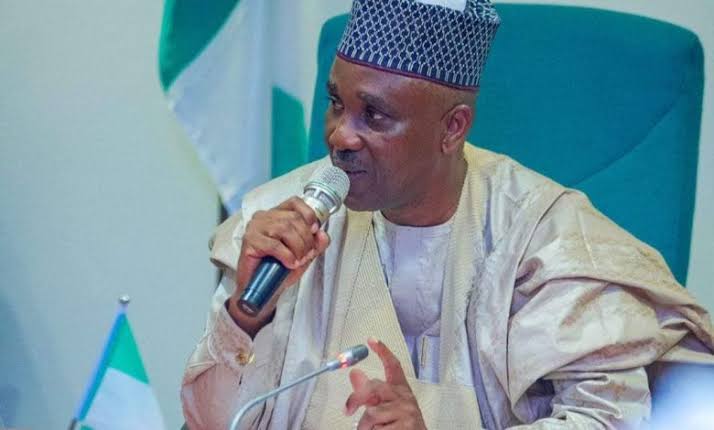
The Executive Secretary NSDC, Kamar Bakrin described the sugar plan as a blueprint for long-term economic impact, citing goals such as the creation of 100,000 skilled jobs, rural development, and a projected $1 billion annual cut in foreign exchange outflows.

Bakrin raised concerns over the recent directive mandating that 50% of the sugar levy be remitted to the Consolidated Revenue Fund (CRF), warning that such measures could undermine the sector’s transformation goals.
“To realize this vision, we require $4.5 billion in investments, which the Council is actively working to attract. Investor confidence is critical, and that confidence hinges on transparent, rule-based policies.
“The sugar levy was specifically introduced to fund the development of the sector, unlike import duties. Redirecting those funds could derail the country’s industrial ambitions,” he stated.
He added that the NSDC has established a technical committee to thoroughly review the proposed amendments and provide feedback.
Representiive of the Director General of NAFDAC, in person of Iba Edward expressed the agency’s support for the bill’s intent to enhance the Council’s regulatory capacity.
However, he cautioned that some of the proposed provisions overlap with the core regulatory functions of the Agency as outlined in Section 5 of the NAFDAC Act.
“We urge the National Assembly to clearly delineate the roles of NSDC to avoid conflict and duplication. NAFDAC remains the regulatory authority for all food imports, including sugar, to ensure consumer safety and quality standards,” he said.
Also speaking, Assistant Comptroller General of Customs, K.C. Egwuh, affirmed the Nigeria Customs Service’s commitment to its revenue collection mandate under Nigeria’s fiscal laws. He reiterated the agency’s support for efforts to enhance transparency and efficiency in the sugar industry.
Representing BUA Group, a former Minister Dr. Aliyu Idi Hong expressed the company’s firm commitment to the NSMP, noting BUA’s substantial investments in the sector.
Hong, however, urged policymakers to consider the economic impact of regulatory changes on both producers and consumers.
“We have developed a nearly 50,000-hectare sugar plantation, with 20,000 hectares already under cultivation, and we’re acquiring another 50,000 hectares. While we’re not where we want to be yet, we are making progress.
“Fiscal policies must be holistic and sensitive to the realities of Nigerians. As a socially responsible company, we support the backward integration policy and commend the ongoing reforms”, he asserted.
On behalf of Flour Mills Nigeria, Head of Government and Community Relations, Onome Okurah, acknowledged the challenges in the sector but stressed the company’s continued dedication.
“We operate on over 6,000 hectares and currently run sugar production for three to four months each year. We believe that with sustained collaboration, we’ll see meaningful progress in the next decade,” he said.
The consulting firm NINA-JOJER also made submissions at the hearing, raising concerns about the bill’s provisions on the utilization of the sugar levy, quota allocation, expanded regulatory roles, and enforcement mechanisms. The firm called for clarification of grey areas to ensure transparency and effectiveness.
Earlier in his opening address, the Committee, Rep. Enitan Dolapo Badru, explained that the hearing was part of efforts to develop inclusive legislation that will strengthen the capacity of NSDC to drive the NSMP.
“We urge all stakeholders to contribute constructively. Our goal is to build a sustainable and competitive sugar industry that creates jobs, improves livelihoods, and contributes significantly to national development,” he said.
In his remarks, Minister of Industry, Trade and Investment, Dr. John Owan Eno, emphasised sugar’s potential in achieving President Bola Tinubu’s $1 trillion economy vision.
The Minister noted that while the sugar industry has benefited from over $2 billion in incentives under the first and second phases of the Masterplan, its contribution to the economy remains underwhelming—estimated at just $30 billion.
“Sugar plays a critical role in rural development, job creation, and national value generation. The NSMP is a vital component of our industrialization drive. However, its success depends on the collective attitude and accountability of both public and private sector actors.
“This amendment is intended to strengthen the law, correct past lapses, and ensure we achieve real import substitution and sustainable local capacity,” he said.
Add a Comment

Leave a Reply

Keep Up to Date with the Most Important News

By pressing the Subscribe button, you confirm that you have read and are agreeing to our Privacy Policy and Terms of Use
Advertisement