BY BOLAJI AFOLABI


The removal of fuel subsidy announced by Asiwaju Bola Ahmed Tinubu shortly after his inauguration as Nigeria’s 5th democratically elected President in the 4th Republic, did not bode well with many people. It was not expected. Just transiting from the Buhari administration characterized by multi-sectoral under-development, accentuating poverty, untoward hardships, and severe economic challenges, the pronouncement jolted Nigerians. Many, who looked forward to more encouraging assurances from Tinubu, after surviving the rudderless mediocrity, gross ineptitude, systemic impunity, and in-your-face shenanigans exhibited by the immediate past government were roundly disappointed. Though Tinubu cited the need to reset the national economy, emplace and promote transparency and accountability in governance, and prevent bankruptcy as part of the reasons for the economic decision, people were not impressed. For some, his 4-word audacious statement, “fuel subsidy is gone,” kept reverberating in their minds, such that it remained on the front burners of discussions among Nigerians.
True to postulations, a few days and weeks into the beginning of the Tinubu administration, the effects of the subsidy removal began to manifest. Across the country, Nigerians witnessed a sudden increase in the prices of goods and services. In many ways, those involved in various trades, commerce, services, and other economic activities adjusted pricings to, in their thinking, reflect the present realities. Some described it as an ignoble season of deceit, defraud, and deception. How do you describe situations where consumers were forced to pay higher rates for goods and services that marketers procured before the removal of petroleum subsidy? It was such a trying period that many people had to literally “think out of the box” seeking realistic ways to navigate around the rising costs. 
Some time in November 2023, about six months into the removal of fuel subsidy, the writer had a meeting in Kuje; one of the six Area Councils of the Federal Capital Territory. To find a way around the high cost of premium motor spirit, commonly called petrol, public transportation became the most reasonable option. With four other passengers in a fairly good Volkswagen Golf sedan, the over 40 minute journey to Kuje commenced at the Wuye junction. Conscious that commercial vehicles, parks, markets, and other places where the every day citizens coalesce are veritable platforms for gauging public perceptions, and getting “fresh” gists, tales, and rumours of happenings, the writer was expectant. One was not disappointed. A few meters away from Wuye Park, one of the passengers, who later introduced himself as Chidiebere literally set the ball rolling. Perhaps, still recovering from the loss of the presidential election by his preferred candidate, he took everyone through “political class.” He did not only ward off any dissenting voices but made spirited efforts to enforce his opinion.
Suddenly, while approaching the House on the Rock Church Junction; after the City Gate, the only female passenger spoke for the first time. Mrs. Rhoda Ayuba, declared in pidgin English, ” *all dis talk about politics don do. Abeg, make una talk other mata wey go better the lives of people.”* Sitting beside the driver, one was enjoying every bit of happenings as the journey continued. With no counter opinion to her “motion” the discussions veered into other topics. Marriage, Economy, Governance, Leadership, and a few others were robustly handled by occupants of the vehicle; including the driver. While enjoying the exchanges, playing the role of “moderator” the writer made little contributions, now and again to enrich discourse, and get more from the “parliamentarians.”
From the Lugbe Junction of the Nnamdi Azikwe Expressway, Ayuba took over the “floor.” Her understanding and knowledge of national issues, development challenges, and other matters were breathtaking. Somehow, without prompting or suggestions, other passengers unanimously decided to listen to her analysis, projections, and commentary. Ayuba, who resides in Bwari but functions as a trader in Kuje has the grips of every topic. On any issue, she kept reminding all that, ” *I be trader, I know how the mata be oooo* .” Speaking specifically on the effects of the fuel subsidy removal, Ayuba illustrated how bad it was because many people were groaning. Though unhappy about the developments, she offered a caveat; situations may improve. This jolted fellow passengers. With confidence, Ayuba reiterated her earlier stance.
Ayuba was still delivering her lectures when the driver made a detour from the Expressway to the Kuje Road. Within minutes, the smooth riding from Wuye became something different. It turned torturous, painful, and pathetic. Just as the driver was meandering round the decrepit road, passengers were dancing to the tearful rhythms of the flogged vehicle. After a few minutes of body pains, non-rehearsed sighs, unplanned hisses, and head-shaking regrets, Ayuba broke the silence. She wondered aloud, ” *wetin area councils do minister Wike?”* The “in-house” analyst was at her best as she reeled out various projects Wike was doing across the city centre.
Apparently impressed by Wike’s determination to improve infrastructures in Nigeria’s capital, Ayuba wondered why the area councils were left out. She complained about the bad roads, decrepit schools, static health institutions, insecurity, and other infrastructural challenges bedeviling meaningful development across the area councils. She painted her story of frustration, depravity, and neglect as she commutes terribly portions of roads within Bwari and Kuje. She confessed that other traders and many people resident in the area councils are recipients of life-threatening roads, heart-wrecking health facilities, dysfunctional academic institutions and more. With a shaky voice, and teary eyed, Ayuba, the senior secondary school drop-out blamed past heads of the FCT for not being responsive to the decay of infrastructures across the area councils. As the driver pulled up at the improvised park for passengers to disembark, Ayuba’s last words focussed on the need for Wike to address these challenges, as the vast majority of Abuja population reside in some of the area councils.
Given the plethora of multi-sectoral rot that pervades the six Area Councils; Municipal, Bwari, Kuje, Kwali, Gwagwalada, and Abaji it will be difficult to fault the pains, and concerns of Ayuba. The councils, in the past decade or more, have been perennial winners of serial neglects and near-zero development. Due to leadership insensitivity, competency deficits, and lack of political will the vast majority of residents are daily ravaged by many challenges. Some past leaders exhibited spinless, pococurante and languorous attitudes to governance. Few others displayed indolence, insolence, and torpid tendencies. These wishy-washy and namby-pamby attitudes, and approaches to governance produced inglorious and stymied growth in and around the councils. Mr. Aniete Ubong, a retired civil servant resident in Gwagwalada declared that, “the deplorable conditions of social services and infrastructures here and other areas is very pitiable.” Alhaji Garba Usman, an entrepreneur in Kuje said, “it is surprising that past ministers of the FCT always played lip services to the development of area councils, knowing that over 70 percent of Abuja residents live in these places.”
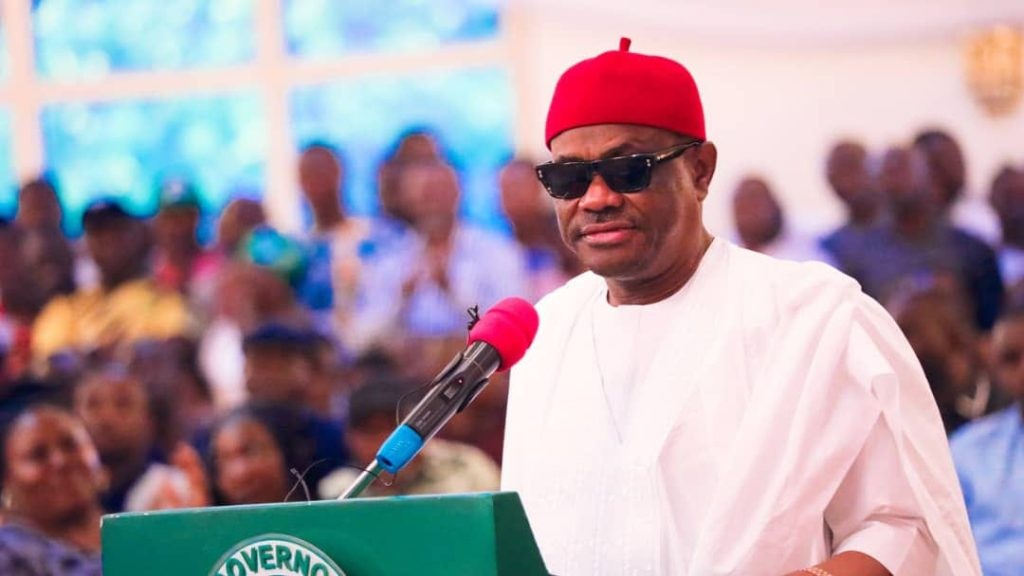
On February 1, 2024, Wike; who by the way, is the 8th Minister (in the 4th Republic) of the FCT made a historic visit to Gwagwalada area council. At the epoch making event, which was the flag-off for the construction of the Gwagwalada-Paikon Kore-Ibwa Road, he announced that President Tinubu had given approval for the construction of 5 Kilometers roads in each of the six area councils. While the audience were still grappling with the unexpected news, he promised to attract numerous projects that will impact on the general well-being of the residents, and galvanize economic growth and development. These promises were taken with bated enthusiasm, and cautious optimism. Though many people commended him for embarking on the construction of the road; described as encouraging when juxtaposed with the leadership styles of some of his predecessors but had doubts about completion of the road. Some others concluded that, as it was under previous governments the councils will be neglected in the distribution of projects. Few others postulated that the councils will still be victims of preposterous sectionalism, ethnic chauvinism, discombobulated political posturing, and religious demagoguery. These unnecessary factors, they argued have been responsible for the quantum stripping and savage of the councils from any meaningful development.
Indeed, as genuine as these worries are, Wike, in many ways seems to be in a hurry to change the past negative narratives. From irrefutable reports, there has been steady and deliberate efforts to improve the infrastructural architecture of all the area councils. Chief Theophilus Godiya, a community leader in Bwari confessed, “this is the first time that serious works have been done by any Minister to change, and improve the infrastructures of Bwari and other councils.” Corroborating, Mrs. Ibironke Akinjuwon, an educationist in Kwali revealed that, “Wike’s passion and commitment towards the provision of basic services and infrastructures across the area councils has been wonderful.” Continuing, Mr. Ifeanyi Ndubuisi, who runs a supermarket in Abaji stressed that, “political sentiments and ethnicity aside, Wike, in about two years has out-performed virtually all those before him. It is interesting that just as the city centre is being modernized, the area councils also have new, and proper face-lifts in every sector.” For Alhaji Kabiru Batagarawa, a real estate consultant in Idu District, “the numerous infrastructure development on-going within the city centre, and in all the area councils have not only opened up the entire territory for economic growth but also improve commercial activities and employment opportunities for the semi and informal sectors. With my background in planning and development, I can project that, if sustained the real benefits of what Wike and his team are doing now will begin to manifest fully from next year.”
Undoubtedly, in less than two years of his deployment to the FCTA by Tinubu, Wike has embarked on numerous projects geared towards communal development, result-driven integration and improved services in the area councils. That he pursues the realization of these projects with iron-cast resolve, audacious focus, and not-too-common fervor is undeniable. Amongst the various road projects spread across the area councils are:- Naharati-River Ukya-Unguwan Hausawa Road; Yangoji-Sukuku-Ebo Road; Paikon Kore-Ibwa Road; Garage Junction-LEA Secretariat Road; Saburi 1 & 2-Old Keffi Road-DeiDei International Market. Also, the Ushafa-War College-Army Checkpoint Roads; Dakibiyu District Dual carriage way; Aguma Palace-Radio Nigeria-New Market Road; Life Camp-Fish Market-Karmo-Dei Dei Road. A staff of the FCTA who preferred anonymity added that, “driving through the entire area councils will confirm that such roads infrastructures have never been done in the past. Also, the quality of the roads are top-notch.”
Some other sectors within the infrastructure architecture of the area councils have witnessed upgrading, rehabilitation, and new additions. In education, over 400 public schools; primary and secondary have been given necessary face-lifts. Some others include the provision of rural electrification of many communities; solar street lightings across numerous villages; construction and equipping of many primary health centers; upgrading of healthcare infrastructures; choice of Kuje, Kwali, and Gwagwalada as the pilot scheme for improved water provision under the FCTA/China Agreement; and numerous others. For Alhaji Musa Dan’Yaro, a Building Contractor, “the huge infrastructural development in the area councils are seen and best appreciated by residents of these communities, labourers, and workers on various sites, as well as suppliers, food vendors, contractors, and others. By embarking on these projects, Wike is not only creating employment and boosting economic activities but also improving quality of life, and upgrading the status of these communities.” Mr. Malachi Balarabe, tourism and hospitality entrepreneur reiterated that, “residents of all the area councils have never had such an avalanche of projects. It is simply unprecedented and encouraging. By his actions, Wike is giving true, and purposeful leadership in the territory.”
Really, it is obvious that Wike, with the support of Tinubu has impacted positively on the area councils, by not only emplacing projects for posterity but also providing the enabling environment for the promotion of commerce, trade, and other economic activities thereby guaranteeing the prosperity of the people. Like or loathe him, he has also shown that democracy, true democracy aside the strengthening of rule of law, is largely anchored on the provision of infrastructures for all, and not a few as commonly practiced. There is a unanimity of opinion that since the creation of the FCT in 1976 by the Murtala/Obasanjo regime, none of the area councils have received such focussed, and determined attention by any minister. Perhaps, Mrs. Ayuba was prophetic. She may be right after all. With the volume, value, and consistency of works on-going across the area councils; driven by him, it is right to put the question; ” *Wetin Area Councils Do Minister Wike?”* *
* BOLAJI AFOLABI, a Development Communications specialist was with the Office of the Public Affairs, The Presidency, Abuja.