
Foreign
India initiates investigation into deadly plane crash


- /home/naijuinz/public_html/wp-content/plugins/mvp-social-buttons/mvp-social-buttons.php on line 27
https://naijablitznews.com/wp-content/uploads/2025/06/fdrg.jpg&description=India initiates investigation into deadly plane crash', 'pinterestShare', 'width=750,height=350'); return false;" title="Pin This Post">
- Share
- Tweet /home/naijuinz/public_html/wp-content/plugins/mvp-social-buttons/mvp-social-buttons.php on line 72
https://naijablitznews.com/wp-content/uploads/2025/06/fdrg.jpg&description=India initiates investigation into deadly plane crash', 'pinterestShare', 'width=750,height=350'); return false;" title="Pin This Post">


The Indian government has launched a formal investigation into Thursday’s tragic Air India plane crash, confirmed the country’s Civil Aviation Minister Ram Mohan Naidu in a social media post.
According to the latest media reports, a total of 265 dead bodies had already been brought to a local government hospital in Ahmedabad city, where the plane crash had taken place.
Among the dead were 241 people onboard the ill-fated Boeing aircraft, while the rest of the casualties took place on the ground.
The formal probe was initiated by the Aircraft Accident Investigation Bureau, in line with international protocols set by the International Civil Aviation Organization, announced the federal minister.
He added that the Indian government was also constituting a high-level committee comprising experts from multiple disciplines to examine the matter in detail.
“The committee will work to strengthen aviation safety and prevent such incidents in the future,” posted the minister on X.
A black box in the rear of the aircraft was found, according to local media reports.
Meanwhile, the country’s civil aviation authorities were expected to take a few days before announcing the final death toll in this year’s worst-ever tragedy in India, as DNA tests were to be conducted to identify the victims.
Air India posted on its social media that the sole survivor is being treated in a hospital.
The flight had 169 Indian nationals, 53 British nationals, seven Portuguese nationals and one Canadian, apart from two pilots and 10 cabin crew members on board when it crashed at the premises of a medical college.
“We regret to inform that, of the 242 aboard, there are 241 confirmed fatalities. The sole survivor is being treated in a hospital,” Air India said in a statement. “The survivor is a British national of Indian origin.”
The airline said it offers its deepest condolences to the families of the deceased and was giving full cooperation to the authorities in the investigation of the crash.
The 12-year-old Boeing 787-8 aircraft bearing number AI171 immediately after takeoff went down at an altitude of 825 feet and crashed on the premises of B J Medical College, causing severe damage to the buildings.
A video of the aircraft flying low and struggling to gain altitude shows the plane going down and exploding in a massive ball of fire. Parts of the plane were scattered all around the premises.
According to the Federation of All India Medical Associations Doctors Association, one person was killed, while at least five medical students and four relatives of resident doctors are reported missing, besides 50 others injured at the premises of B J Medical College.
Indian multinational conglomerate — Tata Group, which owns Air India, said it will give a compensation of 10 million rupees (116,854 U.S. dollars) to the families of each person who was killed in the plane crash.
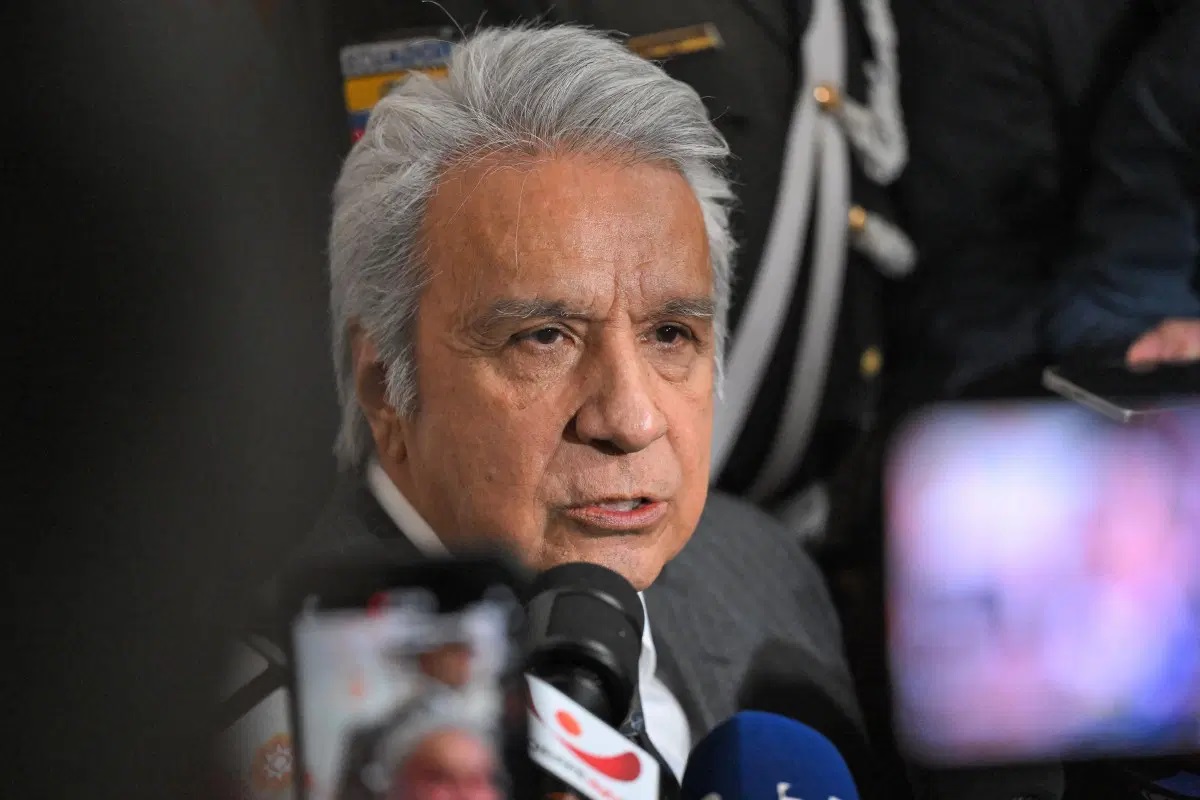
An Ecuadorian court has sentenced former President Lenin Moreno to five years in prison for accepting bribes linked to the construction of the country’s largest hydroelectric dam.
Moreno, who served as president from 2017 to 2021, was among 20 people convicted over corruption allegations surrounding the Coca Codo Sinclair hydroelectric project, which was built by Chinese company Sinohydro.
Prosecutors alleged that Sinohydro paid about $76 million in bribes, representing roughly four per cent of the project’s total cost.
Moreno, 73, denied the allegations and maintained that he never received money from the Chinese company.
Speaking after Friday’s ruling, the former president said he had never received “a single cent” from Sinohydro.
He also blamed the case on the administration of his former political ally and predecessor, Rafael Correa, whom he accused of seeking revenge after their political relationship deteriorated.
Moreno served as Correa’s vice-president between 2007 and 2013 before succeeding him as president. The two later fell out after Moreno moved away from Correa’s socialist policies and developed closer ties with the United States.
The court also sentenced Moreno’s wife and other relatives to nearly three years in prison for complicity in the corruption case.
Two former managers of the Coca Codo Sinclair power plant were also among those convicted.
Prosecutors had initially requested a six-and-a-half-year prison sentence for Moreno.
The former president has announced plans to appeal the judgment.
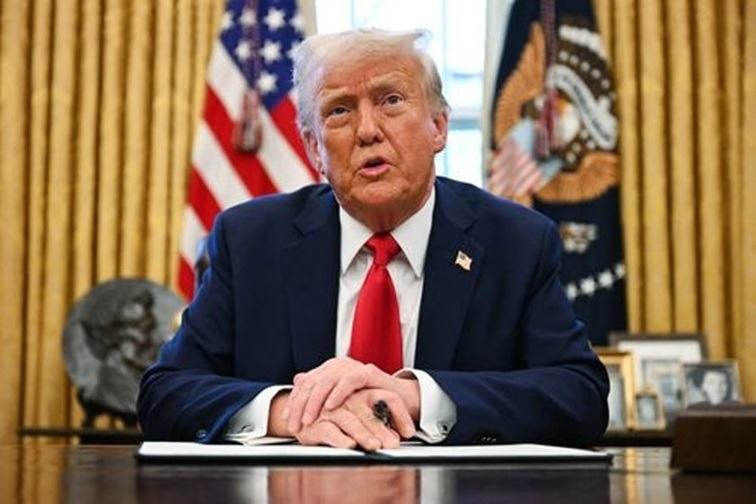
US President Donald Trump has signed an executive order renaming Lake Ontario as “Lake America” for official US federal use, in the latest escalation of his dispute with Canada.
Trump signed the order on Thursday at the White House, saying the change was effective immediately. The order directs the US Department of the Interior to update federal geographic records and naming systems.
Trump justified the move by accusing Canada of treating the United States unfairly in trade and defence. He said Canada had been “ripping us off” in trade and criticised Ottawa over its relationship with Washington.
However, the order does not require Canada or international organisations to adopt the new name. Lake Ontario is shared by the US state of New York and Canada’s province of Ontario, with more than half of its surface area lying in Canadian territory.
Ontario Premier Doug Ford dismissed the move, saying the lake would continue to be known as Lake Ontario by Canadians and much of the rest of the world.
The renaming comes amid a rapidly worsening US-Canada trade dispute. Washington recently imposed 50 per cent tariffs on about $20 billion worth of Canadian goods, while Canada responded with retaliatory tariffs of its own on hundreds of US products.
The latest move echoes Trump’s decision in January 2025 to rename the Gulf of Mexico as the “Gulf of America” for US federal purposes.
Trump also suggested that further geographic name changes could be considered, joking that after a gulf and a lake, the United States might eventually rename the Atlantic or Pacific Ocean.
Canadian Prime Minister Mark Carney’s government had not immediately issued a formal response to the latest order.
The controversy has added another symbolic dimension to already strained relations between the two neighbouring countries, as both sides continue to impose tariffs and seek to protect their economies.
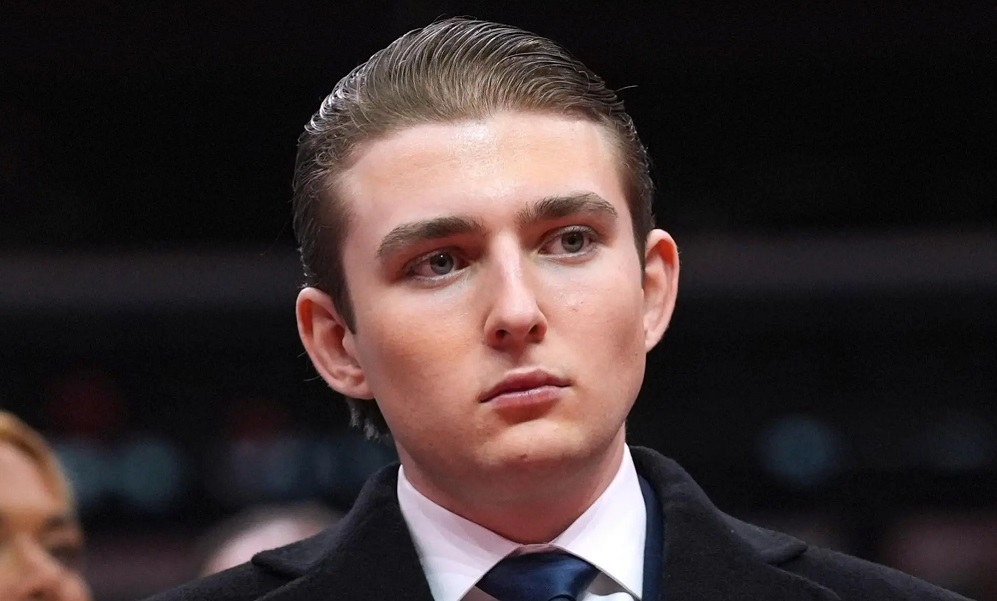
The United States Secret Service has confirmed that it is aware of a video broadcast by Iranian state media that appears to threaten the life of Barron Trump, the youngest son of US President Donald Trump.
The nearly three-minute video, aired by the state-run Islamic Republic of Iran Broadcasting (IRIB), opens with an English-language graphic asking: “Where to kill Barron Trump?!” It then displays stylised graphics identifying places where Barron is publicly known to spend time, including Trump Tower in New York.
The video ends with a narrator referring to people being “eagerly waiting to receive our $10 million reward.”
Secret Service spokesperson Nate Herring confirmed that the agency was investigating the video as a potential threat against one of its protectees.
“The US Secret Service is aware of the video and investigates anything that can be perceived as a threat toward our protectees,” Secret Service spokesperson Nate Herring told CNN in a statement. “Out of concern for operational security, we do not discuss matters of protective intelligence.”
The apparent targeting of Barron marks a new development in a broader pattern of threats directed at Trump and members of his family by hard-line Iranian media.
Iranian media outlets have previously published material threatening President Trump and his family, while first lady Melania Trump has also been the subject of threats. However, the video appears to be the first public instance in which Barron has been specifically singled out.
A federal law enforcement source told CNN that the video forms part of a wider campaign of material from Iran targeting Trump and his family. According to the source, some of the videos have included details about movements and suggestions for killing members of the president’s family.
The security response to such threats involves continuously changing and adjusting protective arrangements, based on information gathered by the Secret Service, other US agencies, police authorities and foreign governments.
IRIB, which broadcast the video, is regarded as aligned with hard-liners within Iran’s regime, while its head is directly appointed by Iran’s supreme leader.
Trump has previously spoken publicly about threats against his life from Iran.
“I’m on whatever list… so far, I guess I’ve been a bit lucky, but maybe that doesn’t last very long. These are evil, sick people.”
He made the comments in July at the NATO summit in Turkey, before secretly leaving the country aboard an alternate military aircraft.
The departure was part of an elaborate security operation reportedly triggered by an Iranian threat. Trump boarded the aircraft while concealed inside a catering truck after officials determined that travelling on either version of Air Force One could expose him to an unacceptable level of danger.
A person familiar with the matter told CNN that the threat involved a shoulder-fired missile and was considered specific enough for officials to fear that Trump’s life would be at enormous risk if he travelled on either version of Air Force One.

Ecuador ex-president bags five-year jail term over $76m bribery scandal

Shettima arrives in Luanda for AU summit

Friend tricked me into kidney removal, spent payment on gadgets — Victim




-
 News23 hours ago
FG moves to harmonise salaries of federal government workers
-

 Metro24 hours ago
Police Parade Doctors, Others Over Alleged Organ Trafficking In Nasarawa
-

 News24 hours ago
NYSC sets September 7 for 2026 batch C registration
-

 News24 hours ago
Ugandan King Who Became Monarch At Age 3 Di£s Aged 34
-

 News18 hours ago
Confusion in Niger as gunfire, explosions rock presidential palace, airport
-

 News23 hours ago
2027 Presidency: Very Unlikely North Will Support Obi-Kwankwaso Ticket — Datti
-
 News23 hours ago
Police-Led Joint Team Arrests Nine, Recovers Three AK-47 Rifles, Pump-Action Gun in Anambra
-

 News19 hours ago
‘My wife drove me with knife, vowed to stab me’, husband says as 15-year marriage crumbles
Warning: Undefined variable $user_ID in /home/naijuinz/public_html/wp-content/themes/zox-news/comments.php on line 49
You must be logged in to post a comment Login